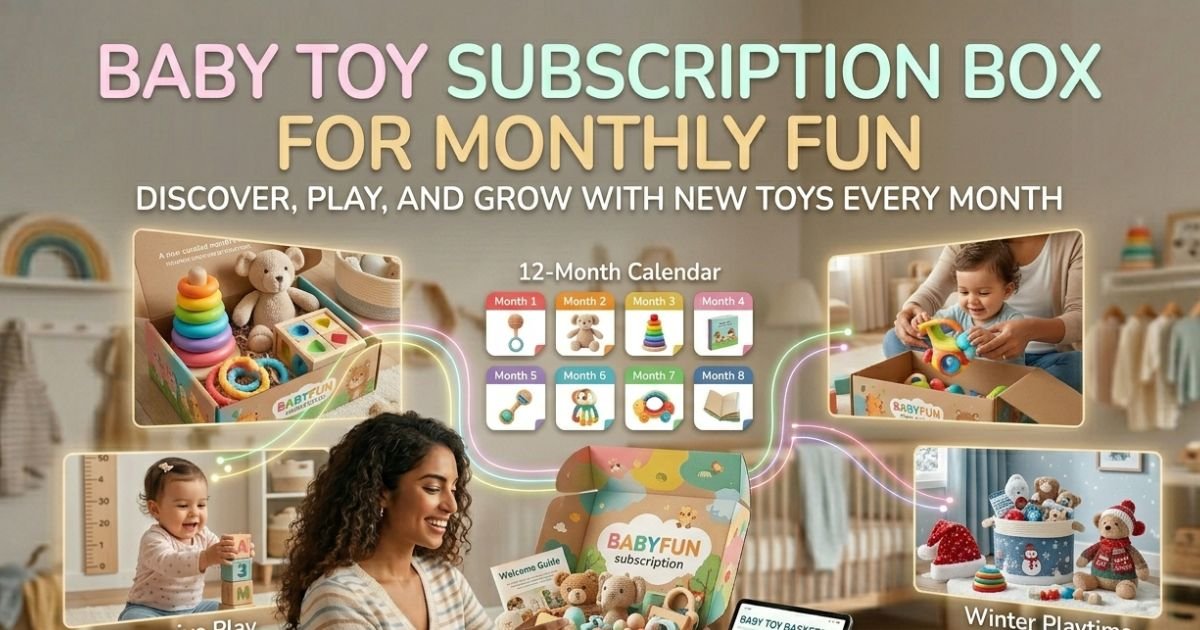

Imagine getting a curated box of baby toys delivered to your doorstep each month an exciting surprise for little ones and a time-saver for busy parents. Baby toy subscription boxes are exactly this: subscription services that deliver age-appropriate toys and activities on a regular schedule. These monthly (or bi-monthly) boxes are designed by child development experts so each toy supports learning milestones and developmental needs. For example, Lovevery kits and KiwiCo’s Panda Crate deliver developmentally appropriate toys that foster learning without parents having to spend hours of time researching or shopping.
These toy subscriptions offer convenience and peace of mind: no more guessing which toy is right for your infant. Instead, a box packed with educational toys arrives on autopilot. The toys are screen-free and often made from durable, natural materials. The goal is to engage infants and toddlers with open-ended, developmentally appropriate play that builds fine motor skills, language, and problem-solving ability. In short, a baby toy subscription box takes one more chore off your plate while boosting your child’s growth through play.
What Are Baby Toy Subscription Boxes?
A baby toy subscription box is a periodic delivery of toys and activities tailored to a baby’s age and developmental stage. Parents subscribe online, providing their child’s age or birthdate. Every delivery (usually monthly or every two to three months) brings a new set of hand-picked toys and sometimes books or parent guides. For example, Lovevery’s Play Kits ship every 2–3 months and contain about seven developmentally appropriate toys plus a play guide. KiwiCo’s Panda Crate ships every two months with 3–6 toys and a “Wonder Play Guide” that explains how to use each toy and reinforces learning concepts.
Subscription boxes often include a built-in learning plan. Many come with instructions or “grown-up guides” that show how to use each toy for maximum benefit. This means new parents don’t have to guess how to play the guide provides creative ways to interact. Parents can typically pause or cancel anytime, and most services let you skip a month if needed. In practice, a baby toy subscription box is a “set it and forget it” solution: once you sign up, age-appropriate toys arrive automatically on schedule.
Benefits of Monthly Baby Toy Subscription Boxes
-
Developmental growth: Toys in these boxes are designed to build specific skills. For infants, this might mean high-contrast toys or rattles that encourage sensory development and cause-effect exploration. Toddlers might get shape sorters, puzzles, or simple STEM kits that teach problem-solving and hand-eye coordination. Pediatric experts note that play helps children acquire “social-emotional, cognitive, language, and self-regulation skills” and even promotes executive function. In other words, playing with the right toys can help a baby reach key milestones faster.
-
High-quality, safe toys: Top subscriptions (like Lovevery and KiwiCo) use premium, child-safe materials. Lovevery toys are made from FSC-certified wood, organic cotton, and non-toxic finishes, while KiwiCo toys are rigorously safety-tested. This means the toys are durable, free of choking hazards, and can often be passed down. Strong, well-made toys also tend to engage babies longer. As one tester said of a Panda Crate, “the wooden book will last for a long time, years even… It’s a toy durable enough that can be handed down to siblings or donated”.
-
Variety and surprise: Each box brings different toys, so babies regularly see new colors, textures, and activities. This variety keeps playtime exciting and introduces new concepts. For example, Lovevery rotates through themes like cause-and-effect or sensory exploration, and KiwiCo’s crates focus on different developmental milestones (from “Here I Come!” motor skills to “Let’s Sort!” shapes). Parents often note that “every box feels intentional and thoughtfully designed for exactly what [the child] is learning in that season”.
-
Convenience for parents: Subscriptions save parents the hassle of finding the right next toy. You don’t have to research developmental stages or browse store aisles an expert-curated selection shows up automatically. As one parent put it, knowing that “every single month, someone has already aggregated and compiled toys for me that are age-appropriate… saves me the research and the trip to the store”. It’s like having a personal baby toy shopping assistant.
-
Parent-child bonding: Many kits include activities designed for caregiver interaction. Reading a board book or playing with a new toy together is a built-in bonding moment. Pediatricians emphasize that play is how parents and children communicate and regulate emotions together. In practice, testers found the play guides in boxes boosted their confidence and engagement. For example, a Lovevery tester said the kit “provides educational information and learning tools for the parent,” which helped her understand how to better support her 3-month-old.
Educational Advantages of Baby Toy Boxes
Baby toy boxes focus on “right-time” learning. Each toy is chosen to match a baby’s current abilities, so play always teaches something new. Instead of random toys, kids get items that target specific skills:
-
Cognitive and sensory skills: Simple puzzles, shape sorters, and cause-effect toys train babies to think. For example, a shape sorter teaches a toddler how to match shapes and provides a chance to learn shape names. A cause-and-effect toy (like a rattle or stacking ring) helps a baby understand that their actions have results. These early experiences build neural pathways for problem-solving and reasoning.
-
Motor skills: Many boxes include building blocks, balls, or motor-crafter toys that improve coordination. KiwiCo’s Panda Crate might have soft blocks to knock over or bead mazes to twist, while Lovevery might include wooden stackers or a ball. Manipulating these toys strengthens fine motor control (grasping, stacking) and gross motor skills (reaching, crawling) over time.
-
Language and communication: Subscription boxes often include board books or sound-making toys. Reading a book from the box introduces new vocabulary and books encourage babbling and story comprehension. Sound toys (like baby-friendly drums or animal shakers) stimulate listening skills and early speech. Engaging with these items helps infants learn to associate words and sounds with objects, a key language-building step.
-
Executive function: As toddlers grow, boxes introduce activities requiring memory and planning (e.g. simple matching games, or pretending to cook with toy food). The AAP notes that play “enhances brain structure and function” and is crucial for developing executive skills like attention and working memory. Subscription toys give kids age-appropriate games to flex these mental muscles for instance, a puzzle toy teaches persistence, and a sorting toy teaches flexible thinking.
-
Creativity and imagination: Open-ended toys (like blocks, nesting cups, pretend play props) let children invent their own games. Montessori-inspired kits in particular encourage imaginative play. Research shows that when children experiment with toys, it boosts creativity and independent thought. Monthly boxes ensure a steady stream of new materials to spark fresh pretend-play scenarios.
In sum, these toy boxes turn playtime into learning time. Children’s “only profession” is playing with toys, which “contributes to the development of cognitive, motor, psychosocial, emotional, and linguistic skills”. Subscription boxes make it easy to give babies regular, developmentally targeted play experiences without extra effort from parents.
Top Baby Toy Subscription Services
Here are some popular baby toy subscription boxes praised for their educational value and convenience:
-
Lovevery Play Kits (0–36 months): Lovevery delivers Montessori-inspired kits every 2–3 months. Each box is curated specifically for the child’s age and contains about 6–8 high-quality toys. The materials are premium (sustainably sourced wood, organic cotton, non-toxic finishes). Lovevery emphasizes open-ended, educational play – instead of many random toys, you get a few purposeful items with a parent guide. Kits cover themes like early STEM, fine motor skills, and language. (Lovevery kits start at $80 for infant kits and $120 for toddler kits.) Reviewers consistently call Lovevery one of the best baby toy subscription boxes, noting its thoughtful design and developmental focus.
-
KiwiCo Panda Crate (0–36 months): KiwiCo’s Panda Crate is a bi-monthly subscription aimed at babies and toddlers. Each crate (for 0–3 years) includes 3–6 toys designed to encourage curiosity and STEAM learning. For example, one box might focus on sensory exploration, another on simple cause-effect puzzles. Each crate comes with a “Wonder Play Guide” for parents. Panda Crate offers three options: Essentials (basic toys, approx. $42+ per box), Plus (deluxe, ~$80+ with additional toys), and Deluxe (includes a book). Notably, KiwiCo’s boxes are highly rated; one review calls Panda Crate “a favorite with parents” that “focuses on learning through play”, encouraging exploration and problem-solving. Shipping is free, and the subscription can be paused or canceled at any time.
-
123 Baby Box (0–24 months): This monthly subscription is curated by experienced parents. Each 123 Baby Box is tailored to your baby’s age and milestones. Along with developmental toys, boxes often include books, feeding accessories, or health essentials, blending practical items with playthings. The contents are a surprise, but generally a mix of toys, books, and essentials that are both practical and fun, ensuring your little one is engaged, learning, and growing. Parents appreciate the variety. The box is fairly affordable and includes occasional bonus items or gifts.
-
Toy Box Monthly (toddlers): For older children (2–5 years), Toy Box Monthly offers an inexpensive option at about $24/month (free U.S. shipping). Each box delivers 4–6 licensed toys (Disney, Marvel, LEGO, etc.). While it’s more about entertainment than strict education, it’s praised for its low price and fun factor. One mom calls it a “big thumbs up” and notes that at $24 it’s easy to do multiple months as gifts or treats. It’s a “budget-friendly” pick if you just want new toys without the premium pricing.
-
Other boxes: There are many niche boxes. For example, some (like Lalo) sell Montessori-style toy kits (though Lalo ended its subscription, you can still buy one-off bundles). Others focus on specific stages (newborn essentials, science kits, etc.). Look around on sites like Cratejoy or review blogs to find options. In general, the best box depends on your baby’s interests and your budget.
How to Choose the Best Baby Toy Subscription Box
When comparing baby toy subscriptions, keep these factors in mind:
-
Child’s age range and focus: Make sure the service covers your child’s current age. Some boxes start at birth and go up to toddlers (e.g., Lovevery covers 0–3 years). Others might target specific ranges. Also consider the educational angle: does it match your goals? KiwiCo Panda Crate emphasizes early STEM and sensory play, while Lovevery emphasizes Montessori-based discovery and caregiver-child interaction.
-
Delivery frequency: Some services ship monthly, others every 2–3 months. Lovevery and Panda Crate arrive less often (which means bigger, more developed toys each time), whereas boxes like 123 Baby Box or Toy Box Monthly ship every month. Pick the cadence that fits your home. If you’d rather have a steady monthly surprise, choose a monthly box. If you prefer less frequent but more substantial kits, the bimonthly services might suit you.
-
Budget and value: Subscription boxes range from very affordable ($20–30) to premium ($80–120+). Think about how much you can spend on toys each month. Remember that premium boxes often include multiple toys plus books and high-end materials, so they can be good value if you would otherwise buy many separate toys. If you’re looking for an affordable baby toy subscription box, consider options like smaller kits or low-cost services (like Toy Box Monthly for older kids). Always check the “cost per toy” or “total box value” vs the price.
-
Quality and safety: Check that the company prioritizes safety. The best baby toy boxes will use non-toxic materials and have independent safety testing. Look for companies that highlight quality and certification. Many eco-minded boxes also use recycled or sustainable packaging and materials.
-
Cancellation and commitment: Look at the subscription terms. Can you pay month-to-month or must you commit for 3–6 months? Good services allow easy cancellation at any time or let you skip shipments without penalty. This flexibility is helpful if you want to try out a box first or only use it for a limited period.
-
Extras and support: Some boxes include extras like parent apps, online activities, or customer support. If you enjoy learning, an accompanying app (like Lovevery’s app with weekly tips) can be a plus. Also read reviews about the company’s customer service. A responsive company can replace lost boxes or fix issues, making the experience smoother.
Pros and Cons of Baby Toy Subscription Boxes
Pros:
- Expert curation: Toys are age- and stage-appropriate, so you know they’ll support your baby’s development.
- Educational design: Many boxes use play to teach skills (fine motor, language, problem-solving) with minimal effort from parents.
- High-quality and safe: Box toys tend to be sturdy and non-toxic, often more durable than cheap store toys.
- Convenience: Delivered to your home on a schedule; great for busy families. You can usually pause or cancel anytime.
- Parent-child bonding: The included activities and guides encourage playing together, which builds relationships while learning.
Cons:
- Cost: Premium kits can be expensive. For example, Lovevery kits start around $80 per shipment. You may not want to subscribe indefinitely if cost is a concern.
- Not every toy is a hit: Babies have individual preferences. Sometimes they may ignore a toy in a box. (Some companies allow exchanges or credits for unhappy items, but often it’s on you.)
- Accumulation: Regular deliveries mean more toys to store. You’ll need to rotate out older toys or donate extras to keep clutter down. (Some services, like Lalo’s Re-Play program, allow donating old toys.)
- Less control: You can’t hand-pick each item. If your child loves a specific brand or character, that toy might not appear unless by chance (unlike buy-on-demand).
As the experts on The Bump suggest, consider your priorities. Do you value saving time and having a continuous learning plan enough to pay a premium for convenience? Or do you prefer shopping once and choosing your child’s toys yourself? There is no one-size-fits-all answer. What’s important is that you feel the box adds value for your family.
Tips for Getting the Most from a Subscription Box
- Rotate toys: When a new box arrives, put away some older toys. This “toy rotation” keeps play fresh and manageable. You can store or donate toys your child has outgrown.
- Use the guides: If the box includes a parent guide or app tips, read them. These often have clever activity ideas you might not think of (for example, using a stacking toy in a new way).
- Combine with free play: The subscription toys complement everyday play, not replace it. Household items (empty pots, boxes, spoons) are also great for learning. The subscription box adds specialized toys on top of that.
- Make it special: Treat each box opening like a mini celebration. Unwrap it together, talk about the theme, and let your child explore at their own pace. It can be a monthly ritual you both look forward to.
- Communicate needs: If your baby has allergies or dislikes certain materials, many companies allow you to note preferences in your profile. They may adapt future boxes if possible.
Conclusion
Baby toy subscription boxes bring monthly fun and educational value right to your door. They take the guesswork out of toy shopping by delivering expert-curated kits designed to help little ones reach new milestones through play. Popular services like Lovevery Play Kits and KiwiCo’s Panda Crate are often ranked among the best baby toy subscription services because of their stage-specific, high-quality toys. More budget-friendly options also exist for families watching expenses.
In summary, a baby toy subscription box can save you time, provide expertly chosen developmental toys, and give your baby fresh ways to play and learn each month. Whether you opt for a top-rated Montessori-style kit or an affordable monthly box, each delivery is packed with purpose. Ready to make playtime even more exciting? Choose a subscription box that fits your baby’s age and your family’s style and get ready for monthly surprises of learning and fun!
