
Babies explore their world through play, using all their senses to reach new milestones. A baby educational toy can hold an infant’s attention while boosting fine and gross motor skills, language, and early problem-solving. Research shows that the right toys “significantly impact a child’s cognitive, emotional, and social growth”. In this guide we’ll explain what makes a toy educational for babies, why these toys matter for smart growth, how to choose quality toys (even on a budget), and examples of the best interactive learning toys and activities.
What Are Baby Educational Toys?
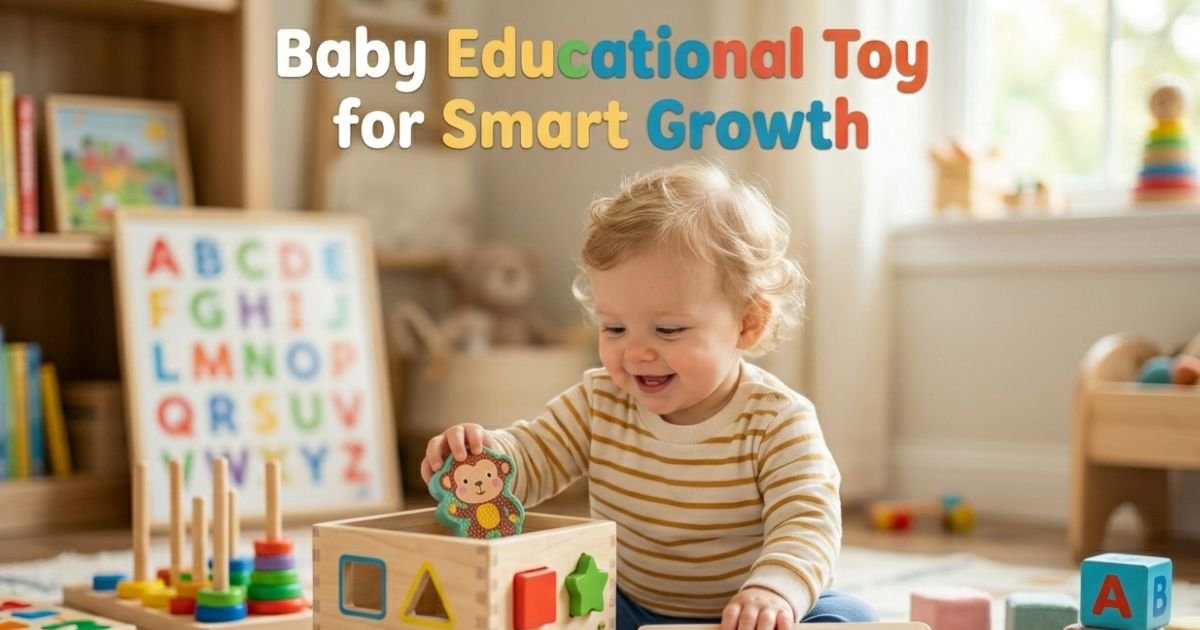
Educational toys are playthings “expected to educate” i.e. designed to teach a child about a subject or develop a particular skill. For babies and toddlers, educational toys turn fun into learning. These can be simple objects like rattles, blocks, or textured books that encourage exploration. Many mimic real-world items (toy phones, kitchen sets, cars) or simplify concepts (shape sorters, stacking cups). Rather than passive entertainment, educational toys provide hands-on learning. For example, a shape-sorter teaches geometry and problem-solving as a baby learns which block fits which hole. A musical toy or storybook encourages early language by letting a child hear words and sounds.
Benefits of Educational Toys for Babies
Educational baby toys offer many growth benefits: they stimulate curiosity, creativity, and skills in multiple areas. Key advantages include:
- Cognitive Development: Toys like puzzles, stacking cups, or cause-and-effect toys teach babies how things work (e.g. “if I press this button, it lights up”). Such toys support brain growth and help babies reach thinking milestones. In fact, experts note that some simple toys (like wooden blocks) have powerful influence on a child’s thinking and problem-solving.
- Fine/Gross Motor Skills: Grasping, shaking, or building with toys strengthens muscles. Babies develop hand-eye coordination by grabbing a rattle or stacking rings. Later, pushing toy cars or crawling after a pull-toy boosts balance and muscle control. For example, a high-contrast baby rattle encourages a firm grasp and shaking motion, which “develops fine motor skills” as the beads jingle.
- Sensory Stimulation: Many educational toys are multi-sensory. Toys with different textures, bright colors, or sounds engage sight, touch, and hearing. For instance, a soft cloth book with crinkly pages and mirror inserts lets a baby touch textures and see reflections. This sensory play helps the brain form connections about the world (feeling smooth vs. bumpy, hearing music vs. silence, etc.). Sensory toys also keep babies curious and calm as they explore textures and sounds.
- Language & Communication: Toys with words, songs, or talking functions introduce babies to language. Interactive storybooks or plush toys that sing nursery rhymes encourage babbling and later word formation. As one guide notes, language-development toys (like sound books or talking dolls) “help babies build early language skills” and practice making sounds. Singing songs together with a toy or mimicking animal sounds from a plush toy reinforces listening and speaking.
- Social & Emotional Skills: Playing with toys often involves adults or other children. Educational toys that prompt turn-taking (like rolling a ball back and forth) or cooperative play (building a block tower together) teach sharing and cooperation. Parental involvement in play also builds bonding and trust, which supports emotional growth.
- Creativity & Concentration: Open-ended toys (blank blocks, dolls, art supplies) invite imaginative play. As researchers found, the simplest toys often score highest in creative play. Building a block fortress or dressing a doll lets a child create scenarios, sparking creativity. Additionally, focused activities like sorting shapes or stacking rings help babies concentrate on a task, strengthening attention span over time.
How to Choose the Best Baby Educational Toys
With so many options, selecting toys that truly support learning can be challenging. Keep these tips in mind:
- Age & Stage Appropriate: Match the toy to your baby’s developmental level. Infants (0–6 months) benefit from simple toys that encourage reaching and grabbing (textured teethers, soft books). Older babies (6–12 months) like cause-and-effect toys (e.g. pop-up toys) as they learn object permanence. Toddlers (1–2 years) can handle puzzles, stacking blocks, and shape-sorters. For example, NAEYC advises that 2-year-olds enjoy problem-solving toys like wood puzzles (4–12 pieces), snap-together blocks, and objects to sort by size or color. Always check age recommendations and look for “developmental stage” guidelines on packaging.
- Multi-sensory Engagement: Choose toys that engage multiple senses. Bright colors, contrasting patterns, different textures, and gentle sounds all capture a baby’s attention and encourage exploration. A high-contrast black-and-white rattle is ideal for newborn vision, while musical toys or rattles attract an older infant’s curiosity. Toys that make music, light up, or have crinkly parts stimulate sight, sound, and touch together, making learning more effective.
- Open-ended and Interactive: Favor simple, versatile toys over complex gadgets. Research finds that basic, open-ended toys (like wooden blocks or vehicles) encourage more learning and creativity than flashy electronic toys. Look for toys that let children play in different ways (building, pretend play, problem-solving). Interactive baby toys (those with buttons, levers, flaps) are excellent because they teach cause-and-effect and keep babies engaged. However, avoid purely passive toys (a toy that only plays a song when turned on) – instead, pick ones that the child has to do something with.
- Safety First: Ensure any baby toy is safe and well-made. Check that it’s free from small parts for infants (no choking hazards) and has non-toxic materials. Reputable toys should meet standards like ASTM or CE. Parents should “make sure there are no small parts or pieces that could become lodged in a child’s throat”. Avoid toys with sharp edges, loose ribbons, or small batteries within reach. Also look for durable toys: sturdy wood or medical-grade silicone is better than flimsy plastic. As one guide recommends, choose chew-safe natural materials (wood, cotton, food-grade silicone) and avoid chemicals like BPA, phthalates or lead.
- Affordability & Budget: You don’t need expensive toys to educate. Consider secondhand or DIY options. Buying gently used developmental toys or making simple homemade toys (cardboard puzzles, fabric scrap sensory bags) can be very effective. Durable classic toys (wooden blocks, metal xylophones) might cost more upfront but last for years or through multiple children, making them cost-effective in the long run.
Best Educational Toys for Babies (Examples)
Many high-quality toys combine fun with learning. Here are some top picks across categories:
- Rattles and Teethers: The classic rattle builds grip strength and curiosity. For example, a high-contrast rattle like the Bright Starts Grippin’ Goals Ball is easy for babies to hold and shake, and its black-and-white pattern “offers plenty of visual appeal for additional stimulation”. Multi-textured teethers (like silicone rings with bumps) soothe gums and teach babies to grasp and mouth safely.
- Stacking Toys & Blocks: Stackable cups, rings, or wooden blocks let babies practice hand-eye coordination and learn sizes/colors. Stacking a cup and watching it topple helps infants understand cause-and-effect. As babies grow, blocks become tools for imaginative play. Blocks and puzzles are also endorsed for toddlers: they solve puzzles and build structures. Wooden block sets or foam cube blocks are versatile educational toy sets that grow with your child’s abilities.
- Shape Sorters: These sets (shapes and boxes or pegs and holes) teach geometry and problem-solving. Toddlers love fitting shapes into slots – it reinforces shape and color recognition. NAEYC notes that providing objects to sort by size, shape, or color is excellent for 2-year-olds.
- Interactive Books and Toys: Board books with textures, flaps, or sounds engage emerging readers. Interactive baby educational toys like talking plushies or sound machines also fall here. For instance, a plush toy that sings songs or reads stories encourages vocabulary as babies listen and try to vocalize. Musical toys (mini pianos, rattles that play melodies) introduce rhythm and language.
- Activity Gyms and Play Mats: Tummy-time gyms with hanging toys, mirrors, and attached teethers provide a stimulating play area for infants. They can bat at hanging shapes, see themselves in a mirror, or chew on a toy—all aiding sensory and motor development. One top pick, the Hape Owl Bed Oscar, is a playmat that combines a soft surface with colorful hanging toys (a bird teether, owl rattle, and flower ring) to “stimulate your baby’s senses” during play.
- Push/Pull Toys & Ride-On: As babies start crawling or walking, push-walkers and pull-along animals encourage movement and balance. They make gross motor development fun. The Baby Einstein Chase & Tap Earl (a rolling elephant) is one example: when babies pull it, it rolls away, encouraging crawling. It also has modes that teach numbers, colors, and shapes when seated.
- Pretend Play Toys: Simple pretend items (toy phones, play kitchen, doll strollers) let toddlers mimic real life. This role-play builds social and language skills. Even a pretend camera can be educational: pressing a button to develop a picture can teach cause/effect, and some toy cameras light up different colors to teach color names (for example, the Baby Einstein + Hape Learning Lens Toy Camera teaches six colors in four languages as the lens glows).
- Music & Instruments: Baby-friendly musical instruments (shakers, small drums, bells) or songs-on-toys engage hearing and rhythm. Singing songs with interactive toys strengthens memory and language. For example, pressing an infant-safe xylophone bar or following along with “Old MacDonald” on a plush toy develops listening skills and timing.
Each of these toys encourages active interaction and learning. Remember: simple, open-ended toys (blocks, dolls, basic puzzles) often yield the richest learning. There’s no need for screens – even classic toys support smart growth when used thoughtfully.
Educational Toy Activities for Babies
You can turn playtime into mini-lessons with a few creative activities:
- Shape and Color Sort: Give your baby a set of colored blocks or stacking cups. Name the colors and shapes as baby places them in a bin or stack. This teaches vocabulary and matching skills. (E.g. “Red circle goes here!”)
- Stacking Fun: Help your baby stack rings or cups to make towers. Count each piece as you stack it (“One, two, three rings!”). Tearing down the tower teaches cause-and-effect (knock it down and rebuild).
- Pretend Peekaboo: Use a soft doll, puppet, or even a blanket for peekaboo. This simple game teaches object permanence (“out of sight, still here”) and social giggles! It’s a fun introduction to playing with dolls or stuffed animals later.
- Sing-Along and Dance: Play nursery rhymes and gently move or clap with your baby. For instance, use a rattle or drum to keep a beat. This musical play develops listening skills, rhythm, and vocabulary. Encourage baby to imitate sounds (“ba-ba” or “da-da”).
- Sensory Exploration: Fill a shallow plastic bowl with water or soft fabric pieces. Supervise as baby splashes or touches them. Describe the feeling (“wet”, “cold”) or the sounds (“splash, splash”). Sensory play enhances language and understanding of the world.
- Building and Pretend Play: Even before a child can really pretend, you can play along. Use toy blocks to make a “car” and say, “Vroom vroom!” or feed a doll with a toy spoon. Narrating simple actions turns toys into teaching moments.
These baby educational toy activities make learning playful. They encourage imitation, curiosity, and bonding. Simple prompts (“Can you grab the blue block?”) and praise go a long way in reinforcing every skill your baby practices.
Affordable Educational Toys (Budget-Friendly Ideas)
Great learning toys don’t have to break the bank. Parents and experts suggest:
- Secondhand & Hand-Me-Downs: Look for high-quality used toys (garage sales, consignment shops) or pass on toys within your network. A well-made toy (like wooden blocks or a plush) from an older sibling is often as good as new.
- DIY and Household Items: You can create fun educational toys at home. For example, fill a clear, sealed jar with small items for baby to shake (sound stimulation), or cut shapes from cardboard and draw on them for a makeshift puzzle. Even a sturdy plastic bowl with a spoon can teach banging rhythms. Moonkie’s advice: “making DIY activities with items you already have at home” is a smart, eco-friendly way to stay on budget.
- Classic Low-Cost Picks: Many classic educational toys come cheaply. Items like plastic stacking cups, simple board books, shape sorters, or wooden puzzles can often be found under $15. Check discount stores or online deals. Dollar stores often carry basics (rattles, shakers, nesting cups) that serve educational purposes.
- Focus on Essentials: Instead of many toys, a few good educational ones suffice. As research suggests, “fewer toys” (focused, quality ones) can actually enhance a child’s learning more than many toys. For example, a single set of stacking rings provides hours of play in different ways.
- Rent or Share: Some communities have toy libraries or swap groups. Borrowing a rotating selection of toys can keep things fresh and educational without ongoing cost.
By choosing durable, open-ended toys and supplementing with homemade activities, you can provide rich learning experiences on any budget.
Conclusion
Baby educational toys are powerful tools for smart growth. They help little ones learn about shapes, sounds, movements, and social play long before formal schooling. When choosing toys, remember research-backed advice: “basic is better” – simple, sturdy toys that your baby can explore in many ways. Always prioritize safety and engagement. Whether it’s a rattle that rattles, a block that stacks, or a storybook that sings, the best educational toys spark curiosity and learning in every giggle and “wow!” moment.
Ready to give your baby a smart start? Explore our recommended picks and activities above, and turn playtime into a joyful learning journey.
