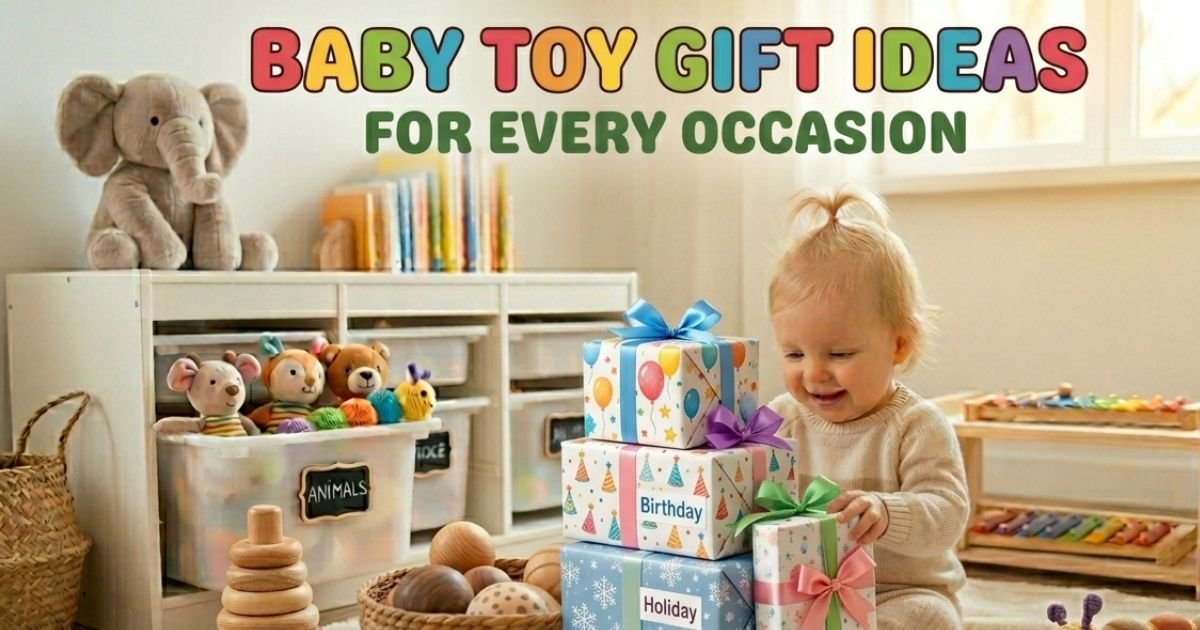

Selecting the perfect baby toy gift can be exciting but daunting. From baby showers to first birthdays and beyond, thoughtful toys entertain little ones and support their development. In this guide, we’ll share best baby toy gift ideas for every milestone: newborn essentials, birthday picks, educational toys, personalized keepsakes, and gift sets. We’ll also cover safety tips and current trends. Remember, experts say “the best toys are those that match your child’s developmental skills and abilities and encourage the development of new skills”. Recent industry trends favor sensory-rich, low-tech toys (the “Cozy Culture”) and innovative STEM sets that nurture creativity. Read on to find safe, fun, and memorable toy gift ideas for each stage of babyhood.
Baby Toy Gifts for Newborns
For newborns and infants, focus on soft, sensory-stimulating toys and comforting items. Gift guides note top picks like blankets, plush animals, and rattles for newborns. Registry lists also highlight baby toy gift sets containing plushies, rattles, and high-contrast items. In the first few months, babies benefit from brightly colored rattles, soft mobiles, and cloth books with high-contrast images. These encourage baby to focus, grab, and coo. For example, an infant toy mirror (placed 8–12 inches away) helps a baby track faces.
When choosing a baby toy gift for a newborn, prioritize safety: pick BPA-free plastic or unfinished wood toys, and avoid any small detachable parts. Soft fabric items should be machine-washable. Here are some great newborn gift ideas:
- High-contrast rattles and plush toys: Black-and-white or brightly colored items capture newborns’ attention.
- Teething toys (from ~4–6 months): Soft silicone rings or wooden teethers soothe early teething (just check age labels).
- Crinkle and board books: Durable cloth or plastic books with baby faces or animals encourage visual tracking and early language.
- Play gyms or activity mats: Dangling soft toys and mirrors engage babies’ reach and grip.
Always verify the age recommendations on packaging. Newborn toys should have no choking hazards and use non-toxic materials. With these choices, your baby toy gift for newborn will be both safe and stimulating.
Baby Toy Gifts for Birthdays
As babies grow, their toys can become more interactive. For first birthdays and toddler milestones, consider gifts that encourage movement, problem-solving, and pretend play. For example, wide-based push toys or ride-on wagons help a 1-year-old practice walking and balance. Stacking toys like cups or blocks introduce basic engineering: a child can stack, knock down, and rebuild, enhancing fine motor and spatial skills. A healthcare guide notes that stackable cubes “increase fine motor skills [and] cognitive development of spatial relations”.
Pretend-play toys are also great for birthdays. Toy cars, play kitchens, doll strollers or tool benches let toddlers imitate grown-ups and invent stories key for language and social-emotional growth. Additionally, musical toys (drums, xylophones, shakers) and interactive board books introduce sounds, rhythms, and words. Simple puzzles with knobs teach problem-solving as babies learn that pieces fit shapes.
Some popular birthday gift ideas by category:
- Push & Ride-On Toys: Small wagons or car-shaped scooters build gross motor skills as baby walks and balances.
- Building & Stacking Toys: Blocks, cups, and stacking rings that baby can stack and sort help develop coordination and early math concepts.
- Music & Books: Baby instruments and sturdy storybooks support auditory and language skills.
- Pretend-Play Sets: Toy kitchens, workbenches, dolls, or animal figures encourage imaginative play and language (symbolic play is critical for development).
- Shape Sorters & Puzzles: Simple shape-sorters and peg puzzles teach cause-and-effect and hand-eye coordination, boosting early problem-solving.
As a child moves into the toddler years, their interests expand (ride-on cars, art kits, interactive games, etc.). Tailor each birthday gift to the baby’s developmental stage, but remember: simple, versatile toys often have the most longevity.
Educational Baby Toy Gifts
Educational baby toys are simply toys that encourage learning through play. The key is that they engage the baby’s senses and imagination. For infants, that might mean rattles and musical toys which explore cause-and-effect and sound. High-contrast mobiles and toys captivate newborn vision and stimulate sensory development. As babies grow, introduce shape sorters, puzzles, and building sets: these teach colors, shapes, spatial skills and creativity.
Some top educational toy ideas:
- Shape Sorters & Knob Puzzles: Babies learn to match shapes and develop fine motor skills. A toddler placing shapes into holes learns colors and problem-solving.
- Building Blocks & Stacking Toys: Blocks or Duplo teach balance, symmetry, counting and color recognition as children build towers.
- Musical Instruments: Baby-friendly drums, xylophones, or keyboards introduce cause-and-effect and early music appreciation.
- Interactive Books: Lift-the-flap or sound books build early literacy and cause-effect understanding.
- Art Supplies: Jumbo crayons, finger paints, and big paper let older babies create and strengthen fine motor control (always with non-toxic materials and supervision).
- STEM Kits: Age-appropriate science or engineering toys (magnetic tiles, gear sets) are booming. In fact, toy-industry data shows the STEM segment is growing rapidly as 78% of parents seek toys that foster creativity and problem-solving.
In short, any toy that makes baby think or sense differently can be educational. The Child Development Institute points out that “every new shape, color, texture, and sound is a learning experience” for babies. So gift boxes that include a variety of sensory and learning toys are especially beneficial.
Personalized Baby Toy Gifts
Adding a personal touch can make a gift truly memorable. Personalized baby toys ones customized with the baby’s name or initials become keepsakes. Popular examples include embroidered plush animals, wooden name puzzles, or storybooks printed with the child’s name. Gift experts note that personalized items “are likely not on [a registry] but are thoughtful gifts that they will absolutely love,” such as custom blankets, framed prints, and name-labeled toys. A $25 personalized keepsake (like an engraved keychain or blanket) can be just as meaningful as a $200 gadget.
Some ideas for personalized baby toy gifts:
- Embroidered Plush Lovey or Blanket: Soft toys or blankets with the baby’s name stitched on them.
- Name Puzzles & Blocks: Wooden blocks or puzzles spelling out the baby’s name fun to play with now and wonderful as room decor later.
- Custom Board Book: A storybook featuring the baby’s name and perhaps photo makes reading time extra special.
- Keepsake Toys: Handcrafted wooden rattles or ornaments engraved with the baby’s birth details.
When gifting personalized items, ensure they meet all safety standards (no small parts, safe inks/paints). Overall, a personalized toy gift shows extra thought and is often treasured by parents and child alike.
Baby Toy Gift Sets
Gift sets bundle multiple items into one package, which can be convenient and festive. For example, a baby toy gift set might include a mix of a plush toy, a rattle, and a small book – all coordinated for the baby’s age. Registry guides even list “baby toy gift set” alongside items like rattles and books as must-haves. You can buy ready-made sets (sensory baskets, bath-time kits, starter music sets) or create your own.
To DIY a set: wrap several smaller toys together or arrange them in a basket. Some set ideas:
- Sensory Basket: High-contrast cards, textured balls, and a teething ring.
- Bath-Time Bundle: Rubber duck, colorful bath book, and washcloths.
- Early Learning Kit: Shape sorter, stacking cups, and an ABC board book.
- Nursery Essentials Set: Soft blocks, rattles, and baby-safe mirrors.
Gift sets are great for variety, but be mindful of duplicates (parents may already have basics like pacifiers). In general, sets give baby multiple ways to play, making them fun “all-in-one” surprises.
Safety and Quality Tips
Above all, ensure your baby toys are safe and age-appropriate. Check age labels and certifications: toys should say the suitable age (e.g. 0-6 mo, 12+ mo), and be certified by safety standards (ASTM, JPMA or CE). Seattle Children’s Hospital advises: “Toys are age-graded for safety… Choose toys that match your child’s age and skills”.
A few key safety tips:
- Age & Material: Pick toys made of durable, non-toxic materials (wood, organic cotton, BPA-free plastic). Avoid those with chipped paint or toxic coatings.
- No Small Parts: For babies under 3, ensure pieces are large. (A simple test: no part should fit inside a toilet paper roll). Avoid magnets or button batteries in infant toys.
- Choking Hazards: Check for attached pieces like eyes or beads that could come off.
- Loud Noises & Strings: Avoid toys that make very loud noises or have long strings/ribbons (>7 inches) that could tangle.
- Cleaning: Babies mouth everything! Choose toys that can be easily washed or wiped clean (machine-washable plush, dishwasher-safe plastics).
- Durability: Inspect toys periodically; throw away any broken toys with splinters or cracked plastic.
By following these guidelines, your baby toy gift will be both enjoyable and worry-free for parents.
Conclusion
The best baby toy gift ideas are those that delight and engage a child at their current stage. For newborns, classic soft toys, rattles and books are winners. For birthdays, look to active play (push toys, blocks) and imaginative play (pretend kits). Educational toys that spark curiosity stackers, puzzles, musical toys are always smart choices. Personalized items and themed gift sets add extra thoughtfulness. Finally, always prioritize safety: choose age-appropriate, non-toxic toys and avoid small parts. With these tips and examples, you can confidently pick a baby toy gift that will be cherished and played with for years. Happy gifting and happy playing!
Sources: Expert parenting and health guides on toy selection and child development.
