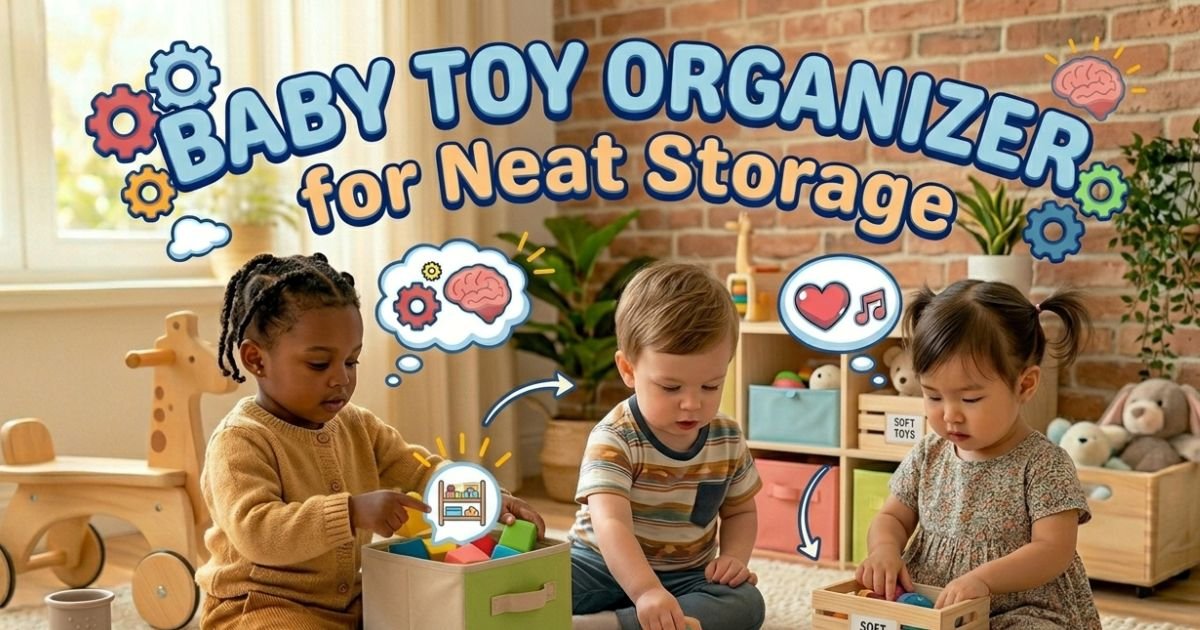

Babies come with a lot of stuff diapers, clothes and endless toys which can quickly make any nursery feel chaotic. A baby toy organizer is any dedicated storage solution (bins, boxes, shelves, baskets, etc.) designed to keep baby’s playthings tidy and accessible. In this guide, we’ll explain why toy organizers are a must-have, compare popular types (toy boxes vs. shelves vs. baskets), and share creative nursery storage ideas. You’ll learn how to choose the best baby toy organizer for your needs and get practical tips to maintain a neat, safe play space.
Why Use a Baby Toy Organizer?
Toddlers and infants accumulate dozens of toys (and sometimes duplicates) in no time. Left unchecked, toy clutter can be overwhelming. As Babylist notes, “babies really tend to collect a lot of stuff… it can start to get a little overwhelming”. An effective toy organizer helps:
- Reduce Clutter & Stress. Everything has a place, so piles of toys aren’t left on the floor. Easy-to-reach bins or shelves mean quicker clean-ups, saving parents frustration.
- Encourage Independence. Low shelves or bins let little ones find and put away their own toys, building tidy habits early. Clear or labeled containers help even pre-readers know where each toy belongs.
- Safety & Accessibility. Keeping toys off the floor prevents tripping and choking hazards. Designated storage (like a sturdy toy chest or secured shelves) keeps small parts and plushies contained. For example, some toy chests have slow-close hinges so toddlers can’t slam them shut.
Overall, a good baby toy organizer turns playroom chaos into calm. It makes daily tidying quick and teaches kids organizational skills. As one source advises, “Bins, baskets and more bins! These are the ultimate go-to for easy clean up and categorized storage.” (We’ll get into specific solutions next.)
Types of Baby Toy Organizers
When choosing a baby toy organizer or shelf system, consider your space, budget, and style. Below are common solutions, each with pros and cons:
Toy Boxes & Chests
A toy box (also called a toy organizer box) is a large lidded bin or chest, often made of wood or plastic. It’s great for stashing all toys out of sight. For example, Melissa & Doug’s wooden toy chest features a solid wood build and a slow-close safety hinge, so it’s durable and toddler-safe. Key features:
- Concealed Storage: Simply toss in toys at day’s end to clean up instantly. This is ideal for grandparents’ visits or photo-ready spaces.
- Durable Design: Look for hardwood or thick plastic so it holds many toys. Many toy chests double as furniture (a sturdy chest can even serve as extra seating).
- Child-Safe: Safety hinges prevent pinch accidents. Soft-close lids are best.
Pros: Large capacity; neat look; often more stable (hard to tip); keeps toys out of sight.
Cons: Kids can’t see what’s inside until it’s opened; everything gets jumbled unless you insert smaller bins inside; heavy when full.
Tip: Organize inside a toy chest by using smaller bins or cloth bags for categories (e.g., blocks, dolls). This way, clean-up is still quick, but toys are sorted.
Open Shelving with Bins
Modular shelving units with removable bins or baskets are very popular. These look like low bookcases, often paired with fabric or plastic bins. IKEA’s TROFAST system is a classic example: a solid pine frame holding several plastic bins. Key points:
- Easy Access: Low shelves and pull-out bins mean little ones can grab toys and put them away by themselves. The IKEA Trofast is noted for “low storage [that] means kids can help out during clean-up and can easily slide the bins in and out”.
- Customizable: You can mix bin sizes. For example, Humble Crew’s toy organizer has multiple bin sizes on each shelf and a top shelf for books. It’s designed for small spaces (even fits in a closet!) and uses tilting bins so kids can see contents.
- Visibility: Open shelves (especially with clear bins) let you see toys at a glance, which many parents find makes cleanup quicker.
- Style Variety: These units come in wood, metal, or plastic, and bins in fabric, rope, or plastic – choose what matches your decor.
Pros: Encourages self-cleanup; toys are visible and accessible; bins can often be washed or swapped easily.
Cons: Can look cluttered if bins are mismatched; open-front bins can sometimes spill if not carefully managed.
Baskets & Bins
Baskets and bins are the most flexible storage. These include fabric bins, woven baskets, rope baskets, clear plastic totes, etc. They can sit on shelves, in closets, or on the floor. Advantages:
- Versatility: Baskets can store blocks, stuffed animals, books, or art supplies – almost anything. Many are decorative (e.g., woven or rope baskets) and blend with nursery themes.
- Size Options: Use small bins for tiny toys or large baskets for big stuffed animals. Crate & Barrel suggests small baskets for little items (minimizes digging) and a soft fabric bin for baby’s toys in the nursery. For example, a textured macrame basket can hold rattles or cloth toys and looks cute too.
- Mobility: Baskets are easy to move. Some even double as laundry hampers or side tables.
Pros: Inexpensive; movable; many styles. Kids often can pull out a basket to play and push it back.
Cons: Without lids, contents can tumble out; baskets on the floor invite dumps of toys everywhere if left unchecked.
Pro Tip: Use labels or color-code baskets to keep them organized. Even simple picture labels (e.g., a truck icon for toy cars) help kids know what goes in each basket.
Shelves & Bookcases
Simple shelves or bookcases (even wall-mounted) can double as toy organizers. Use them with or without bins:
- Low Shelves: A low, accessible shelf allows even toddlers to fetch and return toys. As The Spruce notes, “low shelves mean that even the smallest kid can find their toys (and put them away on their own) while everything still has a tidy spot.”.
- Cube Storage: Cube-style shelves (e.g. 3×3 units) fit cubes or baskets. You can rotate baskets and open cubbies for variety.
- Hidden Storage: For a neater look, install a shallow bookcase inside a closet or behind doors. You can keep many clear bins on such shelves and simply close the door to hide any mess.
Pros: Neat, permanent; can integrate with room furniture.
Cons: More permanent (harder to reconfigure than loose bins); safety fixings needed (anchor shelves to wall to prevent tipping when babies pull).
Under-Crib & Closet Storage
Don’t overlook hidden spots. Babylist recommends utilizing under-crib space: shallow rolling bins or cloth baskets under the crib can hold out-of-season clothes, extra sheets or some toys. Similarly, installing shallow shelves or cubbies in a closet door or unused wall nook provides toy storage without taking up play space.
Other Organizers (Nursery Specific)
Some organizers serve double duty. For example:
- Toy Hammock or Net: Not for all toys, but they can hold plush animals up and away. (Ensure proper safety installation.)
- Hanging Baskets: A hanging crochet or rope basket (like those in nursery decor) can catch lightweight toys or blankets.
- DIY Solutions: Hanging pegboards, repurposed cubes, or even a rolling cart can organize toys in style.
Regardless of type, the best baby toy organizer is one that fits your space, is safe for little hands, and makes sense for how your child plays.
Designating & Maintaining Toy Storage
Choosing the right organizer is step one using it well is key. Follow these best practices:
- Sort by Category. Group toys by type or size (blocks in one bin, dolls in another). This makes cleanup intuitive. Crate & Barrel suggests bins labeled (or color-coded) by content.
- Label Everything. Even simple picture or color labels on bins reinforce where each toy belongs. Spruce points out that “clear bins… paired with labeling make it easy for kids to know what goes where”.
- Use Clear or Open Bins. Seeing contents at a glance helps everyone. According to Happiest Baby, clear or lucite bins (or baskets with peek-through windows) “are a total game-changer for baby’s room. The more you can see from the outside, the less you’ll mess up getting to it.”.
- Rotate Toys. You don’t have to keep all toys out at once. Storing some away (e.g., in off-season drawers or bins) and rotating them keeps clutter down and toys feeling fresh to the child.
- Routine Declutter. Babies outgrow things quickly. Periodically remove broken or unused toys from the bins. Many experts recommend donating seldom-used toys when new ones come in, to keep the number manageable.
- Keep Favorites Accessible. Store the most-played-with toys on the lowest shelves or in easy bins. The Spruce advises keeping favorite toys low so “you won’t have to constantly pull things down only to put them away later that day.” Delicate or supervised toys can go higher.
Following these tips turns any organizer into an organized system.
Baby Toy Organizer Ideas and Tips
Here are creative ideas and reminders for making toy storage work best:
- Eco-Friendly Materials: Consider sustainable storage. Modern Nursery highlights “sustainably-made shelves, toy boxes, and baskets made from natural materials” (like certified wood or organic cotton) which are healthier for baby and kinder to the planet. Natural-woven baskets or solid wood bookcases avoid excess plastic.
- Kid-Friendly Styling: Use fun colors or patterns on bins to make storage inviting. Matching baskets or painting shelves can blend toy storage into nursery decor. A shelf painted in a bold color with matching baskets turns storage into a design feature.
- Make Cleanup Fun: Place the organizer where your child often plays, and consider adding elements they can interact with. For instance, labeling bins with toy pictures or letting toddlers “help” by handing them labeled baskets reinforces habits. As Spruce notes, even if children can’t read labels, leaving one or two toys visible in a bin helps them know where that bin belongs.
- Safe Installation: For any shelving, secure it to the wall. Use bins with non-toxic finishes (look for GREENGUARD or BPA-free labels). Avoid hanging heavy bins or shelves above cribs or changing tables.
Organization Ideas for Small Spaces
Space can be tight in nurseries or small homes. Here are some ideas mentioned by organizing pros:
- Vertical Storage: Use tall narrow shelves or stackable bins to use wall height. A room divider shelf (like some IKEA Trofast versions) can even partition a play corner.
- Closet Conversion: As seen on Spruce, a closet shelf labeled with bins can neatly stow toys and hide mess by simply closing the door.
- Under-crib Drawers: Roll wheels under the crib for extra bins (for spare sheets, costumes, or lesser-used toys). Babylist suggests shallow plastic tubs or fabric bins under the crib for overflow storage.
- Multi-Use Furniture: Ottomans or coffee tables with hidden storage also work (see The Spruce’s “basket functioning as a coffee table” concept).
- Label Clothes/Toys by Child: If multiple kids share a space, label bins by child. Spruce shows plastic bins with each child’s name, so “everyone has a designated spot”.
How to Choose the Best Baby Toy Organizer
When shopping or DIY-building, consider these features (our “buyer’s checklist”):
- Size & Capacity: Measure your space. A single large toy box holds more than multiple small bins, but multiple bins allow sorting. If toys will grow (e.g., baby-to-toddler years), a modular unit (like IKEA Trofast) that can add bins later is handy.
- Safety: No sharp corners, and a stable base. Toy chests should have soft-close lids or safety hinges. Shelves should be anchored. Non-toxic paints/finishes are a plus (especially if baby can reach).
- Durability: Choose sturdy materials. The Good Housekeeping test praises Trofast’s solid pine frame with thick plastic bins for long-lasting use. Avoid flimsy bins that sag under weight.
- Ease of Cleaning: Fabric bins should be washable or wipeable. Open shelves or plastic bins can be easily dusted. For example, bath toy organizers that drain easily are recommended for cleanliness (while outside scope of baby’s room, it highlights the principle of washable storage).
- Style & Coordination: If nursery style matters, pick colors and textures that fit. Neutral baskets or furniture-grade storage can match decor. Some parents choose all-white shelves with pastel bins for a modern look.
Pros vs. Cons Quick List:
- Toy Chest: +Huge capacity, neat look. –Bulkier, all toys hidden (kids may forget what they have).
- Open Shelf with Bins: +Accessible, tidy categories. –Bins must be organized or they look messy; can overload.
- Baskets/Bins (on floor or shelf): +Flexible, moveable. –Less structure, may be pulled down.
- Wall/Overhead (crate, pegboard): +Saves floor space. –Must securely anchor, and within reach.
Conclusion
A well-organized nursery makes life easier for parents and fun for kids. By choosing the right baby toy organizer – whether it’s a sturdy toy box, a low bin shelf, or a collection of pretty baskets – you give every toy a home. Labeling bins, rotating toys, and using clear storage help keep everything in its place. Remember, the goal is not perfection but practicality: encourage children to put toys away by making storage appealing and within reach.
Now that you’re armed with ideas and tips, you can transform toy chaos into calm. Explore combinations of boxes, shelves and baskets that fit your nursery, and enjoy a tidier play space. Happy organizing!
Sources: Advice and examples drawn from expert-organized nursery guides and product reviewers, among others.
