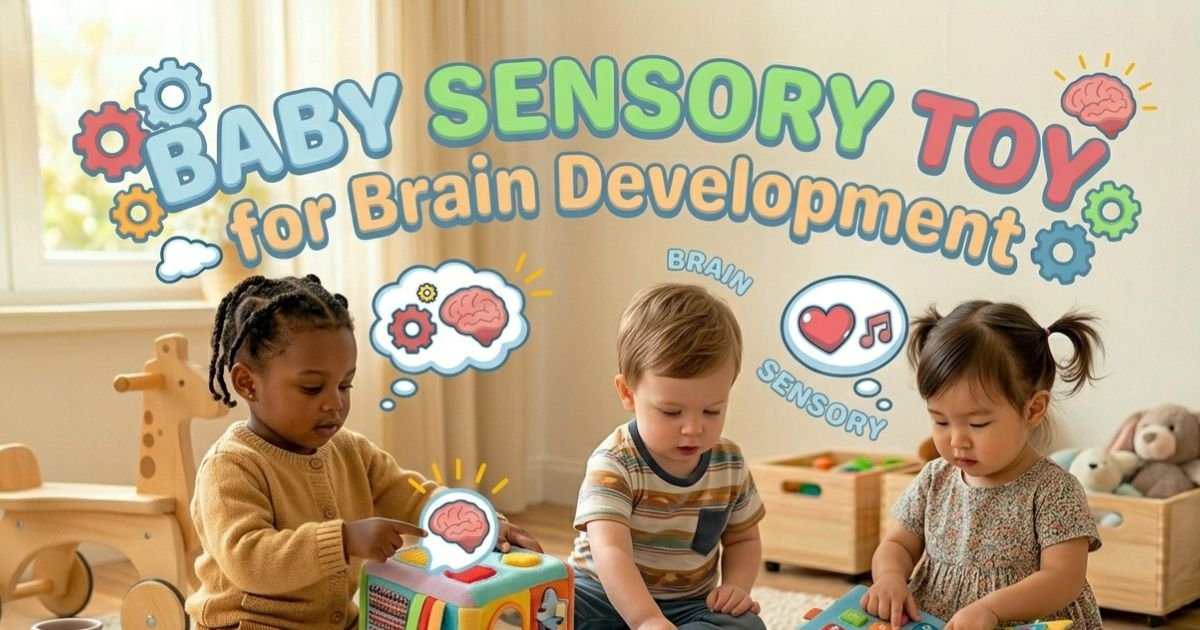

Engaging babies in sensory play isn’t just cute it’s critical brain work. A baby sensory toy (any toy that stimulates sight, sound, touch, etc.) provides novel experiences that literally build a baby’s brain. For example, a high-contrast rattle or crinkly fabric book captivates an infant and encourages looking, reaching, and listening. These multi-sensory interactions lay the foundation for early learning. Research shows that during the first few years of life, the brain is incredibly active: infants form more than one million neural connections every second. In other words, every time a baby plays with a colorful, textured toy, their little brain is firing on all cylinders, strengthening pathways that support future skills. In this article, you’ll learn what makes sensory toys so powerful for development, find age-appropriate toy ideas (from newborns to toddlers), and get practical tips and activities to boost brain growth.
A baby playing with a high-contrast sensory rattle. Such bright, textured toys engage infants’ senses, sparking curiosity and neural growth. Babies use toys to experiment and learn. Even simple play turns them into “little scientists” as they bang, squeeze, and mouth objects to test their properties. Sensory toys are designed to tap into this exploratory drive by engaging one or more senses (sight, sound, touch, smell, even balance). For instance, visual stimulation from high-contrast colors and bold shapes helps babies learn to track objects. Likewise, rattles or bells introduce sound, and textured toys invite touch. Altogether, diverse sensory inputs foster brain development. In fact, a landmark study notes that when a child plays with engaging, multi-sensory toys, it builds nerve connections in the brain’s pathways, helping their developing mind make sense of the world.
What Is a Baby Sensory Toy and Why Does It Matter?
A baby sensory toy is any infant toy designed to stimulate one or more of the five senses (sight, hearing, touch, smell, taste) or the “hidden” senses like vestibular (balance) and proprioception (body awareness). Common examples include colorful rattles, crinkly cloth books, soft textured balls, musical mobiles, or chewable teething toys. These toys typically have bold patterns, bright colors, different textures, and gentle sounds that attract a baby’s attention. Children’s health experts explain that sensory play – activities that engage the senses “helps them develop language skills and motor skills” and is vital for cognitive growth. In practice, a sensory toy might be a black-and-white patterned card for a newborn’s visual focus, a cloth book with crinkly pages, or a rubber teether with bumps to explore.
A key benefit is that sensory toys make learning tangible and fun. As the American Academy of Pediatrics notes, when a baby plays with a toy, they become “little scientists” who use their sensory-motor skills to experiment with it. For example, when an infant drops a rattle and it clatters, they learn about cause-and-effect. When they feel a smooth versus rough surface, they begin to categorize textures. Over time, these tiny experiments build the neural architecture for later skills. By engaging multiple senses at once seeing, touching, hearing – sensory toys help infants connect different brain areas. This rich, multi-sensory input encourages the baby’s brain to strengthen pathways that support language, problem-solving, and creativity.
Brain Benefits of Baby Sensory Toys
Sensory toys don’t just entertain babies – they drive brain development. Pediatric research confirms that sensory-rich experiences literally build the brain’s wiring. During infancy, more than one million synapses form every second. Each time a baby plays with a sensory toy, they stimulate this rapid neural growth. The result is a stronger foundation for complex skills down the road. Major benefits include:
-
Stronger neural connections: Playing with sensory toys builds countless new brain pathways. One source notes that sensory play “builds nerve connections in [the brain’s] pathways,” helping infants later tackle complex tasks. In essence, every sensory toy experience lays another brick in the baby’s neural network.
-
Enhanced cognitive growth: Sensory toys encourage curiosity and problem solving. Babies figure out how toys work for example, how pressing a button makes a sound or what happens when a block is dropped. These experiments develop logic and memory. In fact, researchers describe sensory play as giving children a “safe space for exploration” that “stimulates curiosity, expands understanding of the world, [and] encourages problem-solving”. Over time, these cognitive exercises pave the way for skills like counting, sorting, and scientific thinking.
-
Language and communication: Playing with textures, shapes, and sounds gives babies a reason to communicate. As they explore a sensory toy, caregivers often describe what they feel (“soft,” “bumpy,” “high”) or do (“push,” “shake”). This back-and-forth builds vocabulary. Cleveland Clinic experts note that sensory play “helps with language skills,” because children learn to express new sensations and needs as they play. For example, touching a smooth bead and a rough cloth and hearing them named helps babies associate words with textures, kick-starting language development.
-
Fine motor skills: Grasping, squeezing, stacking, or pouring – all common with sensory toys – build the small muscles in a baby’s hands and fingers. This improves coordination for tasks like holding a spoon or eventually writing. Health professionals affirm that fine-motor “manipulative” toys (like blocks, puzzles, and shape sorters) “support fine motor skills and can improve language and brain development.”. In short, as infants manipulate sensory toys, they strengthen their grasp and hand-eye coordination.
-
Gross motor skills: Larger movements also benefit. For example, reaching for hanging toys during tummy time or crawling toward a colorful play mat uses core and limb muscles. These actions reinforce balance and coordination. Whether it’s batting a mobile or chasing a rolling sensory ball, active play with toys helps babies learn to sit, crawl, and walk.
-
Emotional regulation: Some sensory toys (like weighted lap pads or squishy stress balls) can calm an overactive nervous system. Sensory play often provides comforting pressure or rhythmic feedback. Cleveland Clinic notes that sensory activities can “help regulate [a child’s] overall arousal level.” For instance, a baby might focus intently on squeezing a soft toy or listening to gentle rain sounds, which can soothe anxiety and improve attention.
-
Social and adaptive skills: Playing with sensory toys often involves interaction with parents, siblings, or caregivers. This shared playtime boosts bonding and social learning. For example, taking turns shaking a rattle teaches cooperation, while pointing out colors on a sensory board teaches naming. Sensory toys create natural opportunities for communication and empathy, supporting social skills from an early age.
In summary, sensory toys stimulate every major domain of development. They nurture the brain’s physical growth (neural wiring) and also academic readiness: experts say the skills built during sensory play become the foundation for later reading, math and science learning. In fact, one study found that multi-sensory educational toys led to 34% better engagement and learning outcomes than single-sense toys. In other words, a well-designed sensory toy can make learning stickier and more fun.
Baby Sensory Toy Activities
Introducing a sensory toy is just the start – the real magic is in how you use it. Here are some engaging activities and ideas to maximize brain-building fun with your baby’s toys:
-
Tummy Time with Toys: Lay your baby on their tummy on a soft play mat and place a sensory toy or mobile just out of reach. The baby will lift their head to look at the bright colors or shiny parts, strengthening neck and shoulder muscles. Hanging toys or crinkly books are perfect for this activity.
-
Splash and Splash (Water Play): Even a little water play can be a sensory adventure. Supervise your baby in a shallow tub or on the floor with a towel and let them play with plastic cups, spoons, or waterproof balls. As baby splashes and pours, they learn about cause-effect and enjoy the feel of water. (Tip: use a towel or mat to manage spills.)
-
Texture Talk: Gather a few different fabrics or surfaces – for example, a piece of velvet, a silk scarf, and a piece of sandpaper. Let baby touch each one and describe it aloud. Saying words like “soft,” “smooth,” or “bumpy” builds vocabulary and touch awareness. UNICEF points out that giving babies various textures and naming them helps develop their sense of touch and language.
-
Sound Games: Babies love cause-and-effect. Show them a rattle and help them shake it, then say “shake, shake!” Turn on a gentle song and dance with baby, encouraging them to wiggle to the rhythm. Chiming bells or household items (like tapping a wooden spoon on a pot) can also stimulate auditory curiosity.
-
Sensory Bins: Fill a shallow container with safe items for the baby to explore. For example, a bin of cooked spaghetti, soft pom-poms, or large, brightly colored plastic balls. Let baby reach in and feel the textures. This open-ended play invites exploration. (Always supervise closely so baby doesn’t ingest anything harmful.)
-
Mirror Play: Babies are fascinated by reflections. Securely place a baby-safe mirror at their level so they can watch themselves wiggle and smile. This visual feedback stimulates sight and helps with social awareness (they start recognizing faces – including their own!).
-
Stacking and Nesting: Use cups or soft blocks that stack or nest. Even simple stacking rings teach spatial relationships (bigger over smaller) and encourage the baby to use both hands. These are good exercises in problem-solving and fine motor control.
-
Quiet Cozy Corner: Set up a soft area with cloth books or plush toys. Include items that crinkle, squeak, or have different textures. This creates a low-key sensory environment for calmer exploration.
In all these activities, remember that interaction makes sensory play more powerful. Talk to your baby about what they see, feel, and hear. For example, if baby is squeezing a rubber ball, you can say: “It’s round and bouncy!” This turns play into language practice and strengthens neural connections through joint attention.
Choosing the Best Baby Sensory Toy
Not all toys are created equal. When shopping for a sensory toy, keep these pointers in mind to ensure it’s age-appropriate, safe, and developmentally enriching:
-
Multiple Senses: The best baby sensory toys engage more than one sense. For example, a rattle with a textured surface uses touch and sound. A soft book might include bright pictures (sight), crinkly pages (sound), and fuzzy patches (touch). Multi-sensory toys boost the brain more than toys that only, say, light up or only make noise.
-
Age Appropriateness: Check that the toy is made for your baby’s age group. Newborns (0–3 months) have limited vision, so high-contrast black-and-white patterns or simple mobiles are ideal. As babies grow (4–6 months), they start to coordinate hand and eye, so graspable toys, textured blocks, and teething rings become beneficial. Toddlers (1–2 years) can handle more complexity – look for busy boards or puzzles that are still sensory-friendly.
-
Developmentally Supportive: According to the AAP, traditional toys like blocks, puzzles, and manipulatives “support fine motor skills and can improve language and brain development.”. In other words, toys that require active manipulation (stacking rings, shape sorters) not only entertain but also teach cognitive skills like problem-solving.
-
Safety First: Always ensure toys are made of non-toxic materials and have no small parts that could choke a baby. Be wary of marketing terms: some plastic “educational” gadgets promise the world but may not truly engage multiple senses or require real interaction. The most beneficial toys are often simple and sturdy rather than electronic gadgets. The AAP cautions that some so-called “educational” apps and toys actually isolate infants rather than promote face-to-face learning. In short, prioritize hands-on, screen-free play.
-
Bright & Colorful: Visual stimulation is key, especially in early months. Infants are naturally drawn to novel, high-contrast images. Research shows babies pay most intense attention to faces and complex patterns. So look for toys with bold colors (primary red, blue, yellow) or interesting patterns. As vision develops, colorful toys also help teach color recognition.
-
Textures & Shapes: A variety of textures (soft, rubbery, bumpy) and shapes (circles, squares, animals) adds interest. For newborns, soft cloth and fabric toys with sewn-on labels or tags can intrigue their fingers. For older babies, items like textured balls or chunky linking rings invite squeezing and mouthing.
-
Calming Features: If your baby is easily overstimulated, consider toys that are more soothing, like gentle music boxes, soft crinkle toys, or muted-color plushies. Some toys, like weighted blankets or lap pads for adults, have a calming effect by providing gentle deep pressure.
Below is a quick checklist when choosing a sensory toy:
- Is it designed for my baby’s age and stage?
- Does it stimulate multiple senses (sight, touch, sound)?
- Are there bright colors or patterns for visual interest?
- Does it have different textures or shapes to feel?
- Is the material safe and easy to clean?
- Will it grow with my baby (e.g. stacking cups that can be used beyond infancy)?
When in doubt, simple toys often do the trick. Classic favorites like soft building blocks, cloth books with flaps, and plastic keys can be just as enriching as expensive new gadgets.
Age-by-Age Guide: Sensory Toys for Newborns to Toddlers
For Newborns (0–3 months): Newborn vision is blurry, so babies are drawn to high-contrast items. Look for black-and-white or bold geometric patterns. Examples:
- High-Contrast Books or Cards: Black-and-white images (like Mondrian-style art or animal outlines) that baby can stare at during feeding or tummy time.
- Soft Rattles & Squeakers: Lightweight and easy to grasp. As baby shakes a rattle, the sound and movement capture attention. Ensure it’s a safe, BPA-free material.
- Crinkle Cloths: Cloth books or toys that make a soft crinkling noise when squeezed. This gentle sound is usually intriguing to newborns.
- Visual Mobiles: Hang a simple, safe mobile with big shapes or faces above the changing area or crib (out of reach). Moving mobiles help practice visual tracking.
- Mirrors: Tummy-time mirrors let babies watch movements. (Always use baby-safe acrylic mirrors to avoid breakage.)
For Infants (4–6 months): By now babies have better hand control and color vision. Toys can be more varied:
- Teething Toys: Textured teether rings help with jaw muscles and provide tactile feedback.
- Soft Stacking Toys: Plush rings or simple stackers build early understanding of size and order.
- Busy Boards: (For sitting babies) Boards with buttons, latches, zippers – simple mechanisms to explore with fingers. These encourage fine motor play.
- Balls and Block-like Toys: Soft balls, large wooden blocks (unfinished, safe wood), and linking rings help practice grabbing and dropping.
- Musical Toys: Simple drums, xylophones, or shakers let babies create their own sounds. Music play supports auditory development.
For Older Babies/Toddlers (7–24 months): Babies approaching toddlerhood benefit from interactive, problem-solving toys:
- Shape Sorters & Puzzles: These teach shapes, colors, and cause-effect (e.g. which shape fits which hole). This combines sensory skills with cognitive learning.
- Water & Sand Tables: Outdoor or bathtub play sets that let toddlers pour, dig, and mold. They engage touch, sight, and coordination.
- Art Supplies: Chunky crayons, finger paints, or playdough (for supervised older toddlers) offer messy sensory fun and creativity.
- Outdoor Play Equipment: Consider small swings, baby slides, or ride-on toys that add a vestibular (balance) dimension to sensory play.
- Books with Audio or Textures: Board books that talk or have textures keep learning multi-sensory.
- Mobile Apps (with caution): For older toddlers, interactive story apps can be fine if they are simple and colorful – but remember screen time guidelines and prioritize real-world toys.
The TotalCare ABA guide emphasizes that even for toddlers, sensory toys like rain sticks, pop-it fidgets, and bean bags provide important sensory feedback and help concentrate the child. Always match the toy to your child’s current abilities. For example, a 10-month-old might enjoy putting rings on a peg, while a 2-year-old might start doing simple pretend play with sensory elements (like washing a toy in water).
Comparison of Baby Sensory Toys (Pros & Cons)
No toy is perfect for every baby. Here’s a quick rundown of the pros and cons of using sensory toys:
-
Pros:
- Boosts Development: Engages brain, language, motor and social skills simultaneously.
- Keeps Baby Busy: Offers constructive entertainment and can occupy babies safely (with supervision).
- Calming and Stimulating: Depending on the toy, can soothe or excite – useful for mood regulation.
- Encourages Independent Play: Many sensory toys invite babies to explore on their own as they grow.
-
Cons:
- Overstimulation: Too many sounds/lights can overwhelm some babies. Balance with quiet time.
- Safety Hazards: Small parts or poorly made toys can be choking risks. Always buy from trusted brands.
- Mess & Cleanup: Activities like water/sand play require extra cleanup (but are very rewarding!).
- Cost: Specialty sensory toys can be pricier. (Tip: many household items like wooden spoons or pillow textures can substitute!)
Always supervise sensory play, especially water or play-doh activities. Check toys regularly for wear and tear. A good rule of thumb is to choose toys that encourage real interaction – for example, a colorful shaker toy is better than a single-purpose gadget. According to pediatric guidelines, the “best toys” for infants are ones that parents and children can use together to play, learn, and connect.
Conclusion
Baby sensory toys are not just playthings they’re powerful educational tools. By engaging your baby’s senses through color, texture, sound, and movement, you help shape their rapidly developing brain. From newborn high-contrast mobiles to busy boards for toddlers, the right sensory toys will entertain your child while building neural connections that support language, cognition, and motor skills.
Remember: the simplest toys often have the biggest impact. A soft book with crinkly pages, a set of colorful rings, or even a treasure basket of household objects can spark curiosity and learning. Incorporate sensory play into daily routines bath time, bedtime, or tummy time are all great opportunities. Describe your baby’s actions and the toy’s features (“Look, the ball rolls!” or “This fabric feels soft!”) to add language-building to the mix.
In short, seek out or create bright, varied, safe sensory experiences. Let your baby explore, listen, and touch. As researchers note, every new sensory experience literally carves pathways in the brain. With the right toys and activities, you’ll be supporting your baby’s cognitive growth while sharing in the fun of discovery. Happy playing and learning!
