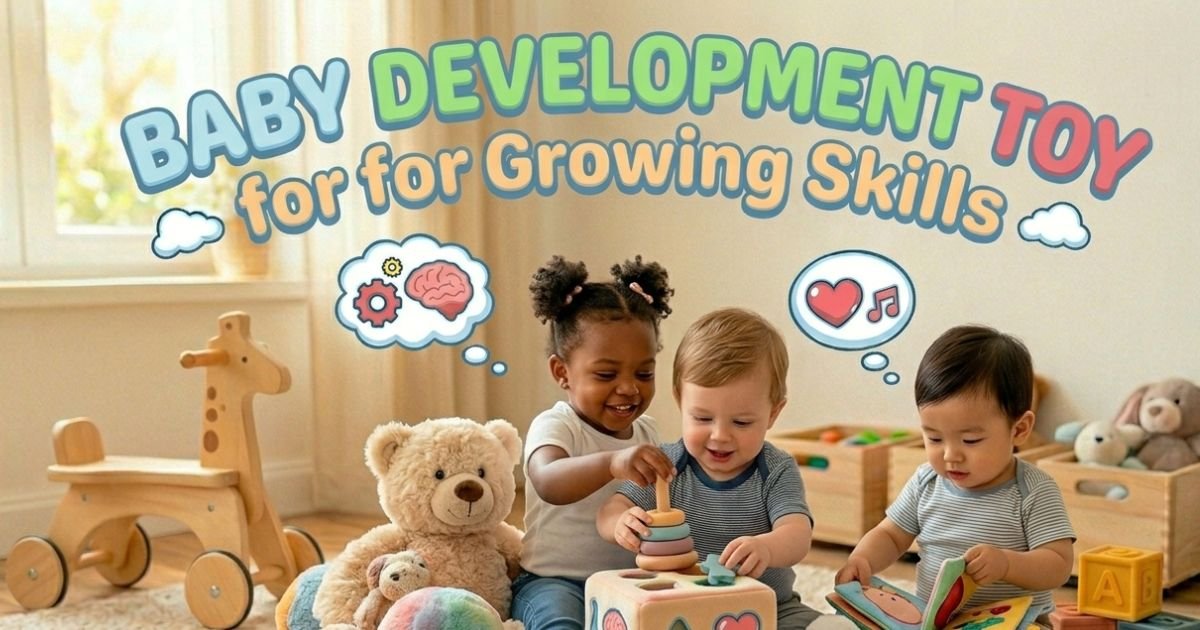

Every parent knows that babies learn by playing. With the right baby development toy, playtime becomes an educational experience. Toys are more than fun distractions they’re “essential tools that help support key growth stages”. Brightly colored rattles, soft blocks, musical mobiles, and shape sorters all serve to engage a baby’s senses and actions, helping little ones develop motor control, thinking skills, and social awareness. For example, Mayo Clinic notes that “toys with different textures or bold patterns” can captivate an infant’s attention during tummy time. In this guide, we’ll explain what makes a toy “developmental,” how to choose and use toys at each milestone, and share practical activities and tips. You’ll learn which educational baby development toys and activities best promote crawling, stacking, babbling, and more — turning play into progress.
What Are Baby Development Toys?
Soft blocks, plush animals, and colorful rattles are classic examples of baby development toys. Such toys are specially designed to match a baby’s age and learning level, encouraging exploration and skill-building. For instance, a simple rattle gives a newborn something to grasp and shake, while a high-contrast mirror helps them focus visually. According to child development experts, good toys for infants “need to match their stages of development and emerging abilities”. In practice, this means choosing toys that fit the baby’s current milestones for a 2‑month‑old, that might be bright mobiles or soft squeakers. UnityPoint Health also highlights examples by age: for example, “rattles… build grip and tactile stimulation” and colorful play mats or mobiles improve focus and head control. By selecting age-appropriate toys (and gradually introducing more complex ones), parents ensure playtime is both fun and beneficial.
Why Baby Development Toys Matter
Baby development toys actively engage multiple areas of growth. They strengthen motor skills, sharpen cognitive thinking, build social skills, and expose babies to language and sensory experiences. For example, soft stacking blocks or push toys help infants practice reaching, grasping, and balancing (key fine and gross motor milestones). Puzzles, shape sorters, and nesting cups challenge infants to problem-solve and learn cause-and-effect. Dolls and pretend-play items let babies mimic caring actions (like feeding a stuffed animal), which fosters empathy and social understanding. Music toys, talking books, and colorful sound-makers introduce babies to patterns of speech and sound, boosting early language skills. In short, playthings designed for learning provide a safe, hands-on way for babies to practice new skills. As one pediatric guide summarizes, “toys play a powerful role in helping children reach baby milestones across all areas of development”.
- Motor Skill Development: Toys like soft balls, push cars, and stacking blocks build muscle control and coordination. They encourage babies to roll, crawl, stand, and eventually walk.
- Cognitive Growth: Puzzle cubes, shape sorters, and nesting toys challenge problem-solving. Infants experiment with trial and error (for example, figuring out which shape fits which hole).
- Social-Emotional Growth: Pretend-play toys (dolls, play phones, stuffed animals) let children imitate social roles. Even very young babies learn empathy and interaction through simple role-play.
- Language & Sensory: Musical toys, rattles, and story-books introduce rhythm, rhyme, and new words. Toys with varied textures, colors or sounds stimulate the baby’s senses. For instance, Mayo Clinic advises using “toys with different textures or bold patterns” to keep infants interested and encourage sensory processing.
Each of these development areas is connected. By choosing toys that cover multiple domains (e.g. a talking shape sorter, or a soft ball that squeaks), parents can give babies rich, educational experiences through play.
Recommended Toys by Age
Children grow quickly in the first year, so the most effective developmental toys change as babies hit new milestones. Experts break the first year into stages and suggest corresponding toys:
- 0–4 months: Baby is learning to focus, hold up their head, and grasp objects. Ideal toys include bright high-contrast mobiles, soft rattles, and unbreakable mirrors. (UnityPoint Health notes “rattles… build grip and tactile stimulation” and high-contrast play mats encourage babies to lift their heads.) Soft teething rings and crinkly cloth books also entertain newborns safely.
- 4–6 months: Babies begin reaching intentionally and often put objects in their mouth. Good toys are textured teethers and squeeze toys (for teething and grasping) and peek-a-boo toys that hide under cloths. These stimulate hand-eye coordination and teach object permanence (the idea that objects still exist even when hidden).
- 6–9 months: Around this time, babies can sit up and transfer toys hand-to-hand. Recommended toys include large stacking blocks and sturdy rings to improve fine motor skills. Toys that roll or light up when pushed encourage crawling and movement. “Busy boxes” or activity cubes with buttons and sliders teach cause-and-effect relationships.
- 9–12 months: Babies start to crawl, pull to stand, and explore actively. The best toys include textured sensory balls (to promote crawling and tactile exploration), simple puzzles with pegs or sorting containers (for fine motor practice), and push-and-pull toys (to support standing and walking). Hide-and-seek or pop-up toys still reinforce object permanence. By 12 months many babies can enjoy stacking cups or shape-sorters that introduce early problem-solving.
Providing toys that match these stages from soft rattles and high-contrast books for newborns up to simple puzzles and walkers for 1-year-olds ensures playtime always challenges the baby just enough to grow new skills.
Engaging Baby Activities with Toys
Beyond choosing the right toys, how you play matters. Here are some fun, development-focused activities using baby toys:
- Tummy-Time Exploration: Lay your baby on a padded play mat with a few colorful toys within reach. Use textured or musical toys during tummy time to encourage reaching and lifting the head. This strengthens neck, shoulder, and arm muscles.
- Peek-a-Boo Games: Hide a favorite toy under a lightweight blanket or behind your back and then reveal it with a smile. Playing peek-a-boo teaches infants about object permanence – that things exist even when hidden. (Babies often giggle or babble in delight when the toy “magically” reappears!)
- Stack and Knock Down: Give baby a stack of soft cups or blocks. Show them how to stack one block and then gently knock it down. Encourage them to repeat it. Stacking and knocking help babies practice hand-eye coordination and understand cause-and-effect (towers fall when pushed). Celebrate each success to make learning fun.
- Sing and Jingle: Introduce simple musical toys like a xylophone or small drum. Play a short nursery rhyme and shake a rattle in time with the music. Music play helps babies develop auditory processing and early language patterns. They might start cooing along or dancing.
- Pretend Play: Even early on, involve a doll or stuffed animal in play. Show your baby how to hug, feed, or talk to the toy. Pretend-play with soft animals or toy phones encourages social interaction skills. According to child experts, such role-play games let children learn social cues and build empathy. (Using a toy doctor kit or kitchen set can be an adorable introduction to caring for others.)
These interactive activities turn simple toys into powerful learning tools. The key is to be engaged and responsive: talk to your baby about the toy’s colors or sounds, cheer them on, and make playtime a joyful routine.
Choosing the Best Baby Development Toys
There’s no single best baby development toy for every child, but there are clear guidelines for choosing high-quality, effective toys. When shopping or receiving gifts, keep these tips in mind:
- Age-Appropriate: Always check the recommended age range on toy labels. Safety and interest go hand-in-hand with developmental stage. As NAEYC advises, toys should “match their stages of development”. For example, toys with small parts or bright flashing lights may be exciting but can be unsafe or overwhelming for very young babies.
- Open-Ended Play: Look for toys that invite creativity. Blocks, soft dolls, nesting cups, and fabric scarves are examples of open-ended toys that babies can use in many ways. A simple set of stacking cups can become a tower, a hat, or a pretend drum. Open-ended toys grow with your child and encourage imagination.
- Safety First: Ensure toys are well-made and non-toxic. For infants, avoid any toy with small detachable pieces. Check that paint is lead-free and materials are safe to chew. Toys should be sturdy, easy to clean, and certified by safety standards. (As Kids2 reminds us, choose “non-toxic, durable toys with no small parts for younger kids”.)
- Educational Value: The best developmental toys teach something while they entertain. Choose toys with learning features—like shape sorters (shapes and sizes), alphabet blocks (letters), or cause-and-effect toys (buttons that trigger sounds). Manufacturers often label these “educational” or “STEM” toys. Even a cloth book with animals can be educational by introducing words and images.
- Engaging Design: Bright colors, interesting textures, and gentle sounds help hold a baby’s attention. Mayo Clinic suggests using toys with varied “textures or bold patterns” to keep infants interested. However, avoid overloading the baby’s senses: babies can get overstimulated by toys that are too flashy or noisy. A good rule is to have a mix: a couple of stimulating toys along with simpler items for calm exploration.
- Versatility of a Toy Set: Consider multi-piece baby development toy sets. For instance, a set might include soft stacking rings, a small activity cube, and a rubber ball. These bundles offer a variety of textures and challenges at one price. Sets provide built-in variety so your baby can rotate through different games (stacking, sorting, tossing, etc.) without needing many separate purchases.
- Pediatrician or Expert Picks: You can also look for toys recommended by child development experts. Trusted brands often have pediatrician-reviewed lines. Parenting award lists (like “Best Baby Toys of the Year”) can highlight standout development toys.
In summary, the best baby development toys are those that combine safety, quality, and interest. They should be fun and engaging, but also encourage a learning moment – whether it’s practicing a new hand movement or learning a new word. Always observe your baby’s cues: if a toy frustrates or upsets them, try something simpler and reintroduce challenges gradually.
Pros and Considerations of Developmental Toys
Pros: Baby development toys offer hands-on learning and bonding. They let babies practice new skills in a playful way. Through toys, babies build confidence (when they stack blocks by themselves, for example) and stay curious. Interactive toys can turn solo play into moments of parent-child interaction when you play together. Overall, these toys empower babies to explore safely.
Considerations: It’s possible to have too much of a good thing. A clutter of toys can overwhelm a baby’s attention. The Mayo Clinic cautions that too much novelty can “overload a baby’s senses”. Flashy lights or loud gadgets might startle a very young infant. Also, any toy must be kept clean babies mouth everything. And remember, every baby is unique: a toy one child loves might not appeal to another, so don’t worry if your baby ignores a fancy gadget.
Safety note: Always supervise your baby with new toys. Check regularly for wear (loose ribbons, broken parts) and keep play areas free of choking hazards (like unattached small pieces). Rotate toys rather than giving all at once; this keeps interest and avoids overstimulation.
Supporting Growth Through Play
Ultimately, baby development toys are tools to encourage exploration and learning but your participation is what makes play truly powerful. Talk to your baby about colors and sounds as they play. Imitate their squeals of joy. By being engaged, you double the developmental benefit of any toy.
In summary, educational baby development toys can dramatically enhance your infant’s growth when chosen wisely. Focus on age-appropriate, engaging toys that align with your baby’s milestones. Combine them with simple activities (peek-a-boo, stacking, singing) to reinforce learning. Keep playtime fun and interactive, and let your baby lead. With each game or song, you’re helping build a foundation of skills and confidence that lasts a lifetime.
Feel empowered to explore a variety of baby development toys and activities. Watch how your little one learns to grasp, to giggle, to say first words through these playful moments. The right toy at the right time can make all the difference in growing your baby’s skills and joy in learning.
Conclusion: Baby development toys are more than just entertainment they’re a bridge between play and learning. By choosing safe, educational, and stimulating toys (and pairing them with loving interaction), parents can nurture a child’s growth in every aspect. No toy can replace your attention, but in good hands they can significantly enrich your baby’s first years. So grab that rattle or stack those blocks playtime is your baby’s classroom.
