
Baby plush toys are more than just cuddly companions they provide comfort, familiarity, and developmental benefits for infants. A baby plush toy is a soft, stuffed toy designed especially for babies, often made of gentle fabrics and filled with hypoallergenic materials. For newborns and young babies, a soft baby plush toy can serve as a “first friend,” helping them feel secure during naps and quiet moments. In this article, you’ll learn what to look for in a high-quality infant plushie, safety standards, care instructions, and top gift ideas.
Benefits of Baby Plush Toys
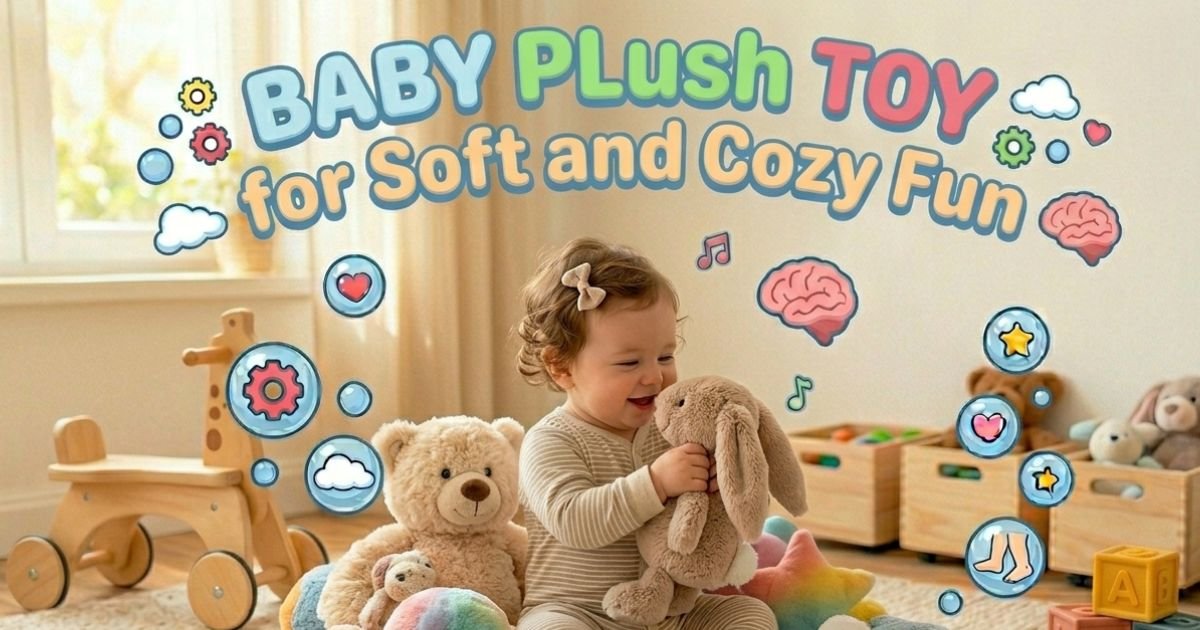
A smiling baby plays with colorful plush toys in a cozy nursery, illustrating how soft stuffed animals can engage and comfort infants.
Baby plush toys offer more than cuteness they support early development in several ways. Cuddling a plush toy provides soothing comfort; many newborns relax and even fall asleep more easily when hugging a familiar stuffed animal. Soft animals also encourage sensory exploration. An infant can feel different textures (like velvety fur or soft fleece) and gentle crinkle sounds, which helps build sensory awareness. Grasping, squeezing, and holding a stuffed animal strengthens tiny hand muscles and hand-eye coordination, promoting early fine motor skills.
Moreover, plush toys help babies form emotional bonds. Having a special toy to carry around can make a child feel safe and secure, particularly during times of change (like a first night at home or traveling). Experts note that soft toys serve as developmental tools: they help children “self-soothe, play creatively, and feel secure during daily transitions”. In short, a cuddly baby plush toy can be comforting and educational – a perfect blend of play and nurturing.
Key benefits at a glance:
- Comfort & Security: Provides familiarity and a sense of safety during naps, bedtime, or stressful moments.
- Sensory Stimulation: Different fabrics, colors, and soft sounds stimulate baby’s senses and encourage curiosity.
- Motor Skill Practice: Gripping and cuddling helps strengthen hand and arm muscles, aiding fine motor development.
- Emotional Growth: Pretend-play with plush toys can foster nurturing behavior, empathy, and emotional bonding.
Safety Standards for Baby Plush Toys
Safety is the top priority when choosing an infant’s toy. Baby plush toys must meet strict safety regulations to prevent hazards. For example, US regulations (ASTM F963) require that stuffed toys have durable seams that “must not rip during testing”. This ensures that stuffing won’t leak out if the toy is chewed or tugged. Global safety guides agree: any eyes, noses, or small decorations on a plush must be firmly attached. In Canada’s toy regulations, for instance, any plastic eye or nose 32 mm or smaller must withstand a 9 kg weight for 5 minutes to prove it’s secure. In practice, this means the safest plush toys have embroidered or stitched-on features instead of small plastic parts.
Other important safety points include:
- No sharp or hard bits: The stuffing must be soft and free of hard particles.
- Non-toxic materials: Look for fabrics and dyes that are hypoallergenic and free from harmful chemicals like lead or phthalates. Many premium plush toys use organic cotton or other child-safe materials.
- Flame resistance: Soft toys must meet flammability standards to reduce fire risk. Avoid any plush product lacking a safety certification (for example CPSIA in the US or OEKO-TEX labeling).
- Age guidelines: Check the manufacturer’s age rating. Most baby plush toys are marked “0+ months” or similar if they’re tested safe for newborns. Never leave any plush toy in an infant’s crib unsupervised; safe sleep guidelines advise keeping cribs free of all toys until at least 12 months old.
In summary, ensure any baby plush toy for infants has soft, well-stitched construction and no loose pieces. Always buy from reputable brands that comply with safety standards (CPSIA, ASTM, CE, etc.). For example, experts recommend “plush friends labeled for newborns or toddlers, meet safety standards like CPSIA and ASTM, and ideally, are machine washable“. By adhering to these standards, parents can be confident the toy will be safe during chewing, tugging, and everyday play.
Key Features to Look For
When shopping for a soft baby plush toy, focus on features that make it both snuggly and safe. Here’s what to check:
- Gentle, Hypoallergenic Material: The fabric should feel soft and smooth on delicate skin. Options like organic cotton, bamboo, or premium polyester fleece are common. These materials are usually labeled hypoallergenic and free from irritating chemicals. Avoid coarse fabrics or materials that could shed fibers.
- No Small Parts: Opt for toys with embroidered eyes, noses, and decorations rather than plastic pieces. Embroidery eliminates choking hazards. As one guide puts it, “Embroidered features instead of plastic parts” is a non-negotiable for baby toys.
- Secure Construction: Check the stitching and seams. Seams should be reinforced so the toy won’t tear easily under chewing or pulling. High-quality plushies often have double stitching or even double-layered fabric at stress points.
- Soft, Rounded Shape: Avoid any toy with wires, hard appendages, or decorations that could poke. Simple, rounded shapes (like teddy bears, rabbits, or elephants) are ideal and safer for snuggling.
- Appropriate Size and Weight: The toy should be light enough for a baby to hold but large enough not to be a swallowing hazard. A general guideline is that any detachable part should not fit entirely into a choking test cylinder. For infants, smaller lovey-style plushes or mini-toys (with an attached blanket or soft taggies) are popular because they’re easy to grasp. Very large stuffed animals are best saved for when the baby is older.
- Machine-Washable Design: Baby toys get dirty quickly, so a washable baby plush toy is a big advantage. Look for care labels like “machine washable”. If the manufacturer only recommends surface cleaning, frequent spot cleaning will be needed. Many modern plushies are made to withstand gentle machine washing.
- Sensory Features (Optional): Some plush toys include gentle rattle noise or crinkly fabric for added stimulation. If you choose these, ensure the noisemakers are securely enclosed and the sounds are not too loud for baby’s ears.
By keeping these factors in mind – soft fabric, safety certifications, washability, and appropriate size – you’ll find a cuddly baby plush toy that’s both adorable and parent-approved.
Caring for Your Baby Plush Toy
Keeping a baby plush toy clean is crucial for hygiene and longevity. These toys absorb drool, food, and germs, so plan to wash them regularly. As the experts say, “Plush toys collect dirt, allergens, and bacteria over time. Washing them helps keep kids safe and toys looking their best”.
Step-by-step cleaning guide:
-
Check the Care Label: Always start by reading the tag. It may say “Machine washable,” “Hand wash only,” or “Surface clean only.” This determines your approach. Never guess – improper washing can ruin a toy.
-
Prep the Toy: Inspect for any loose seams, ripped threads, or detachable parts (like bows or buttons). Repair or remove these before washing. Fasten any velcro or snaps to prevent snags. If there are stains, pre-treat them with a bit of baby-safe detergent and let it sit 10–15 minutes.
-
Machine Washing: If the toy is machine-washable, use a gentle cycle with cold water and a mild, fragrance-free detergent. Place the plush inside a mesh laundry bag or pillowcase to protect it. This prevents delicate parts from catching on other items. Expert tip: Skip fabric softeners or bleach—they can irritate baby’s skin and degrade the fabric. A short, gentle spin cycle is best.
-
Hand Washing: For delicate or older toys, a hand wash is safer. Fill a basin with lukewarm water and a teaspoon of mild detergent. Submerge the toy, gently kneading and swishing it around. Focus on any soiled areas like hands or face. Rinse thoroughly under cool running water until no soap remains. Gently press (do not wring) the toy to remove excess water.
-
Drying: The safest method is air drying. Lay the plush flat on a clean towel and reshape it as it dries. Keep it in a well-ventilated area away from direct heat or sun. A dryer is only recommended if the care tag explicitly allows it. Even then, use a low-heat or air-only setting to avoid melting any plastic parts. Final fluff: Once dry, give the toy a gentle shake or brush to restore its fluffiness.
-
Spot Cleaning Between Washes: For small spills or spots, use a damp cloth with a bit of gentle soap. Gently blot the area and then wipe again with clean water. Avoid saturating the toy. This can extend the time between full washes.
-
Frequency: Toys that baby uses daily should be washed about every 2–4 weeks, or sooner if visibly dirty or after illnesses. Decorative or seldom-used plushies can be cleaned less often. Always wash any toy that falls on the ground or looks stained.
By following these steps, you’ll keep your baby’s plush toys hygienic and soft. As one child-safety guide reminds us, “Having clean plush toys is vital for your child’s health and well-being”.
Popular Baby Plush Toys and Gift Ideas
When choosing a baby plush toy gift, consider timeless favorites and quality brands. Classic designs like teddy bears, rabbits, or gentle animals are always well-received. For example, parents rave about Jellycat’s Bashful Bunny, a super-soft stuffed rabbit. Reviews note its “super soft fur, long floppy ears” and ideal small size for infants. Jellycat plushies come in many colors and sizes, and their high-pile faux fur retains softness wash after wash.
Another top pick is Steiff’s Soft Cuddly Friends collection, such as the Steiff Jimmy Teddy Bear. Steiff is famous for premium craftsmanship: their bears have ultra-soft tousled fur and a distinctive ear tag. Though a bit pricier, they’re built to last for years (and often become keepsakes). A Mumsnet reviewer praises the Steiff teddy: “With over 120 years experience, Steiff know how to make a high-quality teddy bear… children will love Jimmy’s super soft fur and friendly smile”.
Besides brand names, consider:
- Loveys and Security Blankets: These combine a small plush (like a bunny) with a soft blanket. Babies love the dual texture. Many loveys have tags and ends for tucking fingers, and are sized perfectly for tiny hands.
- Musical Plush: Some plush toys play lullabies or nature sounds when squeezed. Ensure any electronics are well protected inside and that batteries are secured. (If a plush has a sound box, it usually must be spot-cleaned rather than machine-washed.)
- Themed Sets: Gift sets that pair a plush with a baby board book or other accessory are popular for showers. They’re an easy way to give a complete package.
- Personalized Plush Toys: Embroidered names or monograms make the toy extra special (just remove any extra ribbons or tags that could pose hazards).
When in doubt, soft pastel colors or gentle contrasts are best for infants, as bright/neon dyes can be overstimulating. Ultimately, the best baby plush toy is one that meets safety needs and matches the baby’s personality (e.g., a plush elephant for an animal-themed nursery). All the above options fit the criteria of being huggably soft, safe, and washable, making them excellent baby plush toy gifts.
Tips for Safe Plush Toy Use
Even with the right toy, supervision and care are essential. Remember:
- Follow age labels: Do not give plush toys to very young infants for unsupervised sleep. Plush toys (and pillows or blankets) should stay out of cribs for at least the first year. You can introduce them during supervised play or tummy time at any age.
- Check regularly: Inspect all plush toys from time to time. Look for loose threads, ripped seams, or damaged parts. Repair or retire any toy that shows wear to prevent potential hazards.
- Rotate toys: Keep only a few plush toys out at once, and store extras. This reduces clutter and makes it easier to clean and monitor the ones in use.
- Remove tags/hangers: Always remove cardboard tags and hanging loops before giving the toy to the baby. These can be choking or strangulation hazards.
- Mind batteries and electronics: If a plush toy has lights or sound, ensure the battery compartment is secure. Never let a baby chew on a toy with exposed electronics. If in doubt, choose a toy without any electronic parts for infants.
By applying these tips along with the earlier guidance, you can let your baby enjoy plush toys safely. Soft toys generally pose fewer injury risks than hard toys – as one parent-guide notes, “stuffed animals are cuddly, safe, and soft. They won’t hurt a child if they are thrown or hugged too hard” – but care still matters.
Conclusion
Baby plush toys are more than toys; they are comforting companions for infants. Selecting a safe, washable baby plush toy means choosing one with gentle materials, no small parts, and robust construction. Look for options that grow with your child easy to grasp and machine washable so the toy stays snuggly through all the cuddles and adventures. Remember that cleanliness and supervision are as important as the toy itself: regularly washing plush companions keeps them fresh, and following safety guidelines (like removing toys from the crib) keeps babies out of harm’s way.
By following the advice above, you’ll be able to pick the perfect soft, cuddly baby plush toy that delights both parent and child. These plush friends nurture sensory development and emotional security from day one. As one expert guide puts it, clean, well-made plush toys help children “feel secure during daily transitions”. Whether as a gift for a baby shower or a first plush for your own child, a carefully chosen baby plush toy will provide cozy comfort and joy for years to come.
