
It is never too early to share a book with your baby, and the best cloth books for babies are built for exactly how babies read: with their hands, their ears and, quite often, their mouths. Soft pages cannot tear, crinkle sounds reward every grab, and bold pictures give newborn eyes something real to study. A cloth book is often the very first book a baby owns, and the right one earns that place.
This guide gathers ten lovely options, from tail books and tummy time books to high contrast first books for the newborn weeks. Each pick is described honestly, with what makes it special, where it falls short and which babies will love it most. You will also find simple advice on choosing, washing and enjoying fabric books together.
Quick Picks: The Best Cloth Books for Babies by Stage
If you want one safe bet, the Jellycat Jungly Tails book is the classic gift choice, with soft animal tails on every page and pictures babies track early. For the very first weeks, the Wee Gallery Friendly Faces cloth book offers gentle high contrast faces made for newborn vision. Tummy time fans should look at the Taf Toys Savannah Tummy Time Book, which stands up by itself and turns floor time into story time.
Parents who love a story with words will enjoy the Kids Preferred Very Hungry Caterpillar soft book, while the Priddy Fuzzy Bee and Friends book is a bright, cheerful choice that survives years of enthusiastic reading.
- Best overall: Jellycat Jungly Tails Soft Book
- Best for newborns: Wee Gallery Friendly Faces Cloth Book
- Best for tummy time: Taf Toys Savannah Tummy Time Book
- Best story book: Kids Preferred The Very Hungry Caterpillar Soft Book
- Best for tags and textures: Taggies Peek A Boo Soft Book
How to Choose the Best Cloth Books for Babies
Start with your baby’s stage. Soft books 0 to 6 months should use simple, bold images, because young babies see high contrast far better than soft colours. Faces, simple animals and black and white patterns hold attention in the first weeks. From about four months, babies want to grab, squeeze and turn pages, so crinkle baby books with easy to hold shapes come into their own.
Texture is the second thing to check. Fabric books for newborns often add tails, tags, ribbons or different fabrics on each page, and every small detail invites touch and builds early fine motor skills. Sensory cloth books may add a squeaker, a rattle or a small mirror. Choose books where every add on is stitched firmly, with no glued pieces that could loosen.
Practical points matter just as much. Washable baby books are close to essential, because these books will be chewed, dribbled on and dropped on every floor you visit. Look for machine washable labels where you can. A loop or strap for the stroller is a bonus, since a lost favourite book can ruin an outing for everyone.
Finally, think about how you will use the book. Standing books suit tummy time, flat books suit laps and cots, and small books suit changing bags. Most families end up with two or three favourites in different spots around the home. For more ways to build early skills through play, see our guide to baby learning toys and the newborn and infant toys collection.
The Best Cloth Books for Babies: 10 Picks to Read and Chew
1. Jellycat Jungly Tails Soft Book
This joyful jungle book is famous for one simple idea: every animal page ends in a soft fabric tail that sticks out for babies to grab. The pictures are bright and friendly, the pages crinkle softly, and the whole book feels like a toy and a story at once. It is a lovely first books for babies choice and a very popular new baby gift.
- Soft tails on every page invite grabbing
- Gentle crinkle sounds reward page turns
- Bright jungle animals with simple shapes
- Tie closure keeps the book neat in a bag
Pros: Babies engage with the tails months before they follow a story, and the quality is excellent. Cons: It sits at a premium price, and the text is minimal. Best for: babies from birth to twelve months and gift buyers who want a sure hit.
2. Wee Gallery Friendly Faces Cloth Book
Wee Gallery designs for newborn eyes first, and this gentle book shows it. Each page presents a simple, friendly animal face in strong black and white, printed on soft organic feeling cotton. The book is light enough for tummy time propping and small hands, and the calm artwork suits parents who prefer a quiet, modern style.
- High contrast faces made for newborn vision
- Soft, light pages easy to prop for tummy time
- Simple artwork with no visual clutter
- Crinkle layer adds gentle sound
Pros: Perfect focus practice for the first three months, and it photographs beautifully for keepsakes. Cons: Older babies may want more colour and action. Best for: newborns from birth and parents who love simple design.
3. Taf Toys Savannah Tummy Time Book
This clever book stands up on its own, which changes everything about floor time. One side offers black and white images for young babies, while the other side blooms into colour with a mirror and crinkle pages for older ones. Babies lift their heads to look, reach for the pages and stay happy on their tummies for longer stretches.
- Free standing design made for tummy time
- Two sided: contrast first, colour later
- Mirror and crinkle pages reward effort
- Folds flat for travel and storage
Pros: It genuinely helps babies enjoy tummy time, a daily job every parent knows well. Cons: It is more of a floor book than a lap book. Best for: babies from birth to six months who are building neck strength.
4. Kids Preferred The Very Hungry Caterpillar Soft Book
Eric Carle’s famous caterpillar shrinks into a soft, squashable first story book. Babies chew the crinkle cover, explore bright fruit pages and meet the butterfly at the end, all in fabric that survives the treatment. The simple counting theme gives parents real words to read aloud, which many cloth books lack.
- Beloved story in a baby safe soft format
- Crinkle cover and soft plush caterpillar details
- Simple words support early reading aloud
- Familiar pictures grow with your child
Pros: A real story to share, and toddlers still enjoy it later. Cons: The soft version shortens the story, which purists may notice. Best for: families who love classic picture books from day one.
5. Lamaze Soft Discovery Book
Lamaze brings its trademark mix of colour and contrast to this friendly soft book. Pages combine bright scenes with black and white patterns, crinkle textures and a soft squeak, and the chunky shape is easy for small hands to hold open. It clips neatly to a stroller or play gym, so it earns its keep on outings as well as at home.
- Colour on one spread, contrast on the next
- Crinkle and squeak sounds built in
- Clip loop for stroller and car seat
- Chunky pages suit early page turning
Pros: Lots of play value in a small book, and very washable. Cons: The squeaker may startle very young newborns at first. Best for: babies from three months who grab and explore.
6. Melissa and Doug Soft Activity Book
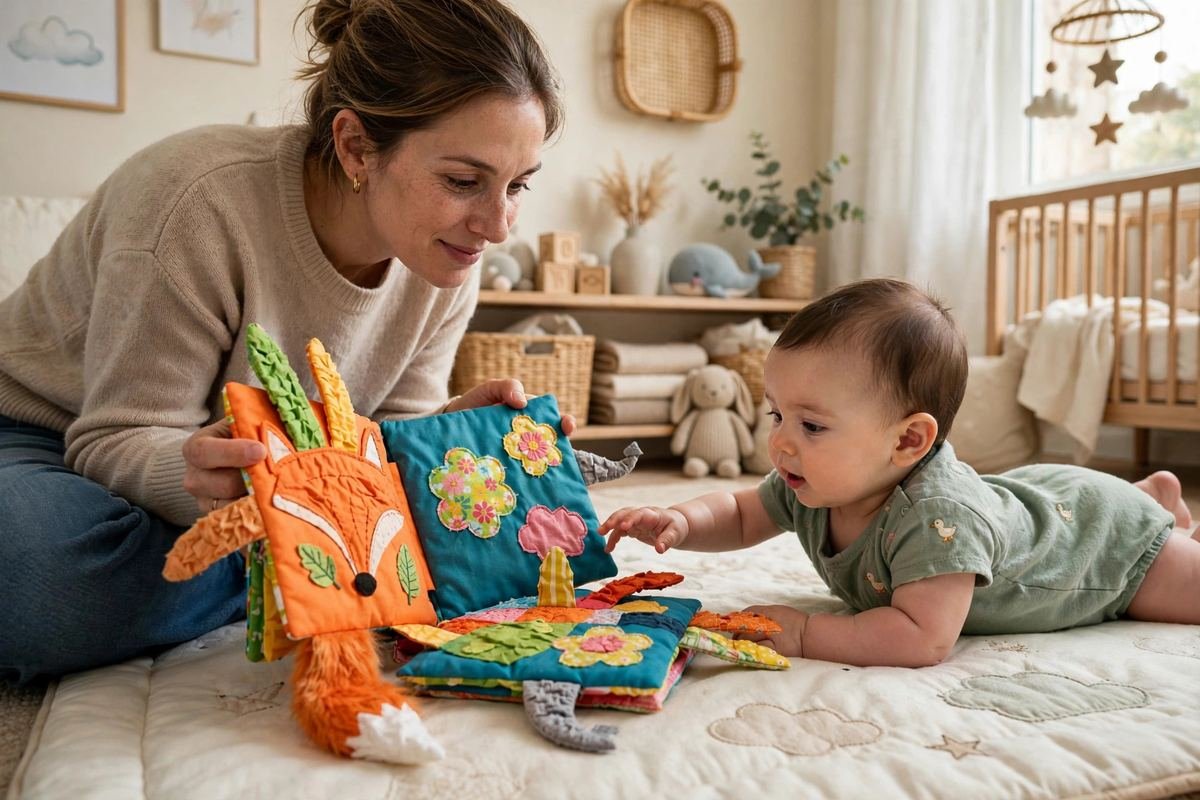
Melissa and Doug make soft books that feel like tiny activity centres. Depending on the title, pages add flaps to lift, tabs to pull and textures to stroke, all wrapped in a gentle story about animals or the world outside. The build quality is strong, with stitching that stands up to daily use and regular washing.
- Flaps and tabs invite early problem solving
- Strong stitching for daily play
- Gentle stories with friendly artwork
- Machine washable in most editions
Pros: Keeps babies busy longer than picture only books. Cons: Busy pages can overwhelm the youngest babies. Best for: babies from six months who love lifting flaps.
7. Priddy Books Fuzzy Bee and Friends Cloth Book
Roger Priddy’s bright baby books are nursery classics, and this cloth edition brings the same bold style to fabric. Big friendly insects, simple words and crinkle pages fill a book that babies can hug, chew and shake. The pictures are clear and uncluttered, which helps young babies focus and gives parents easy words to point to and name.
- Bold, simple pictures with first words
- Crinkle pages and a soft plush feel
- Light and easy to pack for outings
- Part of a much loved first book range
Pros: Cheerful, clear and very baby friendly at a fair price. Cons: The story is simple, so parents read it on a loop. Best for: babies from three months building first words.
8. Infantino Peek and Play Soft Book
Infantino packs a lot of play into this small book. Flaps hide friendly animals, pages crinkle and squeak, and a soft mirror waits near the end for the favourite game of all. The book includes a link for hanging on the stroller or car seat, and the fabrics wipe clean or wash gently when the day gets messy.
- Peekaboo flaps with hidden animals
- Mirror page for face play
- Hanging link for travel
- Crinkle and squeak sounds throughout
Pros: Peekaboo play holds attention well from about four months. Cons: Flaps need gentle handling to last. Best for: babies who love surprise games and mirrors.
9. Baby GUND My First Soft Book
GUND is known for plush, and that softness runs through this gentle first book. Padded pages carry simple animal pictures with sweet, simple labels, and the whole book feels like a small pillow with pictures. It suits quiet times, cuddles before naps and babies who prefer calm play over noise and lights.
- Extra soft, padded pages
- Simple animal pictures with labels
- Gentle colours for calm play
- Compact size for the changing bag
Pros: A soothing choice for bedtime routines and sensitive babies. Cons: No crinkle or squeak, so action lovers may drift. Best for: newborns and calm, cuddly reading times.
10. Taggies Peek A Boo Soft Book
Taggies built a whole idea around the ribbons babies love to rub, and this book covers its edges with them. Each page pairs a simple picture with silky tags that little fingers find irresistible, plus soft flaps for peekaboo play. Rubbing tags is a well known self soothing habit, which makes this book a smart pick for pram and car journeys.
- Silky tags along the page edges
- Peekaboo flaps and soft pictures
- Soothing texture play for restless moments
- Light, flexible and easy to pack
Pros: Tags calm many babies in a way plain books cannot. Cons: Pictures are simple, so story value is light. Best for: babies from three months who love rubbing fabrics.
Safety and Care Tips for Cloth Books
Cloth books are among the safest first books, but a quick check still matters. The United States Consumer Product Safety Commission offers toy safety guidance at cpsc.gov, and the same habits apply here: inspect seams, tags and ribbons weekly, and retire any book with loose threads or torn fabric, because babies pull hard at weak points.
Washing keeps these books hygienic. Most washable baby books handle a gentle machine cycle in a laundry bag, followed by full air drying so no dampness hides in the padding. Books marked surface wash only can be cleaned with a cloth and mild soap. Wash new books before first use, and wash again after illness or heavy teething days.
Reading together is where the real value sits. The American Academy of Pediatrics encourages reading aloud from birth, and cloth books make it easy: name the pictures, copy the animal sounds, and let your baby turn, chew and shake the pages freely. Ten relaxed minutes a day builds language, bonding and a love of books that lasts. Store favourites within reach using the simple systems in our baby toy storage guide, and keep one in the pram using ideas from our baby plush toy roundup of soft companions.
Frequently Asked Questions
When should I start reading cloth books to my baby?
From birth. Newborns will not follow a story, but they love the sound of your voice, the rhythm of reading and bold pictures held at the right distance. Short, relaxed sessions during feeds or tummy time build the habit for both of you.
Are cloth books safe for babies to chew?
Yes, that is part of their job. Choose books from trusted makers, wash them before first use and check seams often. Remove any book with loose threads, and let books dry fully after washing so the padding stays fresh.
How do cloth books help development?
They support vision with contrast, hearing with crinkle and squeak, touch with varied fabrics and language through your voice naming each picture. Grabbing and turning soft pages also builds hand strength and coordination in a gentle, natural way.
How many cloth books does a baby need?
Two or three good ones cover most families: one high contrast book for the early weeks, one interactive book for play and one for the bag or pram. Rotating them keeps interest high, and favourites often stay loved well into toddlerhood.
Can cloth books go in the washing machine?
Most can, on a gentle cycle inside a laundry bag, but always check the label first. Books with mirrors or squeakers sometimes need surface washing instead. Air dry fully, and never hand a damp book back to your baby.
Building a First Library with the Best Cloth Books for Babies
A tiny first library grows best one book at a time. Start with the best cloth books for babies that match your baby’s stage today, then add a new style every month or two as hands and eyes grow stronger. Keep the best cloth books for babies where life happens: one beside the play mat, one in the pram and one near the chair where you feed, so a story is always within reach.
Grandparents and friends often ask what to buy, and the best cloth books for babies make an easy answer, since they suit every budget and never duplicate as badly as clothing in the wrong size. Rotating the best cloth books for babies between rooms keeps each one feeling new, and babies light up when a forgotten favourite returns. A shelf can wait; a small basket of the best cloth books for babies is all a young reader needs.
Reading at the same times each day helps the habit stick. A book after the morning feed, another during afternoon floor play and a calm one before bed gives babies three small anchors of closeness in a busy day. Your baby will soon reach for a favourite cover, chew a familiar corner and settle at the sound of a much loved first page, and those tiny rituals are the true reward of starting early.
Final Thoughts
The best cloth books for babies invite touch, sound and cuddles on every page, and they forgive the chewing that comes with the territory. Pick one contrast book for the newborn weeks, add a tails or tags book for play, and read a little every day. Those small shared moments are where language begins. Explore more gentle first toys at All Baby Toys and read the newest guides on our blog.
