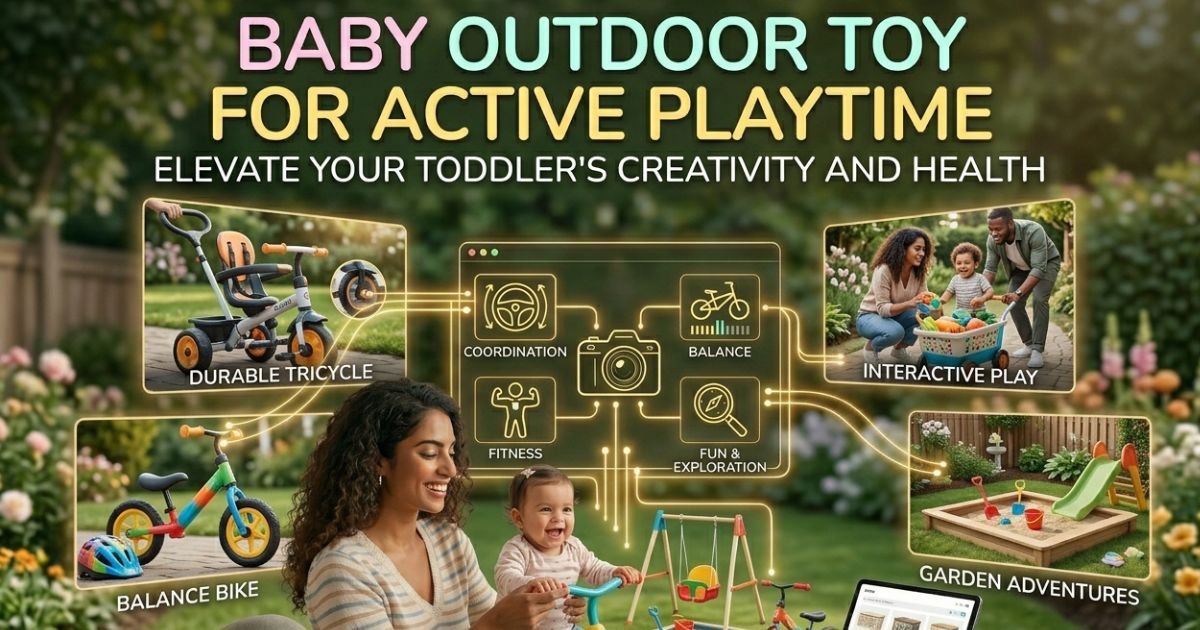

A toddler enjoys a ride-on motorcycle toy outdoors, combining fun and movement. Finding the right baby outdoor toy means balancing safety, learning, and fun. As experts note, “playing outdoors is one of the best gifts you can offer a baby” because fresh air and active play support healthy development. In this guide, you’ll learn why outdoor play matters for infants, what to look for in toddler-safe playthings, and examples of the best baby outdoor toy sets for active playtime. We’ll cover key benefits of outdoor play, safety tips, and top toy ideas so parents can feel confident choosing playtime gear.
Benefits of Outdoor Play for Babies
- Motor Skills & Health: Crawling, walking, throwing, and other outdoor activities help babies develop strong muscles and coordination. For example, safe outdoor tools invite babies to crawl, stand, and push, which “strengthen their core, legs, and coordination”. Research shows kids who play outside gain “advanced motor skills” and improved muscle strength, immunity, and overall health. Outdoor exercise also helps manage weight – active toddlers are less likely to become obese – and pediatrics experts even recommend a “prescription for play” to ensure daily outdoor activity.
- Cognitive & Sensory Development: The outdoors is a rich learning environment. Natural textures (grass, sand, water) and movements stimulate babies’ senses and curiosity. Caregivers can turn simple outdoor play into science lessons: for example, letting a child splash water in a table introduces basic cause and effect. Indeed, classic water tables have “countless educational and developmental benefits” and can “introduce your little one to early science principles…as they splash, pour and sprinkle water”. Even free play with toy cars or shovels teaches cause/effect and problem-solving.
- Social & Emotional Growth: Playing outside often involves family, siblings, or other children. This builds social skills, turn-taking, and confidence. According to child experts, outdoor play “provides a chance to practice social and emotional skills” such as cooperation and self-control, and it helps a child feel important and heard. In short, outdoor play can boost communication skills, empathy, and a sense of independence.
Key Safety Guidelines for Baby Outdoor Toys
- Sturdy, Age-Appropriate Design: Choose toys built for little ones. They should have rounded edges and a wide, stable base to prevent tipping. Avoid toys with small, detachable parts (nothing small enough to fit in a baby’s mouth). Check the age rating on the package: a toy for toddlers should not be too advanced or dangerous for a crawling baby.
- Non-Toxic, Durable Materials: Look for BPA-free plastic or treated wood, and ensure paints/coatings are lead-free and phthalate-free. (In the U.S., certified toys meet ASTM F963 safety standards.) Outdoor toys should be weather-resistant made of UV-resistant, water-resistant materials so they won’t warp or rot. For example, experts advise picking durable plastics that can withstand sun and rain.
- Easy to Clean and Maintain: Dirt and water accumulate fast outside. Choose toys with smooth surfaces that wipe clean, and consider how they’ll be stored. (Tip: Remove batteries before cleaning and store toys indoors or under cover when not in use to prevent mold or rust.) Regularly inspect outdoor toys for wear – make sure wheels and hinges (if any) still work and check that there is no rust or splintering.
- Proper Sizing & Labeling: Ensure the toy’s size matches your child. For infants, nothing should be so large it causes tripping or so small it risks choking. Trusted labels (ASTM, CPSC seals) indicate compliance with safety standards. If a toy is battery-powered, batteries should lock in place with screws (so a baby can’t open them). Finally, supervise play: even the safest toy needs an attentive adult nearby.
Top Baby Outdoor Toys and Sets
When selecting toys, consider categories of play. Below are popular outdoor toys for active babies and toddlers, with examples and developmental benefits:
- Push Walkers & Ride-On Vehicles: Great for older babies (9–18 months) who are starting to walk. These sturdy toys (push wagons, ride-on cars, toy motorcycles) encourage standing, balance and leg strength. For example, a small plastic ride-on or push car lets a child “move easily on grass or pavement” and “improves balance”. Be sure to choose one with a wide base to avoid tipping.
- Soft Balls & Bubble Toys: Simple balls (inflatable or foam) are ideal for infants from 6 months up. They’re easy to grasp, roll, and toss. Chasing a ball or popping bubbles outdoors builds hand-eye coordination and motor skills. Outdoor play with colorful balls is “safe, fun, and endlessly versatile” and helps develop crawling and movement skills. (Bubbles add extra magic watching bubbles float and burst delights babies and can teach tracking and cause/effect.)
- Baby Swings & Slides: An infant-safe outdoor swing (with a harness and high back) can soothe and entertain. Swings teach balance and provide gentle vestibular stimulation (helping body awareness). Likewise, a low toddler slide (12–36 months) with smooth, wide steps lets small children practice climbing. Soft little slides “build confidence” and strengthen legs and core. Always supervise near slides and use on a soft surface.
- Water & Sand Tables (Play Sets): Water play tables are hugely popular for good reason. The Step2 Rain Showers Splash Pond Water Table, for example, is a top-rated toddler water table featuring a rain-shower effect and spinning water ramps. These tables let kids scoop, pour, and watch water flow great for sensory play and basic science. (One reviewer notes even a simple splash table kept her child occupied the longest!). For a toy set combo, consider sand-and-water table sets. A dual basin (like the Step2 Fiesta Cruise Sand & Water Table) lets toddlers dig in sand and pour water separately. As one expert observes, “sensory play with sand is a wonderful way for children to explore new textures” – an educational bonus for tactile learning. Sand-and-water tables often come with scoops, buckets, and shovels, making them an all-in-one outdoor play set.
- Sensory Tunnels & Pop-Up Tents: Lightweight pop-up tunnels or beach tents provide shade and adventure. Crawling through a tunnel or hiding in a small tent encourages gross motor skills and imagination. These are especially handy on sunny days, giving your baby a safe shaded spot to explore with their favorite toys. (Tip: Pack some small cars or stuffed animals inside for pretend “camping” or “garage” play.)
- Imaginative Play Toys: Some outdoor toys turn exercise into pretend play. For example, a child-sized picnic table or sandbox can become a “kitchen” for pouring sand soup. Water tables shaped like pirate ships or trucks engage toddlers in creative games. One popular pirate-ship water table lets little sailors fire a water cannon and crank an anchor, encouraging imaginative fun.
Educational Value of Baby Outdoor Play
Many outdoor toys double as learning tools. Physical play stimulates brain development just as much as muscles. Experts emphasize that free outdoor play “invites children to learn” by exploring real-world science and nature. Classic outdoor toys can teach math, science, and more:
- Early STEM Concepts: Water tables and sandboxes naturally teach cause/effect, measuring, and buoyancy. For instance, the Little Tikes Spiralin’ Seas Waterpark Play Table is designed to “illustrate basic science principles” (kids drop balls and watch them spiral) while refining fine motor skills. Even rolling a ball teaches spatial awareness.
- Creativity & Problem Solving: Being outside often prompts big building projects: stacking rocks, digging trenches in the sandbox, or sorting leaves by color. These open-ended activities build creativity and planning skills. Since outdoor play “anchors children to the real world,” they get hands-on experience (e.g. seeing a book’s picture come alive in nature) that enhances learning.
- Language & Vocabulary: Talking about what they see and do outdoors expands a baby’s language. Use descriptive words (“rough sand,” “cool water,” “soft grass”) during play. Naming shapes, colors, and actions while playing for example, calling out “wheel” or “hammer” when using an outdoor tool makes a simple play session very educational.
Conclusion
Encouraging outdoor play with the right toys gives babies a head start on health and learning. The best baby outdoor toy is one that fits your child’s age and interests: it’s sturdy, non-toxic, and invites active fun (whether it’s a ball, a small slide, or a water table). Remember to follow safety guidelines (no small parts, stable design, and cleanability) as you set up outdoor play. By choosing educational, well-made outdoor toys and supervising play, you’ll create enriching playtime that builds skills and confidence. So head outside whether it’s the backyard, park, or patio and let your little one explore, learn, and have fun with these safe baby outdoor toys.
Ready to get started? Explore local toy stores or online retailers for top-rated outdoor sets (like sand/water tables and push toys) and encourage daily playtime under the sun. Your toddler will love the adventure, and you’ll love watching them grow!
