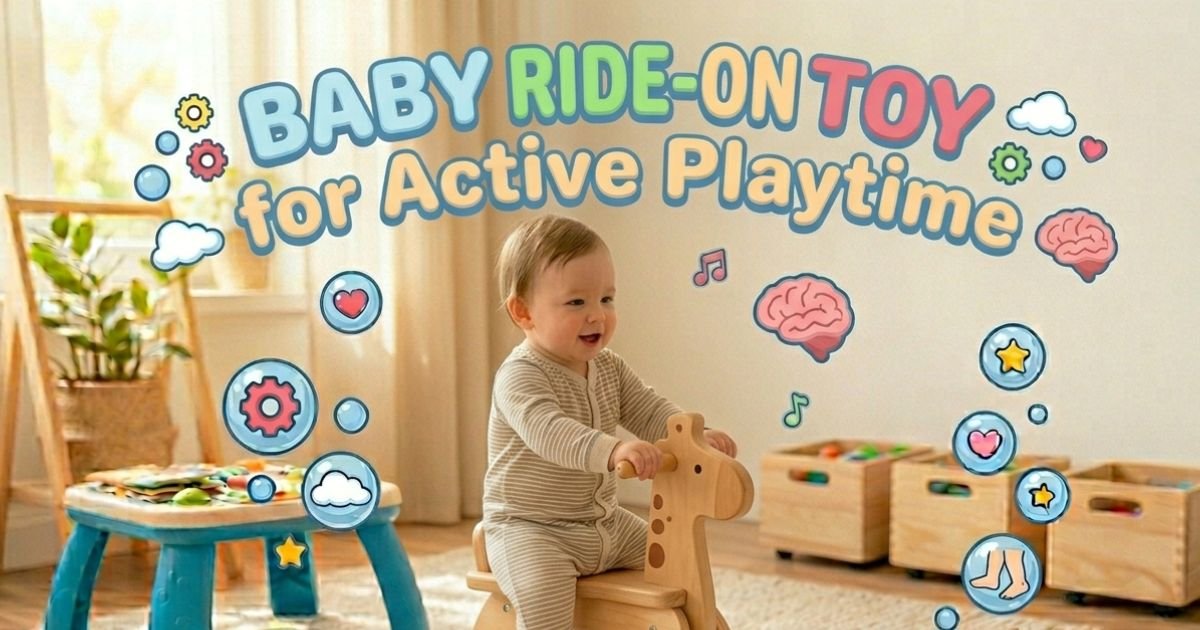

Ride-on toys are a fun, engaging way for babies and toddlers to play actively. These wheeled or rocking toys let little ones crawl, scoot, and ride around, boosting confidence and encouraging movement. From simple push-cars to battery powered mini-vehicles, ride-ons turn playtime into an adventure. They help children develop gross motor skills, balance, and coordination. In this guide, we’ll explain what baby ride-on toys are, discuss their benefits, and offer tips on choosing a safe, age-appropriate model for your child. We’ll also cover key safety guidelines, compare different types (push toys, scooters, electric cars, wooden ride-ons, etc.), and highlight some of the best baby ride-on toys on the market.
What Is a Baby Ride-On Toy?
A baby ride-on toy is any toy shaped like a vehicle or seat that a baby or toddler can sit on and move using their body or power. Unlike regular stuffed toys or blocks, ride ons often have wheels, rockers, or scooter-style bases. Some common examples include:
- Foot-powered ride-ons: Plastic cars or animals with wheels, designed for kids to push along with their feet.
- Push vehicles: Sit-and-ride cars you push from behind, or pull wagons, which toddlers sit in.
- Scooters: Typically three-wheeled for stability, requiring the child to kick and steer.
- Battery-powered/electric ride-ons: Small “cars” or motorcycles with rechargeable batteries and controls for toddlers.
- Rocking toys: Plush or plastic horses, elephants, or sea creatures on rockers (spring or curved bases) for gentle back-and-forth motion.
- Wooden ride-ons: Classic wooden vehicles or animals, often with smooth wheels and a simple design.
The exact design should match a child’s age and ability. For example, infants might start on a rocker or low push-car that cannot roll away, while active toddlers can use higher models with steering and pedals. As toddlers grow, their ride-ons often get more features (lights, horns, pedals, rugged wheels) to match new skills.
Why Ride-On Toys Are Great for Active Play
Baby ride-on toys offer active playtime benefits that go beyond just fun. They help toddlers learn to move and explore:
- Physical Development: Riding and pushing a toy strengthens leg muscles and improves balance. Research notes that ride-on toys “help toddlers build gross motor skills, balance, and coordination”. This active play complements daily exercise guidelines (e.g., the CDC recommends children under five stay active) by blending motion with imaginative play.
- Confidence and Independence: Using a ride-on lets a child move under their own power. This sense of control can boost confidence as they learn steering or foot-pushing. A good ride-on supports safe independent movement for a curious toddler.
- Spatial Awareness: Steering a toy car or maneuvering a scooter teaches spatial skills. Toddlers learn how to avoid obstacles and understand direction. This in turn lays the groundwork for skills like driving a real bike or riding a real bike later.
- Sensory and Cognitive Skills: Many ride-on toys include interactive elements (horns, lights, sounds) which can stimulate senses and encourage imaginative play. For example, some models (like the Kid Trax Real Rigs Recycling Truck) even play songs and talk about recycling to engage kids.
- Safe Active Outlet: Especially for indoor play, a ride-on can let an energetic baby or toddler burn off energy in a confined space (on carpet or a playroom floor) rather than running. Outdoor ride-ons (on sidewalks or driveways) encourage outdoor time and exercise.
Key Point: Ride-on toys merge motion with play, so children learn through active exploration. When choosing a ride-on, look for models that match your child’s age and skills so they are challenged but not frustrated.
Types of Baby Ride-On Toys
There are many styles of ride-on toys. Each has pros and cons depending on the child’s age (often measured in months or years), skill level, and where they’ll play (indoors vs outdoors). Here are the main categories:
1. Foot-Powered/Push Cars and Wagons
These are simple vehicles with four wheels that toddlers push with their feet. Examples include plastic cars, mini-jeeps, or wagons. Toddlers sit on the seat, put their feet on the floor, and scoot along by pushing. Some are designed with a handle so adults can push them too (for younger toddlers who can’t push effectively yet).
- Pros: No batteries or chargers needed. Lightweight and easy to move. Great for beginners (ages ~12-24 months). Very stable due to low center of gravity and a wide wheelbase. Indoor-friendly (usually made of hard plastic). Often less expensive.
- Cons: Limited to flat, smooth surfaces (hard floors, concrete). Not as exciting for older toddlers (no engine or speed).
- Features: Look for a low-to-ground seat and wide wheels for stability. The Radio Flyer Scoot About Sport, for instance, has wide-set front wheels for extra stability and is rated for 1–3 year olds. Some push cars include small storage bins (under the seat) or play features.
Many experts note these are great first ride-ons. For a 1-year-old just learning to walk, choose one with a low seat, easy entry, and no pedals. All plastic versions are easy to clean. A tiny plastic sports car or fire truck design can make play more fun.
2. Scooters (Kick Scooters)
Scooters often have a platform to stand on, handlebars, and usually two or three wheels. For toddlers, three-wheel scooters (two wheels in front, one in back) are recommended because they stay upright on their own. Toddlers “ride” them by standing on the scooter and kicking with one foot.
- Pros: Great for balance and coordination. Scooters are fun and can last for years (some kids use the same scooter up through age 5). Promotes outdoor play and cardiovascular activity.
- Cons: Not typically considered a “baby” toy scooters are generally recommended for older toddlers (around age 2 and up). They require more balance, so younger toddlers may struggle.
- Features: Choose three-wheel, lean-to-steer designs for toddlers, where they lean their body to turn instead of turning handles. The Micro Kickboard Mini is often cited as a top toddler scooter for its sturdy build and easy steering.
- Safety: Scooters should always be used with a helmet and protective gear, especially outdoors.
Scooters are basically a separate category of ride-on (they can be folded or leaned). Mentioning scooters is useful, but since our focus is “baby ride on toy”, these come into play a bit later. Still, for completeness: scooters build gross motor skills as well.
3. Battery-Powered/Electric Ride-On Toys
These are small, electric toy vehicles (cars, trucks, jeeps, ATVs, motorcycles) powered by rechargeable batteries (often 6V, 12V, or 24V). The child sits in the seat and controls acceleration (and sometimes steering) like a real car. Many have high/low speed settings and often come with safety features like seat belts or remote controls for parents.
- Pros: Highly engaging and realistic. They often have built-in music, lights, and even voice prompts. Toddlers love the novelty of a “real car” they can drive. These toys encourage imaginative role-play (rescue, racing, etc.). Suitable for outdoor use (driveways, parks). Some have high weight limits (e.g., up to 130 lbs on big models).
- Cons: More expensive. Heavier and take up storage. Limited battery life (usually ~1 hour per charge), so they must be recharged often. Not ideal for very young toddlers; best for 18 months+ depending on model. Can only be used outside or on very smooth surfaces.
- Safety: Must follow all electrical toy guidelines (CPSC notes electric toys need proper battery securing and to prevent overheating). Always use in a safe area away from traffic. CPSC data warns that battery ride-on injuries have been rising (73.7% increase from 1990–2011), usually from falls or collisions. For this reason, look for models with parental remote control. Many brands (like Power Wheels, Kid Trax, Rollplay) include a remote so parents can stop or steer the car if needed.
- Examples: The Kid Trax Real Rigs Recycling Truck is a 12V electric ride-on with a child-friendly design. It features a realistic truck bed and even teaches recycling with interactive sounds. The Peg Perego John Deere Tractor and Power Wheels Dune Racer are popular for their ruggedness.
4. Rocking and Plush Ride-Ons
These are stable toys that rock back and forth rather than roll freely. They often look like animals (horses, elephants, etc.) or vehicles (motorcycle-shaped gliders). Toddlers sit on them and either push back and forth or use handles.
- Pros: Very safe (no wheels means no rolling off). Great for very young toddlers (around 9–18 months) still mastering balance. Indoor-friendly and often soft. Encourages core muscle development from rocking. Many designs are cute and decorative.
- Cons: Only indoor use. Motion is limited to rocking (no locomotion). Some cheaper rockers can tip if not used on flat ground (so supervise).
- Features: Look for models with low seats, comfortable padding, and secure handles. Radio Flyer, Little Tikes, and Fisher-Price make popular spring riders (e.g., spring-mounted horse). Plush ride-ons (like squishy elephant or whale shapes) provide cushioned seats and gentle bounce.
- Safety: Ensure it has a wide base and non-slip surfaces. Remove once child grows too tall for it, as hitting floor can cause injury.
5. Wooden Ride-On Toys
Classic wooden ride-ons (tricycles, animals, scooters) are beloved for their simple design and durability. They often have a minimalist Montessori style. For example, the B. toys Wooden Bee Ride-On is made from natural wood, has a cushioned seat and 360° rotating wheels. Wooden models often come pre-assembled and use child-safe finishes.
- Pros: Durable (wood rarely cracks easily). Eco-friendly feel. Some parents prefer them for aesthetic/quiet reasons. They are sturdy and stable, usually intended for indoor use. Often have smooth wooden wheels or rubber-coated wheels to protect floors.
- Cons: Typically heavier and less portable than plastic. Most are only suitable for indoor surfaces (fine for hardwood or carpet). Not always as adjustable as plastic models. Fewer “gadgets” (usually no electronics). Usually for younger toddlers (age 1–3).
- Note: Wooden ride-ons “tend to be more durable” and best for indoor play. They “skew toward the younger end of the toddler set”. A wooden ride-on often feels very stable and can last through multiple children.
6. Grow-With-Child / Convertible Ride-Ons
Some ride-on toys adapt as a child grows. For instance, tricycles with removable canopies, footrests, and push handles (like the Joovy Tricycoo) start as a stroller-like trike and convert into a pedal bicycle. These are technically part of riding toys but can be mentioned as high-end examples.
- Pros: Can save money by lasting many years. Usually well-constructed with multiple use modes.
- Cons: More expensive upfront. More complex assembly and more parts to lose/break.
Safety Tips for Baby Ride-On Toys
Safety is paramount with ride-on toys. CPSC regulations require all ride-ons to pass stability and load tests (i.e., they shouldn’t tip or collapse under expected use). Still, accidents can happen if the toy or environment isn’t suitable. Here are key safety practices:
- Check Age and Weight Limits: Always use a ride-on recommended for your child’s age and weight. Using an older child’s scooter or a baby’s rocker for a 5-year-old (or vice versa) can be dangerous. “Choose a ride-on toy rated for your child’s exact age and weight” is a top tip.
- Stable Design: Look for a wide wheelbase and low center of gravity. Stability prevents easy tipping. Many manufacturers note that four-wheeled toys are more stable than three-wheeled ones. Avoid models that wobble or are top-heavy.
- Supervision: Always watch your child during ride-on play. The American Academy of Pediatrics recommends never leaving toddlers unsupervised with ride-on vehicles, especially around hazards.
- Safe Play Area: Use ride-ons in open, flat areas away from stairs, streets, pools, or driveways. “Injuries can happen when children fall off riding toys or play … near the street or near swimming pools”. Keep them on sidewalks, driveway areas, or indoor playrooms free of sharp corners.
- Protective Gear: For outdoor riding, helmets (and knee/elbow pads if appropriate) should be used even at low speeds. Pediatric guides stress using helmets when scooters or trikes are used outdoors.
- Inspect Before Use: Regularly check the toy for loose parts, broken wheels, or small pieces that could come off. A secure battery compartment and sturdy construction are essential for electric models.
- Avoid Small Parts: If the ride-on has decorative bits, ensure none can detach and become choking hazards. Avoid models with long straps or cords.
- Vehicle Speed: Battery ride-ons sometimes have high-speed modes. For young toddlers, start in low-speed setting. Many ride-ons for 1–2 year olds go only ~2–3 mph, which is safer.
- Harnesses & Belts: While not all models have seat belts, many electric or high-chair-like ride-ons do. Use them if present. Note: some studies show that falls and lack of restraints are major injury causes in electric ride-ons. For very young children, a 3 or 5-point harness (like a stroller) can add security.
In short, safety first: choose the right model for your child’s skill level, set clear ride zones, and supervise. As one pediatric safety guide puts it, ensure “your child wears a helmet” and is in a safe area far from traffic. CPSC data also reminds us ride-on injuries often involve falls or impacts, so caution is key.
How to Choose the Best Baby Ride-On Toy
With so many options, how do you pick the best ride-on toy for your baby or toddler? Consider these factors:
- Age and Developmental Stage: A 1-year-old just learning to walk needs a very simple ride-on (push car or rocker) with no pedals. A 2-year-old might handle a more advanced vehicle or a scooter with footrests. Always follow manufacturer age recommendations, but also gauge your child’s individual skill and interest.
- Indoor vs. Outdoor Use: Decide where the toy will be used. Indoor ride-ons should have quiet wheels (rubber or plastic that won’t scratch floors). Outdoor ride-ons need rugged, knobby wheels or inflatable tires for grass/driveways. Some ride-ons are built for both. For example, many plastic push-cars (like a Little Tikes Cozy Coupe) work indoors and out. Electronic ride-ons are meant for outdoor use (or large indoor spaces).
- Size and Weight Limit: Check the child’s height and weight. If a child is near the upper limit of one model, consider a slightly larger one to ensure safety. A snug fit (child’s feet comfortably reach the ground or pedals, back against seat) is important.
- Stability and Safety Features: Prioritize stable designs (wide wheelbase, low seat). Look for safety certifications (ASTM F963 for toys, UL listing for electric parts). Some electric ride-ons include parental remotes or adjustable speed settings. Consider models with grips or straps if needed.
- Durability and Materials: Budget plastic models might crack with rough use; stronger plastics or wood can last years. For outdoor toys, UV-resistant plastic or metal frames are better. Wooden ride-ons can endure generations if well-built. Weigh how much rough play the toy will get.
- Ease of Use and Maintenance: Ride-ons for little kids should be easy to ride (simple steering, intuitive pedals, no complicated assembly). Battery ride-ons require a charger space. Consider whether you want washable covers (on scooters, etc.) and easy-to-clean surfaces.
- Fun Features (optional): Extras can make a ride-on more engaging: music, lights, horns, storage bins, or pretend play items. However, more features often mean more cost. Decide which extras your child will truly use. Sometimes simpler is better for babies (e.g., a bright color and a horn may suffice).
- Budget: Cheap ride-ons can be tempting, but investing in a well-made, safe model can pay off (especially if used a lot or by multiple siblings). Conversely, outgrowing toys quickly means a budget model might be just fine for a short period.
By weighing these factors, parents can zero in on the ride-on that best fits their child. For example, if outdoor fun is the goal, focus on an electric baby ride-on or a rugged push-car. If indoor Montessori-style play is preferred, a wooden scooter or ride-on might be ideal.
Comparison: Pros and Cons of Ride-On Types
To help decide, here’s a quick rundown of the advantages and disadvantages of each ride-on category:
- Push/Floor Cars (Foot-to-Floor):
- Pros: Very stable and simple; no power needed; great for starting riders; usually affordable.
- Cons: Slower (child must kick to move); mainly indoor use; less exciting for older toddlers.
- Electric/Battery-Powered Cars:
- Pros: High fun factor (kids feel like driving a real vehicle); many features (music, lights, horn); excellent for outdoor play.
- Cons: Expensive; need charging; limited to small kids’ weight; safety concerns if not used carefully.
- Scooters:
- Pros: Great for balance and coordination; adjustable for growing child; encourages active play outdoors.
- Cons: Only for older toddlers (2+); steeper learning curve; always require helmet.
- Rockers (Plush or Hard):
- Pros: Very safe and stable; perfect for indoor use and young toddlers; can develop core strength and rhythm.
- Cons: No mobility (rock only in place); use is limited to flat floors; only engages child for short bursts.
- Wooden Ride-Ons:
- Pros: Durable and eco-friendly; simple design that often appeals to Montessori philosophies; usually low-tech and quiet.
- Cons: Can be heavy; mostly indoor use; not as many bells and whistles.
Choosing the “best baby ride on toy” often means picking the one whose pros align with your needs. For instance, a wooden ride-on is “best” if you want long-lasting indoor toy with no plastic, whereas an electric car might be “best” for large backyards and older toddlers.
Top Baby Ride-On Toy Recommendations
Note: Below are examples of popular ride-on toys. Always compare models and check safety standards before purchasing.
- Little Tikes Cozy Coupe: A classic foot-powered car (indoor/outdoor). Infants and toddlers can sit and push themselves around. Stable with a wide base. Easy to assemble. Encourages active play in driveways or playrooms.
- Radio Flyer Scoot About Sport: A durable plastic car with wide front wheels for balance. Suitable for ages 1–3. Includes a hidden storage compartment under the seat (great for toys and snacks!). Also rated for outdoor use on flat surfaces.
- VTech Sit-to-Stand Ultimate Alphabet Train: A ride-on toy that doubles as a learning wagon. Toddlers can ride it or play educational activities attached to the front. Good for indoor active play and early learning.
- Kid Trax 12V Ride-On (various models): Battery-powered cars (Tractor, Mustang, Mercedes, etc.) often for ages 3–7. Many have parental remotes. For younger toddlers, the 6V Power Wheels Jeep or Mini Cooper are scaled down. These encourage outdoor adventure.
- B. toys Wooden Bee Ride-On: A wooden bee-shaped ride-on for ~1–3 years. Made of wood, 360° wheels, cushioned seat. Montessori-style, great indoors. Encourages balance as kids push with feet. (“Natural wood with a cushioned seat and 360° rotating wheels… Montessori feel”.)
- Step2 Whisper Ride II: A two-seater foot-to-floor car with working horn and key. Sturdy plastic, good for twins or two toddlers. Indoors or outdoors, promotes sharing.
- Playskool Explore ‘n Grow Splash’n Wheels (water ride-on): For a splash of fun, this baby bathtub ride-on is a spinning water toy. (Not for use on floors just a fun tub toy.)
- Radio Flyer Outdoor Scooter: A stable three-wheel scooter with wide deck for toddlers 2+. Good start for learning to balance and steer.
When looking at these picks, consider what aligns with your child’s age and play style. Many online retailers and parenting sites review “best ride-on toys” each year. In fact, Good Housekeeping named some of the above (e.g., Radio Flyer Scoot About) in their 2022 toy guides.
Safety and Maintenance Tips
To keep ride-on play fun and worry-free, follow these maintenance tips:
- Regular Inspections: Periodically check wheels, axles, and any moving parts for wear or damage. Tighten loose screws. Replace worn-out tires or grips.
- Battery Care: For electric models, charge batteries only under adult supervision and remove them from the toy when not in use. Keep the charger in a dry place, and do not leave batteries charging unattended. Follow manufacturer guidelines on charge time.
- Cleanliness: Wipe down plastic and wooden surfaces with mild soap to remove dirt and germs. Clean wheels if muddy before using indoors.
- Storage: Store ride-ons in a dry area. If left outside, plastic can fade, or metal parts can rust. Indoors is best unless specified as outdoor-proof.
- Clothing: Dress kids in appropriate clothes no loose scarves or drawstrings that could get caught. Shoes or closed-toe footwear are recommended for outdoor rides.
Finally, update your ride-on choice as your child grows. Don’t keep a small ride-on for too long if the child has outgrown it; an oversized seat can lead to tipping. Conversely, don’t rush them into a complex ride-on before they’re ready. Matching the toy to the child’s current stage maximizes safety and enjoyment.
Conclusion
Baby ride on toys turn active playtime into an adventure. When chosen wisely, a ride-on toy encourages exercise, imagination, and skill-building while keeping toddlers happily moving. Key takeaways: pick a ride-on that matches your child’s age and abilities, focus on safety (sturdy design, helmet use, safe riding area), and let play develop gradually. Whether it’s a simple push car, a classic wooden scooter, or a shiny electric mini-vehicle, the right ride-on can become a child’s favorite playtime partner.
By following the safety guidelines and choosing a high-quality ride-on, you give your baby a fun outlet for active play and exploration. Now gear up, supervise safely, and enjoy watching your little one roll into new adventures!
Key Safety Reminders: Always supervise ride on play and use helmets for outdoor riding. Ensure the ride on’s stable and meets CPSC safety standards (e.g. stability and overload tests). This way, every baby ride-on experience stays happy and injury-free.
