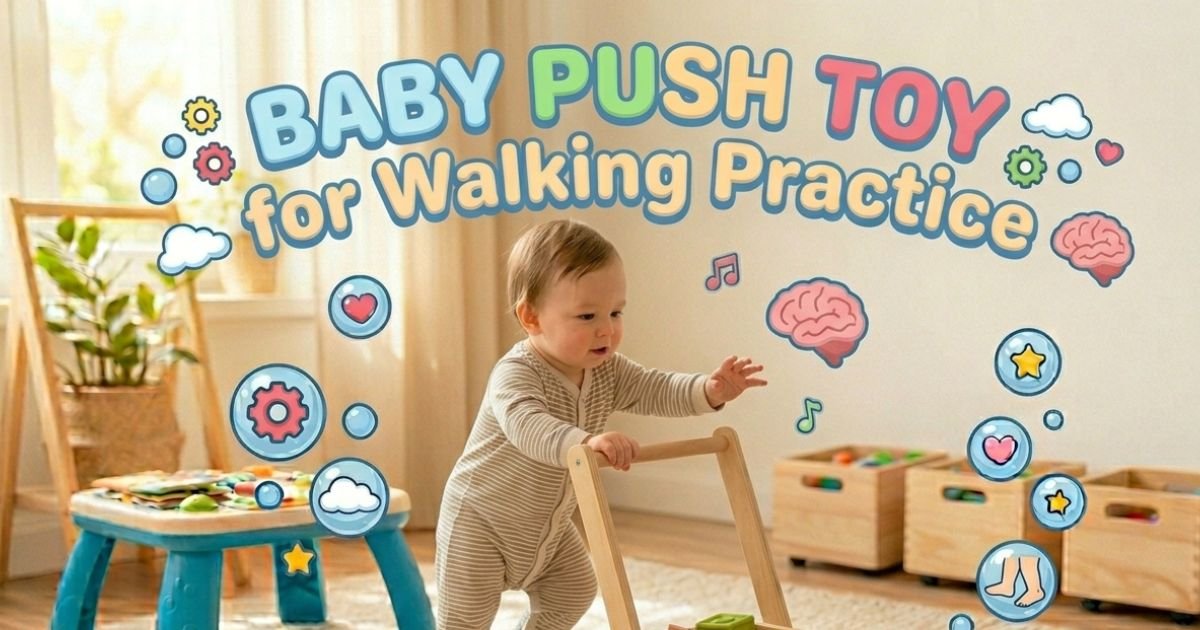

Watching a child’s first steps is exciting, and a baby push toy (often called a push walker or push cart) can make that milestone easier and more fun. Push toys are sturdy, wheeled toys with a handle that a standing infant can grip and push as they walk. Unlike the banned sit-in walkers, with push toys the baby stands on their own feet and uses their muscles to move, which encourages natural balance and walking practice. In this guide we’ll explain what push toys are, list their developmental benefits, compare types (wooden vs. plastic, carts vs. wagons), and give tips on choosing a safe, best baby push toy for your little one’s walking practice.
What Is a Baby Push Toy?
A baby push toy is a mobile walker-like toy designed for early walkers. It has wheels and a tall handle that your baby can hold to push the toy forward while taking steps. This is different from a traditional wheeled “sit-in” baby walker (which the American Academy of Pediatrics discourages) because with a push toy the baby must pull themselves up and walk on their own legs. Push toys often take the form of a little cart or wagon (sometimes with blocks or shapes inside) that toddlers can fill, push, and play with. For example, wooden push walker toys (from brands like PlanToys or HABA) may include built-in blocks or activity centers to extend play before and after your child is walking.
In summary, a baby push toy is any toy that a baby pushes from behind to practice standing and walking – essentially a walking aid on wheels that the child pushes, not sits in. This active play approach supports learning to walk in a developmentally appropriate way.
Developmental Benefits of Push Toys
Push toys offer many benefits for infants learning to walk. They turn walking practice into play while building important skills:
- Strengthens Leg Muscles: Pushing a toy helps babies practice taking steps and bearing weight on their legs. This exercise strengthens leg and core muscles, which is essential for gross motor development. The Mayo Clinic notes push walkers assist in improving the dexterity and strength of a baby’s legs.
- Improves Balance & Coordination: As baby pushes and walks, they learn to balance and coordinate their movements. The handle provides support, but the baby must still stabilize themselves. This encourages a sense of balance and trunk control. Occupational therapists point out that push toys build coordination, bilateral motor planning (using both sides of the body), and hand-eye coordination as babies steady themselves and manipulate the toy.
- Encourages Motor Planning and Visual Skills: While pushing, babies visually track the toy and plan their steps, which enhances spatial awareness and visual attention. OT experts note that play on the floor with a push toy engages shoulder strength and visual processing, helping the baby practice crawling, cruising, and standing transitions in a safe way.
- Builds Confidence and Independence: As children successfully push the toy and move around, they gain confidence. A push toy gives babies a fun goal (moving the toy) that motivates them to stand and walk. Parents report that push toys “encourage walking” by motivating babies to reach for and move the toy. Achieving these steps independently boosts self-esteem and a sense of autonomy, as babies feel proud taking steps on their own.
- Cognitive and Social Play: Many push toys include interactive elements (like shape sorters or rattles) that engage cognitive skills and entertain the baby. For example, PlanToys’ wooden baby walker comes with 11 blocks inside, turning walking practice into constructive play. The excitement of moving a toy can also make infants happy and eager to practice more, supporting emotional development.
Overall, push toys transform walking practice into enjoyable, purposeful play. They allow babies to explore and learn at their own pace. As one pediatric therapist notes, a good push walker lets a child pull up, stand, cruise, and then take supported steps, all while working on strength and coordination. These activities lay the foundation for unassisted walking.
Types of Baby Push Toys
Push toys come in various styles and materials. Choosing the right type depends on your baby’s age, interests, and environment:
- Wooden Baby Push Toys: Many parents prefer wooden baby push toys for their durability and non-toxic materials. Brands like PlanToys and HABA make classic wooden push carts and wagons. Wooden models often have a wide, heavy base for stability. As Toycycle notes, “Wooden push walkers (the standing kind) are safe and one of the most durable options for the price”. Wood also gives a natural feel and can double as an activity center (with blocks or beads). For example, the PlanToys Baby Walker includes wooden blocks and adjustable tension for wheel speed. However, wooden walkers may be heavier and costlier than plastic ones.
- Plastic Push Walkers: Plastic push toys are lighter and often include extra features. Common examples are the Fisher-Price Corn Popper or themed “lawnmower” and wagon push toys. They may have engaging lights, music, or bead chasers to keep toddlers interested. Plastic models can be easy to clean and come in many colors and designs. When choosing plastic toys, ensure the plastics are BPA-free and the edges are smooth.
- Push Wagons & Carts: Some push toys resemble pull wagons or shopping carts that a baby pushes. Radio Flyer, for instance, makes a wooden wagon walker with removable sides and a deep bin. These wagons often have storage space for toys, letting toddlers carry items around. Push wagons can have adjustable handles to fit growing toddlers. They encourage imaginative play (pretend shopping, transporting toys) along with walking practice.
- Convertible or 2-in-1 Models: A few push toys offer multiple modes. For instance, some shape-sorter push toys let a baby play sitting on the floor with pieces, then later attach wheels to become a push walker. These grow with the child, adding value. Others are ride-on toys that can convert to a push toy by attaching a handle.
- Walker Toys vs. Ride-Ons: Note that a “push walker” should not be confused with a ride-on toy. Ride-on toys have a seat and wheels (like a toddler car); children straddle and push with their feet. Push walkers, by contrast, have no seat – the child walks behind pushing. While ride-ons build leg strength too, our focus is on walker-style push toys for walking practice.
Whichever type you choose, look for sturdy construction. Whether wood or plastic, the base should be wide and stable. Metal or rubber components (like brake rings or wheel treads) are a bonus for durability. Keep in mind that extras like lights and sounds can motivate some babies, but simplicity is fine too, as the main goal is walking support.
How to Choose the Best Baby Push Toy
With many options on the market, here are key factors to consider when selecting a baby push toy:
- Stability & Base Width: Look for a wide, low-to-ground base to prevent tipping. A good rule: if the baby leans on the handle, the toy should not roll forward too easily. Some toys have heavier bases or brake-like features to slow movement.
- Age/Height Appropriateness: Ensure the push toy suits your baby’s stage. Most are designed for babies who can pull themselves up (around 9–12 months). The handle height should reach about waist level when your baby is standing straight. An adjustable handle is ideal so the toy grows with your child.
- Safety Features: Check that wheels have traction or anti-slip surfaces. Smooth, rounded edges and non-toxic materials are a must. Avoid small parts or sharp corners. Some models have a tension knob on wheels (like PlanToys) or wheel brakes, which can slow the toy on inclines. These features add safety.
- Build Quality: Read reviews about the toy’s durability. Wooden toys (e.g. PlanToys, HABA) often use eco-friendly, formaldehyde-free wood and safe finishes. Plastic toys should be thick, crack-resistant plastic. In either case, ensure wheels roll smoothly and handles are secure.
- Grip & Handle: The handle should be easy to grip (usually a bar or wide grip). Some have rubberized or textured grips. A solid handle helps toddlers hold on and steer comfortably.
- Entertainment Value: Decide if you want extra activities. Some push toys include shape sorters, beads, or musical buttons to engage the child. While these are fun, they’re not essential for walking practice. Too many distractions can actually slow walking practice if the child stands still to play instead of moving. Balance toys vs. function.
- Portability: If you’ll travel or visit, a lightweight or foldable push toy is convenient. Wooden ones tend to be heavy; plastic models (like the Fisher-Price corn popper) are very portable and easy to store.
- Age/Weight Limits: Always check the manufacturer’s recommended age and weight. Exceeding the limits can make the toy unstable. Many have a weight limit around 30–60 lbs, but confirm before purchase.
- Supervision: No matter which toy you choose, remember it’s a training tool, not a safety device. Always use push toys under adult supervision. This ensures the baby doesn’t push the toy into unsafe areas (like stairs).
Using these criteria, you can compare models. For example, the PlanToys Walker is praised for its build quality and educational blocks, while Radio Flyer’s wooden wagon walker is noted for its sturdy construction and deep storage bin. Ultimately, the best baby push toy is one that feels solid under your toddler’s push, meets safety standards, and keeps your child interested in moving.
Safety Tips for Baby Push Toy Use
While push toys are generally considered a safe walking aid, you should still take precautions:
- Supervise at All Times: Never leave a baby alone with a push walker. Always watch closely, especially when learning. A running baby can still stumble or push into hazards, and they often outpace supervising adults if unmonitored.
- Avoid Stairs and Hazards: Keep the push toy away from stairways, pools, fireplaces, or any drop-offs. Even a small push on wheels can carry a baby several feet, so baby-proof stairs (with gates) and remove obstacles. A soft play mat or carpeted area can provide good traction and a gentle surface.
- Regularly Inspect the Toy: Check the push walker for wear or damage. Look for cracked wood, loose screws, or wheels that wobble. A well-maintained toy is a safe toy. Retire or repair the walker if it shows stress or broken parts.
- Use on Flat Surfaces: Ensure floors are even and clear. Slippery tile or hardwood may cause some push toys to slide; non-slip wheels can help. On carpets, the toy will move more slowly, which can be safer for beginners.
- Limit Usage to Appropriate Age: Introduce the push toy only once baby is developmentally ready – usually when they can pull up to stand by themselves (around 9–12 months). Using it too early can frustrate the child or lead to falls. Conversely, once the baby is a confident walker (after 15–18 months), the toy can remain for play but will be used less for learning.
- Avoid Traditional Sit-In Walkers: Important: Do not use a sit-in baby walker (the kind with a seat) at all. The American Academy of Pediatrics has called for these to be banned due to injury risk. Always use standing push toys instead. According to safety experts, push walkers and wagons (that a baby pushes from behind) are in a different category and “considered safe with normal supervision”.
In short, a safe baby push toy is one that is sturdy, used at the right age, and always under watch. Think of it as a walking practice tool much like how a parent holds a child’s hands when first walking. It is never a substitute for adult supervision or a childproofed environment.
Conclusion
A baby push toy is a fun, educational way to help infants take their first steps. By pushing a walker or wagon, toddlers build strength, balance, and confidence on the road to walking independently. When choosing a push toy, look for stability, age-appropriateness, and safety features. Wooden push toys are durable and non-toxic, while plastic models can offer engaging extras. Always follow safety tips supervise your child, keep hazards away, and ensure the toy fits the baby’s size.
With the right baby push toy for toddlers, learning to walk becomes playtime. Your child can push the toy around the house or yard, practice coordination, and have a blast while doing it. Over time, the push toy will not only foster physical skills but also joyful memories of learning to walk. So choose a safe, sturdy walker, and watch your little one practice those proud first steps!
