
Finding the best baby walkers can feel confusing when your baby starts pulling up, cruising along furniture and looking ready to move. The right walker gives steady support without doing the walking for your child. It lets little legs build strength, balance and confidence at their own pace while you stay close by.
This guide focuses on baby push walkers and sit to stand walkers rather than seated walkers with wheels that surround the baby. Push styles keep feet flat on the floor and encourage natural movement. Many also work as learning walker toys, with sounds, shapes and textures that reward curiosity during floor play and practice walks.
Below you will find options for different homes, floors and stages, from early sitters who love activity panels to confident cruisers who need a sturdy handle. Each pick explains what it offers and who it fits best.
Quick Picks
If you are short on time, start with these five favourites. They cover the most loved styles, from a classic activity panel design to a solid wooden wagon that grows with your child through toddler play.
- VTech Sit to Stand Learning Walker for a removable play panel and early floor play
- Fisher Price Learn with Me Zebra Walker for friendly phrases and easy grip support
- Hape Wonder Walker for sturdy wood and all round activity play
- Radio Flyer Classic Walker Wagon for storage, stability and long lasting pretend play
- PlanToys Baby Walker for adjustable speed and simple natural materials
How to Choose the best baby walkers for Your Baby
Choose the Right Style for the Stage
Start by matching the walker to what your baby can already do. Sit to stand walkers suit babies who sit well and are beginning to pull up, because the activity panel can be used on the floor first. As standing improves, the same toy becomes a support for early steps. This design is especially helpful for walkers for babies 6-12 months, when skills change quickly.
For older babies who already cruise with confidence, simple baby push walkers with a wide base and a firm handle often work best. They move only when your child pushes, which keeps control with your baby. Look for a handle height that lets arms bend slightly.
Look for Stability, Brakes and Floor Friendly Wheels
Stability matters more than speed. A good first steps walker should feel planted, with a wide frame and wheels that roll smoothly without racing away. Some models let you tighten the wheels or add resistance, which helps on wood or tile floors. A baby walker with wheels that move too freely can startle a new walker, so controlled rolling is a real safety plus.
Check how the walker behaves on your own floors before regular use. Carpet needs a lighter push, while hard floors need more grip. You can browse more support ideas in our toddler toys collection. Whatever you choose, the best baby walkers should slow your baby down slightly, not speed them up.
Pick Play Features That Support Learning
Activity walkers for babies earn their space when the play panel teaches as well as entertains. Buttons, spinners, shape sorters and simple music invite reaching, pressing and problem solving while your baby is seated. Once standing, those same features motivate short walks toward a favourite sound or colour.
Keep features balanced. Too many loud sounds can overwhelm a young baby, while a thoughtful mix of textures and quiet activities suits longer play. If learning through play matters to you, our guide to baby learning toys explains what helps at each stage. Choose a walker you can picture using daily, in short sessions, with you nearby.
10 best baby walkers for First Steps
These ten picks come from trusted brands known for thoughtful design and durable build. They include plastic activity models, classic wooden walkers and wagons that double as storage. Read the stage notes for each one to find the closest match for your baby.
1. VTech Sit to Stand Learning Walker
The VTech Sit to Stand Learning Walker is one of the most recognised activity walkers for good reason. Its play panel comes off for floor play, so younger babies can press the piano keys, spin the rollers and explore the shape sorters while seated. When your baby is ready to stand, the panel clicks back onto a sturdy frame with a handle that feels secure for early cruising and short supported walks across the room.
- Removable activity panel for floor play first
- Piano keys, rollers and shape sorters included
- Sturdy frame with an easy grip handle
- Sounds and phrases that encourage movement
Pros: It grows from seated play to standing support and keeps babies engaged for months. Cons: The sounds can feel lively for quiet homes and it needs batteries. It suits babies who love music and busy play, and parents who want one versatile toy that covers two stages without taking up much space in the living room or play corner.
2. Fisher Price Learn with Me Zebra Walker
The Fisher Price Learn with Me Zebra Walker pairs a friendly character face with a wide, stable base that new walkers can trust. Babies can sit and play with the activities on the front, including flipping pages, pressing light up buttons and turning small dials. When they pull up, the handle gives steady support and the zebra offers encouraging phrases and songs as they push forward and gain confidence step by step.
- Wide base designed for steady early steps
- Sit and play activities on the front panel
- Light up buttons, book pages and dials
- Encouraging phrases, songs and sounds included
Pros: It feels stable, cheerful and simple for babies to understand from the first day. Cons: The play panel is fixed in place and the music may not suit every family. It suits younger babies moving from sitting to standing who respond well to voices and songs, and it earns its place among the best baby walkers for gentle daily encouragement.
3. LeapFrog Scout Get Up and Go Walker
The LeapFrog Scout Get Up and Go Walker is built around three stages of play, starting as a floor panel for babies who are not yet standing. It then becomes a walker and later a small interactive play table style setup, which gives it a longer life than many single use walkers. Scout introduces letters, numbers, colours and shapes through songs and questions that feel playful rather than pushy for young learners.
- Three modes for floor, walking and table play
- Scout voice teaches letters and numbers
- Colourful buttons, gears and sliding elements
- Handle and wheels made for early walkers
Pros: It offers strong learning value and adapts as your child grows more mobile and curious. Cons: Changing between modes takes a little adult time and storage space. It suits families who like guided learning play and want a walker that can stay in rotation well beyond the first steps stage, from early sitting right through to confident toddler movement.
4. Melissa and Doug Chomp and Clack Alligator Push Toy
The Melissa and Doug Chomp and Clack Alligator Push Toy brings a calm wooden charm to early walking. As your child pushes, three alligators move up and down and make a soft clacking sound that rewards each step without any batteries or flashing lights. Butterflies and ladybirds painted on the wheels add colour, while the sturdy handle and solid build help babies feel secure as they practise balance on indoor floors.
- Solid wood build with a classic feel
- Chomping alligators move as it rolls
- Gentle clacking sound rewards each step
- Painted details on wheels and handle
Pros: It is quiet, durable and lovely to keep or pass on to younger siblings. Cons: It has no activity panel and no speed control for very fast floors. It suits parents who prefer simple wooden toys and babies who enjoy sound made by movement itself, and many families rate it among the best baby walkers for calm, screen free play.
5. Hape Wonder Walker
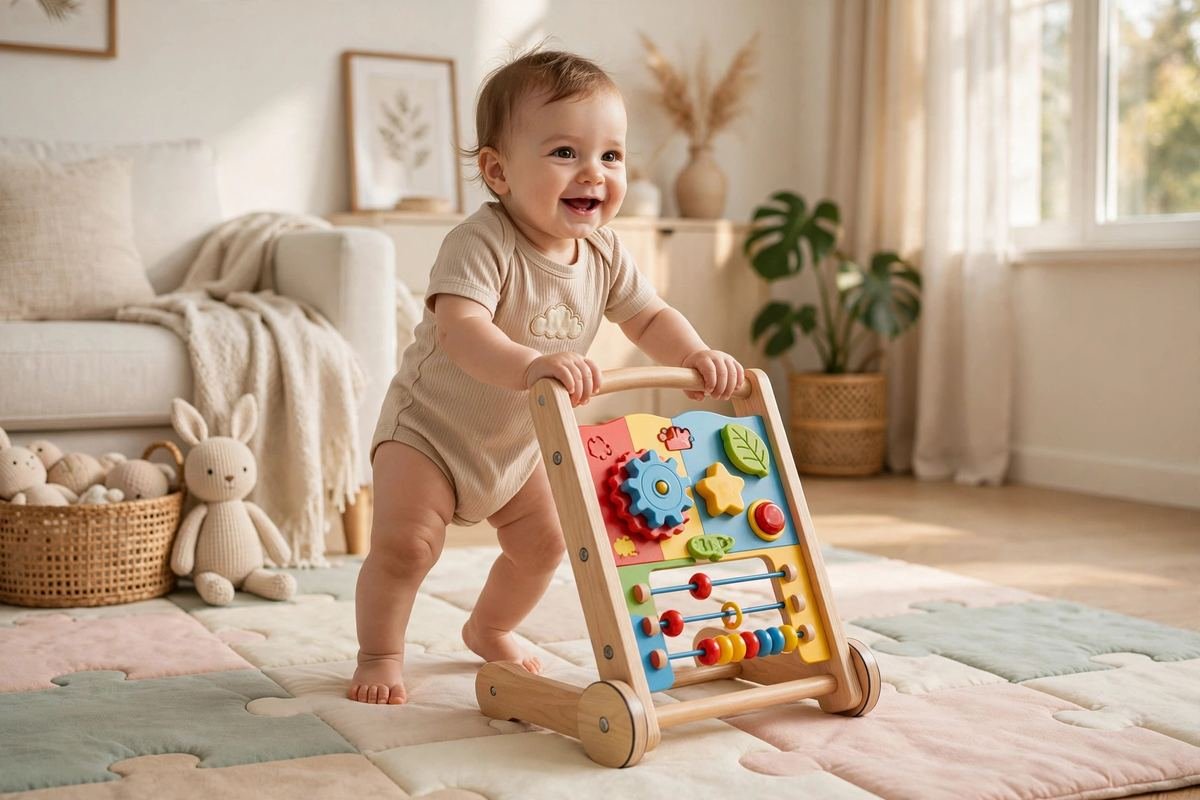
The Hape Wonder Walker is a beautifully made wooden walker with activities on every side. Little ones can move gears, turn knobs, slide shapes and push small balls along tracks while they steady themselves at the handle. The set back wheels and rubber trim help it roll in a controlled way, and the roomy body gives it a planted feel that supports babies who are still finding their balance.
- Wooden frame with activities on all sides
- Gears, knobs, wire tracks and sliders
- Rubber trim wheels for controlled rolling
- Room for small toys inside the body
Pros: It looks lovely in the home, feels very solid and invites long periods of focused play. Cons: It is heavier than plastic models and takes more floor space. It suits babies who love exploring with their hands and parents who want a lasting wooden piece that supports walking, problem solving and quiet play in one thoughtful design.
6. Radio Flyer Classic Walker Wagon
The Radio Flyer Classic Walker Wagon blends a push walker with a small wagon that toddlers love to fill. The wooden body has a no tip design at the front that helps new walkers pull up safely, and a push bar that gives a clear, steady hold. A small bumper at the front protects furniture, while the storage space inside turns every walk into a delivery game with soft toys and blocks.
- Wooden wagon body with push bar handle
- No tip front design for pulling up
- Furniture friendly bumper on the front
- Storage space for toys and blocks inside
Pros: It supports walking and imaginative play for a long time, well into the toddler years. Cons: It is larger than simple walkers and needs a clear path indoors. It suits active babies who like carrying treasures as they move, and for many homes it stands out among the best baby walkers because the wagon play continues long after walking is mastered.
7. PlanToys Baby Walker
The PlanToys Baby Walker is a smart choice for parents who care about materials and control. Made from sustainable rubberwood, it has a handle that can be adjusted and wheels whose speed can be tightened, which helps adults match the pace to a new walker. The walker comes with coloured blocks that fit inside, so babies can stop, stack and play, then load up and push on again when they feel ready.
- Sustainable rubberwood with a smooth finish
- Adjustable handle and wheel speed control
- Includes coloured blocks for stacking play
- Open tray design for carrying favourite toys
Pros: The speed control is genuinely useful on hard floors and the blocks add real play value. Cons: The open design offers fewer fixed activities than panel walkers. It suits careful new walkers who need a slower pace, eco minded families, and babies who enjoy stopping to build as much as they enjoy moving across the room.
8. VTech Stroll and Discover Activity Walker
The VTech Stroll and Discover Activity Walker offers a fresh take on the classic VTech formula, with a panel that can be used on the floor and then attached for walking. It includes a pretend phone, shape play, gears and piano keys, plus songs and phrases about animals and the world nearby. The frame folds in a helpful way for storage, which parents in smaller homes will appreciate.
- Removable panel for seated floor play
- Pretend phone, gears and piano keys included
- Animal songs and early words throughout
- Frame designed for easier storage at home
Pros: It packs in varied play, stores neatly and keeps the format babies already know and love. Cons: Like its sibling model, it is lively and needs batteries to shine. It suits babies who enjoy pretend play and animal sounds, and it is a strong contender among the best baby walkers for families who need storage friendly gear.
9. Fisher Price Laugh and Learn Puppy Walker
The Fisher Price Laugh and Learn Puppy Walker, often sold as the Learn with Puppy Walker, uses Smart Stages content that grows with your baby. Level one explores first words and sounds for sitters, while level two prompts standing babies with questions and encouragement as they push. The puppy character is warm and familiar, the handle is easy to hold, and the base feels reassuring during those first wobbly journeys.
- Smart Stages learning that grows with baby
- Friendly puppy character and familiar songs
- Activities for sitting, standing and walking
- Wide handle and stable four wheel base
Pros: The staged content keeps it fresh for months and the encouragement feels kind and fun. Cons: Families who prefer quiet toys may find the songs frequent. It suits babies who light up at characters and music, and parents who want learning content that changes as skills grow, rather than a walker that feels outgrown after a few short weeks of use.
10. Janod Sweet Cocoon Multi Activity Baby Walker
The Janod Sweet Cocoon Multi Activity Baby Walker is a gentle, stylish wooden walker in soft colours that suit modern homes. It carries several quiet activities, including an abacus style track, a shape box, gears and a small drum space, so babies can play while resting between walks. Silent rubber wheels help it glide smoothly, and the handle height works well for babies taking their first supported steps with an adult close by.
- Soft coloured wood with several quiet activities
- Shape sorting, gears and bead tracks included
- Silent wheels with rubber for smooth floors
- Compact body that suits smaller homes well
Pros: It is calm, beautiful and kind to floors, with play value beyond the walking stage. Cons: It may be harder to find than the big plastic brands in some shops. It suits design minded parents and babies who prefer gentle play, and it closes our list of the best baby walkers with a peaceful option that still gives steady, confidence building support.
Safety and Care
Safety comes first with any walker. Modern guidance from the American Academy of Pediatrics advises against seated walkers where a baby sits inside a frame on wheels, because those models can move too fast and reach hazards. The push and sit to stand styles in this guide keep feet on the floor and speed under your babys control. You can read current guidance at HealthyChildren.org, the parent site of the American Academy of Pediatrics.
Use the best baby walkers only on flat indoor floors, away from stairs, kitchen hazards, cords and small objects. Stay within arms reach, keep sessions short and give your baby plenty of floor time without any support, since free movement builds the strength walking needs. Check wheels, screws and handles each week, wipe surfaces clean, and stop using any walker once your child walks well alone.
Frequently Asked Questions
When can my baby start using a push walker?
Most babies are ready for the best baby walkers in push style once they sit well alone, pull up to stand and try to cruise along furniture. For many babies that happens between nine and twelve months, though every child follows their own timeline. If your baby cannot yet bear weight through their legs, wait a little longer.
Are push walkers better than seated walkers?
Yes, push styles are widely seen as the safer and more helpful choice. A baby walker with wheels in a seated frame can move very quickly and lets babies reach dangers before adults can react. Push walkers keep your baby upright with feet flat, move only when pushed and support the natural pattern of learning to walk, which is why this guide focuses on them.
How long should my baby use a walker each day?
Short sessions work best. Aim for ten to twenty minutes at a time, a few times a day, always with you close by. Balance walker time with crawling, cruising and free floor play, which build core strength and coordination. If your baby wants to stop, follow their lead and try again later.
What is the difference between a push walker and an activity centre?
A push walker moves with your baby and supports real steps across the floor. An activity centre stays in one place and lets a baby stand and play without travelling. Both can be fun, but only the walker practises walking itself. Many families choose the best baby walkers with a removable panel, so the activity play they love is available on the floor too.
Can a walker help my baby walk sooner?
A first steps walker gives practice, balance support and motivation, but it does not speed up the age when babies walk alone. Children walk when their muscles, balance and confidence are ready, usually between nine and eighteen months. Think of a walker as a helpful practice partner and a fun toy, not a shortcut, and celebrate each small gain along the way.
Conclusion
Choosing among the best baby walkers comes down to stage, stability and the kind of play your baby loves most. A panel walker suits a curious sitter, a wooden push walker suits a calm cruiser, and a wagon suits a toddler who carries toys everywhere. Whichever you pick from this list of learning walker toys, use it in short supervised sessions, keep floors clear and enjoy watching those brave first steps turn into confident walking. For more ideas for this wonderful stage, visit All Baby Toys and explore toys that grow with your child.
