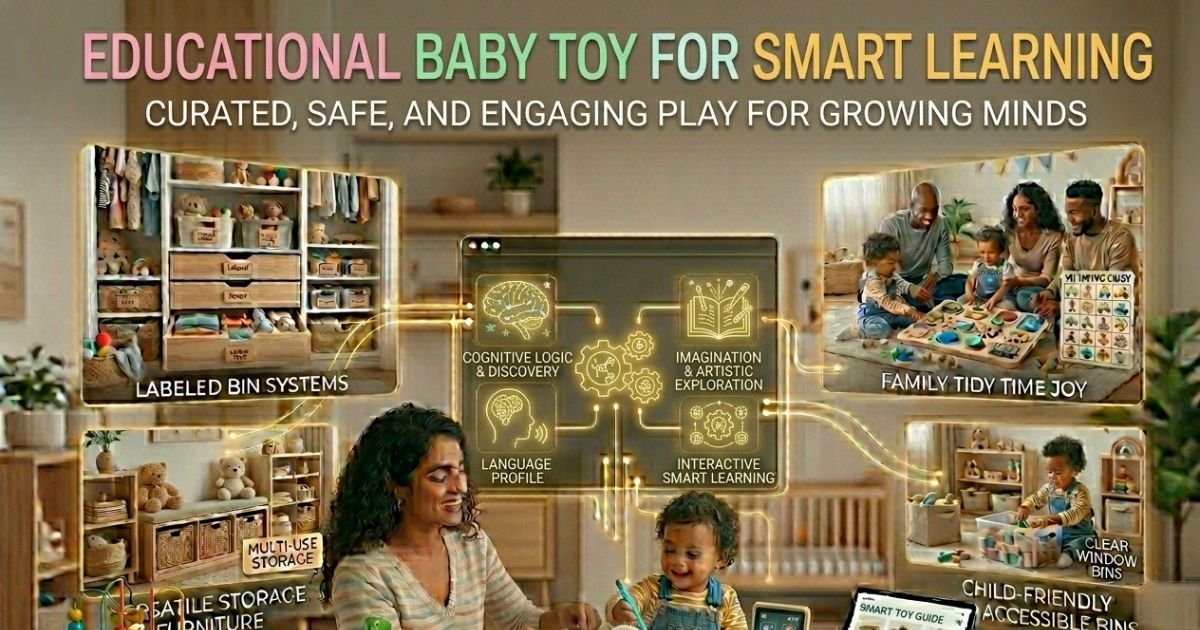

Educational baby toys are specially designed playthings that stimulate learning through fun, age-appropriate play. More than just colorful gadgets, these toys become tools for learning – fostering language, motor skills, problem-solving, and creativity in your little one. By engaging a baby’s senses (sight, sound, touch) and encouraging hands-on exploration, an educational baby toy can set the stage for cognitive and emotional growth right from infancy. In this guide, we’ll explain what makes a toy “educational,” why these toys matter for infant and toddler development, and how to choose the best educational baby toy for your child. We’ll also share examples of toys and activities that make learning fun, plus tips on safe, lasting options and gift ideas.
Examples of educational baby toys, such as blocks, rattles, and plush books, help babies learn through touch, sound, and play. These simple toys allow babies to explore colors, shapes, and textures, and as tiny hands grasp or stack them, little brains build important skills. Educational baby toys might include soft books, stacking rings, shape sorters, musical instruments, or sensory games—each designed to grow with the baby’s age and abilities.
What Are Educational Baby Toys?
An educational baby toy is any toy that encourages learning and development, rather than just passive entertainment. Experts emphasize that these toys “spark imagination and support development,” helping infants explore cause-and-effect, practice new skills, and build a foundation for later learning. In fact, pediatricians note that babies are “tools for learning” through play – when a baby presses a button to hear a sound or matches a shape, the brain is absorbing new concepts. Put simply, educational baby toys engage babies in active play: they often follow the “passive toy, active learner” principle, meaning the less the toy does on its own, the more the baby has to do (which boosts learning).
By interacting with an educational toy, infants and toddlers naturally start learning vocabulary (from talking toys and books), hand-eye coordination (from stacking or sorting), and problem-solving (from simple puzzles and shape-matching). For example, building blocks encourage spatial reasoning, and interactive books introduce words and pictures – all without pressure, just through playful exploration. Educational baby toys are carefully designed to match developmental stages: a cuddly cloth book for a newborn is as “educational” as a simple puzzle is for a 2‑year‑old. In each case, the toy is a bridge to learning something new, whether it’s recognizing colors or grasping the idea of cause and effect.
Why Educational Baby Toys Matter
Choosing the right educational baby toy means giving infants and toddlers a head start on lifelong skills. Research consistently shows that play with learning toys “contributes to the development of cognitive, motor, psychosocial, emotional, and linguistic skills,” helping babies grow into confident, creative learners. Here are some key benefits of educational toys for babies:
-
Brain and Cognitive Skills: Toys like shape sorters and stacking rings teach cause and effect, spatial awareness, and pattern recognition. Dropping a block into a hole or stacking rings in order helps babies figure out how objects relate, strengthening early thinking skills. High-contrast mobiles or cloth books grab an infant’s attention, developing vision and focus.
-
Fine Motor Skills: Handling toys improves hand-eye coordination and dexterity. Grasping a small toy, pressing buttons, or stacking blocks trains tiny muscles in the fingers and hands. For example, grasping a silicone teether vs. a wooden block teaches how different textures feel and refines grip. Over time, these skills support writing, eating with utensils, and other daily tasks.
-
Gross Motor Development: Active toys encourage movement. Push-and-pull toys and soft balls motivate babies to crawl, cruise, or walk, building strength and balance. A rolling ball or a walking toy can entice an infant to crawl after it, while a walker or ride-on toy gives older toddlers a safe way to practice standing and walking.
-
Sensory Exploration: Many educational toys are sensory toys – they stimulate sight, sound, touch, smell, and sometimes taste (safe, baby-friendly). Rattles, crinkle books, teething toys, and activity mats offer different textures and sounds that keep babies engaged. This multi-sensory play helps babies learn about the world around them: soft fabrics versus hard plastic, loud versus quiet, smooth versus bumpy. For instance, a musical teether with ridges soothes teething gums while building tactile awareness.
-
Language and Social Skills: Educational toys often invite caregiver interaction. Singing songs with a toy xylophone or reading a picture book together turns play into bonding time, which naturally introduces new words and social cues. Interactive toys (like talking dolls or sound books) also speak to the baby, exposing them to vocabulary and rhythms of language. Playing games like peek-a-boo with a popping toy teaches turn-taking and attention. All this language-rich play encourages infants to babble, coo, and eventually speak earlier.
-
Problem-Solving and Creativity: Even simple toys can inspire imaginative play. By 12–24 months, toddlers use blocks and pretend play sets to mimic real-life roles, which builds creativity and executive skills. For example, arranging toy people or play food on a kitchen set helps toddlers understand family roles and daily routines. Open-ended toys (blocks, dolls, play dough) invite innovation – the baby can stack, sort, or create in countless ways, which teaches flexibility and confidence.
In summary, educational baby toys give a child “a foundation in language, thinking, and coordination” that benefits them throughout childhood. By matching toys to a baby’s age and interests and playing along, parents can make every toy a chance to grow.
Choosing Toys by Age and Stage
Babies grow fast, so the “best” educational toy often depends on when your baby is. Below is a brief age-based guide, combining developmental milestones and suitable toy examples:
-
0–6 Months – Sensory Discovery:
In these early months, babies explore the world through their senses. Look for soft textures and high-contrast colors. Sensory toys such as crinkle cloth books, soft rattles, sensory balls, and tag blankets are favorites. Anything gentle to chew or hold is ideal. Even simple ring stackers or cloth blocks with different fabrics teach a baby about texture and grip. Recommended toys: a soft cloth book with bright patterns, a plush toy that crinkles, or a baby-safe mirror (a mobile with a mirror can teach self-recognition). These stimulate sight and touch without being overwhelming. -
6–12 Months – Cause and Effect:
As babies sit and crawl, they enjoy experimenting with actions and outcomes. Toys that light up, play sounds, or respond to dropping are exciting. An object permanence box (drop a ball in a tube and it falls out the other end) is classic for this age. Stacking rings or cups teach order and cause-effect when a baby drops them and watches them fall. Puzzles with large pegs, shape sorters with big pieces, and simple musical toys (e.g. drum or xylophone) are great. Recommended toys: a shape-sorting cube, a pop-up activity toy, a simple pull toy that moves when tugged. These help the baby learn that their actions lead to results. -
12–24 Months – Problem-Solving & Mobility:
By one year, toddlers are walking and exploring vigorously. Toys that challenge them to think and move are key. Stacking toys and building blocks let them practice arranging and sorting by size or color. Interactive soft dolls or play sets (kitchen, tool bench) invite pretend play, showing them cause-and-effect (e.g. playing with a toy stove teaches “hot” vs “cold”). Walking toys or push cars build gross motor skills as they propel themselves forward. Recommended toys: wooden blocks or a simple puzzle, a sturdy baby walker with activities, and large-piece puzzles or pegboards. These promote coordination and first problem-solving experiences. -
2 Years and Up – Expanding Imagination:
Toward 2–3 years, toddlers get more imaginative and verbal. Educational toys now can introduce early literacy and math concepts. Toy letters, counting games, and interactive books that require responses become fun. Building sets (simple LEGOs or wooden block kits), art easels, and more advanced pretend-play kits (doctor kit, play kitchen) encourage creativity and vocabulary. Board games with simple rules (like matching games) teach turn-taking. Recommended toys: a toddler-friendly puzzle (4–6 pieces), a set of chunky crayons and paper, or a storybook that asks questions. These continue skill building in new, playful ways.
By choosing the right educational baby toy for each stage – for example, crinkle toys and rattles for babies vs. stacking blocks and shape puzzles for toddlers – you ensure each toy matches your child’s needs. As Crystal Chen of Tiny Land advises, look for toys that help with fine motor skills and cognitive challenges appropriate to the age. And remember, supervision and play with parents only amplify the learning.
Types of Educational Baby Toys
Educational baby toys come in many forms. Below are common categories, each offering unique learning benefits:
-
Sensory Toys (0+ months): These toys stimulate senses. Examples include rattles with beads, textured teethers, and crinkle books. They often have bright colors, varied fabrics, and sounds. By playing with a sensory toy, a baby learns to focus and differentiate textures and tones. For example, a rattle with contrasting colors and textures strengthens visual tracking and touch awareness. Activity idea: gently bounce a rattle to music, or play peekaboo with a crinkly cloth book to engage touch and hearing.
-
Motor Skill Toys (3–18 months): These help babies move and coordinate. Stacking rings, blocks, push/pull toys, and pop-up toys fit here. They get babies grabbing, pushing, pulling, and stacking, building hand and arm strength. For example, stacking cups teach size order and fine motor control as babies pick them up and stack them. Push toys (like a baby lawn mower or shopping cart) encourage walking and balance in 12–18 month olds. Activity idea: build a tower of blocks with your toddler, then knock it down, discussing how each block stacks on the other (early physics play!).
-
Cognitive/Problem-Solving Toys (6–24 months): These toys encourage thinking. Shape sorters, simple puzzles, and cause-effect games belong here. A puzzle with large pegs or a shape sorter box helps a child match shapes to holes. Cause-and-effect toys, like a pop-up giraffe that reacts when you press a button, teach babies that their actions (push, pull, drop) can make things happen. Board books and cloth storybooks also fall in this category, as they introduce concepts (numbers, animals, objects) in an interactive way. Tip: Look for multi-piece toys that allow open-ended play – for example, a set of blocks can be assembled infinitely, encouraging creativity.
-
Language and Communication Toys (6–24 months): These toys expose babies to words and sounds. Interactive sound books, musical instruments (drums, mini piano), and talking stuffed animals are great for this. Even a toy phone or a plush animal that “talks” when squeezed gives words and tunes. Reading board books together is arguably the most effective “toy” for language: naming pictures (“This is a cat. Can you find the cat?”) boosts vocabulary. Musical toys (like a xylophone or shape sorter that plays a tune) develop auditory processing and memory. Activity idea: play a mini-concert with shakers and tambourines, singing nursery songs to foster sound recognition.
-
Interactive Electronic Toys (9+ months): These are battery-operated toys that flash lights or say words. They can be educational, but experts warn they should be used sparingly. The key is choosing ones with cause-and-effect, not just flashing lights. For example, an interactive book that reads aloud when the baby presses a button can teach letters or animal sounds. An activity walker with lights and sounds encourages walking while teaching ABCs. The Tiny Land guide notes: educational toys follow the “Passive Toy, Active Learner” rule, so even with electronics, the baby should have to initiate action (press button, turn a knob) to learn.
Pros: High-tech toys hold attention and can teach letters, numbers, or foreign languages at very young ages. Many parents use tablet-like toys for vocabulary.
Cons: They can overstimulate or discourage problem-solving if they do all the work. Dr. Cindy Gellner (pediatrician) suggests minimalism: an older child’s gadget isn’t right for an infant. Always supervise and choose toys that respond to the child, not just entertain with noise.
How to Choose Safe Educational Baby Toys
Safety and quality are crucial. No matter how educational, a toy must be safe for babies. Keep these guidelines in mind:
-
Age-Appropriate: Always check the age range. A 6-month-old shouldn’t have toys meant for toddlers with small parts. Toys labeled for your child’s age are tested to be safe (non-toxic, no choking hazards). The FDA and ASTM standards ensure this. For example, avoid small decorative pieces on toys for infants.
-
Non-Toxic Materials: Babies explore by mouth. Choose toys made from wood, BPA-free plastic, silicone, or organic cotton. Wooden toys with smooth, non-toxic finishes and food-grade silicone teethers are ideal. Stay away from toys with lead paint or phthalates; look for labels like ASTM, EN71, or CPSIA. This guarantees paints and plastics have been tested for safety.
-
Durability: Babies will drop and chew on toys. Durable toys last longer and stay safe. Solid wood toys with smooth edges or thick silicone toys resist breaking. Soft toys should be well-stitched (no loose beads). Washable is a plus: machine-washable plush or wipeable surfaces help keep germs away. For example, a sealed wooden block or silicone stacking ring can be easily cleaned, whereas an electronic toy with open seams may get gunky.
-
Simplicity and Engagement: The best educational toys are often simple. As Tiny Land notes, the less the toy does, the more baby learns. Avoid toys that flash nonstop if the baby does nothing. Instead, look for toys that need baby input: turning a crank, stacking a ring, pressing a block. These encourage problem-solving. For example, a shape sorter doesn’t talk or move on its own – baby must try different shapes to fit them in, which is the learning.
-
Safety Checks: Inspect every toy. No sharp edges or loose parts. Even with safe materials, a broken toy can become hazardous. Follow the “pull test”: tug on parts, and if anything detaches, don’t use the toy. Also avoid long strings or cords that can tangle. Store tiny toys out of reach until baby is older to prevent choking.
By prioritizing quality, you not only protect your baby but also ensure the educational toy has a long life. High-quality wooden or well-made plastic toys are worth the investment; they last through multiple children and encourage open-ended play. As one pediatric guide advises, wooden toys “are built to last for years,” giving more learning value. Keep toys sorted by age and rotate them to always offer fresh learning experiences.
Fun Learning Activities with Educational Toys
Playing with your baby is the educational toy’s secret ingredient. Here are some activity ideas that turn any toy into a learning adventure:
-
Peekaboo & Mirror Games: If your baby has a play gym or toy with a mirror, make silly faces together. Peekaboo behind a soft toy hides identity and promotes object permanence (baby learns you exist even when hidden).
-
Stack and Count: Use stacking rings or cups to play counting games. “Let’s stack one, two, three rings!” Count out loud as your toddler stacks blocks. This reinforces numbers and sizes.
-
Sort by Shape or Color: When using shape-sorters or a box of blocks, sort items by shape or color together. “Let’s put all the triangles here and circles there!” This introduces matching and categories.
-
Sing Along with Instruments: Give baby a small drum or maraca and sing simple songs (“If you’re happy and you know it, clap your hands”). Rhythm games teach cause-effect and rhythm.
-
Pretend Story Time: With picture books or storybook apps, ask questions: “Where is the dog?” Point and say words. Even if baby can’t answer, they’ll love the interaction and start associating words with pictures.
-
Tummy Time Exploration: Place different toys around during tummy time. A textured ball on one side and a rattle on the other encourages reaching and crawling.
-
Hide-and-Seek with Toys: Hide a toy under a cloth or behind a pillow and let baby find it. This simple game teaches object permanence and problem-solving.
-
Bath Time Learning: Bath toys (cups, rubber animals) can teach concepts of sink/float, pouring water, and grip. Adding letters or shapes to foam play also introduces shapes.
-
Story and Role-Play: Give toddlers a doll or action figure and create simple stories. “Let’s feed the doll and put him to bed.” This enhances empathy and sequencing of actions.
The key is to talk and interact constantly. Research shows that no toy can replace human interaction – narrating what you do, labeling objects, and encouraging babies to babble in response is a powerful way to learn. For example, use a shape sorter and say, “You’re putting the red triangle in the hole! Wow!” This turns playtime into a dynamic lesson in language and logic.
Top Picks and Gift Ideas for Educational Baby Toys
When shopping or gifting educational baby toys, look for trusted brands or award-winning products that parents recommend. Here are some top examples of each category (infant or toddler). These are illustrative and not endorsements, but they show the kinds of toys often praised:
-
Best for Infants (0–6m):
- Soft Cloth Books: High-contrast picture books or cloth books with textures. These “books” often feature crinkle pages or squeakers. They’re baby’s first introduction to reading.
- Baby Play Gym: A mat with hanging toys and mirrors. Encourages reaching and visual tracking. Many have musical parts or rattles.
- Rattles & Teethers: Choose ones with interesting textures and safe, non-toxic materials. Sophie the Giraffe (silicone teether) is a classic example (flexible with multiple surfaces).
-
Best for Toddlers (6–24m):
- Stacking Toys: Wooden rings or nesting cups. Bright colors and different sizes teach sorting and balance.
- Shape Sorters: Durable wooden or plastic sorters with big knobs. Eg: Melissa & Doug shape-sorter cube, which teaches shape recognition.
- Building Blocks: Large soft or wooden blocks are great. Eg: soft fabric blocks for younger babies, chunky wooden blocks for walkers. The Melissa & Doug K’s Kids activity cube or a simple block set.
- Ride-on/Push Toys: A baby walker (with activities on top) or a simple push car to encourage walking.
- Interactive Books: Board books with flaps, buttons, or simple stories (e.g. “Dear Zoo”, “Brown Bear, Brown Bear”) that you can read aloud. Some books even say words aloud if you press pictures.
- Musical Toys: A small keyboard or xylophone can be entertaining for toddlers, boosting auditory skills (research shows “musical elements enhance memory and auditory processing”).
-
Gift Ideas:
- Montessori Toys: Many parents love Montessori-style wooden toys, like stackers or pull-along animals, for their simplicity and durability.
- Interactive Learning Sets: Sets that grow with baby. For instance, a toy that starts as a rattler and later becomes a building toy. These keep children engaged longer.
- Educational Gift Boxes: Some companies curate boxes with multiple developmental toys (blocks, puzzles, books) for birthdays or baby showers. These can include a variety of textures and challenges.
- Subscription Toys: Services that send a few age-appropriate toys every few months. These are convenient gifts that parents appreciate, as they always have something new in rotation.
When choosing a gift, consider the child’s age and interests. Any educational baby toy that is labeled safe for the baby’s age, is interactive (requires the child to do something), and stimulates the senses will be a hit. Even a simple sensory board (a board with patches of different fabrics, knobs, locks) can be a creative gift. And don’t forget classic favorites: stacking rings, shape sorters, and stuffed animals with sounds or textures are practically universal crowd-pleasers.
Conclusion
Educational baby toys turn playtime into powerful learning opportunities. By choosing toys that are safe, age-appropriate, and engage babies’ senses and minds, parents can support development from the very first months. These toys aren’t just fun – they’re foundations for future learning. Whether you’re helping baby stack blocks, read a board book, or shake a rattle together, every playful interaction plants the seeds of language, motor skills, and cognitive growth.
In summary, look for toys that spark curiosity and active play. Embrace simple games (peek-a-boo, stacking, singing) that use those toys. And remember, the best educational baby toy is one that grows with your child – one day it’s a bright teething ring, the next it’s part of a building game or a counting lesson. With the right toys and a little guidance, you’re giving your child “the gift of learning that feels like pure fun”.
Ready to choose the perfect educational toy? Start with your baby’s current interests and stages, check safety labels, and trust your instincts. Play together, explore, and watch your little one’s mind bloom. Happy learning and playing!
