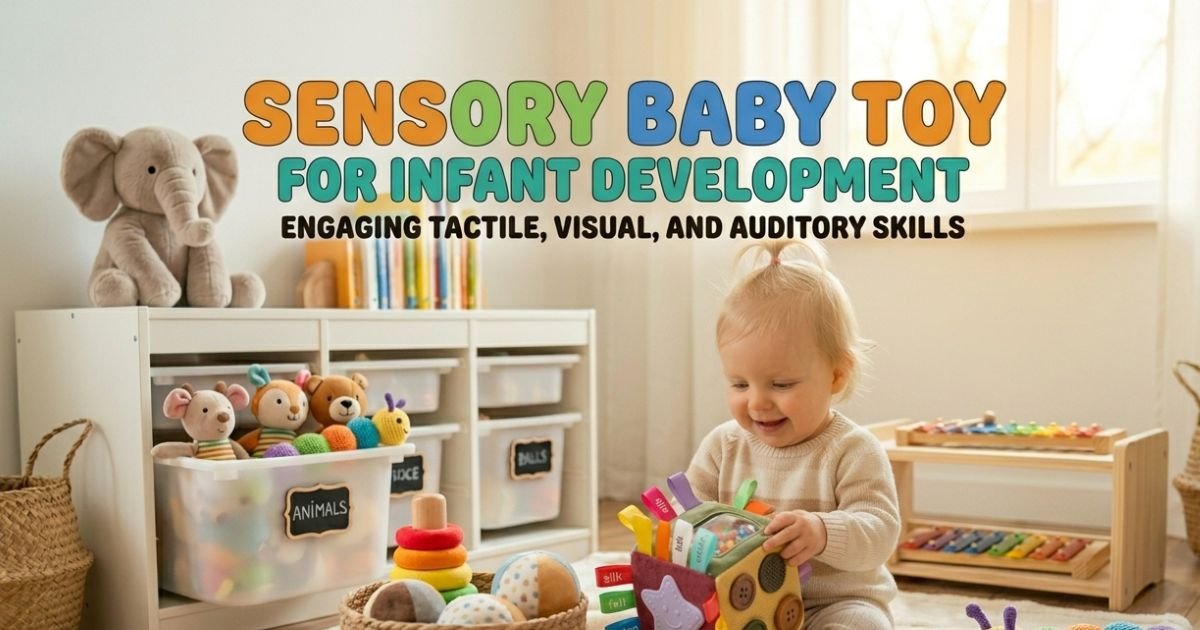

Babies learn about the world through their senses, and sensory baby toys turn playtime into a learning adventure. These toys with bright colors, varied textures, and gentle sounds capture an infant’s attention and support brain growth. As one expert notes, “sensory toys involving textures, sounds and bright, contrasting colors are all great developmental choices for babies”. In this article, we’ll explain what sensory baby toys are, why they matter for infant development, give examples of activities and toy types (from newborns to toddlers), and share safety tips so you can choose the best sensory baby toy for your child.
What Are Sensory Baby Toys?
Sensory baby toys are designed to engage a baby’s senses sight, sound, touch (and sometimes taste) during play. Think of them as “little adventure tools for tiny hands”. They might include crinkle books, rattles, plush teethers, mirrors, or colorful mobiles. These toys often feature bright colors, interesting textures, gentle noises (like a soft rattle or chime), or even lights. For example, a high-contrast black-and-white mirror can fascinate a newborn, while a textured ball and squeaky plush toy appeal to older infants. In short, sensory toys spark curiosity and encourage babies to reach out, grasp, and explore safely.
Sensory toys turn everyday moments into milestones. As babies touch, chew, see, and shake these toys, they learn cause-and-effect and build skills without even realizing it. A toy that makes a gentle sound when shaken or has a tactile surface teaches a baby that “my action does something”. This kind of learning is crucial: sensory experiences build the very neural connections that form the foundation of future learning.
Benefits of Sensory Baby Toys for Infant Development
Sensory play (using the senses) is a powerful way for infants to grow. Research and experts agree on many benefits:
-
Brain and Cognitive Growth: Engaging multiple senses strengthens neural pathways. Every new texture, color, or sound helps build nerve connections in the baby’s brain. As the Cleveland Clinic explains, sensory play “helps build nerve connections in their brain’s pathways,” laying the groundwork for complex skills. Michigan State University extension also notes that combining touch with sight, hearing, smell and taste “helps build cognitive skills”.
-
Language Development: As babies explore sensory toys, they learn to describe experiences. Hearing musical sounds or parents naming colors and shapes during play helps infants pick up words and concepts. Sensory activities encourage early communication – for example, a baby might smile or point at a crinkly toy, prompting verbal interaction. Over time, they learn to associate stimuli (like a “ring” noise) with words (like “bell”).
-
Fine Motor Skills: Handling toys hones hand-eye coordination and small muscle skills. As one baby product guide puts it, even picking up a teether or crinkly cloth is a fine-motor skill in action. The Cleveland Clinic confirms that sensory play lets babies “build on their ability to use small muscle groups and coordinate movements,” which supports skills like grasping objects. Soft blocks, stackers, and textured balls all invite tiny fingers to grab and explore.
-
Gross Motor and Coordination: Sensory toys can motivate bigger movements. A colorful mat or mobile encourages tummy time and crawling to reach toys, strengthening neck and core muscles. For example, a baby lying on a play mat may try to roll or scoot toward a rattling toy. UnityPoint Health notes that textured sensory balls help promote gross motor skills like crawling as well as coordination.
-
Sensory Integration: Handling different textures, sounds, and visuals helps babies learn to process sensory information together. This “learning through experience” approach teaches babies how the world feels and reacts. Over time, toddlers who played with sensory toys develop better focus and are less bothered by distractions.
-
Emotional Regulation: Certain sensory activities can have a calming effect. Rhythmic or warm sensations (like a soft squeeze toy or gentle massage with a sensory ball) can soothe babies, while active play (like light bouncing) can help energetic toddlers expend energy in a positive way.
-
Social and Exploratory Skills: When a baby plays with parents or siblings using sensory toys, they also develop social skills. Playing together with blocks or taking turns using a musical toy teaches sharing and communication in a natural way.
In summary, sensory baby toys turn play into purpose: they entertain while boosting language, motor, social and cognitive skills simultaneously. Early childhood educators even call sensory play “the foundation of all the skills children will use in school”. Every crinkle, rattle, and colorful pattern is a building block for your baby’s development.
Types of Sensory Toys and Activities
Babies grow fast, so their sensory play needs change with age. Below are examples of sensory toys and activities for different stages, plus tips for incorporating them:
-
Newborns (0–3 months): Newborn vision is blurry but drawn to bold contrasts. High-contrast toys (black and white or bright patterns) are ideal. Even simple things like a black-white mobile or a crinkle fabric book can fascinate a young baby. Gentle rattles or soft noise-makers encourage the start of hand coordination. A simple soft mirror or a vivid mobile placed safely above the crib gives visual stimulation. Tummy time with a smooth textured mat or a soft toy just out of reach will motivate them to look and reach up.
-
Infants (4–12 months): Around 4–6 months, babies start reaching and grabbing intentionally. Toys to grasp, squeeze, and chew are perfect. Examples include rattles, teethers, and plush squeeze toys. UnityPoint Health recommends textured or chilled teethers around teething age (4–6 months) to provide tactile and oral sensory input. By 6–9 months, sitting babies enjoy blocks, stackers, and interactive boxes (e.g. push-button toys) – all of which offer texture and cause-effect learning. Peek-a-boo toys (like cloth books or pop-up toys) teach object permanence and also provide sensory surprises (soft flaps, sounds).
Activities: Give your baby safe household items like plastic bowls, wooden spoons, or pieces of fabric to touch and mouth under supervision. A DIY sensory bin (clear bin with water, pasta, or beans) let them splash and feel new textures. Simple games like gentle tickling, or playing music and letting them clap or shake to the rhythm, also engage senses. Tummy time tip: Place a crinkly book or textured toy just in front to encourage lifting up.
-
Toddlers (1–3 years): Even as babies become toddlers, sensory play remains crucial. Colorful sensory baby toys like soft balls, play dough, or water tables stimulate touch and sight. At this age, children love cause-and-effect toys (for example, pressing buttons to see lights or sounds) and enjoy sorting and problem-solving. Activities like color sorting games, finger painting, or sand and water play encourage exploration and learning concepts. For example, sorting colored blocks or pouring water from one cup to another teaches coordination and introduces science ideas.
Examples of toddler sensory toys: Building blocks of different textures, toy kitchen sets (safe utensils to splash and stir), shape sorters, and musical instruments (drums, shakers) combine sensory input with learning. For instance, a textured colorful ball set promotes grasping and crawling skills in older infants, while teaching color names in toddlers.
By varying textures (soft, bumpy, smooth), sounds (quiet to musical), and visuals (solid colors, patterns, lights), you help each age explore all their senses. Keep toys and activities fresh rotate them weekly so your baby’s curiosity stays piqued.
Choosing the Best Sensory Toys
When shopping for the best sensory baby toy, look for these features:
-
Multi-Sensory Elements: A good sensory toy engages more than one sense. For example, a plush teether with crinkle tags (sound + touch) or a spinner toy with beads (sight + sound + touch). This cross-sensory stimulation deepens learning.
-
Age-Appropriate Design: Check the age label. Toys marked “0+ months” have been tested safe for newborns. As the child grows, switch to toys that challenge new skills (e.g., from grasping toys to those requiring two hands or walking).
-
Color and Contrast: Newborns love high-contrast (black/white or primary colors). As their vision sharpens, brightly colored toys become more engaging. “Visual support” toys with bold patterns strengthen focus and tracking, while colorful designs help older babies and toddlers with color recognition and cognitive skills.
-
Texture: Different textures (soft fabric, rubber bumps, smooth wood) encourage touching and mouthing, vital for sensory exploration. Textured balls or fabric books add tactile variety.
-
Sound and Feedback: Gentle sounds (rattling beads, crinkle paper, soft chimes) teach cause-effect. Look for volume-controlled or soft sounds so as not to startle an infant.
-
Size and Grip: Toys should be sized for little hands. One-piece or attached parts avoid choking risks. Many sensory toys are rings, handles, or loops that babies can easily hold.
-
Safety Materials: Prioritize non-toxic, BPA-free, latex-free materials. Because babies mouth toys, ensure fabrics don’t shed and plastics have no lead or phthalates. Check for certifications like ASTM and CPSC compliance.
-
Durability and Cleanability: Babies drool and chew, so choose toys that can be wiped or washed. NAEYC advises picking toys that are easily cleaned and well-made, with no sharp edges or loose parts.
Safety Tips for Sensory Baby Toys
Safety is critical with any baby toy. Follow these guidelines:
-
Check Age Ratings: Always follow the manufacturer’s age recommendations. A toy labeled “0+ months” means it’s been tested safe for newborns, with no choking hazards. Don’t give an infant a toy meant for older children.
-
Inspect for Small Parts: For babies under 3, avoid any toy with small, detachable pieces. As NAEYC warns, ensure there are “no small parts or pieces that could become lodged in a child’s throat and cause suffocation.”. Once a child starts chewing, even screws or eyes on plush toys can be a risk.
-
Non-Toxic Materials: Babies explore by taste and touch. Choose toys made from safe materials – look for BPA-free plastics, natural rubber, or high-quality fabrics. Avoid toys with lead paint or toxic dyes. The U.S. requires lead-free paint on children’s toys.
-
Well-Made Construction: Pick sturdy toys with no sharp points or edges. NAEYC recommends toys “painted with nontoxic, lead-free paint; shatter-proof; and easily cleaned.”. Check that seams and parts are tightly sealed (no beads or stuffing that can come loose).
-
Watch Wear and Tear: Over time, even a safe toy can become dangerous. Regularly inspect toys for breaks, cracks, or loose parts. NAEYC notes that “typical wear and tear can result in a once safe toy becoming hazardous,” so discard damaged toys.
-
Supervise Play: Especially with messy sensory activities (like water or sand), always watch your baby. Keep small items out of reach and ensure the play area is safe.
By combining smart choices with adult supervision, sensory play can be both fun and accident-free.
Examples of Sensory Baby Toy Activities
Here are some simple sensory activities and ideas to try at home:
-
Tummy Time With Toys: Place a bright mirror, crinkle book, or soft rattle just in front of your baby during tummy time. This gives them something fun to look at and reach for, encouraging head lifting and core strength.
-
Sensory Bins: Fill a shallow bin with safe materials – e.g., water and plastic cups, cooked pasta (cooled), or dried cereal. Let baby splash or scoop under supervision. Use spoons, cups, and toys to pour and explore different textures (always ensure items are large and non-chokable).
-
Hand-Eye Games: Sit facing baby and shake a rattle at midline. Encourage them to track it with their eyes. Roll a soft ball slowly and help them reach to grab it – this builds coordination.
-
Touch-Feel Boards: Create a little board or box with patches of different fabrics (fur, smooth plastic, sponge). Let baby run fingers and hands over them. You can also let babies feel safe kitchen items – a wooden spoon, a metal whisk, or a silicone spatula.
-
Music and Rhythm: Sing songs or play gentle musical toys. Dancing and moving with your baby while holding a colorful shaker or soft drum stimulates auditory and vestibular senses.
-
Nature Textures: Introduce safe textures like a leaf, a smooth stone, or cool grass (on a blanket) for them to touch (with clean hands). Talk about what they feel – “soft, rough, cold” – to build language.
All these activities turn ordinary moments into multisensory fun, reinforcing learning in a playful way.
Conclusion
Sensory baby toys are more than just cute playthings they’re tools that help babies learn through all their senses. By providing touch, sight, sound, and movement experiences, these toys support cognitive, language, motor, and social development. From a newborn’s first black-and-white mobile to a toddler’s colorful play dough session, each sensory play opportunity builds the foundation for lifelong learning. Follow safety guidelines (non-toxic, no small parts) and choose toys suited to your child’s age and interests.
Every giggle, reach, and smile during sensory play is a sign of growth. Encourage it: give your baby a soft rattle, a crinkly book, or a textured ball and watch them explore. As experts remind us, these early sensory experiences are “the foundation of all the skills children will use in school”. Harness the power of play – and help your little one learn, one sensory discovery at a time.
