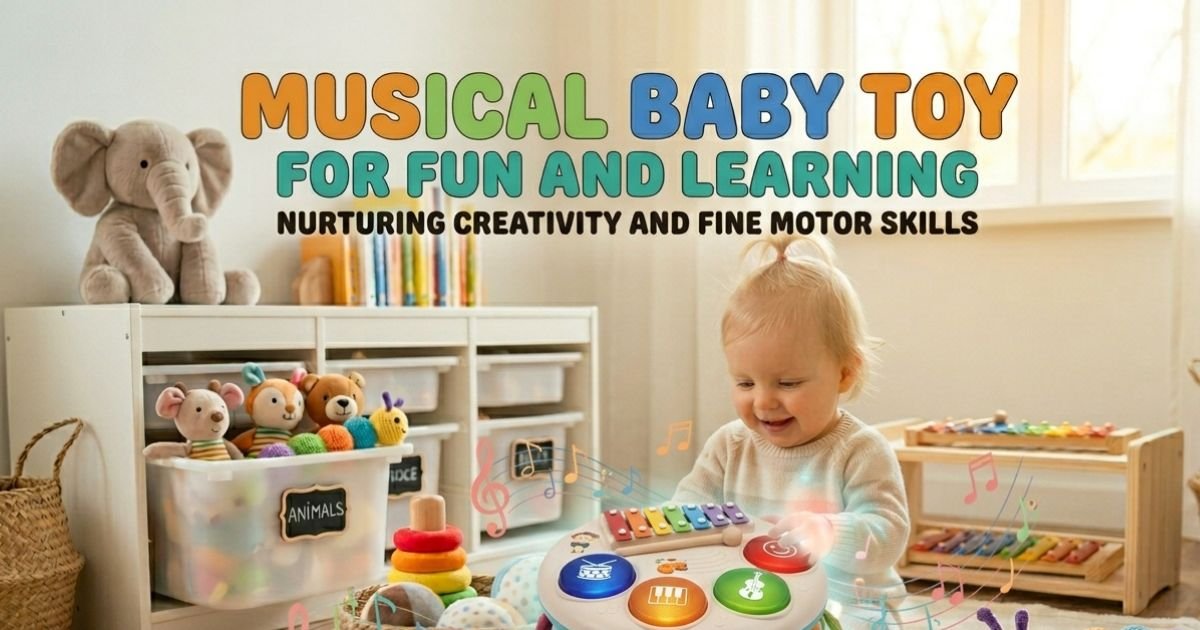

An engaging musical baby toy can transform playtime into a rich learning experience. Not only do these toys entertain with songs, lights, and sounds, but they also soothe crying babies and stimulate brain development. Pediatric experts note that listening to music can “encourage linguistic development and cognitive growth, and strengthen the bonds” between a baby and caregiver. In this article, we’ll explain what musical baby toys are, why they benefit infants and toddlers, how to choose safe options, and highlight some top products. You’ll learn how incorporating music in playtime supports cognitive, motor, language, and social development, making every tune a fun lesson.
What Is a Musical Baby Toy?
A musical baby toy is any toy that produces music, melodies, rhythms, or sounds when a child interacts with it. These toys often include buttons, keys, drums, or motion sensors that trigger songs, animal noises, or lights. For example, Fisher-Price’s Laugh & Learn Sing & Learn Music Player has buttons that play playful songs teaching the alphabet, numbers, shapes, and colors. Similarly, activity gyms and plush toys might jingle or light up when touched or shaken. In short, a musical toy combines entertainment with sensory and cognitive stimulation.
Key Point: Musical toys range from simple rattles and bells to electronic keyboards and interactive music players. Each is designed to capture a baby’s interest and teach cause-and-effect (e.g. press a button = hear music). Many educational musical baby toys double as learning tools. For instance, the Fisher-Price Laugh & Learn music player teaches letters, numbers, shapes, and colors through songs.
Benefits of Musical Toys for Babies and Toddlers
Musical toys offer a mix of fun and learning. Research and experts agree that playing with musical toys has many developmental benefits:
-
Cognitive and Brain Development: Music stimulates the brain. Playing with musical toys can boost brain activity in regions for processing sound, language, and memory. For example, one review highlights that playing instruments in childhood increases brain activity, enhancing memory, problem-solving, and even math skills. The University of Maryland notes that music’s patterns help teach early math and reading skills. Even passive listening sharpens auditory skills: infants exposed to music develop stronger neural responses to speech. In practice, banging out different rhythms or anticipating melodies helps babies notice change and continuity in sounds. And gentle lullabies often calm fussy infants, making them more ready to learn.
-
Language Skills: Musical play encourages babbling and early speech. Songs give structure to sound patterns, helping babies grasp language faster. As one guide explains, toddlers who hear repeated songs tend to “hear and repeat new words,” reinforcing vocabulary. Many musical toys have built-in words or counting rhythms. For example, a toy keyboard might sing color names or count aloud, helping children learn those words from play. Singing along and narrating what the toy does (e.g. “Look, it’s playing ‘Twinkle Twinkle Little Star’!”) also exposes infants to language in context. Furthermore, research suggests musical activities strengthen the same brain areas used for speech; one study found musically-trained babies had sharper auditory responses to speech sounds. In short, hearing music and lyrics during play builds a foundation for talking.
-
Fine Motor Skills: Handling musical toys strengthens little hands. Pushing buttons, tapping a drum, or shaking a maraca requires coordination and muscle control. For example, simple finger-play songs like “Open, Shut Them” engage tiny hand movements. Konig Kids notes that musical activities physically strengthen fine motor skills like grasping and coordination. Over time, pressing keys on a mini piano or hanging beads on a musical toy refines hand-eye coordination skills that later help with feeding, writing, and self-care.
-
Gross Motor Skills: Music naturally inspires movement. Dancing, marching, or swaying to a beat works large muscle groups and balance. The University of Maryland explains that moving to music helps children gain body awareness and coordination. For toddlers especially, marching with a tambourine or stomping to a drumbeat exercises their legs, arms, and core. Even simple actions like bouncing or clapping along build strength and balance. The CHILDRENS HEALTHCARE association also notes that dancing to music “can help children build the muscles in their arms, legs, and trunk”, turning play into a fun workout.
-
Social and Emotional Development: Music builds bonding and emotional skills. Parents often sing lullabies to babies in a softer, melodic tone, which has been shown to calm infants and strengthen attachment. These shared musical moments promote closeness. In fact, one pediatric resource emphasizes that singing together “can help form stronger bonds between babies and their parents”. Music also provides emotional regulation: lullabies teach babies how to soothe themselves, and even very young children can sense happy vs. sad tunes. Group music activities naturally involve turn-taking; ZERO TO THREE notes that passing out instruments and singing call-and-response songs help toddlers learn to wait and cooperate. These experiences lay the groundwork for teamwork, sharing, and confidence.
-
Creativity and Exploration: Musical toys invite experimentation. Babies enjoy discovering cause-and-effect tinkering with a toy drum or xylophone lets them be creative with sounds. Konig Kids points out that musical toys “foster creativity” and help children explore their world. There’s no “wrong” way to play: your child might invent their own rhythms or improvise new tunes on a toy piano. Over time, this creative play nurtures imagination and innovation.
Quick Tip: Provide a mix of musical toys. Variety (rattles one day, drums the next, a light-up piano afterward) keeps babies engaged and introduces different sound and movement experiences.
In summary, musical baby toys engage multiple senses and accelerate development across cognitive, language, motor, and social-emotional domains. Children practice listening, speaking, moving, and feeling joy—all through play.
Types of Musical Baby Toys
Parents can choose from many kinds of musical toys, each suited to different ages:
-
Rattles and Shakers (0–6 months): Perfect for newborns and early infants, these simple toys make gentle sounds when shaken. Soft, brightly colored rattles help little hands learn to grasp and shake. They introduce basic cause-and-effect (shake = sound) without complex features. You can also DIY a maraca by sealing beans or rice in a sturdy container.
-
Musical Plush Toys: These are stuffed animals or soft toys that play songs or nursery rhymes when squeezed. For example, a plush penguin that sings a lullaby when its feet are pressed. Plush music toys are usually soft and machine-washable, making them safe from birth. (Just ensure the sound box is securely sealed.) These toys double as comfort objects and can play gentle tunes for bedtime.
-
Activity Gyms and Mobiles: Place a baby on a mat or crib under a musical mobile. These often have lights and music that play when a toy is touched or when a parent presses a button. For instance, a play gym might play ocean sounds when a baby hits a toy whale, or a crib mobile might gently spin while playing lullabies. Such light-and-sound musical baby toys provide visual stimulation and encourage reaching, kicking, and tummy time. (Always supervise mobiles and remove them once your baby can push up on hands.)
-
Toy Instruments (6–12 months): As babies start sitting up, introduce simple instruments. Colorful drums, xylophones, tambourines, and mini keyboards let toddlers hit or shake to make sounds. These teach cause-and-effect and improve coordination. Expert Reviews praises the Baby Einstein Cal’s Smart Sounds Symphony because it encourages babies (6+ months) to “make beautiful melodies” by tapping drums and keys. It also exposes them to words in Spanish, French, and English. Such instruments come in baby-friendly sizes and produce gentle tones.
-
Musical Activity Tables/Gyms: These are for sitting babies or early walkers. They often combine shapes, buttons, and instruments. For example, Baby Einstein’s Drum & Learn Dean includes a puppy with a drum and speaker. Pressing the puppy’s head plays music, and an educational mode teaches colors, shapes, and even foreign words. Activity tables might have a piano keyboard that plays tunes or spinning wheels with sounds. These multitaskers keep toddlers learning letters, counting, and coordination all in one.
-
Interactive Learning Toys (e.g. an interactive musical baby toy): Many musical toys now have smart features. An interactive musical baby toy might have touch sensors, characters, and responsive lights. The Fisher-Price Laugh & Learn series is an example: its puppy-themed radio has buttons that play songs about letters, numbers, animals, and colors. When a child presses a key, the toy responds with music, encouraging back-and-forth play. These are often marketed for toddlers because they include more phrases and pretend-play elements.
-
Light-and-Sound Toys: Some musical toys emphasize both lights and music. For example, a keyboard with glowing keys or a dancing toy robot that sings and spins. These are highly engaging visually. However, experts advise using them wisely: one study found infants playing with high-tech toys (flashing lights, computerized sounds) had fewer verbal interactions with caregivers compared to traditional toys. The takeaway is to play with your baby. When using a light-up toy, let your child see you label colors or sing along, so you balance stimulation with social learning.
-
Bath Toys: There are waterproof musical toys for water play—like floating sing-along books or light-up bath cubes that play melodies. These can make bath time fun. (Just ensure they are designed for water and have securely sealed batteries to avoid leaks.)
Age Recommendations: In general, select toys labeled for your baby’s age. A helpful guide from Tumama Kids matches toys to stages:
- 0–3 months: Soft lullaby toys and high-contrast mobiles. Babies this young are soothed by gentle music; focus on calming sounds and simple rattles.
- 3–6 months: Graspable rattles, soft bells, and musical plushes (like a fabric guitar or plush piano). These help with grasp and auditory exploration.
- 6–12 months: Baby-sized drums, xylophones, and keyboards become ideal. These allow sitting babies to hit and listen. Toys on the floor encourage crawling and hitting from a seated position.
- 12+ months: Toddlers can handle toy pianos, shape-sorter music tables, and karaoke mics. They can press buttons, climb onto keyboards, and dance around, practicing standing and walking.
Always verify the age printed on the package. Remember Broward Health’s advice: never give toys with small removable parts to children under three, to prevent choking hazards.
- DIY Musical Toys: You don’t need to buy everything new. Simple homemade instruments can work great. For example, make a jam jar xylophone by filling glass jars with different amounts of water (let babies tap them with a spoon). Turn an empty tissue box into a “guitar” by adding rubber bands as strings. Pots and pans become drums with wooden spoons, and a sealed jar of rice or beans makes a maraca. These DIY toys let you customize sounds and textures.
Safety and Selecting the Best Toy
When choosing a musical toy, safety is paramount. Here are key tips:
-
Check Age Labels: Follow the recommended age range on the toy’s packaging. If a toy is labeled for 18+ months, it probably has small parts or complexity that’s unsafe for a 6-month-old. Broward Health emphasizes toys for ages 0–2 should be soft, colorful, and free of choking hazards.
-
Avoid Choking Hazards: Look over the toy for any small or detachable pieces (battery doors, beads, tiny figurines). Anything that can fit in a toilet paper roll is a choking risk for young children. As a rule, avoid toys with small magnets, beads, or buttons for babies under three.
-
Materials and Construction: Choose toys made of non-toxic, BPA-free plastic or untreated wood. Paint and plastic should be lead-free. The toy should feel sturdy, not brittle. Check for smooth edges and no sharp points. Good toys are built to last a beating and won’t split apart easily. Sognoz recommends opting for “sturdy, durable design” in musical toys.
-
Battery Safety: Many musical toys use batteries. Make sure the battery compartment is secured with a screw. Open battery compartments are dangerous—never let a baby access battery cells. Be cautious with button batteries as well. If a toy needs batteries, always supervise the baby, and check the toy regularly for cracks that could expose batteries.
-
Volume Control: Since loud noises can startle or hurt little ears, prefer toys with volume controls or a quiet setting. Start on low volume when introducing a new toy. Some electronic keyboards have headphone jacks or low-mode switches—use these if possible.
-
Certifications: Look for safety certifications on the toy or box. In the U.S., certified toys meet the ASTM F963 standard (now enforced by the Consumer Product Safety Commission). In Europe, the CE or EN71 mark indicates compliance. These labels mean the toy has been tested for hazards (choking, sharp edges, toxic materials).
-
Cleanability: Babies put toys in their mouths. Choose toys with smooth, waterproof surfaces that can be wiped or washed. If the toy has fabric parts, ensure they’re removable for machine washing. Always remove batteries before cleaning electronic parts.
Tip: Always supervise play with any musical toy. Even the safest toy should not replace caregiver interaction. Experts stress playing together first and independent play second, ensuring learning continues at each moment.
Top Musical Toy Examples
When it comes to specific products, several musical toys have earned high praise:
-
Baby Einstein Cal’s Smart Sounds Symphony: This multi-instrument toy has a wobble-base ideal for tummy time. Babies can tap the drums and keys to play melodies in English, Spanish, or French. It teaches instruments and colors with each button. (Recommended for about 6 months and up.)
-
Baby Einstein Drum & Learn Dean: Named “Best Educational Toy for Baby” by Parents Magazine, this interactive drum set features a puppy figure. Press the puppy’s head, and his paws tap the drums. In discovery mode, Dean teaches colors, shapes, and animal sounds in four languages. Parents note that its lights and songs are fun without being overwhelming.
-
Fisher-Price Laugh & Learn Music Player: A portable puppy-shaped radio with buttons. It introduces letters, numbers, shapes, and colors through songs and phrases. Pressing colorful buttons plays songs and silly sounds. (Ages 6 months+.)
-
Interactive Light-Up Toys: Brands like VTech, LeapFrog, and Melissa & Doug make popular interactive music toys. For example, a light-up piano mat lets a baby jump or press keys to play tunes. A toy microphone (karaoke-style) lets toddlers sing along. These engage multiple senses. (Remember to join in play to encourage learning.)
-
Musical Bath Toys: For bathtime, look for singing boats or light-up bath lights with melodies. These make water play more fun (just ensure they’re well-sealed and quick-drying).
-
DIY Favorites: Simple homemade toys can be just as effective. Parents often praise using household items – like a sealed jar of rice for a shaker or a wooden spoon on a bowl as a drum – as zero-cost musical experiences.
For the best musical baby toy, consider what your child enjoys. Some children love lights, others love plush characters, and some are mesmerized by rhythm. No matter which, ensure it’s well-made and engaging. As one parenting guide suggests, picks like Baby Einstein and Fisher-Price models often top the charts for combining education with fun. Ultimately, the best musical baby toy is one that suits your child’s age and sparks joy.
Tips for Maximizing Musical Play
To get the most from musical toys:
-
Play Together: Always start by playing the toy with your child. Model the actions (pressing buttons, shaking, dancing) and describe what happens. This turns the toy into a shared experience. For example, if a toy says “A for apple,” repeat it and point to an apple. Researchers emphasize that musical toys teach best when caregivers actively engage, rather than leaving the baby to play alone.
-
Encourage Imitation: If the toy claps or sings, encourage your baby to clap or mimic the sound. Babies learn by imitating. Celebrate their first “dada” or “mama” in a song!
-
Repeat Favorites: Repetition is key to learning. If your baby lights up at a particular song, play it again. Over time, they’ll anticipate the melody and maybe try to hum along, which is a big step in language development.
-
Narrate and Expand: While playing, describe what’s happening. If the toy lights up, say “Wow, colorful lights!” When it counts, count out loud. This expands vocabulary. For toddlers, ask questions: “What color is this key? Can you press the red one?”
-
Use Music in Daily Routines: Incorporate songs into routines. Sing a cleanup song when tidying toys or a welcome song when you enter the room. This reinforces patterns. Even a short lullaby at bedtime is beneficial for learning and bonding.
-
Balance Tech and Talk: If using electronic toys, don’t let them replace human interaction. One study found that tech toys with flashing lights led to less adult-child conversation. Counter this by narrating and singing yourself, turning the toy into a tool rather than a babysitter.
Parenting Pro Tip: Let your child explore different sounds. Sometimes, real-life “instruments” like pots & pans are just as fun as store bought toys. And don’t worry about making mistakes every laugh and smile means they’re learning.
FAQs
What are musical baby toys and what do they do?
Musical baby toys are toys that play melodies, rhythms or sounds when activated (by pressing, shaking, etc.). They often include lights or moving parts. These toys entertain infants while teaching cause-and-effect (babies learn that their action like pressing a button creates a sound). They also promote auditory skills, fine motor development, and curiosity.
Are musical toys safe for newborns?
Safety depends on the toy. For newborns (0–3 months), stick to soft plush toys or baby-safe rattles with gentle sounds. Avoid anything with small, hard pieces. Flashing lights or music toys can help soothe a newborn, but always ensure the volume is low and the lights are soft. Check that the toy has no removable parts and is rated for infants. Supervise all play.
How do musical toys benefit my baby?
They support development on many fronts. They boost brain growth (music sharpens sound processing and memory), enhance language (songs help babies “hear and repeat new words”), and strengthen motor skills (pressing keys builds muscle and coordination). They also encourage bonding and social skills through shared play. In short, musical play helps babies talk, listen, move, and feel confident.
What age ranges should use different musical toys?
0–6 months: Simple rattles, plush music toys, and gentle lullaby mobiles (to teach cause-and-effect and soothe fussiness).
6–12 months: Baby-sized drums, xylophones, and sit-down keyboards (for hitting and grasping).
12+ months: More complex instruments and interactive toys (toy pianos, karaoke mics, musical activity tables) that teach counting, colors, and encourage movement.
Can toddlers play with musical toys?
Absolutely! In fact, toddlers can handle even more interactive musical toys. Singing and playing rhythms helps toddlers learn new words and coordination. Experts note that music activities help toddlers “learn speech sounds, keep pace and rhythm, and feel confident”. So toys like small guitars, keyboards, or child-friendly microphones are great for 1–3 year olds.
Are light-up, music-filled toys okay for babies?
These toys can be engaging, but use them wisely. One study found that babies playing with high-tech toys (flashing lights, computerized sounds) had fewer verbal interactions with adults. The solution is to use light-up musical toys as shared activities: sit with your baby, play along, and talk about what happens. This way, the lights and music add fun while you still direct the learning.
How can I use musical toys to help learning?
Turn play into teaching moments. Sing the songs yourself, describe what’s happening, and encourage your baby to mimic actions. Repeat favorite songs so your baby can anticipate lyrics. Use the toy during routines: a wake-up song in the morning or a clean-up dance in the evening. The most effective use is with caregiver involvement – music toys are best when the parent or caregiver plays along. For example, as a toy sings “the itsy bitsy spider,” tap the spider on the toy and have your baby press along.
Conclusion
Musical baby toys are more than just fun playthings they are gateways to learning. Each beat and melody fosters brain development, fine and gross motor skills, language growth, and emotional bonding. From a simple rattle that makes a baby giggle to an interactive piano that teaches shapes, every toy has its place in your child’s developmental journey.
Choose a musical baby toy that fits your family’s style and watch your baby dance, babble, and learn. Every beat, tune, and shared smile is a building block for their future. With music in your baby’s daily routine, you’re not just creating playtime you’re creating opportunities for learning and bonding. Go ahead: put on a nursery rhyme, press those buttons, and dance together. Your child’s development is on a melody of its own making!
For extra inspiration, check out local music classes for babies or parent-and-child song groups. You’ll likely meet other parents curious about the same toys. Every song you introduce and every toy you explore becomes part of your baby’s journey. Let the music guide you through smiles, claps, and the wonder of learning.
Choose music – let the fun and learning begin!
