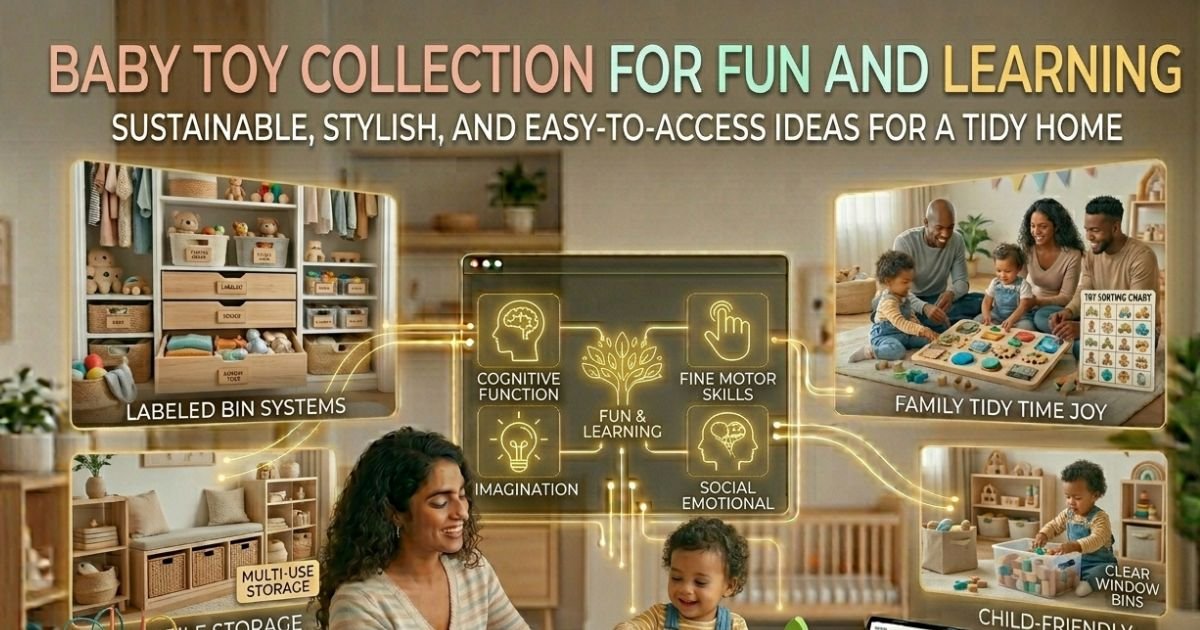

A well-chosen baby toy collection can turn playtime into a powerful learning experience. Baby toys aren’t just fun distractions they’re essential tools for early development. From colorful blocks and soft books to interactive activity centers, the right toys introduce infants and toddlers to shapes, sounds, and movements that spark curiosity and skill-building. In this guide, we’ll explain why baby toys matter for learning, how to pick safe and age-appropriate toys, and which educational baby toy sets, interactive games, and gift ideas will delight your little one while helping them grow.
Why Baby Toys Matter: Learning Through Play
Babies learn about the world by touching, watching, and experimenting, and toys make that learning engaging. In fact, experts emphasize that “toys aren’t just for fun for babies and toddlers, they’re tools for learning”. The right baby toys support physical growth, cognitive skills, problem-solving, creativity, and social engagement. For example, a simple stacking ring toy teaches hand-eye coordination and cause-and-effect, while colorful board books and musical rattles introduce language, rhythm, and sensory exploration.
- Motor and sensory development: Toys like soft balls, push-and-pull wagons, and activity gyms encourage crawling, walking, and grasping, strengthening gross and fine motor skills. Bath toys and textured blocks stimulate babies’ senses of sight, touch, and hearing.
- Cognitive and language skills: Puzzles, shape sorters, and alphabet blocks turn play into problem-solving and early math. Reading books together or playing with talking toys builds vocabulary and attention span. In one study, children practicing skills with toys acted like “little scientists,” exploring how things work through play. (They observe, experiment, and learn about shapes, colors, and cause-and-effect.)
- Creativity and social skills: Pretend-play toys – such as toy phones, dolls, cars and kitchen sets – let toddlers imagine real-life scenarios, boosting creativity and empathy. Interactive play (peek-a-boo, singing songs) with caregivers builds communication and confidence.
Play is brain-building, not frivolous: it helps babies meet key milestones across sensory, motor, social, and emotional domains. As ZERO TO THREE notes, the right toys can nurture almost every aspect of a baby’s development. By choosing toys that engage your child’s stage of play (see next section), you turn fun moments into valuable learning opportunities.
Choosing the Best Baby Toys by Age
Children develop quickly in their first years, so it’s important to match toys to each age and stage. Below are expert-recommended toy types for infants and toddlers (with examples of best baby toy for infants and older children). In general, start with simple, sturdy toys and gradually introduce more complex ones as skills grow.
Best Baby Toys for Infants (0–12 months)
Infants use their senses and motor skills to explore. The best baby toys for this age are large, soft or easy-to-grasp, and safe to mouth or shake. According to early-childhood educators, top picks include:
- Rattles and teething rings: Brightly colored rattles, teething keys or rubber rings keep little hands busy and soothe sore gums. These introduce cause-and-effect (shake to hear a sound) and encourage grasping. NAEYC specifically suggests rattles, large rings, squeeze toys, and textured balls for young infants.
- Cloth and board books: Soft, touch-and-feel cloth books or sturdy board books with high-contrast images are perfect for infants. These promote visual tracking (following pictures with eyes) and early language. Even very young babies respond to babies and animals on pages, as mentioned by child development specialists.
- Soft dolls and plush toys: Small stuffed animals or cloth dolls (with embroidered eyes, no buttons) can become comforting friends. They teach infants about touch and gentle play. This also sets the stage for later pretend-play.
- Activity gyms and play mats: Floor gyms with hanging toys invite infants to reach and bat at dangling objects. This builds upper-body strength and hand-eye coordination. Many gyms include mirrors and crinkly fabric for sensory intrigue.
- Stacking cups and blocks: Large, lightweight cups or blocks (free of small parts) introduce stacking and nesting. Around 6+ months, babies start to enjoy knocking down towers they build. Even simple plastic cups or cloth blocks can teach about size, balance and shapes.
Best Toys for Older Infants and Toddlers (1–3 years)
As babies turn into walkers and talkers, their toys should grow with their skills. For toddlers (about 1 to 3 years), look for toys that spark imagination, problem-solving, and active play. NAEYC recommends items like dolls, push toys, and large blocks for older infants, which transition nicely into toddler sets. Good options include:
- Building and sorting toys: Larger wooden blocks, Mega Bloks, or sturdy shape sorters encourage toddlers to stack, fit pieces, and identify colors/shapes. These activities boost spatial reasoning and patience. Simple puzzles (2–4 pieces) also introduce problem-solving.
- Ride-on and push toys: Small tricycles (with parental handle), push wagons, or pull-along animals help toddlers practice balance and walking. These active toys also teach cause-and-effect (push to move) and coordination.
- Pretend-play sets: Kitchen kits, tool benches, dollhouses, or animal figurine sets become highly engaging. They allow toddlers to role-play real-world scenarios, fostering creativity and language (e.g. talking “on” the phone or feeding a toy). Pretend toys also encourage social skills when playing with family or friends.
- Musical instruments: Shakers, drums, xylophones or toy keyboards introduce rhythm and sound. They’re fun and teach cause-and-effect (press key to hear note) as well as auditory discrimination (high vs. low sounds).
- Interactive activity tables: Some tables or cubes with buttons, levers and lights can target multiple skills – pushing buttons may play songs or light up, reinforcing hand-eye coordination and learning of numbers or letters.
When choosing toys for toddlers, always verify they’re age-appropriate and safe (see next section). Look for sets labeled for 1–3 year olds. As toddlers become more skilled, you can introduce interactive baby toys for kids (such as talking books or electronic learning tablets) that respond to actions with music or voices. These engaging toys keep curious toddlers involved while reinforcing concepts like letters, numbers, or animal sounds.
Safety First: Selecting Safe Baby Toys
Safety is paramount in any baby toy collection. Every baby toy should be designed to prevent injuries and hazards. U.S. law even requires that toys meet strict safety standards: under the Consumer Product Safety Improvement Act, all children’s toys must comply with ASTM F963 safety requirements. In practice, this means manufacturers test toys for choking hazards, toxic substances, and durability.
Here are key safety considerations and tips when picking baby toys:
- Age rating: Always check the age label on toys. A toy marked “3+” may have small parts and is unsuitable for babies. Choose toys with age ranges that include your child’s age. Experts warn that any toy intended for under-3 that poses a choking risk is essentially banned by federal regulation.
- No small parts: For infants and toddlers (under 3), ensure toys have no detachable small pieces. As NAEYC notes, “when choosing toys for children under age 3, make sure there are no small parts or pieces that could become lodged in a child’s throat and cause suffocation”. This means no coins, buttons, marbles, or tiny decorations. Even batteries should be secured and screw-closed.
- Non-toxic materials: Look for toys made of non toxic, BPA-free, phthalate-free materials. Safe toys are often painted with lead-free, non-toxic paint. Avoid toys with strong chemical smells or peeling paint. Most reputable baby toys will be labeled “BPA-free” or “safe materials.”
- Sturdy construction: Good toys are well-made with no sharp edges or points. NAEYC emphasizes that “safe toys for young children are well-made (with no sharp parts or splinters)…painted with nontoxic, lead-free paint; shatter-proof; and easily cleaned.”. Test toys yourself – can you pull them apart easily? Do parts stay firmly attached? Avoid any toy with easily broken components.
- Cleaning and maintenance: Babies put toys in their mouths. Choose toys that can be easily cleaned (washable fabric, wipeable plastic). Regularly wash plush toys and smooth surfaces with gentle soap or baby-safe wipes. Discard any toy that breaks, peels or comes apart.
- Electrical safety: If using electronic or battery-powered toys, ensure they are UL-approved (a certified safety mark) and batteries are well-protected. Loud noises should be at safe volume levels (under 85 decibels).
By following these safety tips many of which are backed by child safety guidelines – you can ensure your baby toy collection is fun and safe. Manufacturers of reputable baby toys will comply with these standards, so buying from well-known brands or checking for a manufacturer’s safety statement is wise.
Educational Baby Toys for Early Learning
To maximize learning, include toys that intentionally teach concepts through play. Educational baby toy sets are collections of toys designed to introduce letters, numbers, shapes, and other skills. For example, a block set stamped with letters or numbers, a shape-sorter with different geometric holes, or a puzzle set can all serve as early learning tools. These sets often feature multiple pieces and activities in one package. When your baby plays with them, they’re indirectly practicing important lessons.
Some top categories of educational toys:
- Stacking and sorting sets: Toys like stacking rings or nesting cups teach spatial reasoning and hand-eye coordination. Sorting toys (beads on a string, shape puzzles) reinforce color/shape recognition and fine motor skills. These classic educational toys help babies understand size and sequencing.
- Alphabet and number toys: Letter blocks, magnetic letters and number puzzles gently introduce literacy and counting. Singing alphabet songs while pointing to letters, or playing with a counting abacus, turns toys into mini-classrooms. These are perfect baby toys for early learning letters and numeracy.
- Musical and sound toys: Instruments, musical mobiles, or sound-matching games encourage listening skills and pattern recognition. Hearing different notes or animal noises from a toy fosters language and auditory learning. For instance, a baby toy xylophone helps a child learn about cause-and-effect (hit bar, get tone) and auditory patterns.
- Interactive activity sets: Activity tables, electronic learning toys, or plush toys that speak when buttons are pressed can teach a variety of concepts. Many have built-in games for counting, colors, or simple words. For example, an interactive plush toy might say “the letter A” when squeezed. These interactive baby toys for kids respond to the child’s actions, making learning dynamic and fun.
- Books with learning themes: Though not “sets,” baby board books are highly educational. Look for books that reinforce numbers, letters, shapes, or simple words (e.g. first words books). Reading together is one of the best learning activities. Books with textures, flaps or mirrors add sensory education.
By choosing educational baby toy sets, you ensure playtime is also learning time. For instance, a wooden block set with letters is an educational set that can be used again and again in different ways. Always keep play open-ended – the most educational toys are those that can be used in multiple ways as the child grows.
Example Educational Toys: Quality educational sets include wooden stacking blocks (for building and letter recognition), shape-sorting cubes, and activity cubes with spinning, clicking parts. These toys introduce colors, shapes and problem-solving in an age-appropriate way. An activity cube with buttons might teach numbers by counting lights, while a colorful puzzle board could teach animal names. The key is that the toy guides learning objectives while still letting the child explore freely.
Interactive Play and Toy Categories
As babies grow into toddlers, interactive play becomes especially important. Interactive baby toys keep children engaged by responding to their actions. These toys combine fun features (like lights, sounds, or moving parts) with educational messages. For example:
- Activity tables and cubes: These multi-sided toys often include buttons, gears, and levers. Pressing a button might play a song or illuminate a picture. This teaches cause-and-effect and fine motor skills.
- Talking toys and learning tablets: Battery-powered books or “toddler tablets” can speak letters, words or songs when the child touches images. They encourage independent exploration of language. (Always supervise screen-like toys and limit time.)
- Ride-on toys with features: Even wheeled toys can be interactive; some have buttons on the handles that honk a horn, play music or teach shapes as the child rides.
- Outdoor/physical toys: Bouncy animals, small slides or push cars promote active play. They develop coordination and muscle strength. While not traditionally “toy sets,” they play a crucial role in outdoor or active playtime.
Interactive toys are best for older babies (12+ months) who can intentionally play with them. They make early learning dynamic: for instance, pressing a toy piano key might say the number “five,” reinforcing counting. When choosing interactive toys, ensure they are sturdy and have volume controls. Again, check for UL certification and no loose batteries. In all cases, supervise play to guide learning and ensure safety.
Baby Toy Gift Ideas
Looking for gift ideas for the little one in your life? A thoughtful baby toy gift balances fun, learning and safety. Here are some baby toy gift ideas organized by age group:
- Newborn to 3 months: Consider high-contrast black-and-white board books or cards (to develop vision) and simple rattles or soft booties. A baby-safe musical mobile or a “tummy time” play mat with hanging toys can also delight a newborn.
- 3–6 months: Soft cloth books, crinkly sensory toys, and teething rings are winners. A gentle activity gym or playmat encourages reaching and kicking. Hooded plush toys or comfort blankets make sweet gifts too.
- 6–12 months: Bright stacking cups, nesting rings, shape-sorters, and bath toy sets (like floating ducks or pouring cups) help exploration. Push-pull toys (e.g. a rolling ball carrier or puppy on a leash) build walking skills. Interactive soft blocks (that say words when pressed) are great for language learning.
- 12–18 months: Busy board toys with switches and knobs, simple musical instruments, and sturdy board books with flaps fit the bill. A small ride-on car or push tractor encourages active play. Pretend-play sets (toy kitchen, doctor kit, animal figures) spark imagination.
- 18–36 months: More complex puzzles, larger building sets (Mega Bloks, big Legos), and pretend costumes or playhouses will please any toddler. Simple art supplies (washable crayons, finger paints) can also double as toys for creativity.
No matter the age, choose gift toys that are durable and from reputable brands. Bonus gift idea: a gift basket with a mix of sensory toys (soft, textured), a teether, and an interactive board book. This gives parents a variety of safe, educational baby toy gift ideas to rotate through stages.
By matching toys to age and interests, these gift ideas will delight babies and support early learning. And because all gift toys should still follow safety guidelines, always double-check the label (especially for choking hazards and non-toxic materials).
Conclusion
A baby toy collection that balances fun and learning is a wonderful investment in your child’s development. Toys that are age-appropriate, safe, and engaging will help your baby build motor skills, language, and creativity from day one. Remember to look for sturdy construction and safety certifications (like ASTM F963 or CE), and rotate through a mix of toys: sensory toys, building sets, books, musical toys, and interactive games. With every rattle shake, book read, and block stacked, your little one is learning something new. Start building that perfect baby toy collection today your child’s smiles and milestones will thank you!
Note: Always supervise babies during play and check toys regularly for wear. Share your favorite baby learning toys or subscribe for more parenting tips below to keep the play (and learning!) going strong.
