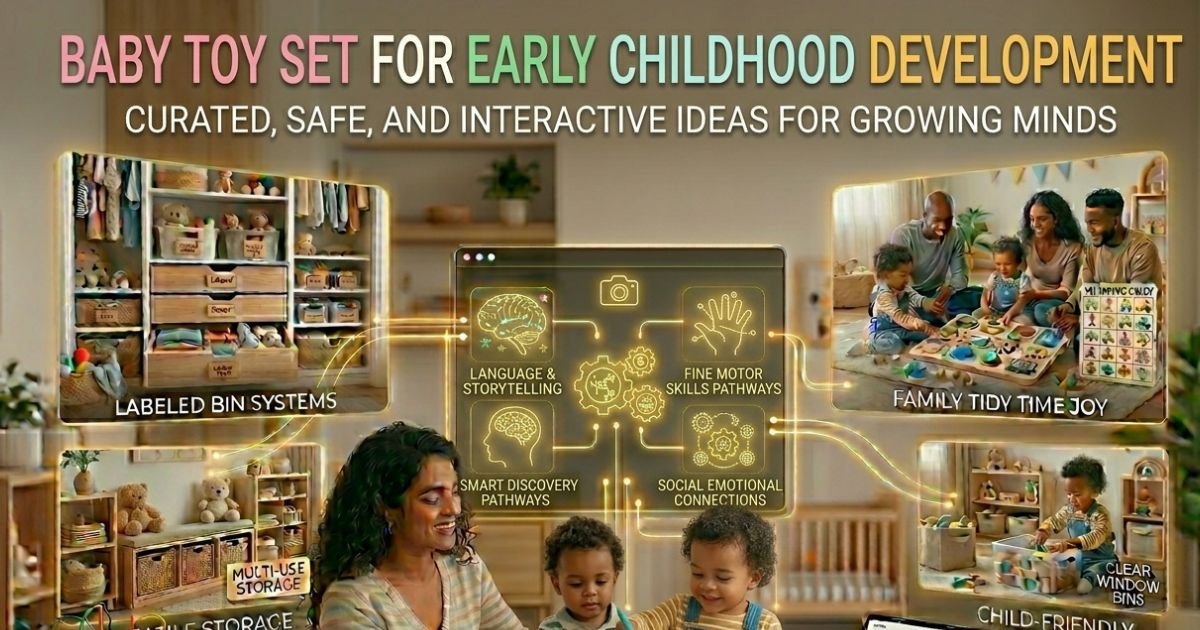

An engaging baby toy set can do more than entertain it can jumpstart your child’s development. Through play, infants and toddlers naturally build new skills. In fact, experts note that play teaches children about relationships, language, math, and problem solving. A well-chosen baby toy set typically includes colorful rattles, soft plushies, blocks or puzzles that capture attention and encourage exploration. In this guide, we’ll explain why a toy set matters for early learning, review types of toy sets (colorful, educational, soft, affordable, etc.), and offer tips on picking the right set for your little one. You’ll also find safety guidelines and product examples to help you buy wisely.
What is a Baby Toy Set?
A baby toy set is any collection or kit of age-appropriate toys designed for infants and young children. These sets often bundle multiple items (like blocks, teethers, rattles, and soft books) that stimulate different senses and skills. Because about 90% of young children’s play involves a toy, choosing a good set is important. For example, a basic set of wooden blocks or colorful shapes can be played with in many ways, supporting open-ended learning. In essence, a baby toy set provides a variety of tools for your child to touch, see, hear and manipulate, laying a foundation for learning.
Benefits of Baby Toy Sets in Early Development
Baby toy sets support every aspect of early growth. Through these toys, children develop fine and gross motor skills, sensory processing, and cognitive abilities. Key benefits include:
- Fine Motor & Hand-Eye Coordination: Manipulating small toys (stacking rings, shape sorters, blocks) strengthens tiny hand muscles. For instance, shape-sorting toys like Fisher-Price’s Busy Blocks (pet-carrier shape sorter) help introduce shapes and colors while developing fine motor grip.
- Gross Motor Skills: Larger toys that babies can push, pull or kick build crawling, standing and walking muscles. Activity gyms with dangling toys (for tummy time) and low push wagons encourage babies to crawl and stand. One example, the Fisher-Price 3-in-1 Kick & Sway Activity Gym, has a thick mat and rattling mobile that “helps foster gross motor skills, sensory skills, and cause & effect” as babies kick and reach.
- Sensory Development: Bright colors, contrasting patterns, textures and sounds engage babies’ senses. Pediatric advice recommends sensory toys involving textures, sounds and bright, contrasting colors for infants. A toy gym with a mirror, crinkly materials, or a textured ball helps infants focus, feel, and listen. For example, that same activity gym includes high-contrast patterns, a mirror, ribbon “taggies” and toys with rattles to stimulate sight, touch and hearing.
- Cognitive & Problem-Solving Skills: Play is essentially a child’s first work – discovering cause and effect. Simple toys like blocks, busy boxes or nesting cups teach concepts like size, order and gravity. Experts emphasize that basic, open-ended toys (like blocks and toy vehicles) score highest for promoting creativity and thinking. Through trial and error with toys, babies learn object permanence (peek-a-boo games reinforce that “hidden” objects still exist) and problem-solving. By around age 1, toys like stackable cubes and simple puzzles offer challenges that boost spatial reasoning and logic.
- Language & Social Skills: Interaction with toy sets often involves naming colors, numbers or animals, which builds vocabulary. Even simple baby books (often sold in sets with toys) greatly enhance speech and language development. Play also fosters social connections: when caregivers play together with a toy set, babies learn turn-taking, imitation and emotional bonding. As one pediatric expert notes, “Books are the best toys, at any age, to enhance speech and language development”.
By combining these benefits, a good baby toy set makes learning fun. As children explore shapes, colors, sounds and movements, they are essentially building neural pathways. In short, every rattle shake or block stack is a lesson in early development.
Babies and toddlers benefit from different toys at each age. For example, for 0–4 month olds, high-contrast sensory toys (bright rattles, mirrors, mobiles) are recommended. From 4–6 months, textured teething toys and soft squeeze toys aid grasping and oral exploration. Between 6–9 months, babies enjoy stacking blocks and rolling toys, which encourage crawling and fine motor control. By around 12 months and up, toddlers can tackle stackable cubes and shape-sorters for building problem-solving skills. At every stage, the right toy set is age-tailored: from plush rattles for newborns to simple puzzles and books for 1- and 2-year-olds.
Popular Baby Toy Set Categories
Toy sets come in many themes. Below are common types of sets that use our key keywords:
Colorful Baby Toy Sets
Bright colors and patterns naturally attract babies. Colorful baby toy sets often include rainbow stackers, multicolored blocks or animal puzzles. These vivid hues help infants practice visual tracking and learn to distinguish colors. Pediatricians recommend high-contrast visuals for newborns, noting that “bright, contrasting colors are great developmental choices” for babies. For example, a colorful stacking ring set (often included in baby sets) offers pieces in red, yellow, green and blue, helping your child match colors while stacking rings by size.
Educational Baby Toy Sets for Learning
Many sets are designed specifically to teach. Educational baby toy sets might include letters, numbers, shapes or basic puzzles. These toys encourage learning as babies play. For instance, shape-sorter sets (like the Fisher-Price Busy Blocks Pet Carrier) help “introduce babies and toddlers to shapes, colors & pet animals” and encourage problem-solving. Alphabet or number puzzles and soft books with words help build early literacy and math skills. The term “baby toy set for learning” simply means a toy kit that focuses on teaching concepts. Even simple kits like wooden blocks (educational focus: shapes and colors) promote counting and language when parents name each piece. In short, an educational set turns playtime into a fun lesson.
Soft materials are ideal for babies starting to explore objects by mouth. Soft baby toy sets (plush blocks, fabric books, cloth balls) keep infants safe while they grab and chew. The image above shows a baby happily chewing a cloth block. Parents should choose soft baby toy sets made of non-toxic, machine-washable fabric. According to child safety experts, plush toys should be “well made, machine washable… and have no loose ribbons or beads”. For example, soft fabric block sets allow gentle stacking and sensory play without hard edges. Always remove any small pieces or filling, since babies will explore everything by touch and taste.
Baby Toy Sets for Toddlers
As children grow, their interests and abilities expand. A baby toy set for toddlers (roughly ages 1–3) usually includes more complex playthings. Think wooden puzzles, chunky knobbed puzzles, pretend-play kits (toy kitchen, doctor kit) and sturdy ride-on or push toys. These sets encourage independent play and problem-solving. For example, a shape-sorting puzzle and a set of toy cars let a toddler use their growing motor skills and imagination. Experts remind parents that toddlers love books and pretend play: “Books are the best toys… to enhance speech and language”. Many toddler sets even include bilingual flashcards or counting beads for early learning. When selecting sets for toddlers, look for slightly larger pieces and themes (farm animals, numbers, vehicles) that match a busy toddler’s curiosity.
Affordable Baby Toy Sets
Baby toy sets range from budget to premium. You don’t need to overspend to get developmental value. There are many affordable baby toy sets under $20. For example, the popular Fisher-Price Baby’s First Blocks set costs only around $12. It includes 10 chunky colorful blocks and a bucket, introducing shapes and colors. In general, wooden block sets, plastic link rings and fabric activity books are inexpensive options. Shopping tip: look for multi-pack bundles or clearance deals, which can include 4–5 toys for one price. If cost is a concern, focus on open-ended basics (blocks, balls, stacking cups) that provide lasting play value. Even a single set of blocks can yield hours of learning and fun. As one expert notes, simple basic toys are among the most developmentally beneficial. In summary, an affordable baby toy set can still be colorful and educational – you just may need to hunt for deals or consider gently used toys from friends or resale stores.
Safety Guidelines for Baby Toy Sets
Safety is paramount with baby toys. Follow these guidelines when selecting or using any toy set:
- Check age labels and warnings: Always follow the manufacturer’s age recommendation. For instance, U.S. regulations require that toys designed for ages 3-6 have a label warning “choking hazard not for children under 3”. This helps you ensure the set matches your child’s stage.
- Think large – avoid small parts: Never give babies under 3-year-olds toys or sets that contain small detachable pieces. AAP advises that all parts must be larger than a child’s mouth to prevent choking. The Stanford Children’s Hospital suggests keeping toddlers away from any toy with pieces small enough to choke on. For example, a shape sorter should have blocks too big to swallow, and plush toys should have embroidered eyes instead of plastic ones that could pop off.
- Material safety: Toys must meet safety standards (like ASTM F963). Look for labels or descriptions indicating “non-toxic” and free of lead or harmful chemicals. The CPSC enforces strict limits on lead and banned phthalates in children’s toys. In practice, avoid toys with peeling paint or unusual smells. When in doubt, reputable brands usually comply with these rules. Remember that any toy that can be mouthed or dropped requires extra caution against toxic materials.
- Soft toy precautions: For plush or cloth toys, ensure they are well-made. Remove ribbons or strings longer than 7 inches (they can strangle). Stuffing or bean-fill should be sewn in securely. Choose machine-washable sets, since babies drool. AAP specifically warns to avoid stuffed toys with small beads or pellets inside that could leak out and pose a choking or suffocation risk.
- Crib safety: Keep hanging toys out of reach of an infant in a crib. Remove mobiles or gym bars once baby begins pushing up, or by 5 months of age, to prevent entanglement. Strings or cords (like from musical mobiles) must be short and secured.
- Avoid other hazards: Don’t give children high-powered magnets or button batteries (inaccessible if a toy set has electronics) – swallowing these can be deadly. Also avoid very loud toys or one that can shoot small projectiles. It’s best to supervise any new toy until you’re sure it’s safe.
By following these rules, you help prevent injuries and ensure the toy set remains fun. Always inspect toys for wear, sharp edges or loose parts before each use.
Tips for Choosing the Best Baby Toy Set
When shopping for a baby toy set, keep these tips in mind:
- Match toys to developmental stage: Review your baby’s current abilities and choose accordingly. Infants (0–6m) need soft, high-contrast toys and teethers. Older babies (6–12m) can handle stackers and push/pull items. Toddlers (1–3y) enjoy pretend-play sets and more complex puzzles.
- Focus on variety and learning: A mixed set (including something to hold, something to stack, something to chew, etc.) covers multiple skills. Look for sets labeled with educational focus (like “shapes & colors”). Using toys together (name shapes, count blocks) amplifies learning.
- Quality and durability: Choose sturdy toys that won’t break easily. As mentioned, basic wooden or thick plastic toys often last longer. The NAEYC underscores that “basic is better” – simple shapes or wooden blocks often outperform flashy gadgets in promoting development.
- Rotation and engagement: You don’t need dozens of toys at once. It’s better to rotate a few engaging toys weekly to keep them interesting. Rotate a baby toy set in and out, adding new pieces as your child grows.
- Interactive play: The best toy set is the one played with together! Use toys to play peekaboo, storytelling, or counting games. This builds bonding and language. Even a simple plush or block set becomes more educational when you describe what the baby is doing.
- Cleanliness: Babies drool and crawl. Wash soft toys and sanitize hard toys frequently. This keeps the baby healthy. Follow manufacturer washing instructions.
By choosing thoughtfully and playing actively, a parent can maximize the benefit of any baby toy set.
Popular Baby Toy Set Examples
To illustrate, here are some examples of well-known baby toy sets and their educational features:
- Fisher-Price 3-in-1 Kick & Sway Activity Gym: A multi-sensory gym with a plush mat, mirror, and linkable toys. It features “5 sensory play areas” including a self-discovery mirror, rattle roller, bead bar and a mobile, encouraging kicking and reaching. As a result, it “helps foster gross motor skills, sensory skills, and cause & effect” in newborns. This toy set is machine-washable and grows with baby (lay, tummy time, sit-up modes).
- Fisher-Price Busy Blocks Pet Carrier: A shape-sorting toy in a pet-carrier design. It includes 8 blocks (4 animals, 4 shapes) that little fingers sort into corresponding holes. As noted in the product details, it “introduces babies and toddlers to shapes, colors & pet animals” and “encourages early pretend play and helps foster problem-solving skills” for kids 6 months and up. In other words, this $16.99 set covers both fine motor practice (grasping the chunky pieces) and cognitive skills (matching shapes).
- Fisher-Price Baby’s First Blocks: (Around $12) A bucket of 10 chunky colorful blocks that babies can stack, sort and drop. It introduces core concepts: the product highlights “introduces colors & shapes” and even buckets up for easy storage. For example, as baby plays, you can name the red cube or blue triangle, reinforcing learning. The blocks are large and hollow, so they’re safe for 6+ month-olds.
- Lamaze or Soft Sensory Toy Set: Sets like Lamaze’s lineup often include a variety of plush toys (e.g. a rattling ball, a squishy mirror teether, a clacker). These focus on sensory exploration for newborns, typically under $20. Because they’re soft, they’re great for very young babies to handle and mouth. While we haven’t cited a specific Lamaze product, such sets exemplify the “soft baby toy set” category.
- Melissa & Doug Activity Cube or Shape Sorter: Wooden sets like Melissa & Doug’s offer stack-and-sort cubes or multi-activity panels. For example, their 12-sided wooden activity cube has puzzles, knobs, spinning gears and shape holes. Toys like these encourage toddlers to problem-solve, improving hand-eye coordination. Many such sets are around $25-$40 and are durable.
Each of the above sets aligns with our categories: they are colorful, engaging and have clear learning goals. Checking product specs and reviews (and our safety tips) before buying can ensure any set is a great addition to playtime.
Conclusion
A thoughtfully chosen baby toy set is a powerful ally in your child’s early development. These sets make learning playful teaching colors, numbers, language, and motor skills through enjoyable activities. Remember to match toys to your baby’s age and interests, prioritize safety (no small parts, non-toxic materials), and encourage parent-child interaction during play. Even simple, affordable sets (like a bucket of colorful blocks or a soft plush toy) can yield big developmental gains when used every day. As one pediatric source advises, tailoring toys to a child’s stage “fosters essential skills like problem-solving, creativity and social interaction”.
In short, let your baby play and learn! Offering a variety of safe, age-appropriate toys and playing together will give your child a bright start. Consider trying one of the recommended sets above or exploring new ones that fit your baby’s stage. Happy playing and watching your little one grow and learn!
