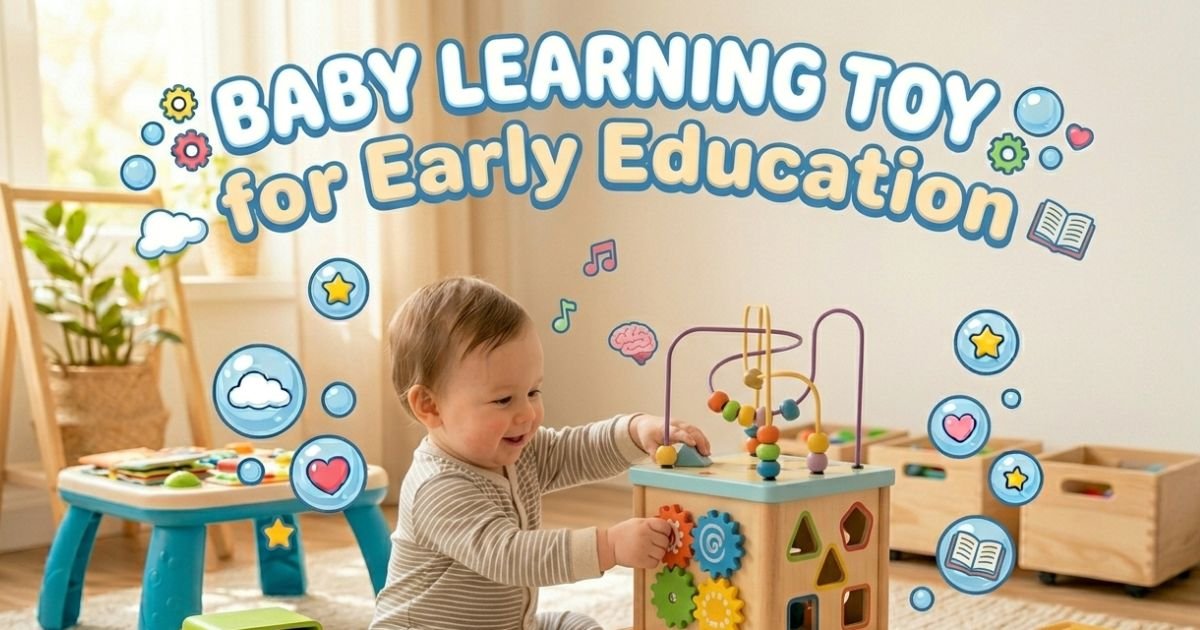

Baby playing with educational toys during tummy time. Baby learning toys are designed to stimulate infants from an early age. These playful, colorful toys encourage little ones to explore, learn, and build key skills. The right baby learning toy supports cognitive, motor, language, and social development in fun ways. In fact, research shows that playful learning approaches “support development across domains” (language, cognitive, social and more). In this article, we’ll explore the benefits of educational baby toys, top toy sets, fun learning activities, and expert tips. Parents and caregivers will discover how interactive play fuels their baby’s growth and what to look for in the best baby learning toys.
What Are Baby Learning Toys?
Baby learning toys are age-appropriate educational toys made for infants and toddlers. These toys often have bright colors, engaging sounds, and simple interactive features (like lights or buttons). The goal is to make learning playful and hands on. For example, a learning rattle encourages grasping and hand eye coordination, while a soft cloth book with textures and pictures introduces colors and words.
Montessori-inspired toys exemplify this idea. A Montessori-style toy “promotes engagement and serves a learning purpose, rather than just entertainment”. In practice, that means toys are designed to teach one concept at a time – like stacking rings to learn sizes or a shape sorter to learn shapes. These educational baby learning toys keep babies interested and help them learn cause-and-effect, vocabulary, and motor skills through play.
Key traits of baby learning toys:
- Sensory stimulation: Different textures, sounds, and colors grab babies’ attention. For example, black-and-white board books are ideal for newborns because the high-contrast images “help increase their concentration skills and attention span”.
- Safe, simple interaction: Toys often have large pieces and no choking hazards. They might make noise when shaken or have easy grips for tiny hands.
- Early skills focus: Many target basic skills like reaching, grasping, crawling, and first words. Rattles teach reaching and grasping, textured teethers soothe gums and teach touch, and simple puzzles or blocks introduce problem-solving.
In short, baby learning toys turn playtime into early learning. They lay the foundation for later skills by making discovery fun and hands-on from day one.
Benefits of Baby Learning Toys
Educational baby toys offer many developmental benefits. Playtime becomes learning time as babies experiment, imitate, and discover new things. Here are some key benefits:
-
Cognitive Development: Babies learn by exploring cause-and-effect and patterns. Toys like shape sorters, stacking blocks, or electronic learning panels help babies think and solve simple problems. For example, UnityPoint Health notes “sensory toys involving textures, sounds and bright, contrasting colors are all great developmental choices for babies”. Such toys teach babies about shapes, sizes and textures in a playful way. By engaging with toys, babies build early reasoning skills and understand that actions have predictable results (e.g. pressing a button makes a sound).
-
Motor Skills: Many learning toys boost fine and gross motor skills. Grasping a rattle, turning pages of a baby book, or stacking rings all strengthen hand muscles and coordination. UnityPoint recommends baby blocks for 6–9 months: “Baby blocks – Build fine motor skills”. Push-and-pull toys encourage crawling and walking, improving balance and strength. In general, active play with toys helps babies develop their muscles and coordination.
-
Language and Communication: Toys help introduce language concepts. Reading a board book or singing songs with a toy teaches new words. For instance, cloth books and story-telling toys encourage parents to name objects (“red ball,” “blue car”), which builds baby’s vocabulary. According to one guide, books and interactive storytime “enhance speech and language development, social and cognitive development”. Simple toys that “talk” (e.g., say ABCs or numbers when a button is pressed) also give babies early exposure to language and counting.
-
Sensory Skills: High-contrast patterns, bright colors, and varied textures stimulate baby’s senses. These sensory toys encourage visual focus and touch exploration. For example, soft balls, textured teethers, and musical mobiles engage sight, sound, and touch. As one expert explains, “Sensory toys involving textures, sounds and bright, contrasting colors are…great developmental choices for babies.”. Such sensory play supports brain connections in vision, hearing, and touch.
-
Social and Emotional: Playing with toys alongside parents or other children nurtures bonding and social skills. A simple game of peekaboo (hiding a toy and then showing it) teaches object permanence and gives babies joy and security. When parents and babies interact over a toy (pointing, clapping, or mimicking sounds), it helps the child feel understood and encourages communication. Even playing alone with a toy can give a sense of independence.
In summary, age-appropriate learning toys turn play into education. They provide a rich environment for babies to practice new skills naturally. By choosing toys that match a baby’s developmental stage, parents can support healthy brain development, motor skills, language learning, and more. In the next sections, we’ll look at types of baby learning toys and how to use them effectively.
Types of Baby Learning Toys
There are many varieties of baby learning toys, each focusing on different skills. Below are common types and examples:
-
Sensory and Soft Toys: These include rattles, teethers, soft blocks, plush books, and textured balls. They stimulate the senses (touch, sound, sight). For example, teething toys with bumps or contrasting colors help soothe gums while teaching texture differences. Soft cloth books with high-contrast pictures engage newborn vision. Rattles and musical plush toys introduce babies to cause/effect (shake = noise) and encourage reaching. Pros: Gentle, safe for infants (no sharp edges), easy to grasp. Cons: May outgrow quickly as baby grows.
-
Building and Stacking Toys: Blocks, stacking rings, and nesting cups encourage problem-solving and motor control. Placing rings on a peg or stacking blocks by size teaches spatial awareness and fine motor precision. UnityPoint notes “Stackable cubes Increase fine motor skills, cognitive development of spatial relations”. Wooden rings or plastic cups that stack are classic examples. Pros: Versatile (can be used many ways as baby grows), durable (especially wood). Cons: Sets can be bulky; too small pieces may pose a hazard.
-
Shape Sorters and Puzzles: Simple puzzles with pegs and matching holes teach recognition and hand eye coordination. For example, a cube with shaped holes (triangle, circle, square) allows the baby to learn shapes by fitting the right piece. These puzzles reinforce problem-solving and fine motor skills. UnityPoint mentions puzzles: “Puzzles with easy-grasp knobs Build fine motor skills, hand-eye coordination”. Pros: Builds cognitive skills early. Cons: Some shapes can be frustrating; ensure the pieces are baby-safe and not too small.
-
Books and Language Toys: Board books, flashcards, and talking toys build language and cognitive skills. Bright, durable board books with simple words or pictures allow babies to explore reading. Flashcards or cloth books (animals, fruits, letters) encourage naming. Interactive sound books or “talking” plush toys (that say letters or words when squeezed) introduce vocabulary and first numbers. Research emphasizes that “books are the best toys, at any age, to enhance speech and language development”. Pros: Prepares baby for reading, promotes parent-child bonding. Cons: Can wear with chewing; should be washable.
-
Musical and Interactive Toys: Baby-safe keyboards, toy phones, or animal sound toys engage auditory learning. These often have lights, songs, or spoken words. For example, pressing keys on a xylophone toy teaches cause-effect (press = sound) and can also introduce colors/numbers if labeled. An interactive baby learning toy might play the alphabet or count, helping toddlers learn basics. Pros: Engaging and entertaining; can teach specific lessons. Cons: Require batteries, may be overstimulating if loud or too fast-paced.
Each baby is different, so many parents opt for a mix. A baby learning toy set often bundles several types – e.g. a mat with dangling toys (sensory), a small set of blocks, and a picture book. When choosing toys, look for ones labeled with developmental stages or educational purposes, and match them to what your baby enjoys and needs to practice.
Baby Learning Toys by Age
Toys should match a baby’s developmental stage. Here’s a breakdown of recommended learning toys by age (based on expert guidance):
-
0–4 Months (Newborn): Focus on sensory stimulation. Items like rattles, colorful high-contrast board books, and soft plush animals are great. For example, dangling mobiles or a simple baby gym with hanging shapes encourage reaching and focus. Mirrors (securely attached) allow babies to see faces, boosting social and visual skills. Soft sensory mats or play gyms with different textures and sounds help babies practice turning their head and using arms/legs. (UnityPoint specifically recommends “colorful floor play mats” and “mirrors” for infants). At this stage, even everyday objects like a crinkly book or a safe household item can count as a learning toy by encouraging grasp and curiosity.
-
4–6 Months: Babies begin to reach and grab deliberately. Teething toys (textured or chilled) become important to soothe gums and explore texture. Soft squeeze toys or small stuffed animals with different textures engage hand-mouth coordination. Peek-a-boo toys (like cloth flaps or pop-up toys) teach the concept that things still exist when hidden. Mirror play is still valuable. Try introducing simple cause-and-effect toys: e.g., a drum or xylophone toy that makes noise when hit encourages banging or clapping. All toys should be larger than a baby’s mouth to be safe from choking.
-
6–12 Months: Baby is now mobile (crawling/wobbling) and curious. Introduce stacking and nesting toys: soft blocks or nesting cups to practice piling and fitting. UnityPoint recommends baby blocks specifically at this age to “build fine motor skills”. Also shape-sorter boxes: dropping shapes into holes teaches matching and hand-eye coordination. Rolling toys (balls or wheels that roll, possibly with sound) encourage crawling and walking. Sensory balls (different textures) promote grasping and coordinated movement. Hide-and-seek toys (like a box with a lid) reinforce object permanence: UnityPoint notes that “Peek-a-boo or hide-and-seek toys… enhance object permanence”. At the end of this stage (around first birthday), simple puzzles and stackable cubes help with spatial awareness and problem-solving.
-
12–36 Months (Toddlers): Now toddlers use words, walk well, and enjoy imaginative play. More complex puzzles (knobbed pieces) and building sets (big Lego, Duplo) improve fine motor and cognitive skills. Pretend play toys (toy phones, kitchen sets, dolls) develop creativity and social understanding. Interactive learning toys become useful too: e.g. a simple talking tablet or electronic book that teaches numbers, letters or animals with songs. Reading books with stories should be a daily routine, as “Books are the best toys… to enhance speech and language development”. Also outdoor toys like pull-cars or balls encourage gross motor growth. In this stage, the phrase “baby learning toy for toddlers” means toys that adapt to toddler skills: look for adjustable difficulty (like puzzles with more pieces) and vocabulary-building features.
Educational Baby Toy Activities
Toys are tools, but how you play with them matters. Here are some learning activities using baby toys:
-
Peekaboo (Object Permanence): Cover a toy with a cloth or your hands and say “Where’s the toy?” then reveal it. This classic game teaches object permanence – the idea that things exist even when hidden. Babies love the surprise and repetition; they’ll learn “peekaboo!” naturally.
-
Name and Point (Language Boost): Whenever baby points or gazes at a toy, clearly name it. E.g., baby holds a red ball, you say “Ball! This is a red ball.” Research highlights this simple game: naming objects baby shows interest in “helps them to learn new words”. Over time, the baby associates words with objects, building vocabulary.
-
Texture Talk (Sensory Play): Introduce variety of textures (a soft blanket, a wooden spoon, a fuzzy toy). Let baby feel each and label it “smooth, rough, soft.” UNICEF notes that feeling different fabrics and using words helps build touch perception and vocabulary. You can make it a game: guess the texture, find objects with that texture around the room, etc.
-
Stack and Sort Games: Use blocks or rings for early puzzles. Ask baby to stack 2 blocks or place shapes in a sorter. Cheer as they try: “Up goes the ring!” This builds problem-solving. Talk about colors and numbers (“Blue ring, one… two rings!”) as they play.
-
Musical Rhymes: Combine singing with toys. Tap a rhythm on a drum or play “If You’re Happy” while bouncing baby. Rhymes with actions strengthen memory and motor skills.
-
Pretend Play: Even babies can mimic. Give baby a toy phone or spoon and pretend with them. “Hello! Papa!” or “Eating yummy soup.” This encourages social skills and imagination.
-
Fine-Motor Fun: Give baby safe snacks like cereal to drop into a cup (supervised) or let them put rings on a peg. Any play that involves picking up small objects improves pincer grasp. You can narrate: “You put it in!” to link action with words.
As UNICEF advises, even simple household “toys” work: flipping a light switch (saying “on/off”) teaches cause-effect, and “in and out” games with a box and blocks teach spatial words and dexterity. The key is to engage: smile, name things, and celebrate their discoveries. These toy activities make learning concrete and fun for babies.
Interactive vs. Traditional Learning Toys
Baby learning toys range from simple non-electric toys to interactive electronic gadgets. Each style has pros and cons:
-
Traditional Toys (No Batteries): These include wooden blocks, cloth books, rattles, puzzles. Pros: Durable, often made of natural materials, and encourage open-ended play (baby can use them in many ways). They tend to focus baby’s imagination and manual skills without screens. Cons: They might have a single function (stack, sort) so might need more creativity from caregivers to “drive” play.
-
Electronic Interactive Toys: Examples are baby tablets, singing stuffed animals, or talking baby walkers. These toys often have lights, music, and phrases. Pros: They can introduce letters, numbers, shapes, and songs in an engaging way. They grab attention and can “teach” through repetition. Cons: They require batteries or charging, can be overstimulating with noise, and sometimes teach passively. Experts caution that babies learn best from real-life interaction, so use these sparingly and preferably with a parent rather than alone.
A good rule is balance: a best baby learning toy setup includes both types. For instance, a toy laptop might say the alphabet (interactive), while a wooden puzzle promotes careful thinking (traditional). Always supervise electronic toy use and combine it with play-acting or storytime for maximum learning benefit.
Best Baby Learning Toy Sets and Examples
There are many curated baby learning toy sets designed to cover multiple skills. While we won’t name brands, here are examples of what to look for in a comprehensive set:
-
Multi-Activity Playsets: These have different modules: e.g. a mat with mirror and sound buttons, plus detachable shapes. One playset might include a shape sorter on one side and an activity board on the other. This covers several skills at once – sensory play, fine motor, and cause/effect.
-
Stacking and Sorting Sets: A box set might include nesting cups, a stacking ring tower, and wooden blocks. These let baby grow: initially shaking blocks like rattles, then stacking them later. Some sets include letters or numbers on blocks to introduce symbols early.
-
Interactive Learning Playmats: Floor mats with letters, numbers, and textures. Some are also electronic (press an icon to hear its name). These encourage tummy time and teaching baby basic concepts.
-
Soft Book & Toy Combo: Many sets pair a cloth book with a soft toy character. The character might “read” to the baby or crinkle pages for sound. The learning toy set could also include sensory objects like a teething ring with a mirror.
When evaluating a set, consider age-appropriateness. A set labeled 6–12 months should have no small parts and should match skills (like bigger blocks, easy-pull rings). For toddlers, look for slightly more complex sets (puzzles with knobs, pretend play kitchen kits, etc.).
Always check reviews or educational claims if possible – the best baby learning toy set will mention targeted skills (e.g., “supports motor development” or “teaches colors and counting”). A well-designed set grows with your child and offers many ways to play.
Tips for Choosing Baby Learning Toys
Here are practical tips to pick and use baby learning toys effectively:
-
Age and Stage: Follow age ranges on packaging, but also watch your child. If a toy is too easy or too hard, save it for later or introduce it sooner. For example, peek-a-boo toys are great around 6–9 months when object permanence concepts bloom.
-
Safety First: Always check that toys have no small parts or hazards. For young babies (under 3), don’t give any toy that can fit through a paper towel tube (a standard choking test). Stanford Children’s Health warns: “Don’t let your toddler (ages 3 and under) play with small toys and parts… This can cause them to choke”. Also discard any strings or ribbons longer than 7 inches babies can strangle on cords. Choose BPA-free, non-toxic materials for teething toys. Always supervise play, even with safe toys, and regularly inspect toys for wear or damage.
-
Durability and Ease of Cleaning: Babies often taste and dribble on toys. Fabric toys should be washable, hard toys should wipe clean. Wooden toys are great for durability but make sure any paint is non-toxic.
-
Open-ended Play: Prefer toys that can be used in multiple ways. For instance, simple blocks can become vehicles, towers, or pretend food. This kind of play fuels creativity.
-
Engaging Features: Bright colors, gentle music, or textures can hold baby’s interest. But avoid toys that are overly fast-paced or loud for long periods. The best baby learning toys allow the parent to participate – like pressing buttons together or naming shapes.
-
Rotate and Refresh: Keep a few toys out at a time and swap them weekly. Novelty keeps baby engaged. Even ordinary objects (like wooden spoons or plastic cups) can become new “toys” and teach cause-effect or volume.
Safety and Maintenance
Always keep safety in mind:
- Small Parts: As mentioned, no detachable eyes, buttons, or pieces that can break off. Even beads or small stars should be larger than a choking hazard.
- Sharp Edges: Toys should be smooth without splinters or sharp corners.
- Strings and Loops: No cords longer than 7 inches (17 cm) on any toy – this is a strangulation risk. Avoid toys with straps or ribbons too.
- Regular Cleaning: Wash plush toys often. Hard toys can usually be wiped with mild soap. This keeps germs at bay, especially for teethers.
- Check Recalls: Stay updated on toy recalls from the Consumer Product Safety Commission (CPSC) to ensure none of your child’s toys have been flagged.
Finally, the most important safety step: Supervision. Even the safest toys should be used under adult watch, especially for babies who mouth everything. Always follow the manufacturer’s instructions for age and use.
Conclusion
Baby learning toys turn playtime into a foundation for early education. From the first colorful rattle to a toddler’s building blocks, each toy teaches lessons. Sensory toys spark curiosity, books and speech toys build language, puzzles and blocks grow thinking and motor skills. By choosing age-appropriate educational baby learning toys and actively playing with your child, you can boost their development in all domains.
Remember: quality over quantity matters. A few thoughtful toys and learning activities (like peekaboo, naming games, or hide and seek) can be more valuable than a room full of noise. Look for durable, versatile toys (sometimes bundled in baby learning toy sets) that grow with your child. And follow safety guidelines to keep playtime joyful and hazard-free.
With the right mix of the best baby learning toys, you’ll nurture your baby’s curiosity and skills from day one. Happy playing and learning!
