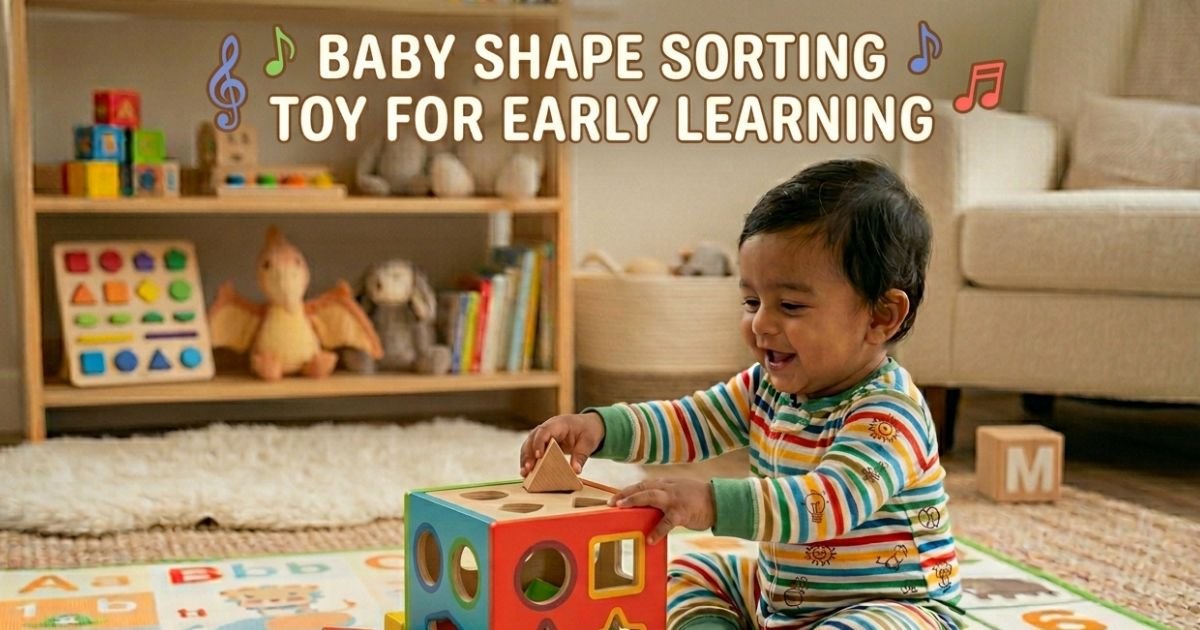

Introducing a baby shape sorting toy is a fun way to help little ones learn. A shape sorter typically is a box (or other container) with cut-out holes and matching blocks. Babies and toddlers match each block to the hole of the same shape, dropping it through to hear the satisfying clunk. This simple play builds essential early learning skills. In this article we explore what shape sorting toys are, how they boost development, and how to pick the right one. Parents will discover educational benefits, pros and cons, examples of top baby shape sorting toy sets, and safety tips for choosing the best option.
A classic wooden baby shape sorting toy (Melissa & Doug shape-sorting cube) with brightly colored shapes to match the holes. Such toys engage toddlers in hands-on learning while developing fine motor and problem-solving skills.
What Is a Baby Shape Sorting Toy?
A baby shape sorting toy is a simple early-learning toy that typically includes a container with cut-out shapes and matching blocks. The goal is for the child to fit each block into the corresponding hole. As Melissa & Doug explains, a classic shape-sorting cube “features 12 chunky, vibrantly colored shapes with rounded edges that are easy for little hands to hold and maneuver. Each cube fits through a hole of the same shape on the natural-finish hardwood cube”. In other words, toddlers pick up a block, recognize its shape, and find the matching hole to drop it through. After dropping all shapes, they can open a lid or door to retrieve them and play again.
Shape sorting toys come in many forms: cubes, bins, boards, and even themed figures (like a bus or animal). Some are made of wood, others of plastic or fabric. Educational baby shape sorting toys often use bright colors and various textures to keep kids engaged. Many classic designs are made of solid wood for durability, as noted by toy experts. Regardless of style, these toys share the same basic function: they teach matching by having the child recognize shapes and drop them through the correct slot. This simple concept makes shape sorters one of the most popular and enduring baby toys for early learning.
Benefits of Shape Sorting Toys
Shape sorting toys are more than just playthings – they foster a range of developmental skills. Benefits include:
- Hand–Eye Coordination & Fine Motor Skills: Grasping and manipulating blocks helps toddlers refine their finger and hand movements. Each time a child picks up a shape and places it in a slot, they practice the pincer grasp and wrist rotation. Experts note that “as children pick up the blocks and attempt to fit them into the holes, they are working on their motor skills and hand-eye coordination”. This develops the small muscle control needed for later tasks like writing, buttoning, or feeding themselves.
- Problem-Solving & Logic: Shape sorters encourage trial-and-error thinking. A child might try one way, see it doesn’t fit, then turn or rotate the block to solve the puzzle. This process “supports attention, working memory, and flexible thinking” as noted in child development guides. Every “try, adjust, and try again” cycle on a shape sorter builds early cognitive skills and perseverance.
- Spatial Awareness & Geometry: Matching a 3D block with a 2D opening strengthens spatial reasoning. Toddlers learn that shapes have orientations and angles; for example, a triangle must be turned to fit. This activity “builds mental rotation and spatial awareness,” which in turn lays groundwork for early math and geometry understanding.
- Shape and Color Recognition: Repeating shape names (circle, square, triangle, etc.) during play helps a child learn vocabulary. Many shape sorters use bright colors to reinforce learning. Simply handling a “red star” block and dropping it into the star hole introduces both the concept of that shape and its color name. In fact, studies and guides point out that using consistent labels (like calling shapes by name) during play supports language development.
- Problem Solving and Creativity: Beyond solving the shape puzzle itself, toddlers often experiment creatively. They might sort shapes by color or use the blocks for free play. According to educational blogs, shape sorters “encourage creativity” as children imagine new uses for blocks or try shapes in different sequences.
- Language and Vocabulary: As noted above, naming shapes and colors reinforces language. Therapists recommend describing the action (“Let’s try a circle”) and praising attempts (“Great job rotating the square”) to build a child’s verbal skills. One parent guide says shape sorters “develop vocabulary knowledge (e.g. being able to identify and name shapes)”.
- Social Skills (Turn-Taking & Play): When played with a parent or sibling, taking turns with a shape sorter teaches social interaction skills. Even simple statements like “Your turn, my turn” during play help children practice sharing and patience.
- Persistence and Confidence: Persisting until a block fits teaches children patience and persistence. It also offers a sense of accomplishment. As one toy maker notes, “Finding the correct matching shape can also help kids feel a sense of pride and accomplishment”.
In summary, shape sorting toys engage multiple areas of learning. Experts note they “help develop a wide range of skills, including hand-eye coordination, problem-solving abilities, spatial awareness, cognitive development, and creativity”. By playing with shapes, toddlers learn through hands-on, screen-free play.
Types of Shape Sorting Toys
There are many designs and materials for baby shape sorting toys. Parents should consider the differences to find what best suits their child’s age and interest. Common types include:
- Wooden Shape Sorters: These classic toys usually have a wooden box or cube with holes for wooden blocks. They’re durable and have a natural look. For example, the Melissa & Doug Shape-Sorting Cube is “beautifully constructed from high-quality, solid wood” and comes with 12 wooden shapes. Wooden sorters are often preferred by Montessori-style educators and last for years. They tend to be quiet when used (no electronics) and have a tactile, sturdy feel. The Montessori toy store even highlights that a solid wood cube is a “beautifully constructed wooden toy, perfect for kids who love shapes and colours”.
- Plastic Shape Sorters: Many shape sorters are made of plastic and come in bright colors. These can have more varied shapes and designs (like animals, vehicles, or cartoon characters). Plastic toys may include interactive features (lights, music, sounds). For instance, some electronic sorters play songs when a shape is inserted. Plastic toys are typically lighter and easy to clean. According to child-toy experts, plastic models “can be lighter, easy to clean, and sometimes allow varied shapes with precise edges”. The tradeoff is they may include many parts (some plastic shards can break) and often use noisier feedback than wooden ones.
- Shape Sorting Boards or Puzzles: Instead of a box, some toys are flat puzzles where shapes fit into outlines (like a pegboard or puzzle board). These emphasize matching 2D outlines to blocks. They can be a good transitional toy once a child can remove pieces without frustration. Boards are usually thinner and focus on shape recognition more than dropping shapes into a container.
- Soft/Fabric Sorters: For very young babies or travel, there are soft cubes or bags with fabric shapes. These are quiet (no falling noise) and lightweight. Pieces may have different textures. Because blocks can deform, they require close supervision but are great for on-the-go play. JoyCat notes soft sorters are “safe, quiet, squeezable”, though shapes may be less precise for matching.
- Electronic/Interactive Sorters: Some modern sorters have lights, sounds, or interactive apps. These can motivate young children, but sometimes distract from the pure shape-matching challenge. JoyCat’s guide notes electronic toys provide “immediate reinforcement” but “sounds can distract from self-correction”. They may also reduce talking opportunities between parent and child.
- Themed or Vehicle Shape Sorters: Toys like a bus, car, or animal with shape holes can appeal to toddlers. For example, a “musical bus shape sorter” doubles as a xylophone and shape sorter. These often combine multiple play modes (colorful shapes and music). They tend to be plastic and are more of an educational “busy toy.”
- Stacking Shape Sorters: Some shape sorters have a stacking ring or peg that different shapes slide onto (like this Wonder Cube from B. toys). The Wonder Cube has 9 shapes and doubles as a storage container. It encourages stacking and counting too. This hybrid design adds another dimension to play.
In all types, look for shapes in different geometric forms (circle, square, triangle, etc.) and different colors. Variety adds learning value. A colorful baby shape sorting toy can hold a toddler’s attention longer and introduce color matching as well as shapes. As one product description says, the Wonder Cube uses “9 unique and vibrant shapes – from clovers, to hearts, to hexagons” to build fine motor and recognition skills.
Wooden vs. Plastic and Material Choice
Choosing material depends on your priorities. Wooden sorters are sturdy and have a classic feel. They are often made from “high-quality, solid wood” with a natural finish and typically have smooth, painted surfaces. They can be more expensive but last a long time and fit a Montessori-style aesthetic. Plastic sorters are more common in big-box stores and are often cheaper. They can be molded into fun shapes and may include extras like lids or drawers. However, plastic models should still follow safety rules (no sharp edges or toxic paint). A toy expert guide advises that both wood and plastic can be safe and durable when well made; choose based on how you use the toy (JoyCat). For example, if you need a washable toy for messy play, plastic might be better. If you prefer a quiet, screen-free playroom, wood is ideal.
Shape Variety and Complexity
The number and shape of blocks affects the toy’s difficulty. Beginner sets often have only 3–5 basic shapes, suited for 1-year-olds. More advanced sets may have 8–12 shapes including complex ones like stars or pentagons. Some cubes have shapes on multiple faces, adding variety. As children grow, you can level up to a sorter with more holes. For example, the Melissa & Doug cube has 12 shapes for older toddlers. Think about your child’s age and interest: a “baby shape sorting toy for toddlers” should have big, easy-to-hold pieces, while an older toddler can manage smaller, more intricate shapes.
How to Choose the Best Shape Sorting Toy
When shopping, consider these tips:
- Age and Skill Level: Check the recommended age on the toy (e.g. 18 months+, 2+ years). Very young babies benefit from larger pieces and few shapes. As a general rule, a 1-year-old should start with 2–3 large shapes, progressing to 5–8 shapes by age 2.
- Safety and Materials: Ensure non-toxic paints and smooth edges. Verify the toy meets safety standards (in the US, look for ASTM F963/CPSIA compliance; in the EU, EN71). Ensure holes are large enough and pieces cannot be swallowed. Avoid loose parts and check that lids/doors latch securely so that blocks don’t fall out unexpectedly.
- Durability: Wooden toys usually last longer than flimsy plastic. Check that blocks fit snugly but aren’t glued (so they don’t crack). The container should be sturdy (some wooden sorters can be stood on if well-made).
- Ease of Use: Some designs have removable lids or doors to reset the toy easily. JoyCat recommends a removable lid for easy play reset. This prevents frustration.
- Variety: If you want a long-lasting toy, choose one with many shapes and bright colors. The shapes should be easily distinguishable by sight and touch.
- Storage: Some shape sorters double as storage bins (like the Wonder Cube). This keeps pieces together and teaches cleanup habits. Others come with carrying cases.
- Multi-function: A few shape sorters incorporate other learning elements, such as number matching or musical parts. Decide if you want a simple sorter or something with extra features.
- Price and Quality: While you can find cheap sorters, investing in a well-made one often pays off. Brands like Melissa & Doug, B. toys, and Hape have quality reputation for wooden sorters.
When you have narrowed your options, read product reviews and check for mentions of choking hazards or durability issues. Even reviews on sites like Amazon or Walmart can provide insight (look for comments on size, sturdiness, and how children respond).
Top Baby Shape Sorting Toy Sets and Brands
There are many great baby shape sorting toys on the market. Here are a few popular choices with different features:
- Melissa & Doug Shape-Sorting Cube (Classic Wooden Toy): This wooden cube (for ages 2+) comes with 12 thick wooden shapes. It’s solid wood with natural finish, easy to grip shapes, and a hinged lid. Experts praise it for being an “ultimate shape sorter” that promotes color and shape recognition, problem-solving, and fine motor skills. (Image: Melissa & Doug Shape-Sorting Cube)
- B. Toys Wonder Cube (Wooden Shape Sorter): A cube with 9 vibrant shapes and a clear lid. It doubles as a storage container. The playful lid and fun shapes (clover, heart, hexagon, etc.) encourage kids to explore shapes, colors, and counting. It’s recommended for toddlers 18+ months. The Wonder Cube highlights shape recognition while also teaching counting (“ask them to count the blocks!”).
- VTech Busy Shapes (Plastic Electronic Sorter): This plastic toy includes lights and sounds when a shape is placed correctly. It also teaches shapes, colors, numbers, and animals through electronic feedback. (Note: Electronic sorters are fun but be aware they may reduce creative trial-and-error play.)
- Fisher-Price Xylophone Shape Sorting Bus: A plastic bus that is also a xylophone. The bus has shape holes on the roof and sides, plus a xylophone inside for musical play. Pushing shapes through plays a note.
- K’s Kids Take-Along Shape Sorter (Soft Bag): A soft fabric cube with textured blocks and a zipper bag for storage. It’s machine washable and good for travel. The pieces are large, tactile, and safe (a great first shape sorter for very young babies).
- Puzzle Boards or Sorting Tray Sets: Some sets come with multiple boards featuring different activities, including shape sorting. For example, a wooden tray might include pegged shapes that fit into slots, plus stacking pegs. These multi-activity sets grow with the child.
- Montessori Wooden Shape Puzzles: Simple boards with cut-out shapes made of wood, often unpainted or in natural tones. They present shapes with less color distraction, focusing on the form itself.
- Huanger Musical Bus Shape Sorter: This toy is a plastic bus with a xylophone and 3D shapes on the roof. It’s very popular online. (Shoppers note it’s bright and combines music with shape sorting.)
- GeoSmart Magnet Toys Shape Sorter: Magnetic shape-set that allows for building 3D models, including shapes sorting. For a twist on sorting, look for magnetic geometric sets.
Each of these options suits different needs. For a wooden baby shape sorting toy, Melissa & Doug and B. toys are top-rated. For bright colors and sounds, VTech or Fisher-Price offer electronic options. A baby shape sorting toy set might refer to multi-piece sets that include various sorting activities (like a puzzle tray plus a sorter). When choosing a “best” toy, consider your child’s age and your preference for wooden vs. plastic, simple vs. interactive.
Tips for Maximizing Learning with Shape Sorters
To get the most out of your baby’s shape sorting toy, use these strategies:
- Model and Name: Demonstrate how to rotate a block and say the shape’s name before inserting it. For example, hold up the triangle and say “triangle,” then place it in its hole. Repeat this language consistently to help your child learn shape names.
- Encourage Sorting by Color/Shape: Once your child masters simple matching, add challenges. Ask them to find all the red shapes or all the circular pieces, like in KidSense’s tips. This integrates color recognition and category sorting into play.
- Hide and Seek Shapes: One tip is to hide the shapes around the room and ask your child to find a specific shape before sorting. This makes the game dynamic and reinforces shape identification.
- Turn-Taking Play: If two children play together (or parent and child), take turns placing shapes. Encourage each other, using phrases like “It’s my turn” and “It’s your turn”. This teaches sharing and patience.
- Extend the Activity: After sorting, you can build with the blocks as a stack or use them in counting practice (“How many shapes do we have?”) because many shape-sorter sets have a number of blocks that make easy counting exercises.
- Address Common Challenges: If a child throws pieces out of frustration, try reducing the number of shapes in play, or encourage deep breaths and persistence. Use positive language and celebrate effort (“Nice try!”).
- Rotate Toys: If interest wanes, swap the shape sorter with another toy or introduce a new shape. JoyCat suggests alternating between a box sorter and a puzzle board, or trying a soft sorter if the child dislikes noise.
- Safe Play Setup: Play on a low table or the floor so the child can easily reach. A non-slip mat under the sorter or a small basket for retrieved shapes can keep things tidy.
In short, make the experience interactive. Ask simple questions (“Where does the circle go?”), praise attempts, and follow your child’s lead. Keep play sessions short (a few minutes with breaks) for very young toddlers to maintain focus. These actions turn a simple shape sorting toy for toddlers into a rich learning activity.
Pros and Cons of Baby Shape Sorting Toys
Pros:
- Highly educational: Builds cognitive and motor skills.
- Durable (especially wooden) and reusable for years.
- Engaging colors and shapes keep toddlers interested.
- Can be social (works with parents or siblings).
- Encourages independent play and problem-solving.
Cons:
- Limited longevity if toy has very few shapes (a child may outgrow an easy set).
- Some toddlers may initially get frustrated if shapes don’t fit.
- Potential to lose pieces if child is careless.
- Electronic sorters can distract from learning if overused (some studies suggest parents talk less during electronic toy play).
- Cleaning required: small parts on floor.
Overall, most experts agree the benefits far outweigh any downsides. Proper supervision and choosing the right level of challenge will minimize cons.
Conclusion
A baby shape sorting toy is a classic choice for early childhood playtime. It turns shape recognition into hands-on fun, supporting everything from motor skills to problem solving. By selecting a quality toy (wooden or plastic) that meets safety standards, you give your toddler a tool for educational play that grows with them. Use the tips above to make every sorting session an interactive learning experience. In summary, look for well-made sets with colorful shapes, incorporate naming and sorting activities, and choose the right complexity for your child’s age. With the right toy and guidance, your little one will be learning shapes, colors, and fine motor control all while having fun.
Shape sorting toys are excellent gifts for curious toddlers. Ready to try one? Explore our recommended picks or local stores to find the best shape sorting set for your child today!
