
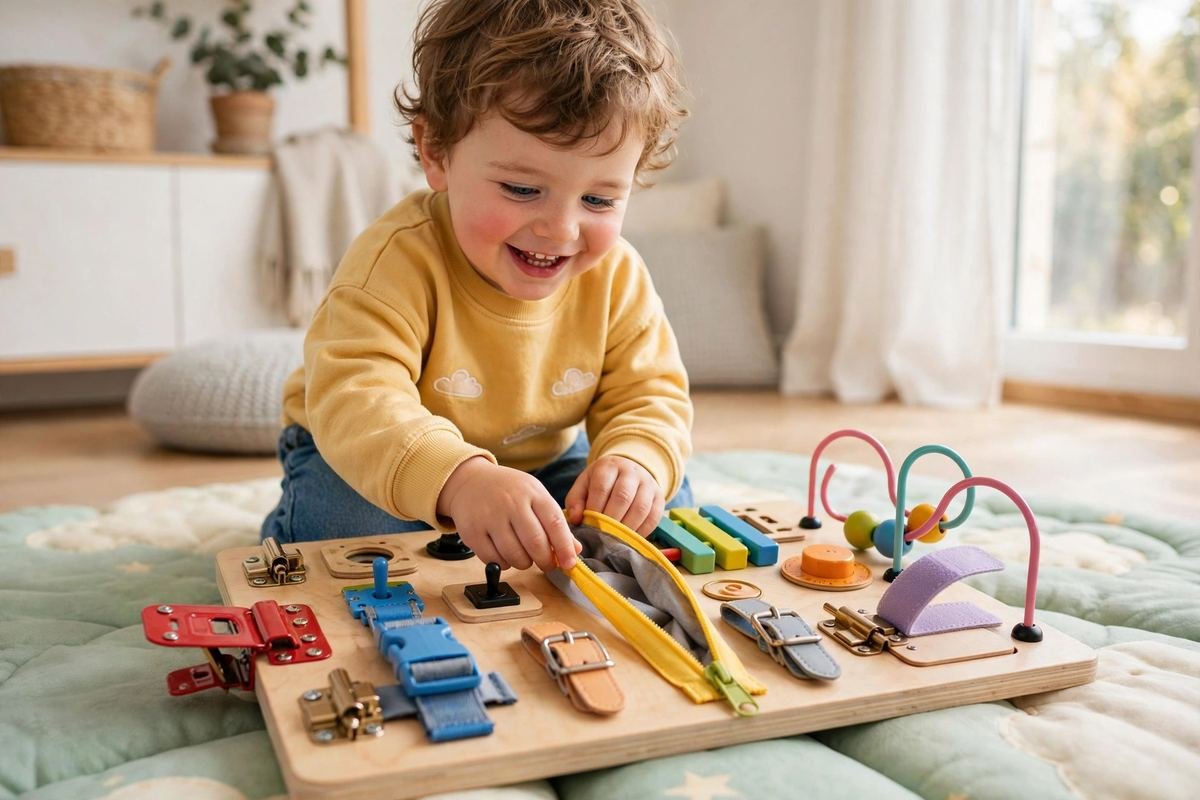
Finding busy boards for toddlers that hold attention for more than a few minutes can feel surprisingly hard. Toddlers want to open, close, twist, zip and press everything they see around the home. A good activity board gives them a safe place to practice those exact moves. The best options build fine motor strength, hand and eye coordination and early problem solving while keeping little hands happily occupied during playtime, quiet time and family routines each day.
This guide brings together trusted boards from respected toy brands, with choices for different ages, spaces and play styles. You will find a classic wooden latch board, a soft travel busy board for toddlers for car rides, and a sensory busy board for toddlers filled with textures and sounds. Each pick explains who it suits most, so you can match the board to your child rather than guessing from a photo alone.
Whatever stage your child is at, the right busy boards for toddlers can turn daily curiosity into useful skills. If you are shopping for a first birthday gift, a board for a curious two year old, or an activity that grows with a preschooler, start with the quick picks below. Then use the buying guide to check size, materials and safety details. For more play ideas, browse our educational and learning toys collection.
Quick Picks
Short on time? These five boards cover the most common needs, from a first Montessori style board to a compact option for trips. The full reviews below explain the features, strengths and limits of each one in more detail, so you can compare them with confidence before you choose.
- Best overall: Melissa & Doug Latches Board for classic wooden play
- Best for life skills: deMoca Montessori Busy Board for dressing practice
- Best with lights: Cliksy Busy Board for cause and effect fun
- Best for travel: Top Bright Activity Busy Cube for small spaces
- Best for preschoolers: Janod Sweet Cocoon Activity Board for growing skills
How to Choose Busy Boards for Toddlers
Match the Board to Your Child Age and Skills
Start with age and current skills. A simple busy board for 1 year old babies should have large knobs, soft textures and one clear action per feature. A busy board for 2 year olds can add latches, zippers, buckles and simple sequences that reward patience. When comparing busy boards for toddlers, look for activities your child can almost do alone. That sweet spot keeps frustration low while still offering a satisfying challenge to repeat.
Choose Materials and Features That Fit Your Home
A wooden busy board for preschoolers feels sturdy and often lasts long enough to pass to a younger sibling. Fabric boards are lighter and quieter, while plastic elements can add color and sound. Think about where the board will live. A large board suits a playroom floor, while a smaller board works on a high chair tray or a sofa. Fewer well made features usually beat a crowded board with parts that feel loose or flimsy.
Check Size, Sound and Storage
Measure the space before you buy, especially for standing boards or boards you plan to mount on a wall. If you choose a busy board with lights and switches, check how loud it is and whether the sound can be turned down or off. Batteries should sit behind a screwed cover. Finally, think about storage. Flat boards slide behind a chair, while cubes need shelf space. Our guide to baby toy storage can help you plan a tidy play corner.
The 10 Best Busy Boards for Toddlers to Consider
Each review below focuses on real play value: the skills a board practices, the features that matter, and the children it fits best. The brands were chosen for their long standing reputations in early learning toys and for designs parents can find through trusted retailers.
1. Melissa & Doug Latches Board
This classic wooden board from Melissa & Doug invites toddlers to unlock, unlatch and open six little doors, each hiding a colorful picture underneath. The mix of hook latches, snap latches and sliding bolts gives small fingers several different grips to master. Bright numbers and animals behind the doors add simple counting and naming games to the play. Because there are no loose pieces, it works well for independent play on the floor, at a low table, or propped against a cushion during quiet time.
- Six doors with different metal latches and locks
- Smooth wooden board with colorful artwork throughout
- Number and animal pictures hidden behind each door
- No separate pieces to lose between play sessions
Pros: Sturdy build, varied latch motions and a screen free design that parents trust. Cons: The metal latches can pinch if a child forces them, so early supervision helps. It suits toddlers who love opening doors, posting surprises and copying everyday actions they see around the home.
2. deMoca Montessori Busy Board
Parents looking for the best montessori busy board for practical life skills often choose this deMoca design. It packs buckles, a zipper, shoelaces, buttons, a clock and shape sorting pieces onto one portable board. The activities mirror real dressing and daily routines, so practice feels meaningful to a toddler. Soft felt backing keeps the board light, and a handle makes it easy to carry from room to room or take along on family visits. The layout spreads activities out, so children can focus on one skill at a time.
- Buckles, zipper, buttons and lacing in one place
- Learning clock and shape matching activities included
- Light felt board with a carry handle
- Activities based on real dressing skills
Pros: Lots of dressing practice, light to carry and engaging for a wide age range. Cons: Small removable shapes need supervision and tidy storage. It suits families who want busy boards for toddlers that teach real life skills through calm, focused play.
3. Cliksy Busy Board with Lights and Switches
This busy board with lights and switches from Cliksy brings cause and effect play to the front. Toddlers flip switches, turn a key, press buttons and spin gears, and each action lights up or makes a gentle sound. The board is designed to hold attention during seated play, and the variety of switches builds finger strength and coordination. Its travel friendly size makes it a handy option for waiting rooms and long drives, as long as an adult stays nearby during use.
- Switches, buttons and a key that activate lights
- Gears and spinners for extra hand practice
- Compact size for laps and travel trays
- Secure battery cover for the light features
Pros: Immediate feedback from the lights, many switch styles and strong repeat play value. Cons: It needs batteries, and the sounds may not suit very quiet settings. It suits curious toddlers who respond well to cause and effect toys and enjoy pressing, flipping and turning things again and again.
4. Top Bright Activity Busy Cube
Top Bright turns the flat board into a cube, giving toddlers a different activity on every side. One face offers turning gears, another a shape sorter, and the others add beads, a simple clock and small puzzles. The cube shape encourages children to sit, reach and rotate the toy as they play, which adds gentle whole body movement to the session. It takes up little floor space, looks neat on a shelf between uses, and works well in smaller rooms and shared spaces.
- Multiple activity sides in one compact cube
- Gears, beads and shape sorting play included
- Learning clock for early number talk
- Solid feel that stays put during play
Pros: Several toys in one, a space saving shape and activities for different moods. Cons: Younger babies may need help turning it to a new side. It suits small homes looking for busy boards for toddlers that pack many activities into a small footprint.
5. Hape Lock and Learn Playboard
Hape is known for well finished wooden toys, and this playboard focuses on locks, doors and problem solving. Toddlers work through different locking mechanisms to open small doors, which rewards patience and careful finger work. The natural wood finish and soft colors suit calm play spaces, and the board feels solid without being too heavy to move from room to room. It is a good step up for children who have mastered simple knobs and now want a real challenge to work through.
- Several lock styles on one wooden board
- Doors that open to reveal hidden spaces
- Smooth edges and child safe finishes
- Sturdy build made for daily use
Pros: Beautiful wood finish, genuine problem solving and quiet play with no batteries. Cons: Some locks are tricky at first and may frustrate younger toddlers. It suits patient children who enjoy figuring out how things work and repeating a task until it finally clicks for them.
6. Lovevery Lockbox
The Lovevery Lockbox comes from a brand known for stage based play kits designed with child development experts. Children post balls through openings, open compartments and retrieve what is inside, which builds object permanence and early logic. The clean design uses a small set of well made parts rather than dozens of distractions. It works especially well for focused floor play, and the compartments give toddlers a satisfying reason to open, close and try again until they remember where each ball has gone.
- Posting and retrieving play that builds early logic
- Compartments with doors to open and close
- Simple design with few, well made parts
- Designed to match toddler development stages
Pros: Thoughtful design, a strong focus on cause and effect, and quality materials throughout. Cons: It is often sold as part of a wider play kit rather than on its own. It suits parents who prefer busy boards for toddlers with a calm and uncluttered design.
7. PlanToys Activity Board
PlanToys builds wooden toys from sustainable rubberwood, and its activity board style designs focus on sorting, matching and moving pieces along tracks. Toddlers slide, turn and place elements while practicing color and shape recognition. The muted colors and natural materials appeal to families who prefer a calm look in shared rooms. Because the play is open ended, children invent new games as they grow, from simple posting and sorting to early pattern making with a parent or an older sibling joining in.
- Made from sustainable rubberwood
- Sorting and matching activities built in
- Calm colors that suit shared living spaces
- Open ended play that grows with the child
Pros: Sustainable materials, gentle colors and play that stays interesting over time. Cons: The quieter design may not grab children who prefer lights and sounds. It suits eco conscious families who value simple wooden toys and slower, focused play sessions at home, where the board can stay out on a low table or shelf ready for daily use.
8. Janod Sweet Cocoon Activity Board
French brand Janod brings a soft, rounded look to its Sweet Cocoon range, and this activity board follows the same gentle style. Little ones explore turning gears, stacking shapes and moving pieces along curved paths. Depending on where you place it, the board supports seated play and early standing play, which helps it last through several stages of development. Sweet Cocoon toys are known for pastel colors and smooth finishes that feel pleasant for small hands to explore every day.
- Gears, stacking and sliding activities included
- Rounded shapes with a smooth, pleasant finish
- Soft pastel colors from the Sweet Cocoon range
- Supports seated and early standing play
Pros: Lovely design, varied hand movements and a build that spans several stages. Cons: Availability can vary by region and by retailer. It suits design minded parents who want busy boards for toddlers that look good in shared family spaces, and anyone buying a thoughtful gift that feels a little different from the usual plastic toys.
9. Melissa & Doug Basic Skills Board
This second Melissa & Doug entry focuses on dressing skills, with a friendly bear demonstrating a buckle, a zipper, a button, a snap and laces to tie. Each skill sits on its own removable puzzle piece, so a child can practice one task on a lap before fitting it back into the board. That flexibility helps beginners who find a full board overwhelming at first. It also makes the board a nice shared activity for siblings who are working at different skill levels.
- Five dressing skills on removable puzzle pieces
- Buckle, zipper, button, snap and lace practice
- Friendly bear design that invites daily play
- Pieces can be used on or off the board
Pros: Skills can be practiced one at a time, the pieces are easy to hold, and the dressing theme is practical. Cons: Removable pieces can wander around the house between uses. It suits beginners who are learning to dress themselves and enjoy puzzle style play.
10. Joyin Montessori Busy Board
Joyin offers a soft, travel ready busy board packed with buckles, snaps, zippers and laces on a fabric board that folds for packing. The light build suits car seats, stroller rides and flights, where a wooden board would feel bulky and heavy. Bright colors and varied textures keep hands busy on the move, and the board opens flat for floor play once you reach your destination. For many families, this kind of soft board becomes the travel toy that lives in the car.
- Soft fabric board that folds for travel
- Buckles, snaps, zippers and laces to practice
- Light build with a carry friendly design
- Bright colors and mixed textures throughout
Pros: Very portable, quiet in public places and full of dressing practice. Cons: Fabric boards offer less resistance than wood for strong little hands. It suits families who travel often and want busy boards for toddlers that fit easily into a bag, a suitcase or the basket under a stroller.
Safety and Care
Safety starts before the first play session. Check busy boards for toddlers for loose screws, cracked wood and small parts that could come free, and follow the age guidance on the packaging. The American Academy of Pediatrics shares helpful play and safety guidance for families at HealthyChildren.org, including advice on choosing toys that match your child’s stage of development and checking them often for damage.
Care is simple for most boards. Wipe wooden boards with a damp cloth and mild soap, then dry them well. Fabric boards may allow gentle hand washing, so check the label first. Store boards in a dry place and put them out of reach when a part breaks. Check battery covers on light up models after every few uses, and supervise young toddlers during play, especially with laces, cords and small removable pieces.
Frequently Asked Questions
At what age should a toddler start using a busy board?
Most children can enjoy busy boards for toddlers from around twelve months, starting with simple knobs, textures and large switches. Always follow the age guidance from the maker, and choose a board with no small loose parts for younger children. Short, supervised sessions work best at first, and interest usually grows as finger control improves week by week.
Are Montessori style boards better than electronic ones?
Neither style is automatically better. Montessori style boards build real life skills and quiet focus, while electronic boards reward actions with light and sound, which some children find motivating. Many families use both at different times of day. The best choice is the one that matches your child’s interests, your space and the skills you want to encourage most.
Can a busy board help with fine motor development?
Yes. Turning, pinching, pulling and fastening all strengthen the small muscles in the hands and fingers. Used regularly, busy boards for toddlers can support skills that later feed into drawing, feeding themselves and getting dressed. They do not replace free play, outdoor movement or time with books, but they make focused hand practice feel like a game.
What size board is best for travel?
For travel, choose a board that fits on a lap or a tray table and has no loose pieces to drop along the way. Soft fabric boards and small cubes work well in cars and waiting rooms. A handle helps older toddlers carry their own board, which adds a small sense of independence to the trip for the whole family.
How do I clean and store a busy board?
Wipe hard surfaces with a damp cloth, wash fabric boards gently if the label allows it, and let everything dry fully before storing. Keep busy boards for toddlers in a dry spot away from direct heat, and retire any board with broken parts. A low shelf or basket helps children reach the board themselves and tidy it away afterwards.
Conclusion
The right board turns everyday curiosity into confident skills. Whether you choose a classic wooden latch board, a soft travel design or a board full of lights and switches, the best busy boards for toddlers are the ones your child returns to again and again. Start with your child’s age and interests, check the safety details, and let patient practice do the rest. Explore more ideas in our blog for play inspiration at every stage.
