
Choosing flashcards for toddlers can feel simple at first, yet the right set can shape how your child hears words, names pictures and joins in with early learning play. A good card or tablet invites pointing, repeating and smiling rather than quiet memorising.
Some families love sturdy picture cards for the floor, the sofa and the pram. Others prefer a gentle tablet that says the word aloud and rewards a tap with music. Both can work well when sessions stay short, warm and led by your child.
This guide brings together paper cards, talking sets and preschool learning tablet toys in one place. You will find first words flashcards for brand new talkers, sound based sets for curious listeners and early letter and number options for children who are getting ready for preschool.
Quick Picks
If you are short on time, start with these five favourites. They cover talking cards, a bilingual word book, a first tablet and two classic card sets that suit different ages, budgets and learning styles at home.
- QuTZ Talking Flash Cards for spoken words and bright pictures
- LeapFrog Learning Friends 100 Words Book for English and Spanish words
- Fisher Price Laugh and Learn Smart Stages Tablet for very young toddlers
- Melissa and Doug Smarty Pants Preschool Cards for games and questions
- LeapFrog LeapPad Academy for older toddlers who want a fuller tablet
How to Choose flashcards for toddlers That Fit Your Child
Match the Set to Age and Attention
A one year old usually needs big pictures, one clear word per card and very little text. A two or three year old can enjoy matching games, simple questions and short stories built around each picture. The best flashcards for toddlers grow with the child, so look for sets you can use in more than one way.
Start with themes your child already loves, such as animals, food, vehicles or family objects. Familiar pictures make it easier to join in, and early success builds the confidence to try harder words later. Put tricky cards aside and return to them when interest returns.
Decide Between Paper, Sound and Screens
Paper cards build fine motor skills as little hands pick them up, turn them over and pass them to you. Sound adds another layer, and many parents search for audible flashcards for babies and young toddlers because hearing a clear voice model can encourage copying and early speech sounds.
Electronic options can be lively and helpful, but balance matters. Treat electronic flashcards for toddlers as one tool among many, alongside books, songs and conversation. Our guide to choosing a baby learning toy explains how to mix active play with quieter learning moments through the day.
Check Size, Strength and Everyday Ease
Cards for this age group take a lot of bending, dropping and chewing, so thick card, rounded corners and wipe clean surfaces are worth seeking out. Large print helps small eyes, and clear photos or simple drawings are easier to name than busy scenes.
Think about storage too. A box, pouch or ring that keeps cards together will save time and stop favourite cards getting lost under the sofa. If a tablet needs batteries or charging, check how simple that job is, because a flat battery at playtime helps nobody.
Top 10 flashcards for toddlers and Learning Tablets to Explore
The picks below mix classic card sets with talking and tablet style learning toys from brands families know well. Each one supports early words in a slightly different way, so read for fit, age and play style rather than chasing a single perfect choice.
1. QuTZ Talking Flash Cards
The QuTZ set is often the first name parents meet when they search for the best talking flashcards for toddlers, and the idea is delightfully simple. Your child pushes a card into the reader, hears the word spoken clearly and sees a friendly picture at the same time. Words cover animals, food, colours, vehicles and everyday objects, so early vocabulary builds across the whole day, not just at the table.
- Reader speaks each word clearly as the card is inserted
- Large picture set covers animals, food, colours and vehicles
- Simple controls suit small hands and short play sessions
- Rechargeable design removes the need for constant battery changes
Pros: The spoken voice encourages copying, the format feels like a game and cards can be sorted by theme for extra play. Cons: The reader needs charging and loose cards need a safe home. It suits toddlers who learn happily by listening, repeating and proudly showing you each new word they recognise.
2. LeapFrog Learning Friends 100 Words Book
LeapFrog built this sturdy interactive book around three animal friends and one hundred everyday words. Children touch a picture to hear the word, a sound effect or a short fact, and a language switch lets families hear everything in English or Spanish. For parents who want bilingual flashcards for toddlers in a tougher format that will not bend or scatter, this book style approach is a smart middle path.
- One hundred words across animals, food, colours and activities
- Touch sensitive pages play words, sounds and simple facts
- English and Spanish modes support two language learning
- Thick board pages stand up well to daily toddler handling
Pros: Pages stay together, the Spanish mode adds real value and the characters keep the tone playful. Cons: It is heavier than paper cards and needs batteries. It suits bilingual homes and curious toddlers who love pressing, listening and turning pages during story time and quiet play alike. It also makes a thoughtful gift for new parents.
3. VTech Touch and Teach Word Book
The VTech Touch and Teach Word Book turns familiar first words into a touch and listen activity with four play modes. Toddlers can hear what a word is, find a picture, listen to music or explore simple facts, all by pressing the colourful pages. The questions are gentle rather than pushy, which helps younger children take part even when they only know a few of the answers.
- Four modes cover words, finding games, music and facts
- Touch pages respond with clear speech and cheerful sounds
- Twelve themes include home, food, animals and the park
- Carry handle makes the book easy to move around
Pros: The find it game builds listening skills, the handle helps portability and the modes add variety over time. Cons: Sounds may feel loud in quiet spaces and batteries are required. It suits flashcards for toddlers fans who want a guided activity that a child can also explore alone for a few minutes.
4. Fisher Price Laugh and Learn Smart Stages Tablet
This chunky first tablet from Fisher Price is a gentle learning tablet for 2 year olds and even younger toddlers who are not ready for real screens. Pressing the app style buttons lights up the border and plays letters, first words, animals and songs. Three Smart Stages levels change the content as your child grows, moving from simple sounds to words and then to pretend play prompts.
- Three learning levels grow from sounds to words and phrases
- Light up buttons respond to every press with cheerful feedback
- Letters, animals and everyday words form the core content
- Slim, sturdy body is sized for laps and travel bags
Pros: The staged content lasts well, the lights hold attention and there is no fragile screen to protect. Cons: The play is mostly pressing and listening, with no cards to handle. It suits younger toddlers who love buttons, music and cause and effect play during short, supervised sessions.
5. Melissa and Doug Smarty Pants Preschool Cards
Melissa and Doug take a playful route with Smarty Pants, a card set built around questions, matching games, puzzles and silly prompts rather than plain word drilling. Each card gives you something to ask, point at or act out together, so learning feels like a game you share. The preschool focus suits older toddlers who already know basic words and are ready for colours, shapes, counting and simple reasoning.
- Question and game format keeps adults involved in play
- Activities cover colours, shapes, numbers and matching skills
- Large cards are easy to spread out on the floor
- Varied prompts support language, logic and early maths
Pros: The games spark conversation, the skills range is broad and the set works well with siblings. Cons: Younger toddlers may find some cards too advanced at first. It suits confident two and three year olds who enjoy answering, guessing and showing off what they know. Short rounds work beautifully at the table after meals too.
6. School Zone First Words Flash Cards
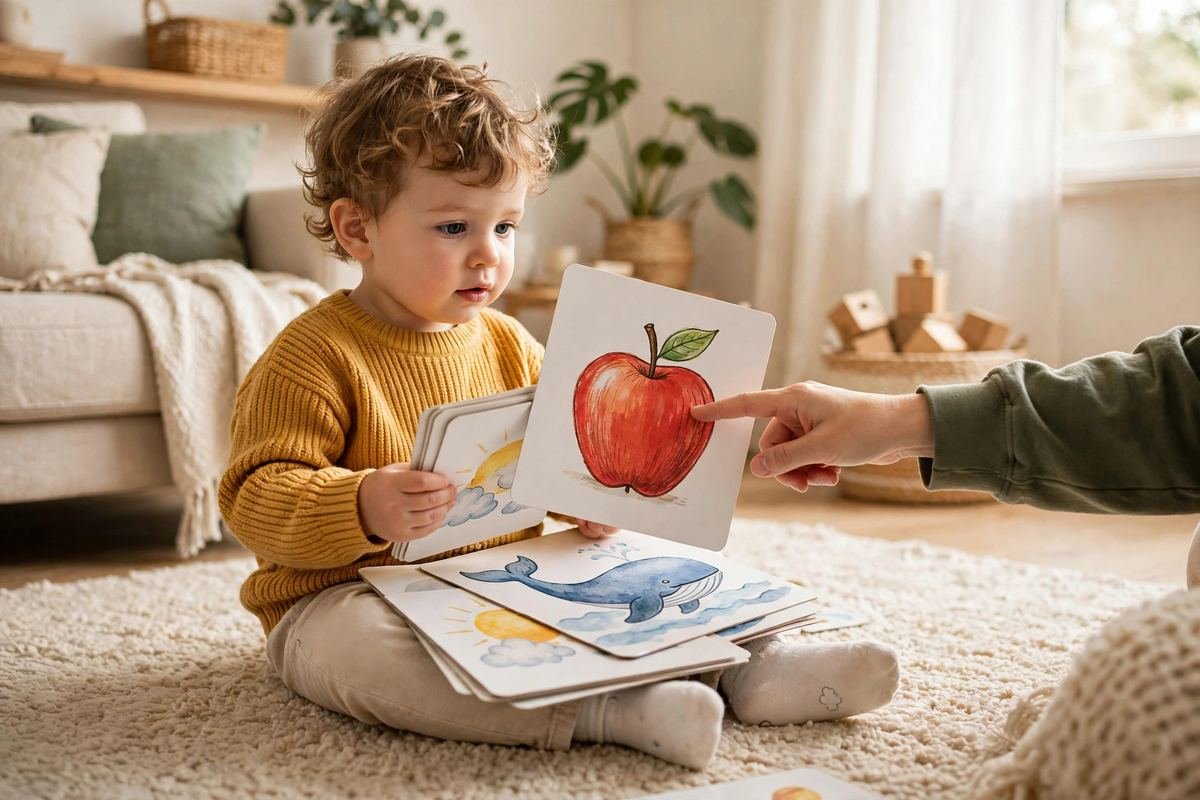
School Zone has made learning materials for young children for decades, and this first words set keeps things calm and clear. Each card pairs a large word with a simple, friendly picture, which makes it easy to hold up, name and repeat together. Parents can start with naming, then move on to matching pairs, finding colours and acting out actions as language grows over the months.
- Clear word and picture pairing supports early recognition
- Everyday themes include animals, objects and action words
- Cards work for naming, matching and simple memory games
- Handy size suits home play, travel and nursery bags
Pros: The design is uncluttered, the learning path is flexible and the set is easy to share with carers. Cons: There is no sound, so adults provide the voice and the energy. It suits families who prefer quiet, screen free practice built around talking, pointing and plenty of praise. It rewards patience and turns tiny shared moments into real learning progress.
7. LeapFrog 2 in 1 LeapTop Touch
The LeapTop Touch looks like a tiny laptop, then flips into a touch tablet, which makes it feel wonderfully grown up to a toddler. Children can tap letters, hear their sounds, explore numbers and play with Scout and Violet through messages and games. Among preschool learning tablet toys, this one stands out for pretend value, because so much of the fun comes from copying what adults do at a real keyboard.
- Screen flips to switch between laptop and tablet play
- Full letter keyboard teaches letters, sounds and early words
- Modes cover music, numbers, games and pretend messages
- Handle and closing lid make it simple to carry
Pros: The two formats refresh interest, letter play is strong and pretend messaging sparks imagination. Cons: The screen is basic compared with real tablets and batteries are needed. It suits flashcards for toddlers graduates who are curious about letters and want a toy that feels like their own little computer.
8. VTech Little Apps Tablet
VTech designed the Little Apps Tablet as a first step into app style play without a real screen or internet connection. A light up display, letter buttons and a piano keyboard introduce letters, words, numbers and music through twelve activities. Progress steps adjust the challenge, so a child who starts by pressing any button can slowly move toward finding letters and answering simple questions.
- Twelve activities cover letters, words, numbers and music
- Light up screen and letter buttons give clear feedback
- Piano keys add free musical play between learning games
- Volume control and sturdy case suit everyday family use
Pros: The activity range is wide, the piano adds creative fun and the casing handles knocks well. Cons: Graphics are simple and keen readers will outgrow some games. It suits toddlers who enjoy music, lights and button play and who are beginning to notice letters around the home. It also travels well between rooms, car journeys and family visits.
9. ThinkFun Zingo Sight Words
ThinkFun Zingo Sight Words turns word recognition into a fast and friendly matching game. Players slide the tile dispenser, shout when they see a tile that matches their card and race to fill their board first. The words are common early reader words, so this pick suits older toddlers and preschoolers best, especially when an adult or older sibling plays along and reads every tile aloud.
- Tile dispenser adds excitement and keeps pieces moving
- Common sight words build early reading confidence step by step
- Picture clues on tiles help new players join in
- Group format works for families and small play groups
Pros: The game energy is high, word practice never feels like a lesson and replay value is strong. Cons: It is too advanced for most children under three and tiles need tidying. It suits flashcards for toddlers lovers who are ready to turn word practice into a lively family game night.
10. LeapFrog LeapPad Academy
LeapPad Academy is the most complete tablet on this list, built by LeapFrog for young children with a tough bumper, a shatter safe screen and parent controls. Preloaded apps and games cover reading, maths, science and creativity, and children earn rewards as they play. It costs more in effort and setup than any card set, but it can serve a family for several years.
- Preloaded learning apps cover reading, maths and creativity
- Protective bumper and shatter safe screen suit young users
- Parent controls manage time, content and web access
- Rechargeable battery and headphone jack support travel use
Pros: Content depth is excellent, controls give parents confidence and the build is made for children. Cons: Setup takes time and extra content can cost more later. It suits older toddlers and preschoolers whose families want one lasting tablet for learning games, stories and creative play at home. It can keep siblings interested too, with fresh challenges as skills grow.
Safety and Care
Check cards and tablets before play for torn edges, loose parts or cracked cases, and take anything damaged out of reach straight away. Young children explore with their mouths, so choose flashcards for toddlers with rounded corners and finishes made for this age group, and always follow the maker age guidance on the box.
Keep button batteries and charging cables well away from small children, and let an adult handle charging and battery changes. The American Academy of Pediatrics shares helpful guidance on balanced media use at HealthyChildren.org, which is worth reading when tablets become part of the daily routine.
Wipe cards and tablet surfaces with a soft, slightly damp cloth and let them dry fully before packing them away. Storing sets in a lidded box keeps pieces together and clean, and our ideas for tidy toy storage can help small learning sets stay complete for younger siblings later.
Frequently Asked Questions
What age is best to start word cards?
Most babies enjoy looking at bold pictures from around twelve months, and short sessions can begin whenever your child shows interest. Start flashcards for toddlers with a handful of familiar words, follow your child lead and stop while it still feels fun. Two minutes of happy pointing beats ten minutes of pressure every single time.
Are talking cards better than plain paper cards?
Neither type is automatically better, because they teach in different ways. Talking sets model clear pronunciation and reward independent pressing and listening. Paper cards invite holding, sorting and matching, and they give you more freedom to ask questions, invent games and follow whatever picture your child wants to talk about that day.
How often should we practise each week?
Little and often works best for this age group. A few short sessions spread across the week, perhaps after breakfast or during a quiet afternoon moment, will usually do more than one long lesson. Repeat favourite words often, mix in one or two new ones and let songs, books and everyday talk do the rest.
Can tablets replace reading books together?
No, and they work best as a partner to books rather than a replacement. Shared reading builds conversation, cuddles and imagination in ways a device cannot copy. Use flashcards for toddlers and simple tablets for variety, then keep daily story time as the heart of early language learning in your home.
How do I keep card sets from getting lost?
Choose one home for each set, such as a small box, zip pouch or ring binder, and make tidying part of the game. Counting cards back into the box is itself useful number practice. Remove any damaged cards, keep sets away from water play and store tablets out of direct sun and heat.
Conclusion
The best choice is the one your child reaches for again and again, whether that is a talking reader, a sturdy word book or a simple pack of picture cards. Start with flashcards for toddlers that match your child age and interests, keep sessions playful and short, and let repetition do its quiet work. Words grow fastest in warm moments shared with you.
