
Choosing good fine motor toys for toddlers can feel tricky because so many toys promise learning while offering very little real practice. The best options invite small hands to pinch, turn, stack, thread and squeeze again and again, without frustration taking over. Those small movements build the control children later use for feeding, dressing, drawing and holding a pencil.
This guide brings together trusted brands and simple designs that earn their place in a play basket. Each pick supports a clear skill, from a first pincer grasp to early lacing and sorting. You will also find honest notes on who each toy suits best, so you can match fine motor toys for toddlers to your child rather than buying on impulse.
Toddlers learn at very different speeds, and that is normal. One child may love threading beads while another prefers posting, scooping or stacking. Offering a small rotation of toys, and letting your child repeat a favourite activity many times, usually works better than filling a shelf. Our wider guides on educational and learning toys can help you build that rotation slowly.
Quick Picks
If you are short on time, start with these five fine motor toys for toddlers. They cover grasping, lacing, scooping, stacking and hand strength, and they work well as a first set at home.
- Best overall: Learning Resources Spike the Fine Motor Hedgehog for posting and pulling pegs
- Best for lacing: Melissa & Doug Primary Lacing Beads for threading practice
- Best with tweezers: PlanToys Beehives Sorting Set for careful pincer work
- Best tool set: Learning Resources Helping Hands Fine Motor Tool Set for scooping and squeezing
- Best classic stacker: Melissa & Doug Geometric Stacker for matching and placing shapes
How to Choose fine motor toys for toddlers
A good buying decision starts with the movement you want to encourage. Look for toys that ask your child to do one clear action well, with pieces sized for small hands and a result your child can see. The sections below explain what to check before you buy fine motor toys for toddlers for everyday play.
Match the toy to the skill and stage
Younger toddlers need large pieces, short actions and quick success. Simple posting, stacking and squeezing toys work well as fine motor toys for 1 year old children who are still building a steady grasp. Older toddlers can handle smaller challenges such as threading, sorting by colour and using child sized tweezers or tongs.
Parents searching for the best fine motor skills toys for 2 year olds often do best with a mix. Choose one stacking toy, one threading toy and one scooping toy, then watch which action holds attention longest. That interest is a useful guide for the next purchase.
Look for grasp, strength and control
Strong little hands come from varied practice. Pincer grasp toys encourage a child to pick up pieces with thumb and forefinger, while posting and shape sorting build careful placement. Squeezing soft toys, turning chunky knobs and pulling pegs out of a base all count as gentle hand strength work during play.
Good hand strength toys for toddlers should feel firm but not stiff. If a child must use their whole body to make a toy work, it is probably too hard for now. Pieces should move with steady toddler pressure and reward effort with a clear result, such as a stack that stands or a bead that slides along a lace.
Choose materials you can live with
Wood, sturdy plastic and washable fabric each have a place. Wooden threading and beading toys often feel solid and last well, while plastic tools are easy to wash after messy play. Check that paint and finishes are made for young children, edges feel smooth, and laces or cords are short and secure.
Think about storage too, because loose pieces get lost quickly. A lidded tub or a simple basket keeps a set inviting. Our notes on baby toy storage share simple ways to keep small sets together without buying lots of extra boxes.
Our Top Picks for fine motor toys for toddlers
The ten picks below come from well known makers of early learning toys. We grouped them by the skill they practise most, from first grasping to lacing and tool use, so you can choose one or two that fit your child now and add more later as confidence grows.
1. Learning Resources Spike the Fine Motor Hedgehog
Spike the Fine Motor Hedgehog is a friendly posting toy with chunky, colourful quills that push into holes on the hedgehog back. Toddlers grasp each quill, aim for a hole and push, then pull the quills out and start again. That simple back and forth action builds hand strength, colour recognition and early counting talk as you play together on the floor.
- Chunky quills sized for a full hand or early pincer grasp
- Posting and pulling action that rewards repeated practice
- Quills store inside the body to help keep pieces together
- Bright colours that support sorting and simple counting games
Pros: The pieces are easy to hold and the task is clear from the first try. Cons: Very young toddlers may need help lining quills up with the holes at first. It suits children who enjoy posting games and parents who want fine motor toys for toddlers that also invite colour and number talk.
2. Melissa & Doug Primary Lacing Beads
This wooden set pairs large painted beads with sturdy laces, making it a gentle introduction to lacing toys for toddlers. Children pick up a bead, find the hole, push the lace through and pull it out the other side. The beads come in shapes such as cubes and balls, so the set also works for stacking, sorting and simple pattern play on a tray.
- Large wooden beads that are easy for small hands to hold
- Two sturdy laces for threading and shared play
- Shapes and colours that support sorting and early patterns
- Solid wood feel that stands up well to daily use
Pros: The beads are versatile and grow from stacking into threading over time. Cons: Threading takes patience, and some toddlers will need an adult to hold the lace steady at first. It suits patient toddlers who enjoy quiet table play and families building a small set of threading and beading toys at home.
3. PlanToys Beehives Sorting Set
The PlanToys Beehives set includes colourful wooden hives, small bees and a pair of child sized tweezers. Toddlers use the tweezers, or their fingers, to pick up each bee and place it in the hive of the matching colour. The task asks for a careful pinch, a steady hand and close looking, which makes it a lovely step up from basic posting toys.
- Child sized tweezers that encourage a true pincer grasp
- Colour matching hives and bees for sorting practice
- Made by PlanToys, known for wooden toys with a simple finish
- Compact pieces that work well for calm table play
Pros: The tweezers add a real challenge and colour matching keeps the game purposeful. Cons: The bees are small, so this set needs close supervision and suits older toddlers better. It suits children who already enjoy sorting and are ready for more precise fine motor toys for toddlers with a gentle challenge.
4. Hape Double Rainbow Stacker
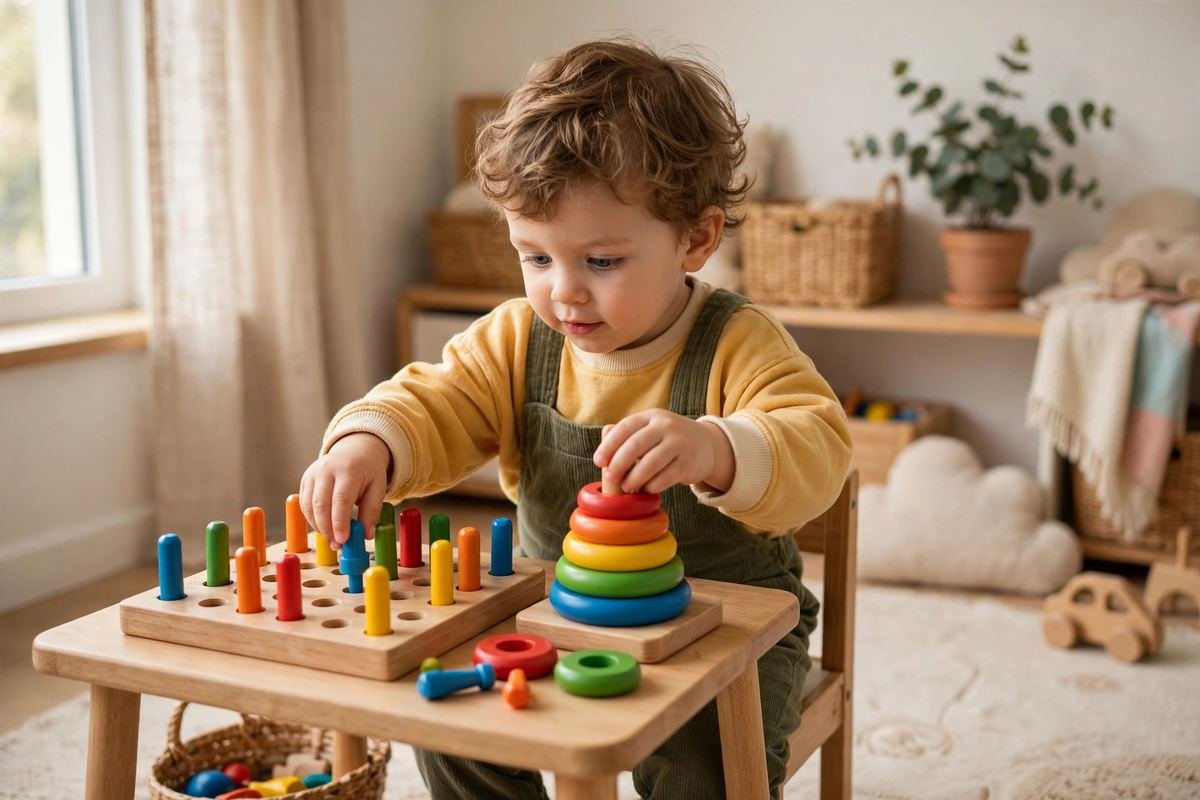
The Hape Double Rainbow Stacker is a wooden stacking toy with colourful rings that slide onto pegs. Toddlers grasp each piece, line it up and let it drop into place, learning to adjust their hand as the stack grows. Stacking looks simple, yet it builds wrist control, hand eye coordination and patience, especially when a child tries to rebuild a tower in a chosen order.
- Smooth wooden pieces in bright, appealing colours
- Two pegs that add a little sorting to classic stacking
- Grasping and placing action suited to younger toddlers
- Sturdy base that stays steady during early attempts
Pros: The pieces feel pleasant to hold and the task gives quick, visible success. Cons: Children who have mastered stacking may move on from it sooner than from threading sets. It suits younger toddlers taking first steps with stacking and families who want a calm starter toy for daily table play.
5. Learning Resources Helping Hands Fine Motor Tool Set
This tool set gives toddlers a safe way to practise the actions behind scissors, spoons and droppers. The set includes handy scoopers, a twisty dropper style tool and grippy tongs style pieces made for water, sand and table play. Children squeeze, scoop and release, building hand strength while moving pompoms, large beads or water between bowls. Because each tool works a little differently, children stay curious and keep trying new grips without being told to practise.
- Several tool shapes for squeezing, scooping and gripping
- Great partner for water play, sand play and sorting trays
- Builds strength and control used later for cutlery and crayons
- Easy to rinse clean after messy sensory play sessions
Pros: One set covers many movements and keeps sensory play fresh for months. Cons: You need to provide bowls and items to scoop, and water play needs supervision. It suits active learners who love sensory trays and families who want versatile fine motor toys for toddlers for open ended play.
6. Alex Toys String a Farm Lacing Set
Alex Toys String a Farm is a wooden lacing set with farm themed pieces and a long lace for threading. Toddlers thread the lace through a barn, animals and other farm shapes, then pull each piece along and tell simple stories as they go. The chunky pieces are easy to hold, and the farm theme gives parents plenty to talk about during play. It also packs neatly into a small bag, so it travels well for family visits and quiet play away from home.
- Chunky wooden farm pieces that are simple to grasp
- Long lace designed for early threading success
- Farm theme that encourages naming and story talk
- Pieces can also stand alone for simple pretend play
Pros: The theme keeps threading playful rather than feeling like a lesson. Cons: The lace can tangle in storage, so winding it around a piece helps. It suits animal loving toddlers and anyone comparing lacing toys for toddlers who wants a set that doubles as pretend play.
7. Melissa & Doug Wooden Scoop and Serve Ice Cream Counter
This wooden ice cream counter turns scooping into pretend play. Toddlers use the scoop to lift wooden ice cream scoops and place them on cones or in cups, following simple orders from a play menu. The lifting and releasing action works the hand and wrist, while taking orders builds listening and early social play with family members.
- Wooden scoop that lifts and releases play ice cream scoops
- Cones, cups and toppings for sorting and stacking fun
- Pretend orders that add language and listening practice
- Solid wooden pieces made for repeated daily play
Pros: Pretend play keeps practice going long after a plain sorting task would end. Cons: It is a larger set, so it needs a little shelf or floor space. It suits toddlers who love role play and parents who want fine motor toys for toddlers that siblings can enjoy together.
8. Haba My First Threading Game
Haba is known for sturdy wooden games for young children, and this first threading game follows that tradition. Large wooden pieces thread onto a cord following simple picture ideas, or in any order your child likes. The pieces are chunky, the cord is made for small hands, and the result is a garland or train of shapes that feels like a real achievement. Children can copy a simple sequence from a card or invent their own order, which keeps the same set feeling fresh over many weeks of regular play.
- Large wooden threading pieces suited to early learners
- Picture ideas that give gentle guidance without strict rules
- Threading action that builds focus and two hand coordination
- Quality wooden finish from a long established toy maker
Pros: The guided pictures help children who get stuck with free threading. Cons: Confident threaders may prefer larger bead sets for more variety later. It suits toddlers who like calm, seated play and families exploring threading and beading toys for the first time together.
9. Fat Brain Toys pipSquigz
pipSquigz are soft, textured suction toys that stick to tables, trays and bath sides with a gentle push, then pop off with a pull. Toddlers press, squeeze and pull each bright piece, which builds hand strength and cause and effect understanding. The textured surfaces invite touching and mouthing exploration in younger children, and the pieces rinse clean easily after play.
- Soft textured pieces that are pleasant to squeeze and hold
- Suction bases that stick to smooth tables and highchair trays
- Pushing and pulling action that builds early hand strength
- Simple shapes that travel well for meals out and trips
Pros: They hold attention on a highchair tray and need no extra parts. Cons: Suction works best on smooth, clean surfaces and weakens on rough tables. It suits younger toddlers and travel play, and it works nicely for short play sessions at home or while waiting for a meal.
10. Melissa & Doug Geometric Stacker
The Geometric Stacker is a classic wooden toy with rings, squares and octagon style pieces that fit onto pegs on a sturdy base. Toddlers match shapes by colour and form, then stack each piece in order. It asks for careful looking, a steady grasp and gentle placement, and it grows from simple posting into early shape and size talk.
- Three shape types for matching, sorting and stacking
- Chunky wooden pieces that are easy to lift and place
- Rocking base option that adds a gentle extra challenge
- Timeless design that suits a wide toddler age range
Pros: One toy covers stacking, shape matching and colour sorting in a simple format. Cons: The many pieces need a basket to avoid losing parts under furniture. It suits most families as a long lasting staple, and it often appears in fine motor kits for preschoolers as children grow into harder sorting games.
Safety and Care
Small pieces are part of many fine motor toys for toddlers, so active supervision matters, especially with beads, pegs and tweezers sets. Sit nearby during threading and sorting play, and put small piece sets away when play ends if a younger baby is in the home. The American Academy of Pediatrics parent site offers helpful guidance on safe play and choosing toys by age.
Check toys regularly for cracked wood, loose paint, frayed laces or damaged suction bases, and remove anything broken. Follow age guidance on packaging, since it reflects piece size and cord length. When in doubt about a toy with very small parts, choose a chunkier option and wait a few months before trying the smaller set again.
Most wooden toys wipe clean with a damp cloth, while plastic tools and suction toys wash well in warm soapy water. Dry laces and wooden beads fully before storing them, and keep sets in a low basket your child can reach. Clean, visible toys get played with more often, which means more practice without any extra effort from you.
Frequently Asked Questions
At what age should toddlers start using fine motor toys?
Most children can enjoy simple grasping, stacking and posting play from around their first birthday, with adult support. Start with large pieces and short sessions, then add threading or tweezers as control improves. If a toy frustrates your child every time, set it aside and try again in a few weeks.
How often should my toddler play with these toys?
Short daily play is plenty. Ten to fifteen minutes of stacking, scooping or threading during normal play builds skill steadily, especially when fine motor toys for toddlers stay in regular rotation rather than appearing once. Follow your child lead, and stop while the activity still feels fun.
What is the difference between lacing and threading toys?
The ideas overlap a lot. Lacing usually means pushing a lace through holes in flat pieces or cards, while threading often means sliding beads or blocks onto a cord. Both build two hand coordination and focus, so choose the theme or piece size your child likes best.
Can fine motor play help with eating and dressing?
Yes, the same control is used in daily life. Scooping, squeezing and pinching during play support the hand skills children need for using a spoon, pulling up a zip and holding a crayon. Fine motor toys for toddlers will not teach those tasks alone, but they make the underlying movements stronger and more confident.
How many fine motor toys does a toddler need?
A small set is enough. Three to five toys that cover grasping, stacking, threading and scooping give plenty of variety without clutter. Rotate one toy out every week or two to renew interest, and add a harder set only when your child handles the current ones with ease.
Conclusion
The right toy makes practice feel like play. Start with one or two fine motor toys for toddlers that match your child stage, watch what they return to, and build slowly from there. With safe pieces, a calm space and a little daily repetition, small hands get stronger, steadier and more ready for everything toddler life asks of them.
