
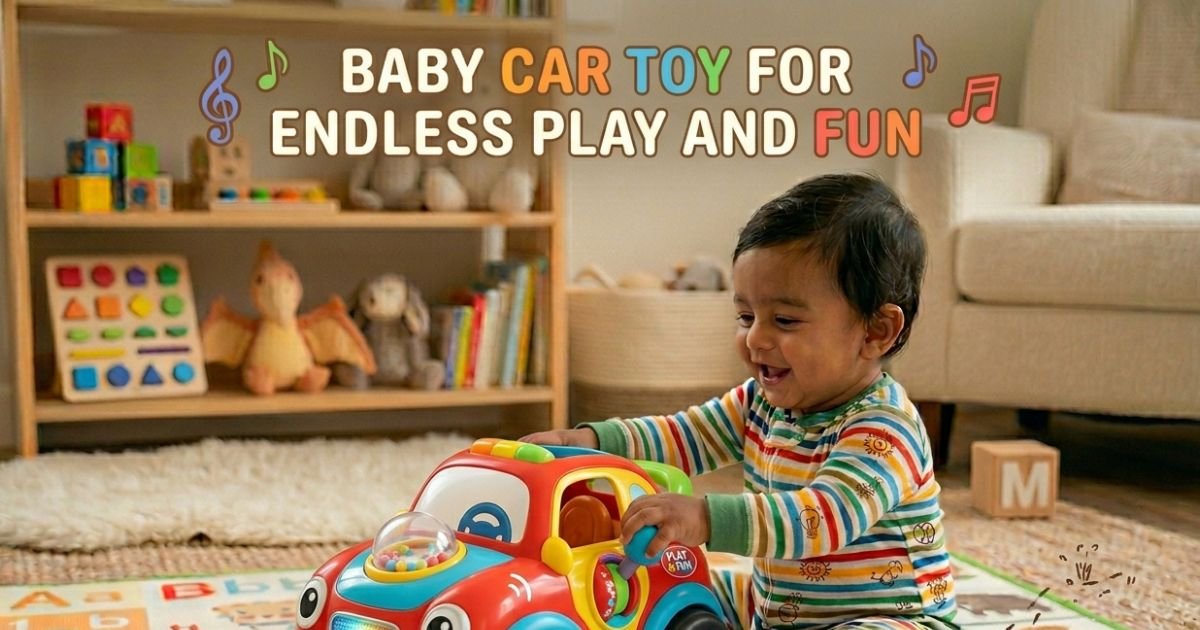

Parents and caregivers know that a simple baby car toy can spark huge smiles and boundless energy. These little vehicles from pull-along cars to ride-on models capture a child’s imagination while building skills. In this guide, we’ll explore what makes a great baby car toy, including types (push cars, ride-ons, electric cars), educational features, and safety considerations. You’ll learn about developmental benefits (motor skills, coordination, creativity) and get tips on choosing the best baby car toy. Whether you want a baby car toy set of colorful pull-back cars or a sturdy electric baby car toy, our friendly advice and examples will help you make smart choices for endless fun.
Types of Baby Car Toys
Baby car toys come in many forms, each suited to different ages and play styles:
-
Push-and-Pull Cars. These simple cars (often plastic or wooden) let babies grasp and push or pull them across the floor. Their chunky size makes them easy to hold and safe for small hands. Many push cars are unpowered “foot-to-floor” ride-ons, like the classic Little Tikes Cozy Coupe, where a baby sits and pushes with their feet. Other push toys have strings or sticks so a parent can pull the car along. These are ideal for beginners learning to walk and develop gross motor skills.
-
Ride-On and Pedal Cars. For toddlers who can sit well, ride-on cars are a big hit. These look like miniature cars or wagons that a child can sit on and scoot. Some are foot-powered (the child pushes with their feet), while more advanced models have pedals or even electric motors. A popular example is the Cozy Coupe® by Little Tikes: it has a high back for support, a removable floorboard so kids can transition from parent-push to self-propelled riding, and fun details like a working horn, doors, and a gas cap. Ride-ons help develop balance and coordination. A child seated in a ride-on car is thrilled to “drive” like mom or dad – this independence and imaginative play is great for confidence.
-
Electric/Battery-Powered Cars. These are small motorized cars with rechargeable batteries, often resembling real cars (like Jeeps, tractors, or sports cars). They usually have a steering wheel and go at toddler-friendly speeds. For example, the Peg Perego Polaris RZR (a 24V UTV ride-on) comes with working lights, a radio, and seats up to two children. These electric baby car toys can zoom up to a few miles per hour, giving older toddlers a realistic driving experience. As Car & Driver notes, electric ride-ons “encourage outdoor play, boost motor skills, and give young enthusiasts their first taste of independence”. Keep in mind these require assembly and supervision, and you should ensure the battery compartment locks securely.
-
Toy Car Sets and Collections. A baby car toy set usually means a pack of small vehicles (think pull-back cars or push-and-go cars). These sets often come with 3–10 little cars or trucks in bright colors and fun themes (e.g. farm vehicles, safari trucks). They are great for collecting and imaginative play, letting toddlers line them up, crash them, or drive them on tracks. Small play cars develop fine motor skills as kids grasp and push them. For example, a wooden Safari Shape-Sorting Car combines a toy car with shape puzzles: it has cutouts on the roof where animal-shaped blocks fit, “training shape recognition and motor skills” as children play. Such sets encourage exploration of different vehicles and can be shared in group play to build social skills.
-
Educational Car Toys. Some baby car toys double as learning tools. These educational baby car toys might have letters, numbers, lights, or buttons that teach colors, counting, or sounds. For instance, a ride-on car might include an activity panel on the dash (with lights and music) or a built-in shape sorter under the seat. These features turn play into learning: toddlers practice shapes, colors, and cause-and-effect (press button → sound) while having fun. A wooden push car (like PlanToys’ Vroom Car) focuses on organic play, but still develops fine motor coordination as the child grabs and pushes it. In general, any car toy that invites interaction steering, honking, putting objects in/out boosts problem-solving and early STEM concepts.
Developmental Benefits of Car Toys
Baby car toys do more than entertain: they support key developmental milestones. Playing with cars helps toddlers develop motor skills, cognitive skills, and creativity. Key benefits include:
-
Motor Skill Development: Grasping wheels, pushing pedals, and steering improve fine and gross motor skills. Even a simple push car teaches a child to reach, grab, and guide the toy. As one expert notes, ride-on vehicles “help develop motor skills by learning how to handle or grasp the steering wheel or joystick”. Over time, children gain coordination between their hands, feet, and eyes as they move the car.
-
Sensory and Spatial Awareness: Toy vehicles often stimulate senses. Flashing lights, engine sounds, and movement give “tons of sensory input” for little ones. Zooming a car across the floor engages visual tracking; rattling sounds build auditory processing; and the texture and shape of the toy develop tactile sensitivity. This multi-sensory play supports language and fine motor development, as children learn to differentiate what they see, hear, and feel. Driving a car toy through space also teaches spatial awareness and cause-and-effect. For example, rolling the car into a block pile shows that pushing causes movement; this concrete feedback is crucial for cognitive learning.
-
Imagination and Creativity: Cars encourage pretend play. Kids love to mimic adults filling the gas tank, honking the horn, or driving to the store. This kind of role-play nurtures creativity. According to child development experts, playing with vehicles lets children “explore the world” in their imagination, zooming through make-believe cities, and learning how things work. It also fuels interest in how things work: older toddlers might open hoods or figure out how to assemble simple toy parts. These activities lay the foundation for problem-solving and early engineering concepts.
-
Independence and Confidence: A car toy can give a child a new sense of freedom. Sitting in a ride-on car, even if a parent is pushing, makes a toddler feel grown-up. Independent play (driving in circles or racing) builds self-confidence. As one parenting site observes, when a child can drive “only one child,” they “establish a sense of independence” by making their own decisions (steer here, stop there). Accomplishing small “tasks” like steering around obstacles or learning to reverse brings pride. Over time, these successes with cars translate to more confidence in other activities.
-
Social Skills (when sharing): Car toys are easy to play with in groups. Pushing cars together, staging races, or going on “caravans” encourages cooperation, taking turns, and even basic sharing. One ride-on toy blog notes that having multiple ride-on cars at a playdate can spur friendly competition (races) or collaboration (lining up at pretend traffic signals).
A curious toddler in a bright red toy car illustrates how car toys spark exploration and joy. These toys can develop coordination as children learn to steer and move the car.
Safety and Material Considerations
Safety is paramount for baby toys. When picking a baby car toy, look for:
-
Age-Appropriateness: Check the manufacturer’s recommended age. For infants (6–12 months), choose cars with no small parts (so nothing detachable that could be swallowed) and wide stable bases. By 1–2 years, children can handle larger push cars and ride-ons. Never give a toddler a toy meant for older kids. According to pediatric safety guidelines, any small parts under 1¼” can be choking hazards.
-
Non-toxic, Durable Materials: All paints and plastics should be lead-free and non-toxic. Many wooden car toys (like those from Montessori brands) use organic dyes and chemical-free finishes. A sturdy build is key: metal or thick plastic chassis (as in Tonka’s steel trucks or ride-ons) can withstand rough play. Avoid flimsy wheels or handles that might break.
-
Battery Safety: For electric cars, ensure the battery compartment locks with a screw or secure latch. Batteries (especially coin cells) and liquids are dangerous if accessed. Also check the battery’s voltage suits your child’s age (6V or 12V for toddlers, 24V+ for older kids) and do not exceed weight limits.
-
Stability and Harness: Ride-on cars should have a low center of gravity to prevent tipping. Many toddler ride-ons come with wide wheelbases or four wheels for extra stability. If a harness or seatbelt is provided, use it. KidsHealth notes that “riding toys…should be stable and secure enough to prevent tipping” and often include straps for safety.
-
Size and Maintenance: Make sure the car is the right size: the child should sit with feet touching the ground and knees slightly bent. Too large a car can strain legs. Also consider where you’ll use it (indoor carpets vs. backyard gravel). Finally, cleanability matters wheels and surfaces should be easy to wipe or wash to keep germs away.
How to Choose the Best Baby Car Toy
Choosing the best baby car toy involves matching features to your needs:
-
Age and Weight Limit: Confirm the toy’s recommended age (e.g. 12–36 months) and max load. A good toy grows with the child: for instance, the Cozy Coupe’s removable floorboard lets an 18-month-old ride as a push toy, then converts to foot-powered driving for ages 2–5.
-
Intended Use (Indoor vs. Outdoor): Decide where the car will be used. Indoor push toys often have quiet wheels or are smaller, while outdoor ride-ons have bigger wheels for grass or pavement. Electric cars are best outdoors or in large indoor spaces.
-
Features and Fun: Determine if you want extra features. Do you prefer a simple wooden car or something with music and lights? Educational features (like shape sorters or storybooks) can add learning value. Pros: More engaging; Cons: Might add clutter or cost.
-
Durability and Quality: Read reviews for reliability. Parents often praise durability for example, Little Tikes reports that parents love how long the Cozy Coupe lasts. Metal-frame options (Tonka steel trucks) are virtually indestructible for rough outdoor play.
-
Portability and Storage: Some cars fold flat or have handles for carrying. Consider if you need to transport it often. Also, a car with onboard storage (under the seat) can hold small toys.
-
Price and Brand: Ride-ons and electric cars are pricier. Basic plastic push cars are very affordable. Stick to reputable brands (Little Tikes, Fisher-Price, PlanToys, Tonka, VTech, etc.) that meet safety standards. Look for safety certifications (ASTM, CE, EN71).
-
Ease of Assembly: Check how much assembly is required. Large ride-ons often come in boxes that you assemble. Some parents prefer simpler toys that are ready to go out of the box.
Top Baby Car Toys and Sets
Here are a few popular examples to consider (features and types vary):
-
Little Tikes Cozy Coupe® (Ages 18 months+). Iconic foot-to-floor ride-on car. It has a high back, easy-to-turn 360° front wheels, a removable floor for push vs. ride mode, a working horn, gas cap, and even a door. Sturdy plastic and “kids love being behind the wheel while adults love the durability”. Great for indoor/outdoor use, up to 50 lbs.
-
PlanToys Vroom Car (12m+). A simple wooden push car (12 cm long) designed for tiny hands. There are no electronics, just a solid wooden car shaped for easy gripping. It’s eco-friendly, made of rubberwood with water-based dyes, and helps develop fine motor and hand-eye coordination as babies push and chase it. This educational baby car toy encourages imaginative play without small parts (just the car shape).
-
Tonka Steel Classics Pickup Truck (3y+). A classic yellow metal toy truck. Built with steel and sturdy plastic parts, this toy can handle the roughest play. It’s great outdoors in sandboxes or mud. (Note: its metal grill and edges are rounded, but always supervise small children around metal toys.)
-
VTech Sit-to-Stand Learning Walker (6–36m). Not exactly a car, but it has a detachable “steering wheel” console that mimics a car dashboard. When babies are on the floor, the console has lights, gears, and horn sounds to teach numbers and words. When pulled off, it doubles as a walker for early walkers. This is an educational baby car toy because it introduces letters, numbers, and music along with pretend drive play.
-
Peg Perego John Deere Tractor & Wagon (3y+). A ride-on tractor with working lights and sound, plus a pull-along wagon. Suitable for older toddlers, it’s battery-powered (24V) and very sturdy with a metal frame. It comes with a seat belt and has a weight capacity over 100 lbs. This model also contributes to STEM play as kids imagine farms or construction work.
-
Shape-Sorting Safari Car (12m+). As mentioned, toys like the small foot Safari Shape-Sorting Car combine a ride-on car with shape puzzles. With five animal-shaped blocks (lion, giraffe, etc.), the toddler fits each shape into the matching slot on top of the car. This builds fine motor skills and shape recognition while encouraging push-play.
-
Pull-Back Mini Car Set (1–3y). Many brands sell sets of simple pull-back cars (4–6 vehicles in bright colors). These are great stocking stuffers or a baby car toy set for on-the-go fun. An example is Joyin’s Animal Car Toy Set, which includes 4 cute push-and-go cars with animal drivers. These sets teach cause-effect (pull back and release) and can be used to teach colors and counting as toddlers line them up.
Pros and Cons of Baby Car Toy Types
To summarize different models:
-
Manual Push/Pull Cars:
- Pros: No batteries needed, usually very durable, simpler and often cheaper. Good for younger babies.
- Cons: Limited features, no sound or lights (unless extra add-ons).
-
Ride-On Cars (Foot-Powered):
- Pros: Develop gross motor skills, very engaging (kids feel like they’re really driving). Tend to have fun details (horns, doors).
- Cons: Takes more space, can be costly, risk of bumps if used unsafely.
-
Electric Ride-On Cars:
- Pros: Realistic driving experience, often more features (speed control, music, remotes for parents). Great “wow” factor for birthdays.
- Cons: Expensive, requires charging/maintenance, heavier assembly, and adult supervision. May have higher risk if the child is too young (speed control is essential).
-
Car Sets and Pull-Back Cars:
- Pros: Very affordable, easy to store, great for multiple children (share & race).
- Cons: Small pieces (not for under 3 without supervision) and limited on their own – more of a supplementary toy.
-
Educational Feature Cars:
- Pros: Adds learning (letters, shapes, music) to playtime.
- Cons: May be distracting or confusing for some children, and electronics can break or drain batteries.
Conclusion
A baby car toy is more than just a fun plaything it can boost your child’s development, from motor skills to imagination. Whether you choose a classic push car, a modern electric ride-on, or a quirky shape-sorting model, focus on safety and age-appropriateness. Look for sturdy materials, secure batteries, and positive reviews from parents. With the right toy, your toddler can enjoy hours of imaginative adventures and gain confidence behind the wheel all while having endless fun. Ready to hit the road? Explore our picks and happy driving!
