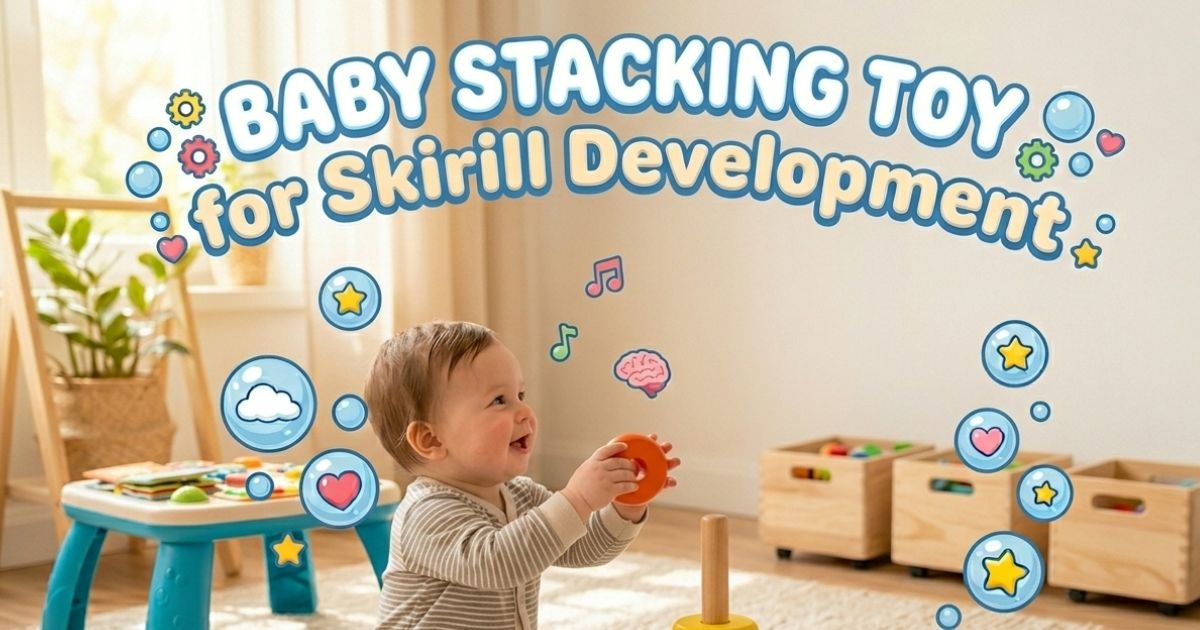

A baby stacking toy is more than just a plaything it’s an educational tool that helps infants and toddlers develop key skills. Stacking toys typically consist of rings, blocks, cups or shapes that children can stack in order or freely arrange. For example, the classic Fisher-Price Rock-a-Stack has colorful rings on a pole to teach colors and coordination. In this article, you’ll learn what stacking toys are, why they’re great for development, the different types (from wooden stacking toys to colorful stacking sets), and how to choose and use the best stacking toy set for your child. We’ll cover benefits, safety tips, comparisons (wood vs plastic vs silicone), and fun ways to play. By the end, you’ll see why a well-chosen stacking toy can be one of the best educational baby stacking toys for your little one.
What Is a Baby Stacking Toy?
A baby stacking toy is an educational plaything designed for babies and toddlers to stack, balance, and manipulate objects. These toys often include rings, blocks, cups or other shapes that fit together or stack on pegs. They may be made of wood, plastic, silicone or fabric, and come in bright colors or natural wood finishes. Stacking toys are popular in Montessori and play-based learning because they offer hands-on, open-ended exploration.
By stacking pieces in the right order (often by size or color), children learn concepts such as size differentiation, sequencing, and color recognition. For instance, the Fisher-Price Rock-a-Stack requires placing five rings from largest to smallest on a wobbling base. This design “teaches young children about colors and helps them develop their hand-eye coordination and shape perception”. Even a simple set of nesting cups or rings introduces counting and order as babies figure out how to stack them correctly.
Benefits of Baby Stacking Toys
Baby stacking toys offer many developmental benefits, making playtime both fun and educational. Key benefits include:
- Fine motor skills & hand-eye coordination: Grasping, lifting and placing stacking pieces strengthens tiny muscles and coordination. Research notes that “infant stacking toys boost fine motor skills” as babies “grasp, stack, and balance pieces”. As one therapist explains, picking up and placing pieces helps toddlers learn intentional grasp and release, progressing from using whole hands to refined pincer grasps.
- Spatial awareness & perception: Stacking requires judging where each piece fits. This develops visual-spatial skills like depth perception and balance. Stacking “works on depth perception, hand-eye coordination, and understanding where your body is in space”. As babies place one piece on another, they learn to gauge where to put it both in relation to themselves and to the other pieces.
- Cognitive & problem-solving skills: Stacking is essentially a simple engineering challenge. Children learn cause-and-effect (e.g. “if I stack too much, it will fall”), and they practice problem-solving by figuring out how to make towers stable. One source notes stacking toys “encourage problem-solving skills” and introduce early math concepts like size, sequence and counting. Tumama Kids adds that babies learn about “sizes, sequences, and patterns” through stackers, which sharpens cognitive development.
- Creativity & imagination: Open-ended stacking toys let kids experiment. They can create towers, patterns, and new combinations, which fosters creativity. Tumama Kids highlights that babies “explore endless ways to stack, sort, or combine pieces, creating a playful yet educational experience”.
- Language & social skills: Stacking time often involves parent or sibling interaction. Parents can talk through the process, introducing words like “big, small, top, bottom, red, blue” as they play. MontessoriGrow.com points out that play with stacking toys encourages communication and vocabulary development, as caregivers introduce terms related to colors, shapes and sizes. Taking turns or building together also teaches sharing and cooperation.
- Parent-baby bonding: Stacking toys make great social toys. A parent can sit with the baby, guiding or cheering them on. This shared activity “strengthens communication skills” and creates happy memories. Tumama Kids notes that parents “guide babies through the stacking process, offering praise and encouragement” which not only builds skills but also creates lasting memories.
- Core strength & gross motor: When babies start stacking, they often sit up independently. They learn to stabilize their core as they reach and balance pieces. According to ARK Therapeutic, around 6+ months babies gain the stability to sit and “coordinate their movements” while stacking. This activity lets their body practice adjustments to maintain balance (a “protective response”).
In summary, stacking toys are proven to support fine motor (grasping, coordination), cognitive (problem-solving, sequencing), visual-spatial (depth and balance), and social-language (vocabulary) skills. One review emphasizes that stacking rings teach size differentiation and sequencing, key cognitive milestones. Another notes that using a stacker helped a child learn both shapes and colors over time. In short, what looks like simple playtime is actually valuable learning.
Types of Baby Stacking Toys
Not all stacking toys are the same. They come in different materials, shapes and complexities to suit various ages and preferences. Here are the main types:
Wooden Stacking Toys
Wooden stackers (rings, blocks, or boards) are classic and durable. They often have a natural wood base with painted rings or blocks. Benefits of wooden toys include sturdiness and eco-friendly appeal. As MontessoriGrow.com points out, wooden stacking toys are “durable and often more sustainable”. Brands like HABA emphasize using solid wood and child-safe water-based paints for these toys. For example, a wooden ring stacker might have five solid wood rings (each a different color) on a wooden peg. These typically offer bright colors to teach color recognition (much like the Fisher-Price example) while giving the tactile feel of wood.
Because of their heft and texture, wooden stacking toys can feel more substantial in a baby’s hands. They’re great for toddlers who have outgrown plastic rattles but still need safe, simple toys. However, wooden rings are not chewable, so they’re best once teething is mostly finished. Many parents also love wooden stackers for their aesthetic – they often look attractive in a nursery.
Plastic and Silicone Stacking Toys
Many stacking toys are made of bright, colorful plastic or soft silicone. The well-known Rock-a-Stack by Fisher-Price is a plastic stacking toy: a rocking base with a pole and rainbow rings. Plastic sets like stacking cups or rings are often very colorful and light. Some modern stackers use food-grade silicone or soft foam so infants can chew on them safely (which helps teething).
A common plastic set is nesting/stacking cups: a series of plastic cups that nest inside each other and also stack. These teach the same concepts of size order but add versatility – babies can sort, fill with water, knock them down, and use them as bath toys. Stacking cups typically introduce colors and counting as well.
Soft fabric or silicone stackers (like squishy blocks or rings) are perfect for younger babies. They usually have rounded edges and different textures for sensory play. For example, soft fabric rings often crinkle or rattle when squeezed. These are labeled safe for mouths and help babies whose first reflex is to chew. They often come in gentle colors to teach “colorful” recognition.
Pros/Cons Comparison: In general, wooden stackers are durable and natural but not chewable. Plastic stackers are lightweight and often cheaper, but parents must ensure they’re BPA-free and well-made. Silicone/fabric stackers are safest for teething but might have simpler stacking options. Always choose non-toxic, baby-safe plastics (BPA/PVC free) or certified wood to ensure safety.
Educational and Themed Stacking Sets
Some stacking toys are designed with extra educational twists or themes. These may include numbers, letters, or shapes printed on the pieces. For instance, there are stacking rings labeled with numbers (so you can practice counting as you stack) or blocks that form animals or letters. Montessorigrow notes that “themed & interactive stacking toys” might have lights, sounds, or character shapes to engage children.
Examples include stacking towers where each block has a puzzle or the tops form an image when aligned. Others use magnets or balance beams (sometimes called balancing blocks) that challenge older toddlers’ engineering skills. These more advanced sets are often marketed as “toddler stacking toy sets” or educational stacking toys, since they combine stacking with problem-solving or pretend play.
While any stacking toy is educational, look for extra features if you want more learning: e.g. a rainbow stacker that introduces colors, a stacking animal set that teaches about animals, or interlocking wooden blocks that encourage creative building.
Baby Stacking Toy Sets for Toddlers
As children reach 18 months and older, they often want more complex stacking toys. A simple ring stacker might give way to a large set of wooden blocks or an elaborate tube-stacking game. “Baby stacking toy for toddlers” typically means bigger towers, more pieces, or novel challenges (like stacking on an angle, or balancing pieces on an uneven base).
Some sets come with 10–20 pieces instead of just 5 rings. For example, Melissa & Doug and PlanToys make stacking sets with many wooden blocks of different shapes. These allow a toddler to practice building towers of varying sizes. Larger sets often combine stacking with other activities (like including wheels or holes).
Another type is “stacking toy set” with multiple play modes. A stack-and-nest set might allow both activities (stack rings on a pole or nest them by size) and can grow with the child. We’ll cover choosing the best set below, but in general: more pieces = more complex play = better for older toddlers.
How to Choose the Best Baby Stacking Toy
Selecting a great stacking toy depends on your child’s age, skill level, and your priorities (safety, educational value, durability). Here are key factors to consider:
-
Age Appropriateness:
- Infants (6–12 months): Choose large, soft pieces they can grasp. Look for chunky rings or cups. They will likely enjoy knocking stacks down first. Many sets label “6M+” for this stage.
- Toddlers (1–2 years): You can introduce smaller rings or blocks. Toddlers can sort by color or size, so sets with 5+ pieces work well. Stacking toys for toddlers often include more rings (5–10) or blocks. MontessoriGrow suggests wooden rings or nesting cups for this age.
- Preschool (3+ years): Look for advanced stacks or balancing toys. The child can do puzzles or stability challenges, so more sophisticated stacking games are ideal (these sometimes go beyond “baby” to “toddler/preschool” toys).
-
Material and Durability:
- Wooden baby stacking toy: Sturdy and lasting, often with smooth painted surfaces. Wooden toys (like a classic wooden rainbow stacker) are usually eco-friendly. HABA and other brands emphasize sustainably sourced wood and water-based paints. The durability is great, but make sure finishes are non-toxic.
- Plastic baby stacking toy: Bright and lightweight, often cheaper. Ensure it’s made from BPA-free, phthalate-free plastic. Check for a reputable brand to guarantee safety. Plastic sets can include nesting cups which add versatility.
- Silicone/Fabric stacking toy: Soft and safe for babies, ideal for teething. Many have BPA-free silicone and are dishwasher-safe. They usually have a premium price but great safety.
- Combined materials: Some toys use both wood and silicone (e.g. a wooden base with silicone rings).
-
Safety Features:
- Avoid small parts. All pieces should be too large to swallow. For infants, stay away from any set with detachable small pieces. Rounded edges are a must.
- Non-toxic finishes. Look for BPA-free plastics or water-based paints. Check for safety certifications (ASTM, EN71 compliance) on the packaging.
- Stability. A wobbly base (like Rock-a-Stack’s roly-poly) is fine if it’s durable. But ensure it won’t easily topple with normal stacking.
- Washability. Babies put toys in their mouths, so choose a toy that can be cleaned easily (wipeable or wash-safe).
-
Educational Value:
- Consider what you want your baby to learn. If you want color and counting, pick a colorful baby stacking toy (rainbow stacker).
- If fine motor is the focus, simple rings or blocks are fine.
- For multi-skill learning, look for sets with numbers/letters or those that come with activity guides.
- Also think about open-ended play: a versatile stacking toy set that allows different configurations can provide more learning opportunities than a single-purpose toy.
-
Reviews and Best Lists:
- While we won’t review brand names in detail, it’s useful to consider highly-rated options. For instance, experts note the Fisher-Price Stacking Rings for teaching sequencing and fine motor skills. The Litand Soft Blocks (silicone set) are praised for sensory features and safe design. Look for products noted as top-rated or best sellers in “Sorting & Stacking Toys.”
-
Cost and Quality:
- Often, wooden toys are more expensive upfront but last longer (even for siblings or resale).
- Cheap plastic sets may do the job but could break or have hidden chemicals. Balance your budget with quality – investing a bit more in a well-made toy (especially if it ticks all safety boxes) is worthwhile for peace of mind and durability.
How to Use Baby Stacking Toys (Tips & Activities)
Once you have a stacking toy, here are some ways to make playtime even richer:
- Let Your Baby Explore Freely: Place the toy where the child can reach it and watch what they do. Initially, they may just grab or shake pieces. Over time, show them how to stack one piece at a time, praising every success.
- Sorting and Challenges: Encourage your toddler to sort the pieces before stacking: by color, size, or even shape (if the set has different shapes). Ask questions like “Can you find the biggest ring?” or “What color comes next?” These simple tasks add problem-solving and color/size recognition to stacking. As your child masters basic stacking, introduce new challenges (e.g. build a tower of 3 rings, then 4).
- Incorporate into Daily Routines: Use stacking cups at bath time by filling them with water, pouring, and balancing them. Take a small stacker on playdates or to grandma’s – stacking together with friends or siblings teaches social play. Even at mealtime, a parent can encourage stacking tasks between bites.
- Combine with Learning Activities: Make stacking a mini-lesson. Count out loud as you stack each piece, or sing a nursery rhyme about colors and stack corresponding rings when you mention a color. You can also pretend stack for storytelling (e.g. “The yellow ring is like the sun”). MontessoriGrow suggests using stacking rings for pattern-making and counting exercises.
- Interactive Play: Play games like “Who can stack the tower the tallest without knocking it over?” or “Let’s stack big to small, and then small to big.” These games introduce friendly competition and more problem-solving.
- Combined Toys: Pair stacking with other toys – for example, a stuffed animal that “knows” how to stack or building a tower on top of a larger block. This cross-play enhances imagination.
MontessoriGrow.com specifically recommends letting the child experiment (“free play”) and gently guiding when needed. They also suggest using stacking as an opportunity for counting and pattern recognition. The key is to keep it fun and pressure-free. Praise attempts and successes to build confidence.
Safety Tips for Stacking Toys
Safety is paramount with baby toys. To ensure your child’s stacking toys are safe:
- Inspect Regularly: Check the stacking toy before each play session. Look for loose pieces, cracks, or peeling paint. Remove any broken parts immediately to avoid choking hazards.
- Size Matters: Make sure all pieces are large enough that the child can’t swallow them. As a rule, any part should not fit entirely into a toilet paper roll (standard choking test). Small rings or beads can be dangerous for little ones.
- Non-Toxic Materials: Confirm the toy is BPA-free plastic or food-grade silicone, and that wooden toys are coated with non-toxic paints. Many reputable brands follow ASTM or EN71 safety standards. If in doubt, check the packaging or manufacturer site.
- No Sharp Edges: Good stacking toys have rounded edges and smooth finishes. If you feel any rough spots or splinters on a wooden toy, sand them down or discard the toy.
- Supervise Play: Even with safe toys, always supervise infants and toddlers during stacking play. Babies sometimes try to mouth even large pieces, so watching them ensures they stay safe.
- Cleanliness: Babies explore with their mouths. Choose stacking toys that you can clean easily. Plastic and silicone toys can usually be wiped with soap or put in warm soapy water. Wooden toys can be wiped with a damp cloth (avoid soaking wood). Keeping toys clean prevents buildup of germs.
- Age-Appropriate Choice: Don’t give an infant a toy meant for older toddlers. For example, a stacker with many small parts is not suitable for a 6-month-old. Follow manufacturer age labels, and observe your child’s abilities.
Tumama Kids highlights that many soft stacking toys are made from non-toxic, BPA-free materials with rounded edges. They caution parents to “inspect the toys for loose parts and avoid sets with small pieces for younger babies”. Following these guidelines will help ensure stacking time is both fun and safe.
Conclusion
Stacking toys are a simple yet powerful way to support your baby’s development. By grasping, balancing, and stacking rings or blocks, children build fine motor skills, hand-eye coordination, cognitive reasoning and more. Whether you choose a classic wooden stacking toy, a vibrant plastic colorful stacking toy, or a soft silicone stacking set, the key is an engaging, age-appropriate toy made with safety in mind.
Remember to match the toy to your child’s age and abilities, check for safe materials, and make playtime interactive and fun. With the right baby stacking toy set, you turn play into learning: teaching colors, sizes, and problem-solving without any extra effort. As one expert notes, stacking toys “provide valuable opportunities for hands-on learning and open-ended play” that promote spatial awareness and creativity.
If you’re looking for the best baby stacking toy, consider classic stackers or new educational sets that incorporate colors, shapes, or numbers. Let your baby explore freely, offer gentle challenges, and be amazed as they grow new skills with each stack and tower. Happy stacking!
