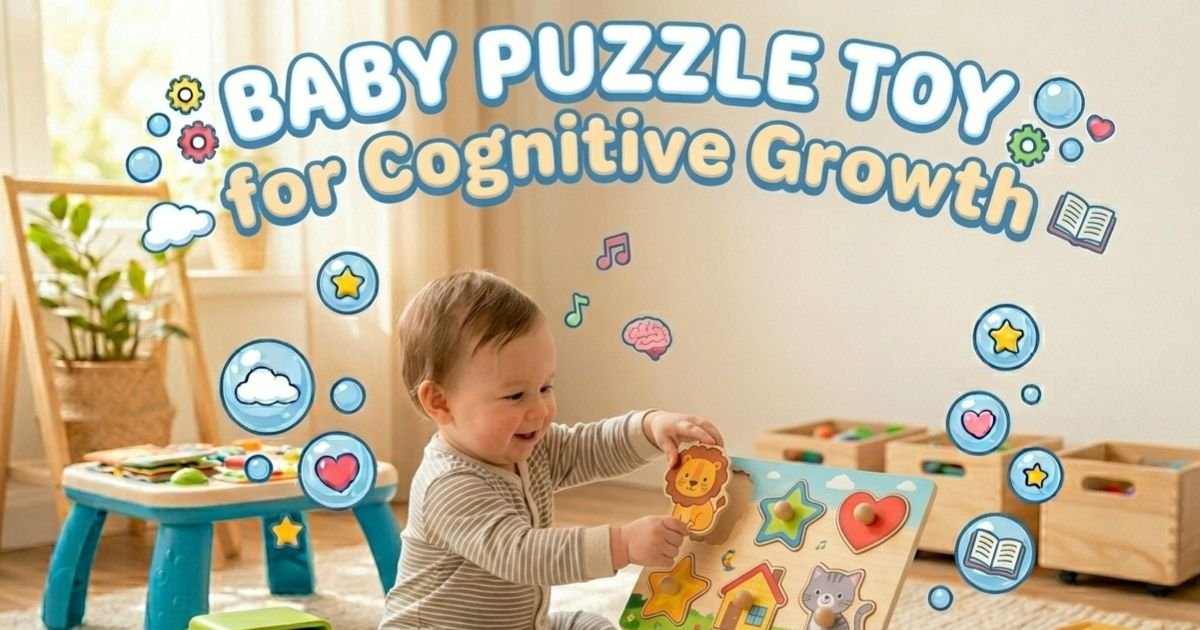

Are you looking for a fun way to help your baby learn and grow? A baby puzzle toy is an engaging educational toy designed for infants and toddlers. These toys typically involve fitting shapes, blocks, or pieces together in the right way. They combine play with learning, making them perfect for boosting early brain development. In this comprehensive guide, you’ll learn how puzzle toys benefit your child’s cognitive growth, the different types available (wooden, colorful, educational, etc.), how to choose age-appropriate puzzles, and expert safety tips. By the end, you’ll know exactly how a baby puzzle toy can help your little one learn shapes, colors, problem-solving, and more.
What is a Baby Puzzle Toy?
A baby puzzle toy is any toy designed for babies that requires fitting pieces together or stacking parts. Common examples include shape-sorter puzzles (large shapes that fit into matching holes), peg puzzles (wooden boards with handles on each piece), stacking puzzles, and simple floor jigsaw puzzles. These toys often feature bright colors and familiar images (animals, vehicles, letters) to attract a baby’s attention. A key aspect is that pieces are large, have knobs or handles, and are easy for tiny hands to grasp.
- Educational Shape Puzzles: Wooden boards with cutouts of geometric shapes (circles, squares, triangles) or objects (animals, vehicles) and matching blocks. Babies learn by placing each piece in the right slot.
- Stacking and Nesting Toys: Rings or shapes that stack on a peg or nest into each other. These teach sizes and order as babies fit pieces together.
- Simple Jigsaw Puzzles: Oversized 2–5-piece puzzles with pegs, suitable for 1–3 year olds. As babies grow into toddlers, these larger-picture puzzles build on earlier skills.
- Interactive/Montessori Puzzles: Modern options like “puzzle-by-number” sets or color-matching puzzles encourage creativity. They are often brightly colored and reusable.
Each of these educational baby puzzle toys is designed to entertain while teaching basic concepts like shapes, colors, and problem-solving. Over time, puzzle play also builds important fine motor skills, concentration, and other cognitive abilities.
Cognitive Benefits of Baby Puzzle Toys
Puzzle toys are more than just fun – they are powerful tools for early cognitive development. Playing with puzzles helps babies and toddlers develop a range of mental and physical skills:
-
Fine Motor Skills & Hand-Eye Coordination: Grasping puzzle pieces (often with knobs) and placing them correctly strengthens tiny finger muscles and improves precision. As the SensorySouk blog explains, “picking up, gripping, [and] placing pieces” is excellent for developing fine motor control. Likewise, guide-your-hand actions coordinate sight and movement, building the connection between eyes and hands.
-
Problem-Solving & Critical Thinking: Every puzzle presents a little problem to solve. Babies learn by trial-and-error which shape goes where. Puzzle play encourages them to “think hard” and try different solutions. Matching by color or pattern teaches logical thinking. Over time, this builds resilience in learning to try again after mistakes.
-
Spatial Reasoning & Visual Perception: Fitting pieces together teaches spatial awareness understanding how shapes relate in space. Studies show frequent puzzle play improves children’s spatial transformation skills (the ability to mentally rotate and fit shapes). One Montessori blog notes that kids who play puzzles regularly perform better on spatial tasks later on. Puzzles also teach depth perception and shape recognition before formal school.
-
Shape and Color Recognition: Colorful puzzles introduce babies to different colors and shapes. Playing with a colorful baby puzzle toy –such as a rainbow-shaped sorter or animal board helps babies learn to distinguish red from blue, circle from triangle. Knowing shapes and colors is the foundation for later math and reading skills.
-
Concentration and Patience: Puzzle activities require focus. As one Plus-Plus article notes, puzzles give kids a goal and help them sit still, improving their attention span. Working patiently through a puzzle, even a simple one, gradually builds their ability to concentrate.
-
Memory: Remembering which pieces go where or recalling a picture in the puzzle exercises short-term memory. Repeated puzzle play helps babies form neural connections and enhances recall of shapes and colors.
-
Language and Cognitive Learning: Puzzle play also boosts language skills. As UnityPoint recommends, parents can talk about the shapes, colors, and animals on puzzle pieces, using one-step commands (“Find the yellow star!”). This kind of guided talk enriches both expressive and receptive language while playing. Each time you describe a piece or count the blocks, your baby’s vocabulary and comprehension grow.
-
Self-Confidence & Perseverance: Completing a puzzle even a simple one gives a great sense of achievement to a young child. Expert sources point out that solving a puzzle is a “huge confidence booster” for children. With each success, babies learn they can influence their world. Puzzles also teach persistence: they naturally involve making mistakes (“that shape didn’t fit!”) and trying again until it works. Over time, this grit pays off in learning and school success.
In short, playing with a baby puzzle toy supports cognitive development on many levels. It simultaneously develops the body (motor skills) and brain (logic, memory, language). As one source put it, puzzle-solving builds foundational skills in early mathematics and reading because kids learn about parts, shapes, and how objects relate.
Types of Baby Puzzle Toys
Puzzle toys come in many styles to suit different ages and interests. Some popular baby puzzle toy categories are:
-
Wooden Peg and Knob Puzzles: These are classic shape puzzles with wooden handles (“knobs”) on each piece. For example, a board shaped like a barn with animal pieces, each with a small peg, is very common. The wooden baby puzzle toy is sturdy and non-toxic. Wooden pieces are easy for babies to grasp and safe for mouthing. They often feature simple, real-world images (animals, vehicles) which follow Montessori principles.
-
Shape Sorters and Stacking Toys: These toys usually include larger pieces (blocks or rings) that fit into matching holes or stack on posts. For instance, cube blocks that drop into a box teach shape recognition and order. These pieces are big and easy to grasp for little hands. Shape sorters often start as single-shape tasks and graduate to multiple shapes. These puzzles support both fine and gross motor skills (since baby may lean over or roll to get pieces).
-
Floor Jigsaw Puzzles: For older babies and toddlers, oversized jigsaw puzzles (10–20 pieces) become ideal. These typically lie flat on the floor and have large interlocking cardboard or foam pieces with vibrant images. The large pieces prevent choking and help toddlers practice bigger-picture assembly. By solving picture puzzles, children reinforce spatial and visual skills.
-
Colorful Educational Puzzles: Many puzzle toys double as teaching tools. For example, puzzles with letters, numbers, or geometric shapes introduce academic concepts. Others combine playsets with puzzle elements (like a train with lettered cars). These educational baby puzzle toys make learning subjects like counting and alphabet fun and interactive. Bright colors and engaging themes (animals, farm, space) keep toddlers interested.
-
Puzzle Toys for Toddlers: As children approach ages 2–3, more complex puzzles are suitable. This includes multi-piece puzzles, 3D puzzles (simple building sets), or pattern-matching puzzles. According to child development guides, starter toddler puzzles include shape sorters, shape puzzles, peg puzzles, simple jigsaws, and stacking blocks. Even easy building toys (like Duplo blocks) encourage puzzle-like thinking by having children fit pieces together.
Each type of puzzle toy is intended for a specific stage. Beginners start with chunky, one-piece puzzles; as skills improve, puzzles can include multiple shapes and require more matching. Both wooden puzzle toys and modern plastic/cloth puzzles can be colorful and educational. The key is that the puzzle engages the child’s attention and makes learning playful.
Choosing the Right Puzzle Toy
When shopping for a baby puzzle toy, consider these expert tips to pick one that’s both safe and developmentally appropriate:
-
Age and Skill Level: Always check the age recommendation, but observe your child first. Many experts note that babies can start simple puzzles around 10 months, while toddlers (1–3 years) can handle puzzles with 3–10 pieces. Start very simple: a one-piece shape-sorter or knob puzzle for a 10–12 month old, and gradually move to multi-piece puzzles around 15–18 months. The right puzzle should be challenging but not frustrating.
-
Easy-Grasp Pieces: Look for puzzles with large handles or knobs that tiny fingers can hold. As Montessori Generation explains, your baby’s first puzzles should come with big wooden nobs for grabbing. These make it much easier for babies to pick up and manipulate pieces. For very young babies, chunky wooden pieces are safer and simpler than flat cardboard ones.
-
Piece Size and Safety: Pieces should be too big to fit in a baby’s mouth. According to safety guidelines, avoid any puzzle with parts smaller than about 1.25 inches for infants. Babies will explore by mouthing pieces, so ensure chunks are large and well-attached. One source explicitly advises: “Baby’s first puzzle should have big pieces that they can’t easily swallow… They will taste it before putting it together, so ensure they can’t hurt themselves”.
-
Durable, Non-Toxic Materials: Choose puzzles made from safe materials. Wooden baby puzzle toys are highly recommended they typically use natural wood with non-toxic paints. Good wooden puzzles don’t splinter and often have smooth, rounded edges. If selecting a plastic puzzle, ensure it is BPA-free, and paint-free or with food-safe paint.
-
Engaging Design: Pick puzzles with clear, simple images and bright colors that interest your baby. Many puzzles use animals, vehicles, or familiar objects. High contrast or multi-colored designs help with visual stimulation and color learning. Also consider your baby’s likes a puzzle featuring a beloved animal or toy can be extra engaging.
-
Progressive Complexity: It’s okay to keep several puzzles on hand. Start with an easy one-piece shape puzzle and, over time, graduate to puzzles with more pieces or interlocking parts. This keeps your child challenged as they develop. One parenting resource suggests that puzzles should be “complex enough to be engaging but not too complicated”, aligning with a Montessori approach.
By following these guidelines, you ensure the baby puzzle toy you choose is age-appropriate and beneficial for learning. Remember, the goal is to encourage your baby to experiment and learn naturally through play.
Safety Tips for Puzzle Toys
Safety is paramount with baby toys. When selecting any puzzle toy:
-
Check for Safety Certifications: Make sure the toy complies with safety standards. In the U.S., look for CPSIA compliance and ASTM F963 certification, which indicate the toy meets federal safety specs. In Europe, look for the CE mark. Products should list an age rating (e.g. “12–24 months”).
-
Non-Toxic Finish: Ensure all paints and finishes are non-toxic and lead-free. High-quality wooden puzzles will explicitly state they have lead-free paints. The Playroom Collective safety guide advises choosing toys with “non-toxic finishes [that] ensure safe mouthing and teething”.
-
No Small Parts or Magnets: For babies under 3, puzzle pieces should be too large to swallow. Avoid puzzles with tiny parts, detachable magnets, or small pebbles. The guidelines state pieces smaller than 1.25 inches pose a choking hazard for infants.
-
Smooth, Round Edges: Inspect puzzles for sharp edges or rough spots. A baby puzzle toy should have smooth, rounded edges on all pieces and boards to prevent cuts or splinters. Better wood puzzles will have finely sanded edges for safety.
-
Durability: Puzzles should be sturdy. Avoid flimsy cardboard pieces that bend easily or plastics that can crack. Quality wooden toys tend to be more durable and less likely to break into dangerous shards. If a piece does break, be prepared to discard it immediately.
-
Supervise Play: No matter how safe, always watch your baby during puzzle play. Even with large pieces, babies might mouth edges or try to chew knobs. Active supervision also lets you help guide pieces, ask questions, and keep play positive.
By sticking to trusted brands and checking labels (age, safety symbols), you can confidently add a puzzle toy to your baby’s playtime. Wooden puzzle toys are especially known for being safe and chemical-free many are naturally antibacterial and free from BPA or phthalates, unlike cheap plastic toys.
How to Use Puzzle Toys with Your Baby
Introducing a puzzle toy to your baby is easy and fun. Follow these friendly steps:
-
Demonstrate First: Show your baby how the puzzle works. Hold a piece and place it in the correct slot yourself. Babies learn by imitation, so guide their hand a couple of times if needed. For example, gently place a block into a shape-sorter hole and say, “Look the star fits here!” This shows them the goal of the game.
-
Encourage Exploration: Let your baby explore the pieces freely. It’s normal for little ones to put puzzle pieces in their mouth or throw them around when first introduced. This exploration phase (mouthing, dropping) actually helps them understand the pieces. Reassure yourself – babies use all senses to learn, and they’ll eventually connect shape with slot.
-
Offer Help and Praise: If your baby seems frustrated, offer gentle help. You might say, “Let’s turn it this way… yes!” Celebrate small wins enthusiastically. Praising effort is key: even trying to fit a piece teaches. According to parents’ guides, completing even a simple puzzle gives a child a huge confidence boost. So clap and cheer when they get a piece in, reinforcing that sense of achievement.
-
Name Shapes and Colors: Use the puzzle as a teaching moment. Describe what you’re doing and what you see. “This is a red circle. Let’s put the circle in its place!” Talking through the play supports vocabulary. It also ties into the puzzle’s learning goal e.g. matching shapes or colors. (Experts note that asking “where is the yellow star?” teaches language alongside puzzling.)
-
Increase Challenge Gradually: Once your child masters a simple puzzle, introduce a slightly harder one. For example, move from a one-shape puzzle to two shapes, or from wood to a jigsaw with two pieces. Always match the level to your child’s patience Toys should inspire, not frustrate. Over time, watching them improve and taking on bigger puzzles will be very rewarding.
-
Play Together: Puzzles are great bonding activities. Sit with your baby, help turn pieces, or even try the floor puzzle together. This joint play deepens learning – as one parenting expert notes, playing and learning together sends a message “you are important to me” and boosts the baby’s confidence to explore.
By using puzzle toys interactively, you make learning a natural part of playtime. Each step from picking up a block to completing the puzzle becomes a small victory in your baby’s cognitive growth.
Pros and Cons of Baby Puzzle Toys
Like any toy, baby puzzle toys have advantages and a few drawbacks. It’s helpful to weigh these as you decide which puzzle to buy.
Pros:
- Educational Value: Puzzle toys teach a multitude of skills simultaneously – motor control, logic, shape/color recognition, memory, and more. They are truly purposeful playthings that prepare little ones for future learning.
- Durability: High-quality puzzles (especially wooden ones) can last through years of play and even be passed to younger siblings. Wood doesn’t break easily and is less likely to wear out compared to flimsy plastic.
- Safe, Non-toxic: Good puzzles use baby-safe materials. Wooden puzzles avoid many chemicals found in plastics, making them ideal during teething and mouthing phases.
- Screen-Free Entertainment: Puzzle play is low-tech and promotes attention spans without involving any screens. It’s a calming, quiet activity parents appreciate.
- Wide Age Range: A single puzzle often entertains at multiple stages. A shape sorter works as a baby puzzle and later as a counting/game toy. This long “age range” can make puzzles a great investment.
- Encourages Independent Play: Once taught, many toddlers can play with puzzles by themselves, giving parents a bit of solo time. Puzzles naturally lend themselves to quiet, focused play.
Cons:
- Choking Hazard (if not chosen carefully): The biggest risk is small parts. Always ensure pieces are large and age-appropriate. Younger babies should never have access to small puzzle parts.
- Frustration Possible: If a puzzle is too difficult (or too easy), a child may lose interest or get upset. Finding the right level is key.
- Limited Themes: A baby only uses shape sorters or one puzzle so many times. Some children might lose interest if the toy isn’t varied enough. Rotating puzzles or buying a set helps.
- Cost: Quality wooden puzzles can be more expensive than cheap plastic sets. However, their longevity and safety often justify the price.
- Piece Loss: As children grow more independent, puzzle pieces can wander off (under furniture, etc.). This is a minor annoyance but keep it in mind.
Overall, the pros of puzzle toys – developmental gains and safe design – generally outweigh the cons, especially when you pick age-appropriate sets and supervise.
Conclusion
In conclusion, a baby puzzle toy is one of the best play items you can choose for your little one’s development. From the early months of mouthing a shape to the toddler years of solving multi-piece puzzles, each stage builds on the last. Puzzle toys are not only entertaining and colorful baby puzzle toy fun, but also powerhouse tools for growing brains boosting memory, logic, and confidence as children play. By selecting educational baby puzzle toys that are safe, age-appropriate, and engaging, you can ensure your child gets maximum learning benefit.
Remember to look for quality sturdy wooden puzzles with safe finishes are excellent choices. Begin with simple shape-sorters or knob puzzles, and gradually introduce more complex challenges as your baby grows. Always supervise young children with puzzles, but don’t hesitate to let them explore. With encouragement and a variety of puzzles, your baby will not only have fun but will also develop crucial skills for school readiness.
Ready to give your child a head start? Consider adding a baby puzzle toy to your playroom. It could be the first step toward a lifelong love of learning. Happy puzzling!
