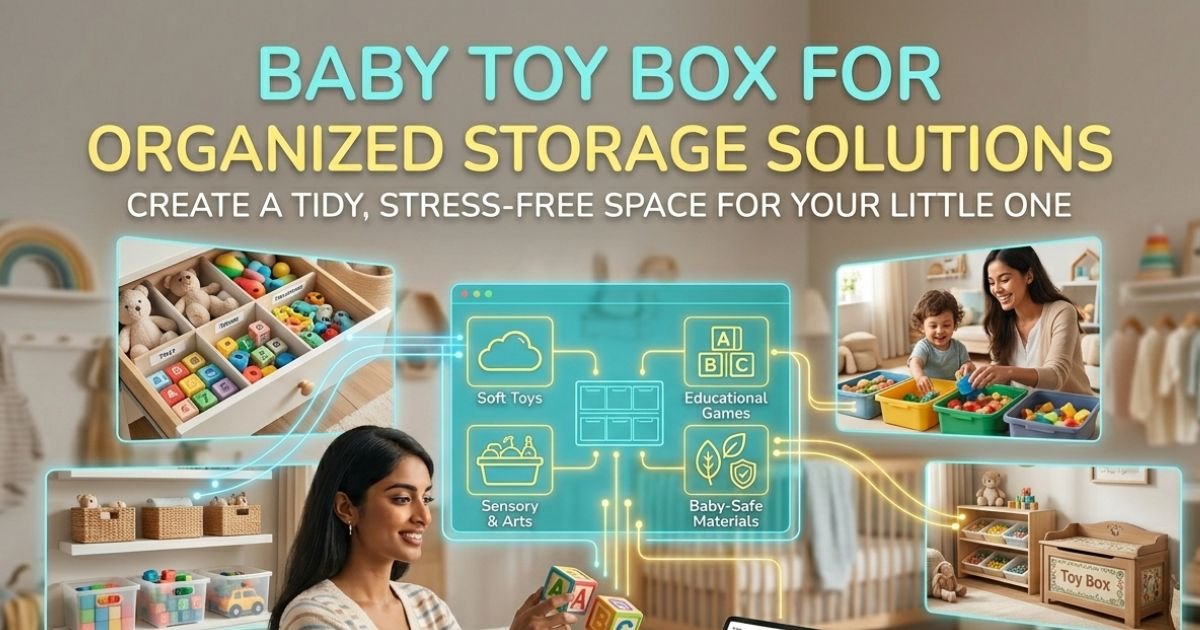

Keeping a playroom tidy is a daily challenge for parents. A baby toy box can be the key to organized storage, helping hide clutter and teach kids to put away their toys. With the right toy box, cleanup becomes as simple as tossing everything inside. In this guide, we’ll explore different types of toy boxes (from wooden chests to bin organizers), important safety features to look for, and tips for using a toy box effectively. By the end, you’ll know how to choose the best baby toy box to fit your space and keep your child’s room neat.
Why Use a Baby Toy Box?
- Instant Declutter: A toy box provides concealed storage for scattered toys. As one reviewer notes, a good toy chest “provides concealed storage for toys – throw everything in and it’s out of sight”. This makes tidying up quick and painless at the end of playtime.
- High Capacity: Many toy boxes can hold a huge volume of toys. For example, Melissa & Doug’s wooden toy chest offers about 8.25 cubic feet of storage space. The KidKraft Austin bench toy box (30″ long) can hold “just about everything (including dress-up costumes)”. A large box can clear an entire room’s worth of toys in one go.
- Multi-Use Furniture: A sturdy toy box often doubles as seating or a play surface. The same solid wood chest “holds a ton and doubles as kids’ seating”, so it’s extra functional in a nursery or playroom.
- Teaches Organization: Having a special place for toys helps kids learn to organize. Sturdy toy boxes with simple lids make it easy for toddlers to help put toys away. As one parenting guide explains, giving kids a dedicated storage spot “helps children develop responsibility and tidiness habits” by making cleanup a routine. When toys belong to categories (blocks in one bin, stuffed animals in another), kids can find what they want and take ownership of putting things away.
- Safer Playroom: Keeping toys off the floor reduces trip hazards for parents and kids. A well-chosen toy box (especially one with a lid) keeps small parts contained. Many parents find that a safe, sturdy toy box helps keep the play area safer and more organized.
In short, a baby toy box is more than a container – it’s an investment in making playtime cleaner, safer, and more fun.
Toy boxes often blend into nursery furniture. For example, a toy chest placed next to a sofa can keep toys tucked away. A reviewer notes that such toy chests “provide concealed storage for toys” for easy cleanup, and many designs double as seats for extra use.
Types of Baby Toy Boxes
There are many styles and materials of baby toy boxes. Here are the most common:
Wooden Baby Toy Boxes
Wooden toy chests are classic and durable. They often use solid or engineered wood (pine, maple, birch) because these woods are strong yet have fewer toxins. A good wooden box will have a smooth, non-toxic finish and rounded edges to avoid splinters. For example, Melissa & Doug’s popular wooden toy chest (pictured in their catalog) is sturdy, holds over 8 cubic feet of toys, and comes with a safety-hinged lid. Parents love its classic look and the fact that it’s “built with little ones in mind” – the slow-close hinge “prevents toddlers from slamming it shut”.
Pros: Very sturdy, long-lasting, can be painted or stained to match décor. Often solid enough to sit on.
Cons: Heavy (hard to move), usually more expensive than plastic.
Plastic or Resin Toy Boxes
Plastic chests (like the Suncast outdoor toy box) are lightweight, affordable, and often weather-resistant. They resist moisture, making them a good choice for outdoor spaces or damp basements. Some even have locking lids and wheels for easy movement. However, cheaper plastic boxes can crack or warp, and they may have sharp edges if not well-made. Plastic models rarely need assembly and can be wiped clean easily. On the down side, they may contain more chemicals unless labeled BPA-free.
Pros: Lightweight, usually cheaper, easy to clean.
Cons: Less durable (can crack), may look less “nursery-friendly.”
Fabric / Collapsible Storage Bins
Soft-sided bins or fabric toy boxes (often collapsible) are another option. They are very lightweight and portable, and there’s no risk of pinched fingers. Many are made of canvas or felt and come in fun colors or patterns. These work best for light toys (stuffed animals, clothes, plush blocks) and in very young children’s rooms. They can even be transported to other rooms easily. The trade-off is that they can’t hold heavy items or serve as a seat, and they may collapse if not packed properly.
Pros: Safe (no lids to pinch), portable, inexpensive.
Cons: Not sturdy, limited durability, only hold lightweight items.
Large Toy Box (Bench-Style)
If you need a lot of storage, consider a large toy chest or bench-style box. These are often nearly 3 feet long and can swallow giant toys or multiple bins. For example, the KidKraft Austin Wooden Toy Box is about 30″ long and can store bulky items like costumes and large games. Because they are so big, these chests tend to be wider and taller, so they’re best in larger rooms. A bonus: many large toy chests are designed to double as benches, providing extra seating. They often have handles or cut-outs so kids can open them easily (KidKraft’s design has a cut-out grip in the front).
Pros: Huge capacity, doubles as seating or table, fewer chests needed for many toys.
Cons: Takes up much floor space, can get heavy when full, smaller kids may struggle to reach inside.
Toy Box Organizer (Multi-Bin Storage)
For parents who want even more organization, consider a toy storage organizer rather than a single chest. These units combine open shelves and bins of different sizes. For instance, one popular organizer includes angled bins plus open cubbies and a closed cabinet, all with anti-tip brackets. Using an organizer, you can sort toys by category (animals here, blocks there) so little ones can find them without dumping everything out. Toy box organizers encourage display and concealed storage: you might put frequently used toys on open shelves and stash extras in hidden bins or baskets.
Pros: Highly customizable storage, good for sorting and rotating toys.
Cons: Often requires assembly, can be tall (may need wall anchors), and tends to cost more.
Key Features to Consider
When choosing a baby toy box, keep these features in mind:
- Safety Hinges / Lid Design: Look for toy chests with soft-close or safety hinges on the lid. These hinges slow the closing action, preventing the lid from slamming down and pinching little fingers. Many quality wooden toy boxes come with these by default. Alternatively, some safety guidelines even recommend a lightweight or removable lid to avoid the danger of a heavy lid falling.
- Ventilation Holes: Some boxes include small holes or mesh panels so air can circulate. This is crucial if a child climbs inside; it prevents suffocation by allowing air flow. Vent holes are a good safety feature in any enclosed toy storage.
- Rounded Corners and Smooth Edges: Any toy box should have no sharp corners or rough edges. Rounded trim and a smooth finish prevent bumps and scrapes when kids play around it.
- Lock and Opening: For a baby toy box with lid, you may or may not want a lock. If there is a lock (usually for outside boxes), ensure it can be opened from the inside in case a child climbs in. More commonly for indoor toy chests, a simple lid without a latch is safest.
- Capacity and Size: Measure your space. A toy chest that’s too large will crowd a small room; one that’s too small won’t hold enough toys. Consider how many toys and types your child has. It’s often better to err on the side of bigger capacity (kids accumulate). For reference, a mid-size box might be ~30″ long (holds large items), while smaller boxes (20″ or less) suit toddlers’ rooms.
- Material & Finish: Ensure materials are safe look for non-toxic, child-safe paints or stains. Woods like pine or birch are common and contain fewer toxins. For plastic, check labels for BPA-free, phthalate-free. Durable finishes (no lead!) mean the box will look good for years.
- Assembly and Durability: Some toy boxes ship pre-assembled (less hassle), while others require you to screw on hinges and boards. If you can assemble it yourself, check how easy the instructions are. Sturdy construction is key, especially if it doubles as furniture the box should support sitting weight without collapsing.
- Style and Decor: Since toy boxes are often furniture, pick one that matches your room’s style. Wooden chests come in classic whites, grays, or natural woods. Plastic bins come in bright or neutral colors. You can personalize plain wood with decals or paint. The right look can make the toy box feel like part of the decor rather than an eyesore.
Many experts suggest making a short checklist of these features when shopping. For example, one guide notes: “Some serious injuries have happened… [so] the toy box should have stoppers on the inside of the lid [to keep a 1.5 cm gap] and ventilation holes”. Always verify safety standards – well-made boxes comply with ASTM toy safety tests to limit lid force and travel distance.
Organizing Tips Inside the Toy Box
A large empty box is helpful, but you can make cleanup even easier by organizing the contents:
- Use Bins or Dividers: Place smaller plastic bins or baskets inside the toy box. Group similar toys together (e.g. building blocks in one bin, stuffed animals in another). One blog suggests you can “organize from within” by using bins or clear bags inside the toy chest, so it’s easy to find toys without emptying the whole box.
- Label or Color-Code: For older toddlers, label the bins or use different colors. You might label a bin “Cars” or simply attach a toy picture. Labels help kids remember where each toy goes.
- Stackable Storage: Use stackable containers for tiny parts or craft supplies, and keep them at the top of the toy box or on a shelf. This prevents small toys from getting lost at the bottom. (Some parents use zippered mesh pouches for LEGO or puzzle pieces inside a large box, but that’s optional.)
- Rotate Toys: Only keep current favorite toys in the main toy box, and store extras elsewhere. This keeps the volume down. Rotating toys for example, swapping some out weekly – can make playtime feel new without having a constant mountain of toys in the box.
- Easy Access: Place the toy box in a low, accessible spot so your child can reach in. If the box has high sides, they might need help fishing toys out. Some parents put the toy chest near where the child plays so they can grab toys and also help put them away.
- Clean Up Game: Make putting toys in the box a fun activity. Count how many blocks you can “chuck” into the box, or play music and race to finish cleanup. Eventually kids learn that the toy box is the “home” for all their stuff, and tidying becomes part of play.
By organizing inside the toy box, you get all the benefits of hidden storage while still keeping everything categorized. This makes the toy box not just a trash bin for toys, but a true organizer.
Using bins and shelves inside toy chests. As one parent blogger suggests, insert smaller bins or baskets into the toy box to sort different toy types. In this way, kids can grab exactly what they want without emptying the whole box.
Comparing Materials: Wood vs. Plastic vs. Fabric
Wooden Toy Box: Often made of solid or engineered wood, these are heavy-duty and long-lasting. They usually come in solid colors (white, gray, natural) and can support sitting. As noted above, use woods like pine or maple with safe finishes. A wood chest can be refinished if nicked. The main drawback is weight and cost.
Plastic Toy Box: Typically lighter and cheaper. Good for damp areas or outdoors (patio toy boxes are often plastic or resin). They often have a more modern or casual look. Quality plastic boxes will note they’re BPA-free. Plastic won’t rot, but may break if dropped. It’s easier to clean (just spray and wipe).
Fabric/Felt Bin: These foldable bins (often sold as cube organizers) are soft, colorful, and perfect for young kids. They have no risk of slamming lids or sharp edges. However, they can’t hold anything heavy or rigid, and collapse if not full. They’re best used as a supplement for stuffed animals or laundry.
In summary, wood is best if you want a piece of furniture that lasts a long time. Plastic is best for lightweight durability (especially outdoors). Fabric is best for lightweight, temporary storage.
Top Picks and Styles
While this guide isn’t meant to sell a specific brand, some models are frequently recommended by parents:
- Melissa & Doug Wooden Toy Chest: A classic choice. The white wood toy chest has 8.25 cubic feet of space and a safety-hinged lid. Reviewers praise its sturdy build and slow-close hinge (“so toddlers can’t slam it shut”).
- KidKraft Austin Wooden Toy Box/Bench: This large wooden chest (30″ L × 21″ W) comes with safety hinges and a handle cut-out. It doubles as a bench and can hold costumes and large toys. Many parents like the bench seat feature.
- Suncast Patio Toy Box: For outdoor or extra-large needs, this resin box is weather-resistant and has a locking lid. It’s essentially a mini deck storage bench (holds ~46″ of stuff).
- Fabric Storage Cubes / Bins: For older kids, the modular cube units (with or without bins) are popular. These aren’t chests, but serve as toy “organizers.” Many parents combine a few fabric bins with a low shelf.
Ultimately, the best baby toy box for you will depend on your room size, décor, and whether you prioritize safety features or maximum capacity. Reading reviews (like on retailer sites) can help confirm build quality and real-life tips (e.g. how hard it is to assemble).
Safety First: Essential Features
Safety should be a priority with any baby product, including toy boxes. Accidents have happened when toddlers climb inside or lids fall. Here are recommended safety features:
- Slow-Close Lid or Stop: As emphasized earlier, ensure the lid has a slow-close hinge or an internal stop so it can’t slam shut. Some guidelines say the lid should stay open at any position to avoid crushing fingers. In practice, a lid with a built-in hinge stay or hinge bracket will keep a small gap (about 1.5 cm) even when closed, letting air in and preventing fingers from being caught.
- Ventilation Holes: If the toy chest is fully enclosed, built-in holes (usually on the side or back) allow air to flow. This is crucial in the rare event a child climbs inside – it prevents suffocation. Some toy box designs include simple sawed holes or mesh panels for this reason.
- Rounded Edges: Look for boxes with rounded corners and smooth sanding. Even if a child bumps into the box, there won’t be sharp corners to hurt them. Many children’s furniture lines include this as a selling point.
- Stable Base / Anti-Tip: Ensure the toy box won’t tip easily. Heavier bases or wall-mount anchors (for organizers) prevent tipping. For tall storage units with bins, always use the wall straps provided.
- No Small Parts: If a box has decorative knobs or hardware, make sure they can’t be removed or swallowed.
- Standards Compliance: In the US, look for ASTM F963 compliance (toy safety standard). This standard explicitly tests toy chest lids for pinch hazards. Although not always advertised on retail shelves, knowing the box has a design consistent with ASTM tests gives extra confidence.
Consumer safety authorities have even issued warnings: the Australian Product Safety agency notes “injuries and deaths have occurred from toy box lids falling on children’s heads,” and advises either no lid or a lid that can be opened from inside. In other words, for infants it may be safest to use an open bin until they’re older.
Safety features matter whether using an open shelf or a toy chest. For example, even open shelving near a window (above) should be complemented by a safe toy box with hinge stops. Experts advise that any toy chest have slow-close hinges and ventilation holes to reduce the risk of pinching or suffocation.
Maintaining Your Toy Box
To keep the toy box clean and inviting:
- Regular Cleaning: Wipe the interior and exterior with a damp cloth weekly. Use mild soap if needed, but avoid harsh chemicals that could damage finishes or leave fumes. For wood boxes, a gentle furniture polish (non-toxic) can protect the finish.
- Odor Control: Cloth or cardboard-lined boxes can develop stale smells. A simple hack is to place a small sachet of baking soda or a charcoal odor-absorber inside the box – this will soak up mustiness. Replace it every few months.
- Check Hardware: Periodically test the lid hinge or stay. Make sure it still holds the lid open as intended, and that screws are tight. Loose hinges should be re-tightened. For plastic boxes with locks, ensure the lock isn’t broken or jammed.
- Inspect for Damage: Look for any splinters in wood or cracks in plastic. Sand down any rough spots, and don’t let children sit or stand on the lid, as this can warp it. Ideally, a toy box is for storage, not climbing.
Proper maintenance keeps the toy box safe and prolongs its life as your child grows.
Frequently Asked Questions
What makes a good baby toy box organizer? A good organizer has both capacity and easy access. It should have smooth finishes and child-safe materials. Key features include a safe (soft-close) lid, ventilation holes, and stable construction. Some organizers incorporate removable bins or shelves to sort toys inside the chest.
How large should a toy box be? That depends on your space and toy volume. Measure the intended spot and choose a box that fits with room to spare. For a toddler’s room, a 24″–30″ long box is common. For a living room play corner, larger (up to 36″) can work. Remember, kids need to reach in, so keep height reasonable (18″ or so for toddlers).
Are wooden toy boxes safe for babies? Yes, if they meet safety guidelines. Wooden boxes should have smooth, non-toxic finishes and safety hinges. Softwood varieties (pine, birch) are recommended due to lower toxins. Many wooden chests now include child-proof lid supports.
Can a toy box have a lock? Generally, avoid locks on children’s toy chests. If you need a lock (e.g. outdoors), ensure it can be opened from inside and teach kids how to use it. Otherwise, a simple lid without a latch is safer so kids aren’t trapped.
Why not just use open bins instead of a toy box? Open bins are convenient for kids to grab toys, but they show clutter. A toy chest hides mess and can store more at once. Experts often recommend a mix: open shelves for display and everyday play, plus a closed toy box for overflow and quick tidy-up.
Conclusion
A well-chosen baby toy box can transform a chaotic nursery into a calm, organized space. By selecting the right type (wooden, plastic, or fabric) and ensuring essential safety features (like slow-close hinges and vents), you create a tidy home and a teaching moment for kids. Remember to fill your toy box in an organized way (using bins or labels) so cleanup is a breeze.
In summary: look for a box that fits your room, matches your décor, and meets safety guidelines. Whether you choose a solid wood chest or a colorful plastic box, the goal is the same – to make playtime fun and cleanup easy. Armed with these tips, you’re ready to pick the best baby toy box for your family. Happy organizing!
