
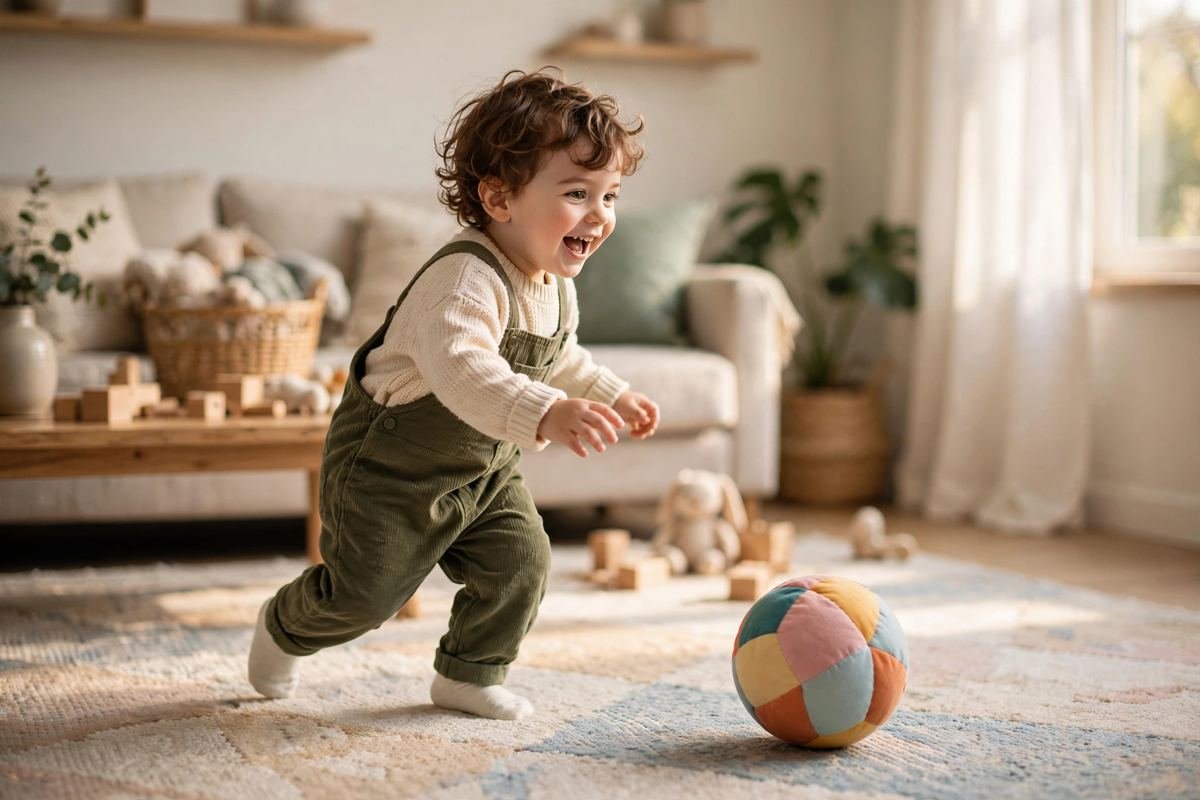
The best balls for toddlers turn a plain floor into a whole afternoon of play. A ball rolls away, and your baby crawls after it. A ball bounces, and your toddler squeals and runs. Few toys grow with a child the way a simple ball does, from first reaches on a play mat to confident kicks in the garden.
Choosing well matters more than it sounds. A ball that is too hard can hurt, too small can be a hazard, and too lively can frustrate a young toddler who cannot catch it yet. Soft balls for babies suit the earliest months, while firmer, bouncier balls reward older toddlers who are learning to throw, catch, and kick with real aim.
This guide rounds up ten trusted balls and ball sets, from sensory classics to a gentle playground ball for the park. Every pick comes from a maker known for safe baby gear. If you are filling a first toy basket, start with our homepage for more ideas, then pick the ball that fits your child stage.
Quick Picks: The Best Balls for Toddlers at a Glance
The Infantino Textured Multi Ball Set is our top all rounder, with six different surfaces for small hands to explore. The Oball is the easiest first ball for young babies to grab, and the Edushape sensory set earns its fame in baby classes everywhere. Together they cover most of what parents mean by the best balls for toddlers. The reviews below add movement, music, and outdoor picks.
- Best overall set: Infantino Textured Multi Ball Set
- Best first ball for babies: Bright Starts Oball Classic
- Best sensory set: Edushape See-Me Sensory Balls
- Best for crawlers: VTech Move and Crawl Ball
- Best outdoor ball: Crocodile Creek Playground Ball
How to Choose the Best Balls for Toddlers
Start with size and weight. The best balls for toddlers for a one year old are light, soft, and big enough that they cannot fit in the mouth. As your child grows toward two and three, slightly smaller and bouncier balls become fun, because throwing and catching skills are ready for a livelier game.
Size, Weight, and Grip
A good first ball sits easily in two small hands. Holes, bumps, and ridges help babies hold on, which is why textured balls for babies are so popular in the first year. Very light balls roll slowly and stay close, building confidence. Heavier foam balls travel straighter and suit toddlers who are learning to aim a throw at a target.
Materials and Surfaces
Foam balls for toddlers are kind to furniture and little faces, which makes them the default indoor choice. Rubber balls bounce better outdoors but can sting on a close catch. Fabric balls are the softest of all and wash easily. Whatever the material, check that seams, valves, and coatings are smooth, with nothing peeling or sharp.
Indoor Play Versus Outdoor Play
Indoor balls for toddlers should be soft, slow, and quiet on hard floors. Save firmer balls for the garden or park, where a wild bounce hurts nobody. Many families keep a toddler ball set indoors and one playground ball by the door. You can browse more active play ideas in the toddler toys category when you finish here.
Floor type matters more than parents expect. On wooden or tiled floors, even a soft ball travels fast, so choose lighter balls with a gentle roll for small rooms. On carpet, a slightly firmer ball keeps the game alive, because very soft balls stall after one push. Test a new ball yourself first. If it feels calm in your space, it will feel right for your toddler too.
The 10 Best Balls for Toddlers
1. Infantino Textured Multi Ball Set
This set of six colourful balls is a staple of baby baskets for good reason. Each ball has a different surface, with bumps, ridges, and soft spikes that invite squeezing and mouthing. The sizes vary a little, which gives small hands new challenges as they grow. The balls are light, soft, and easy to wash after a day on the floor. The set also gives parents easy games to copy, like rolling one ball back and forth or naming a colour before each throw, which stretches simple play into early learning.
- Six balls with different textures to explore
- Soft, squeezable build suited to young babies
- Bright colours that support colour naming games
- Light weight that is safe for indoor rolling
Pros: One set covers months of sensory play and works in the bath too. Cons: The smallest balls need supervision with very young babies who mouth everything. It suits parents who want one versatile set for tummy time, rolling games, and early grasping practice.
2. Bright Starts Oball Classic
The Oball is famous for one clever idea. Its flexible web of holes lets even a tiny baby hook fingers through and lift the ball with ease. It barely rolls away, it never hurts when it lands on a face, and it squashes flat in a bag and pops back into shape. For many babies, this is the first ball they ever hold. It also survives being chewed, dropped, and sat on without complaint, and a quick wash brings it back to the play mat looking and smelling fresh for the next round.
- Open web design that tiny fingers can grip
- Soft, flexible material that bends without breaking
- Very light body that is safe for young babies
- Squashes flat for travel and storage
Pros: No other ball is this easy for a young baby to hold and shake. Cons: It does not bounce or roll far, so older toddlers lose interest sooner. It suits families shopping for one of the best balls for toddlers to use from the earliest grasping months.
3. Edushape See-Me Sensory Balls
Edushape sensory balls for toddlers are the ones you see in baby classes and therapy rooms. The translucent colours glow in the light, and the nubby surface gives a gentle massage feel as babies hold and roll them. Inside some balls, small beads or shapes move and catch the eye. They are sturdy, cheerful, and made for group play as much as home use. The colours look especially lovely near a window, where the light turns a simple roll into a small show that babies track with real focus and delight every single time.
- Translucent colours with a nubby grip surface
- Moving details inside that reward rolling
- Sturdy build made for heavy daily use
- Sizes suited to two handed baby holding
Pros: The texture and colour keep babies engaged longer than plain balls. Cons: The firmer feel suits older babies better than newborns. It suits parents who want a proven sensory set that siblings and playgroups can share for years.
4. VTech Move and Crawl Ball
This electronic ball has a clever trick for crawlers. It wiggles and rolls a short distance on its own, then stops and invites your baby to follow. Buttons play animal sounds, songs, and simple phrases, and the movement is gentle rather than wild. It is less a ball for throwing and more a moving friend for babies learning to crawl. Parents can switch the sounds off and keep the movement, which is a thoughtful touch for quieter rooms and for babies who startle at sudden songs during floor play.
- Self moving action that encourages crawling
- Animal buttons with sounds and songs
- Chunky shape that stops and starts in short rolls
- Sturdy plastic build for floor play
Pros: It motivates reluctant crawlers better than a still toy. Cons: It needs batteries and is too hard for throwing games. It suits families who want one of the best balls for toddlers at the crawling stage, when movement is the whole game.
5. Sassy Bumpy Ball
The Bumpy Ball from Sassy covers its surface with big, soft bumps in bright patterns. Each bump is a different colour and texture, and the whole ball is easy for babies to grab, shake, and roll. A gentle rattle inside adds sound without startling. It is a small ball with a big sensory job, and it does that job very well. It is small enough for the changing bag, which makes it a smart spare toy for cafes and waiting rooms where a baby needs something safe to hold and study.
- Large bumps in varied colours and textures
- Gentle rattle sound inside
- Easy grip shape for young babies
- Soft build that is safe to mouth and squeeze
Pros: The bumps make grasping simple and the patterns hold a baby gaze. Cons: It is a baby ball first, so active two year olds will outgrow it. It suits parents who want a rich sensory ball for the first year of play.
6. Fisher-Price Boppin’ Activity Balls
These three activity balls each hide a different surprise. One rattles, one squeaks or chimes, and each has a busy surface of shapes and colours for babies to study. They are sized for two handed holding and soft enough for indoor rolling. Fisher-Price built them for the youngest ball players, and the simple sounds reward every push and shake. The three ball set splits neatly between rooms, so one can live by the play mat, one near the highchair, and one in the car for longer drives with a restless passenger.
- Three balls with different sounds and surfaces
- Sized for two handed baby grips
- Soft bodies suited to indoor play
- Bright shapes that support early learning games
Pros: The variety keeps babies curious and the set is easy to split between home and grandparents. Cons: The sounds are simple, so interest peaks in the first year. It suits families who want one of the best balls for toddlers in a ready made set with sound built in.
7. Rubbabu Natural Rubber Foam Ball
Rubbabu makes its toys from natural rubber foam with a soft, velvety surface that feels unlike any plastic ball. This ball is light, squeezable, and kind on skin, with a gentle bounce that suits indoor play. The simple design has no seams to split and no coating to peel, which parents of mouthing toddlers will appreciate. The ball holds its shape well over time and does not squeak, which keeps it welcome during quiet play and makes it a calm choice for shared family spaces in the evening.
- Natural rubber foam with a velvet soft surface
- Light and squeezable for small hands
- Gentle bounce that suits indoor games
- Simple one piece build with no peeling parts
Pros: The feel of the material is genuinely lovely and the ball is very safe for young toddlers. Cons: The soft foam picks up dust and needs regular wiping. It suits parents who prefer natural materials and a calm, simple ball for home play.
8. HABA Fabric Soft Ball
HABA brings its wooden toy care to fabric with this soft ball for babies. The ball is plush, light, and covered in friendly fabric patterns, with a gentle sound inside on some versions. It will not hurt, knock, or startle, which makes it a kind first ball for a baby still learning to track movement with their eyes. Because it is fabric, it can double as a comfort object at nap time in a way no plastic ball can, and many babies adopt it as a first favourite toy.
- Plush fabric body that is fully soft
- Light weight that suits the youngest babies
- Friendly patterns that attract a baby gaze
- Quiet play with no hard parts at all
Pros: It is the gentlest ball in this guide and washes well. Cons: It barely rolls or bounces, so it is a first ball only. It suits families looking for one of the best balls for toddlers who are still in the early baby months.
9. Manhattan Toy Skwish Classic
The Skwish is a ball shaped wooden rattle built from elastic cords and wooden beads. Babies can squash it flat, shake it for a soft wooden rattle sound, and watch it spring back into shape. It is not a rolling ball, but as a grasping toy for young babies it has few equals, and it has won parents over for decades. It is also a rare toy that a baby and a parent can enjoy together, squeezed between two hands in a simple game that builds early turn taking and shared laughter.
- Squashable web of cords and wooden beads
- Soft wooden rattle sound when shaken
- Springs back to shape after every squeeze
- Made with sustainable wood and safe finishes
Pros: It builds grasping strength in a way normal balls cannot. Cons: It does not roll or bounce, so it fills a different role from the other picks. It suits parents who want a clever first grasping ball for a young baby.
10. Crocodile Creek Playground Ball
When your toddler is ready for the park, this rubber playground ball is the classic next step. Crocodile Creek covers its balls in cheerful artwork, from dinosaurs to butterflies, and the rubber build gives a real bounce on grass and pavement. The smaller sizes suit toddlers learning to kick toward a goal and chase a rolling target with friends. Choose the smaller size for toddlers, because a full playground ball can knock a small child off balance, while the junior sizes invite confident kicks and proud first goals.
- Natural rubber build with a lively bounce
- Cheerful artwork in many designs
- Smaller sizes suited to toddler kicks
- Tough surface made for outdoor ground
Pros: It turns garden time into real ball play and lasts for years. Cons: The bounce is too lively for indoor use or close catching games. It suits active toddlers, and it belongs on any list of the best balls for toddlers once outdoor play begins, especially as bouncy balls for 2 year olds go.
Safety and Care for Toddler Balls
The best balls for toddlers are safe balls first. Check that any ball or ball part is too big to fit through a toilet paper roll, which is a simple home test for choking size. Inspect balls weekly for cracks, peeling coatings, or loose valves, and remove damaged balls at once, because toddlers test everything with their mouths.
Match the ball to the place. Soft balls belong indoors, firm balls belong outside, and heavy balls do not belong near stairs or glass. The American Academy of Pediatrics parent site offers clear guidance on safe active play for this age. Wash plastic and foam balls with warm soapy water, air dry fabric balls fully, and store the set in one basket so small balls do not hide under furniture.
Inflatable balls need a moment of care too. Check the plug sits flush and the ball holds its shape overnight, since a slowly leaking ball plays badly and can surprise a toddler mid game. Keep balls away from sharp garden tools and pet teeth, and pump gently rather than hard, because an overfull ball bounces wildly and feels too firm for little hands to catch.
Frequently Asked Questions
What size ball is safe for a 1 year old?
Choose balls at least as large as your toddler two fists together, and always run the toilet roll test for safety. Bigger, lighter balls are easier to hold and safer to mouth. Sets with mixed sizes are fine, as long as the smallest ball still passes the size test with room to spare.
Are foam balls or rubber balls better for toddlers?
Foam balls win indoors because they are soft, slow, and quiet. Rubber balls win outdoors because they bounce and survive rough ground. Most families end up with both. If you buy only one, pick foam, since most toddler play happens at home in the first two years.
How do balls help my toddler develop?
Rolling builds crawling and tracking skills. Throwing and kicking build balance, leg strength, and aim. Catching, even a slow roll caught in two hands, builds coordination and confidence. Few toys train so many skills so simply, which is why the best balls for toddlers earn a place in every playroom.
When can my toddler start kicking a ball?
Many toddlers try their first kicks soon after walking steadily, often between fourteen and twenty months. Start with a large, soft ball that moves slowly, and kick it gently back and forth together. Save lively playground balls until your child can run and stop with control.
How many balls does a toddler need?
Two or three good balls beat ten poor ones. A soft indoor ball, a sensory ball for quiet play, and later an outdoor ball cover nearly every game. Rotate them weekly to keep interest fresh. Our tips on simple toy storage can help you keep sets together and off the floor.
Conclusion
A ball is the oldest toddler toy in the world, and still one of the best. The best balls for toddlers match your child age, your space, and your floor, whether that means a squishy sensory set or a cheerful playground ball. Start soft, grow bouncier with time, and enjoy the chase. For more active play ideas, visit our blog whenever you like.
