
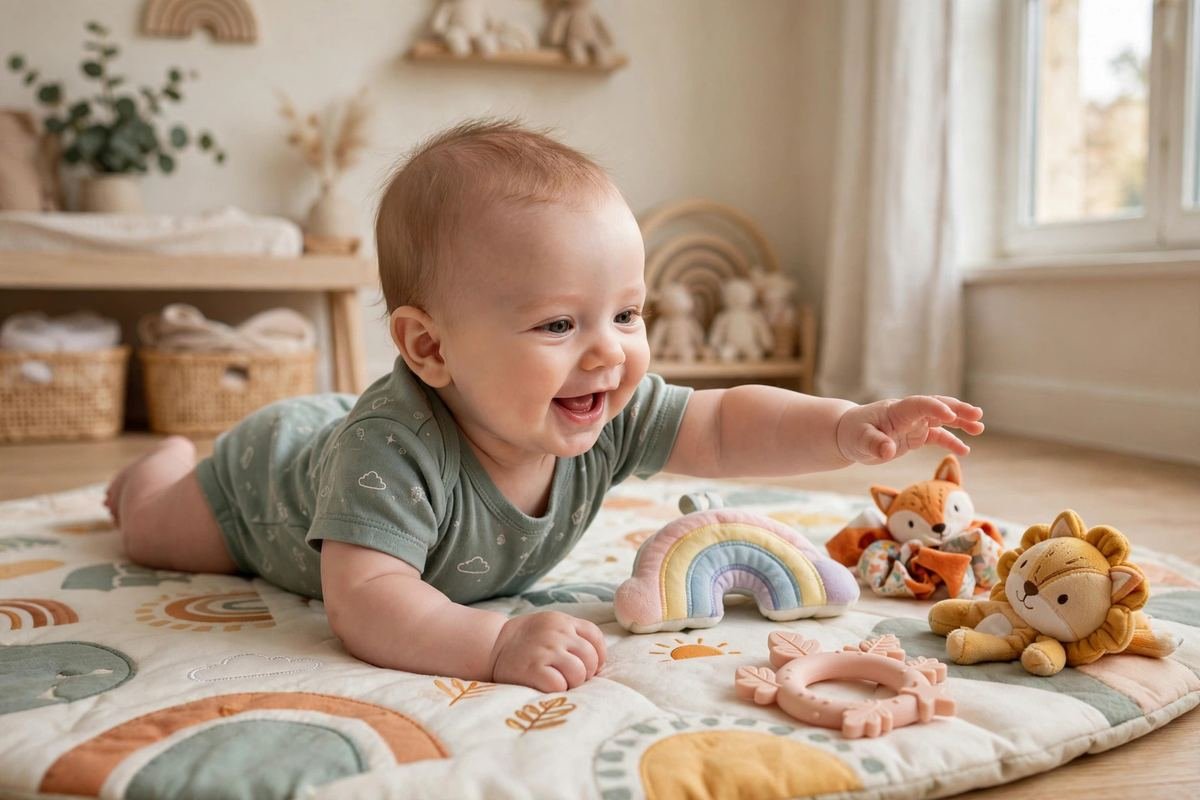
Finding the best toys for 3-6 month old babies can feel simple at first, yet this stage changes very fast. A baby who only watched faces last month may now bat at a rattle, grip a ring with both hands, and roll toward a bright ball. The right toys support each small step without overwhelming your baby.
Between three and six months, babies build head control, stronger grasping, early hand to eye coordination, and the first real interest in cause and effect. They shake, mouth, kick, and reach, and they learn from every sound and texture. Good toys for this age invite action and reward effort with a gentle sound, a mirror flash, or slow movement.
This guide collects the best toys for 3-6 month old babies across rattles, grasping toys, activity toys, and soft rolling balls. Every pick is a real product that parents know well, described honestly so you can match it to your baby. You can also browse our full newborn and infant toys collection for more ideas by age.
Read the buying guide first if you feel unsure, then jump to the picks.
Quick Picks: Best Toys for 3-6 Month Old Babies
Short on time? These ten picks cover grasping, tummy time, sound play, and early rolling practice. They are our shortlist of the best toys for 3-6 month old babies right now.
- Bright Starts Oball Classic Ball for the easiest first grasp
- Manhattan Toy Whoozit for contrast patterns and crinkle play
- Lamaze Freddie the Firefly for clip on fun anywhere
- Sassy Wonder Wheel for spinning beads and high chair play
- Sophie la girafe for grasping and soothing mouthing
- Baby Einstein Take Along Tunes for music and light play
- Infantino Spin and Teethe Gummy Rattle for shaking and chewing
- Manhattan Toy Skwish Classic for a grasping challenge
- Fat Brain Toys pipSquigz for suction and texture play
- VTech Wiggle and Crawl Ball for babies near six months
How to Choose the Best Toys for 3-6 Month Old Babies
Match the Toy to New Skills
At three months, most babies bat, swipe, and hold a toy placed in the hand. By five or six months, many reach with purpose, pass toys between hands, and push up during tummy time. Choose toys that meet your baby where they are now, with a little room to grow. A light ball that barely rolls suits a new reacher, while a spinning wheel rewards a baby who can sit with support and swat with control. Keeping that match in mind is the secret to choosing the best toys for 3-6 month old babies.
Look for Grasp Friendly Design
Small hands need slim shapes, open holes, rings, and soft edges. Toys that can be held in more than one way get used longer, because babies change grip styles week by week. Weight matters too. A toy that feels light in your palm will not tire tiny arms, and a toy that stays close when dropped saves you constant fetching during floor play. Our guide to baby learning toys explains how simple design supports early skills.
Choose Safe Materials and Easy Care
Everything goes to the mouth at this age, so surfaces should be smooth, washable, and free from loose parts. Check seams on plush toys, squeeze water out of bath style toys, and follow the maker care notes. Fabric toys that can be wiped or machine washed on a gentle cycle save effort. Rotate a few clean toys each day and put the rest away, which keeps play fresh and cleaning simple.
The 10 Best Toys for 3-6 Month Old Babies in Detail
Each pick below explains what the toy does, the features that matter, honest pros and cons, and the babies it suits best. Each one earns its place among the best toys for 3-6 month old babies for a clear reason.
1. Bright Starts Oball Classic Ball
The Oball Classic is a light, flexible ball covered in smooth holes, and it is often the first ball a baby can truly hold. The open design lets tiny fingers slip through and grip from any angle. It rolls a short distance and stops, which keeps success close during tummy time and early reaching practice on the floor.
- Flexible holes for an easy first grip
- Very light for young arms
- Smooth plastic that wipes clean fast
- Rolls slowly and stays nearby
Pros: Babies succeed with it early, and it works for grasping, shaking, and rolling in one toy. Cons: It makes little sound, so sound seekers may lose interest at times. Best for: Babies from three months who are learning to reach, hold, and track a moving toy. Parents often keep this ball in the car and the play gym bag, because it squashes into small spaces and springs back at once, and a quick rinse under the tap keeps it clean for the next outing.
2. Manhattan Toy Whoozit
The Whoozit is a soft round character with a smiling face, bold patterns, and many small parts to bat and grab. Babies are drawn to the strong contrast, and the crinkle sounds reward small movements. A Velcro loop on top lets you hang it from a play gym or stroller bar for face to face play.
- High contrast face and patterns
- Crinkle and rattle sounds inside
- Soft body that is easy to hug
- Loop for hanging on gyms and bars
Pros: Rich visual and sound play in a soft, light body that suits young babies well. Cons: The larger size can cover the face during play, so watch closely. Best for: Newborn graduates and three month olds who love faces, patterns, and gentle noise. It is an easy early choice among the best toys for 3-6 month old babies. The bold face also makes it a sweet photo companion for monthly pictures, and many families find it becomes a favourite comfort toy that stays in rotation long after the early months of batting practice end.
3. Lamaze Freddie the Firefly
Freddie the Firefly is a clip on plush toy built for life on the move. The wings crinkle, the body shows bright patterns on one side and strong contrast on the other, and a teether and rings hang below for grasping. The large clip attaches to strollers, car seats, and play gyms in seconds.
- Large clip for bars and handles
- Crinkle wings and soft textures
- Teether and link rings attached
- Patterns on both sides of the wings
Pros: One toy covers looking, batting, grasping, and mouthing, and it travels anywhere. Cons: The clip can slide on smooth bars if not fixed well. Best for: Babies who spend time in strollers and bouncers and need toys for sitting up practice later. Because it clips almost anywhere, Freddie often becomes the toy that lives on the pram, so familiar play is ready during waits, walks, and visits, which helps young babies settle in new places with ease.
4. Sassy Wonder Wheel
The Wonder Wheel is a spinning activity wheel that fixes to a flat surface with a suction cup. Inside the clear wheel, small beads cascade as it turns, and textured sections invite poking and swatting. It shines during supported sitting and high chair time, when babies want both hands busy and enjoy clear cause and effect.
- Suction base for tables and trays
- Spinning wheel with cascading beads
- Textured parts for finger play
- Mirror and shapes around the base
Pros: Strong cause and effect play that builds hand control and focus. Cons: Suction works best on smooth surfaces and can pop off on textured trays. Best for: Babies closer to six months who sit with support and love to swat and spin. Sit beside your baby during wheel play and spin it slowly at first, then let small hands take over, because watching the beads fall teaches patience and timing as well as simple hand and eye control.
5. Sophie la girafe
Sophie la girafe is a classic teether and grasping toy shaped like a small giraffe, made from natural rubber with a soft feel. The long legs and neck give babies many grip points, and a gentle squeak sounds when the body is squeezed. The spotted pattern also gives young eyes a clear target during floor play.
- Natural rubber with a soft touch
- Many shapes for small hands to hold
- Gentle squeak rewards squeezing
- Light body for early grasping
Pros: Soothes sore gums while doubling as a grasping and sound toy. Cons: Water must not enter the squeaker hole, so cleaning needs care. Best for: Babies in the heavy mouthing stage who need safe teething and grasping toys. Sophie also suits babies who dislike cold teethers, since the rubber warms in the hand, and the light body means tired arms can hold it through long chewing sessions on the mat or in the pram.
6. Baby Einstein Take Along Tunes
Take Along Tunes is a flat music toy with a large button, a sturdy handle, and lights that move with short classical melodies. Babies can hold it during tummy time or while seated, and the single big button makes success easy. It is a simple first lesson in cause and effect, with sound and light as the reward.
- One large button for easy pressing
- Short melodies with moving lights
- Handle sized for small hands
- Slim shape for bags and travel
Pros: Easy to trigger, pleasant tunes, and a size that suits laps and floor play. Cons: Some parents find any sound toy repetitive over long sessions. Best for: Babies who track lights and sounds and enjoy pressing with the whole hand. Use it for short music breaks between quiet toys, and rest it during feeds and sleep, so the tunes stay special and your baby learns to enjoy both lively sound play and calm, silent looking time.
7. Infantino Spin and Teethe Gummy Rattle
This rattle pairs a spinning centre with soft teething surfaces shaped for small mouths. Babies can shake it for sound, watch the parts turn, and chew the textured ends when gums feel sore. The shape is easy to hold in the middle, and the bright colours hold attention during short play sessions.
- Spinning parts for visual tracking
- Soft ends made for mouthing
- Rattle sound that is not harsh
- Easy grip shape for both hands
Pros: Combines sound, motion, and teething comfort in one small toy. Cons: The spinning action needs a flick that younger babies learn slowly. Best for: Four and five month olds who shake everything and chew on toys all day. The mix of shake, spin, and chew makes it a strong changing bag toy, and it wipes clean in seconds after drops on cafe floors, which busy parents will value during the heavy drooling months.
8. Manhattan Toy Skwish Classic
The Skwish Classic is a wooden grasping toy built from rods, beads, and strong elastic cords. It flattens when squeezed and springs back to shape, and the beads slide and click as babies explore. The open frame gives many grip points, and the smooth wood feels different from plastic and plush toys in the basket.
- Squishes flat and springs back
- Sliding beads with a gentle click
- Open frame with many grip points
- Smooth wooden parts and elastic cords
Pros: A real grasping challenge that grows with your baby and lasts for years. Cons: The firmer feel suits babies who already hold toys with control. Best for: Babies building two hand play, passing toys, and stronger finger skills. It also looks lovely on a shelf, which is a small bonus for parents, and the sturdy build means it often serves siblings, making it one of the longest lasting grasping toys in many family toy boxes.
9. Fat Brain Toys pipSquigz
pipSquigz are chunky suction toys with textured surfaces and rattle sounds inside. Press one onto a tray or floor and it stays put while your baby pulls, bats, and chews the soft shapes. The suction adds a new kind of resistance that plain rattles cannot offer, which makes them great for supported sitting play.
- Suction cups stick to smooth surfaces
- Textures across each shape
- Rattle sounds inside every piece
- Soft, chunky forms for grasping
Pros: Stays in place during high chair play and works later in the bath too. Cons: Suction needs a clean, smooth surface to hold well. Best for: Babies near six months who sit with support and enjoy pulling and peeling games. Try sticking one piece low on a smooth board during floor play, because pulling against suction builds arm strength and gives babies a proud sense of power when the piece pops free at last.
10. VTech Wiggle and Crawl Ball
The Wiggle and Crawl Ball is an interactive ball that wiggles and moves in short bursts, inviting babies to reach and follow. Buttons on the surface play sounds and short phrases, and the movement stays slow enough for early crawlers to chase. Save this one for the end of the stage, when your baby pushes up strongly and tracks moving toys.
- Moves and wiggles to invite chasing
- Buttons with sounds and music
- Chunky shape that is easy to tap
- Motion stops and starts for safety
Pros: Motivates reaching, pivoting, and early crawling better than a still toy. Cons: It needs batteries and can startle very young babies. Best for: Babies close to six months who are strong in tummy time and ready to move. Keep the floor clear and stay close during play, and turn the ball off when your baby tires, so the game ends on a happy note and the toy stays a treat rather than daily background noise.
How to Play With These Toys Each Day
Short, frequent play sessions beat one long session at this age. Try ten minutes of floor play after a feed and a nap, when your baby is calm and alert. Place two toys within reach and one toy a little farther away, then let your baby choose.
Use your voice as part of the toy. Name what your baby touches, copy the sounds they make, and pause so they can answer with a kick, a shake, or a smile. These small pauses teach turn taking and help babies learn that their actions make things happen in the world.
End play before your baby gets overtired. Signs include turning the head away, fussing, rubbing the face, or sudden jerky movements. A calm routine like this makes toys for 4 month old and 5 month old babies work harder.
Safety and Care for Toys at 3 to 6 Months
When you shop for the best toys for 3-6 month old babies, safety starts with size. Any toy or part that fits fully inside a small parts tester is too small for this age, and ribbons, cords, and loose buttons should never be part of play. The U.S. Consumer Product Safety Commission offers clear guidance on toy safety and recalls, and it is worth checking older or gifted toys against recall lists before use.
Supervision matters as much as the toy itself. Stay close during floor play, take away any toy that cracks, peels, or loses a part, and keep plush toys with long fibres away from sleeping areas. Toys are for awake play only. Timing is part of safety too.
Cleaning is simple if you keep a routine. Wipe plastic and rubber toys with warm soapy water, rinse, and air dry fully, and keep water out of squeaker holes. Wash fabric toys as the label allows, and dry plush toys in moving air so moisture does not stay inside. A weekly clean keeps the toy basket fresh.
Frequently Asked Questions
How many toys does a 3 to 6 month old need?
A small set of eight to twelve toys is plenty. Offer three or four at a time and rotate the rest every few days. Rotation keeps old toys feeling new, supports deeper play, and makes cleaning easier for you.
What toys help with tummy time?
Toys that sit just out of reach work best, such as a slow rolling ball, a mirror toy, or a crinkle plush. Place the toy at eye level when your baby lifts the head, and move it side to side to build neck and shoulder strength.
Are electronic toys good for this age?
Simple electronic toys with one button and short sounds can teach cause and effect. Balance them with quiet toys like rattles, balls, and fabric toys, so your baby also learns from your voice, faces, and silence.
When should I offer a ball?
You can offer a soft or open grip ball from three months for holding and tracking. Rolling games grow from there. As your baby reaches and pivots, roll the ball a short distance and let them work for it, which builds strength for sitting and crawling. That is why tummy time toys sit at the heart of the best toys for 3-6 month old babies.
How do I know a toy is too advanced?
If your baby cannot make anything happen with the toy after many tries, it is likely too advanced for now. Frustration is normal in small doses, but repeated failure means the toy should rest for a few weeks. Growth at this age is fast, so try again soon.
Conclusion
The best toys for 3-6 month old babies are simple, safe, and matched to new skills like grasping, reaching, and early rolling. Start with one great grasping toy, one sound toy, and one rolling toy, then add pieces as your baby grows. For more age based ideas, read the latest guides on our baby toys blog, and enjoy this fast, joyful stage.
