
Telling the time looks simple to adults and feels huge to a small child. The best teaching clock toys for kids turn the mystery of moving hands and ticking numbers into a game your child can touch, turn and talk about every day. With the right clock, a toddler learns to match numbers, a preschooler starts to read the hour, and an older child begins to understand what five more minutes really means.
Start with short, playful sessions. Point to the big hand at breakfast, move the hands together at bath time, and let your child spin the dial just for fun. Teaching clock toys for kids work best when they link the clock face to real moments in the day, like lunch at twelve and stories at seven. Add a simple calendar, and your child also begins to notice days, weeks, seasons and birthdays.
This guide brings together clock puzzles, practice clocks and calendar boards from trusted makers. Every pick is a real product families buy for learning corners, classrooms and gifts. You will find a wooden teaching clock puzzle for little hands, talking clocks that say the time aloud, and calendar learning toys for kids that make the days of the week feel friendly and familiar.
Quick Picks: The Best Teaching Clock Toys for Kids
If you want one answer fast, start with the Melissa & Doug Shape Sorting Clock. It is the best learning clock for toddlers who still love sorting shapes, and it grows into a first practice clock. The Hape Chunky Clock Puzzle suits small hands that need big, easy pieces. Tock the Learning Clock talks and sings, which helps children who learn by listening. For calendars, the Melissa & Doug Magnetic Daily Calendar turns every morning into a small routine of dates, weather and feelings.
- Best overall: Melissa & Doug Shape Sorting Clock
- Best wooden puzzle: Hape Chunky Clock Puzzle
- Best talking clock: Learning Resources Tock the Learning Clock
- Best calendar: Melissa & Doug Magnetic Daily Calendar
- Best for kindergarten: Learning Resources Time Activity Set
How to Choose Teaching Clock Toys for Kids
A good first clock matches your child stage, not just their age. Toddlers need chunky numbers and hands that turn without pinching small fingers. Preschoolers are ready for hour and half hour practice, while older children can handle minutes and simple elapsed time. Look for a clear face, strong contrast between the numbers and the background, and hands that stay where your child puts them.
Start With Hands On Puzzle Clocks
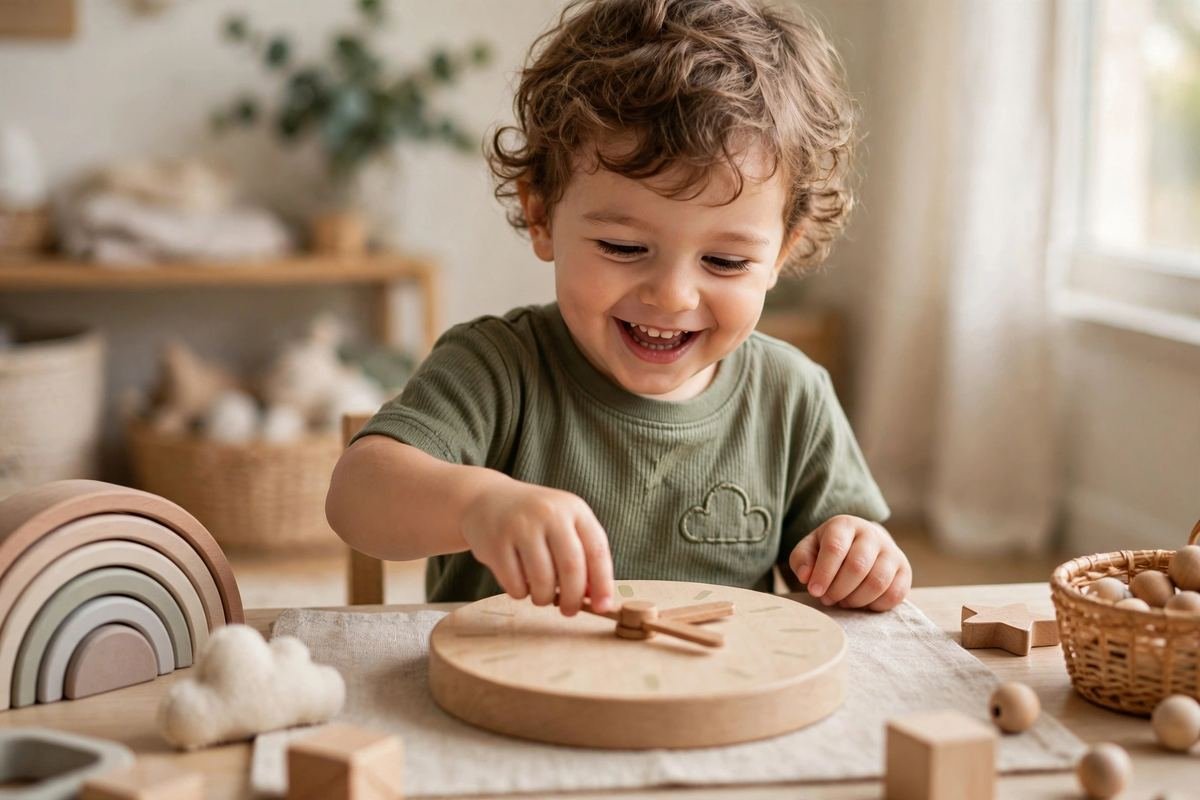
A wooden teaching clock puzzle gives toddlers two lessons at once. The pieces teach number order and shapes, while the clock face introduces the idea that numbers live in a circle. Many parents choose a montessori clock toy in this style because the design is calm and free of lights or sounds. Your child can remove the pieces, mix them up and solve the puzzle again, and every round quietly builds number confidence before any real time telling begins.
Match the Clock to the Skill
For telling time toys for preschoolers, choose a face that marks the minutes or colors the two hands differently, so the long and short hands are easy to tell apart. Hour only faces suit three year olds, while five minute markings help five and six year olds. If your child is preparing for school, look for time teaching resources for kindergarten that include activity cards, writable surfaces or simple games about daily routines.
Add a Calendar for Days and Routines
Clocks show hours, but calendars teach the rhythm of the week. Days of the week learning toys help children predict what comes next, like nursery on Monday or swimming on Saturday, and that predictability feels safe and exciting at the same time. A magnetic calendar on the fridge soon becomes part of the morning routine. Pair it with one of the teaching clock toys for kids on this list and your child connects hours, days and seasons into one friendly picture of time.
The 10 Best Teaching Clock Toys for Kids
1. Melissa & Doug Shape Sorting Clock
This classic wooden clock is often the first practice clock in the house. Twelve chunky number pieces fit into matching slots around the face, and each piece is a different shape and color, so sorting practice comes free too. The hands turn with a gentle click and stay in place, so you can set a time and ask your child to read it. The painted face marks the minutes in small numbers, so the same clock keeps teaching long after the puzzle stage ends.
- Twelve removable number pieces in bright shapes
- Moving hour and minute hands that hold their position
- Minute markings printed around the clock face
- Solid wooden build made for daily play
Pros: It teaches numbers, shapes and time in one toy, and the pieces are easy for small hands to grip. Cons: The loose number pieces can wander around the house, and there is no storage tray. It suits toddlers and preschoolers who learn best by touching, sorting and repeating, and it earns its place among the best teaching clock toys for kids in home learning corners.
2. Melissa & Doug Turn and Tell Wooden Clock
Once the puzzle stage feels easy, this wooden clock gives your child a cleaner face for real practice. The hour hand is short and the minute hand is long, and the two hands are different colors, so the classic mix up happens less often. A turning dial moves both hands together, which shows how the hour hand creeps forward as the minutes pass. The face prints clear minute numbers around the edge.
- Color coded hour and minute hands
- Turning dial that moves the hands together
- Minute numbers printed around the face
- Sturdy wooden frame with easy grip knobs
Pros: The moving hands show how hours and minutes connect, and the clean face suits school style practice. Cons: There are no loose pieces for sorting play, so younger toddlers may lose interest faster. It suits families comparing teaching clock toys for kids for the preschool years, especially children who already know their numbers and are ready to read o clock and half past times.
3. Hape Chunky Clock Puzzle
Hape builds this clock for the smallest learners. Each number is a chunky wooden block that stands up on its own, so toddlers can play with the numbers away from the board as well as in it. The pieces are thick enough for a palm grip, the colors are soft, and the clock hands turn with a light touch. Because the puzzle has no minute markings, the whole toy stays calm and simple, which is exactly what a first clock should be for a two year old.
- Chunky number blocks that stand on their own
- Soft colors with smooth, rounded edges
- Easy turning clock hands for small fingers
- Made from wood with child safe finishes
Pros: The thick pieces build grip strength and number order at the same time. Cons: Without minute marks, older children outgrow the time lesson fairly quickly. It suits one and two year olds who are meeting numbers for the first time and need a gentle, sturdy start.
4. Learning Resources Tock the Learning Clock
Tock is a friendly clock character with a light up face and a cheerful voice. Press a button and Tock says the time, plays music, or asks your child a question about the hands. The two play modes grow with your child, starting with simple hour times and moving toward harder questions. For children who learn by listening and answering, this talking clock often holds attention far longer than a silent wooden face.
- Talking clock that says the time aloud
- Light up face with music and quiz modes
- Two learning levels that grow with your child
- Moving hands children can set by themselves
Pros: The questions turn practice into a game, and the voice supports children who are not reading yet. Cons: It needs batteries, and the sounds may be too lively for quiet time. It suits preschoolers who love buttons, music and call and response games, and parents shortlisting teaching clock toys for kids that talk back during practice.
5. Learning Resources Big Time Learning Clock
The Big Time clock is an oversized teaching clock made for demonstrations. Its large face is easy to read from across the room. Hidden gears keep the hands moving in the correct relationship, so when your child turns the minute hand, the hour hand creeps forward just like a real clock. Simple red and blue coloring separates hours from minutes, and the sturdy stand lets it sit on a table or hang during group lessons.
- Oversized face that is easy to read together
- Geared hands that move in a realistic way
- Color coded hours and minutes
- Stand and hanging options for table or wall
Pros: The realistic hand movement teaches how clocks truly work, and the size suits siblings learning together. Cons: It is large for a small shelf and has no puzzle or sound features. It suits families and teachers who want one clear practice clock for daily drills, matching games and questions at breakfast.
6. Learning Resources Time Activity Set
This set turns time into a table full of small games. It includes a practice clock with movable hands, write and wipe activity cards and time matching puzzle pieces. Children match clock faces to written times, order the events of their day, and write times on cards they can erase and try again. Because the pieces work like time teaching resources for kindergarten classrooms, the set bridges home play and school practice in a way a single clock cannot.
- Practice clock with movable, geared hands
- Write and wipe cards for repeat practice
- Daily routine and time matching puzzles
- Pieces sized for classroom or home tables
Pros: The variety keeps practice fresh for months, and the routine cards spark good talks about the day. Cons: Many small pieces need a storage box to stay together. It suits five and six year olds preparing for school, and parents who want teaching clock toys for kids that go beyond the clock face alone.
7. Melissa & Doug Magnetic Daily Calendar
This wooden calendar hangs on the wall and turns the date into a morning job your child will be proud to own. Dozens of chunky magnets cover the month, the day, the date, the weather, special events and how your child feels today. That short daily ritual teaches words for time and emotions together. The hinged wooden boards fold closed when the day is done, which keeps the magnets in place. Young children take real pride in being in charge of changing the tiles each morning.
- Chunky magnets for date, weather and feelings
- Days, months and seasons in bright words
- Hinged wooden boards that fold closed
- Daily routine that builds prediction skills
Pros: It builds a calm morning routine and rich daily vocabulary at the same time. Cons: The magnets are a choking risk for babies, so keep this calendar for children over three. It suits preschoolers who love jobs, charts and being the official helper who announces the day to the family.
8. PlanToys Activity Clock
PlanToys makes this clock from rubberwood with a soft, natural finish. The design follows calm, focused thinking, with clean numbers, simple shapes and hands that invite slow turning. Colored number pieces fit into the face as a gentle puzzle, and nothing flashes or sings. Parents who prefer a quiet learning shelf often choose it as their main montessori clock toy, and the smooth wood feels lovely in small hands during play. The simple design also travels well between home, school and grandparents.
- Natural rubberwood with a smooth finish
- Removable number pieces in soft colors
- Quiet, battery free design for focused play
- Simple face that suits calm learning shelves
Pros: The calm design supports concentration, and the materials feel durable and kind. Cons: There are no minute markings, so it teaches hours and number order only. It suits families building a quiet learning corner and comparing teaching clock toys for kids with a natural, simple style.
9. Janod Pure Clock
The Janod Pure clock brings a soft French style to the learning shelf. Its face pairs friendly animal illustrations with clear numbers, and the chunky hands are easy for little fingers to turn. The muted colors suit calm bedrooms and playrooms. The wooden number pieces double as a simple sorting puzzle for younger toddlers who are not ready for reading times yet. It is a sweet gift pick that still teaches real skills every day. It also looks as good on a bedroom shelf as it works at the play table.
- Gentle animal artwork in soft colors
- Chunky hands sized for toddler fingers
- Number pieces that double as a sorting puzzle
- Solid wooden build from a trusted French maker
Pros: The artwork makes the clock feel like a friend, and the puzzle stage extends its life. Cons: The soft colors offer less contrast than bolder clocks. It suits toddlers and preschoolers in calm homes, and gift buyers who want a learning toy that looks beautiful on the shelf.
10. KidzLane Wooden Teaching Clock
This friendly wooden clock focuses on the basics and does them well. The hands carry the words hour and minute, a small detail that answers the most common beginner question before it is even asked. Bright colors keep the face lively, and clear minute markings help children move from whole hours to five minute steps. The light wooden frame is easy for children to carry from room to room, so practice games can happen at the kitchen table or the grandparents house. The bright design holds attention well during short, regular practice games.
- Hands labeled with the words hour and minute
- Bright face with clear minute markings
- Light wooden frame that is easy to carry
- Simple design focused on core skills
Pros: The labeled hands remove early confusion, and the price is friendly for a second practice clock. Cons: The finish is simpler than premium wooden clocks. It suits families who want a clear, cheerful practice clock for everyday questions.
Safety and Care
Teaching clock toys for kids are simple toys, but a few checks keep them safe. Choose clocks with smooth edges and firmly attached hands, and check loose puzzle numbers before play, because small pieces can be a choking hazard for babies and young toddlers. The U.S. Consumer Product Safety Commission shares guidance on small parts at cpsc.gov, and it is worth a quick read before buying.
For talking clocks, keep the battery cover screwed shut and replace batteries away from children. Wipe wooden clocks with a damp cloth and dry them fully so the paint and wood stay smooth. Store puzzle pieces in a small box or bag, and retire any clock with cracked numbers, splinters or a hand that has come loose. A quick weekly check during tidy up time keeps these tools safe for years.
Frequently Asked Questions
When should my child start learning to tell the time?
Most children show real interest between four and six years old, once they know their numbers and the order of their day. Toddlers can still enjoy clock puzzles for numbers and shapes. Start with whole hours, keep sessions playful, and let your child lead. If they wander off, the lesson is over for today, and that is fine.
Are wooden clocks or talking clocks better for beginners?
Both styles earn their place, and many families own one of each. Wooden clocks build number order and quiet focus, while talking clocks give instant answers and questions that keep practice lively. A common path is to start with wood, then add teaching clock toys for kids that talk once number knowledge feels firm and your child wants a bigger challenge.
How long should practice sessions be?
Short is better. Five to ten minutes of playful questions beats a long lesson every time. Weave the clock into real life instead, by asking your child to set the hands for lunch time, bath time or the start of a favorite show. Real reasons to read the clock teach faster than worksheets.
What time skills should a kindergartner know?
By the end of kindergarten, many children can read o clock and half past times and talk about morning, afternoon and evening events in order. The best teaching clock toys for kids at this stage mark minutes clearly and come with cards or games for extra practice. Daily routine talk at home supports these school skills more than extra drills.
How do I teach days of the week alongside the clock?
Pair the clock with a simple calendar and a morning routine. Each day, move a marker, say the day name, and talk about one thing that happens today. Songs about the days help the order stick. Within a few weeks, most preschoolers proudly announce the day, the weather and what comes tomorrow, all before breakfast is finished.
Conclusion
A first clock is a small toy with a big job. It turns waiting, routines and bedtime into ideas your child can see and touch. Start with the teaching clock toys for kids that match your child stage today, keep practice playful and short, and let real moments in the day do most of the teaching. For more early learning ideas, explore our blog and our baby learning toy guide, then enjoy the proud moment your child reads the clock before you do.
