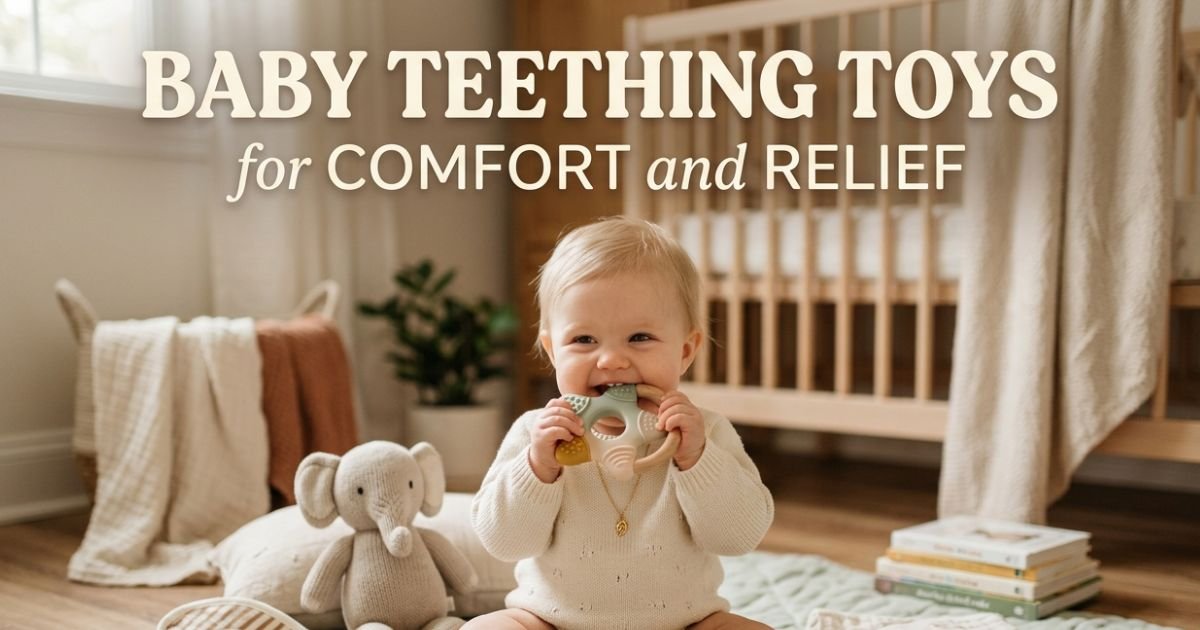

Teething is a normal developmental stage when babies’ teeth begin to emerge, often starting around 6–7 months of age. During this time infants may drool, become irritable and have sore gums. A baby teething toy (also called a teether) is any chewable object designed to relieve this discomfort. These toys give babies something safe to gnaw on, which can gently massage sore gums and apply counter pressure to emerging teeth. In this guide, we’ll explore why teething toys help, how to choose the best and safest baby teething toys, and practical tips for use and care.
Why Use a Baby Teething Toy?
Teething toys are a pediatrician-recommended way to soothe sore gums without medication. Chewing on a teether provides gentle relief: it massages tender gum tissue and creates counter-pressure against erupting teeth, which eases pain. Giving a teething toy to your infant can also distract and comfort them many babies enjoy exploring their world by mouthing objects, so a teether lets them safely satisfy that instinct. In short, a teething toy helps calm crankiness and offers safe oral stimulation exactly when infants need it most.
- Gum Massage: Biting on a textured teether helps soothe inflammation by gently massaging the gums.
- Distraction: Allowing free chewing keeps baby engaged and diverts attention from discomfort.
- Self-Soothing: Mouthing is a natural developmental behavior; teethers channel this safely and can be used even when baby isn’t actively teething.
Teething can cause irritability, but it usually passes once the tooth breaks through. Teething toys are a simple, drug-free tool to ease that transition.
Safety Guidelines for Teething Toys
When selecting a baby teething toy, safety is paramount. Choose toys made from non-toxic, baby-safe materials and avoid any design that could pose a choking, strangulation or poisoning hazard. Look for teethers that meet current toy safety standards (ASTM F963 in the US) and are clearly labeled BPA‑free, phthalate‑free and lead‑free. Always inspect toys regularly and discard any with cracks or loose parts. And supervise your baby while they are using the teether.
What to Avoid
-
Liquid-Filled Teethers: Steer clear of plastic or gel-filled rings. If a baby chews through them, they could ingest the liquid inside. Notably, recalls have targeted liquid-filled rings due to leaks, bacteria growth, or choking hazards.
-
Breakable Parts or Batteries: Avoid any teether with small pieces, detachable parts or electronic components. Even non-toxic plastic can become dangerous if it breaks into shards; batteries are a severe choking and poisoning hazard if swallowed.
-
Homemade or Unlabeled Toys: Never give an untested or poorly labeled item (like a homemade wooden toy or imported piece without safety info). Some adults’ jewelry or beads marketed for teething have contained toxic metals. In fact, the CDC documented an infant lead poisoning case from chewing a metal “healing” teething bracelet. Always choose products from reputable brands that list materials clearly.
-
Teething Jewelry (Necklaces/Bracelets): Teething necklaces and bracelets (amber, silicone beads on string, etc.) are not safe. FDA and AAP warn they can cause choking, strangulation or mouth injury. Small beads can break off; strings can wrap around a baby’s neck or finger. Even if marketed for babies, no necklace or bracelet should be given to infants for teething. Always opt for one-piece teethers only.
-
Harmful Chemicals: Ensure the teether is free of BPA, phthalates, PVC, lead and other toxins. Good materials include food-grade silicone, natural rubber, or untreated wood. For example, Sophie la Girafe (a popular teether) is made from 100% natural rubber and is BPA-free. Check packaging or descriptions: “BPA-free” and “food-grade” are key phrases to look for. Also note common allergens like latex; many parents choose silicone to avoid latex sensitivities.
Figure: A CDC report image of a beaded teething bracelet that contained high levels of lead. Teething jewelry poses serious poisoning and choking risks. (Always avoid giving any necklace or bracelet to a teething baby.)
What to Look For
- Solid, One-Piece Design: The safest teethers are one solid piece with no holes or joints. This means no parts that can break off. A single-piece silicone ring or rubber toy with a simple shape minimizes choking risks.
- Soft, Durable Materials: The teether should be soft enough not to injure gums, yet durable enough to withstand biting. Food-grade silicone and natural rubber both fit this bill. Silicone is synthetic but non-toxic and very hygienic; natural rubber is organic and eco-friendly. (Avoid hard plastics or very rigid wood, which can hurt sensitive gums.)
- Textured Surfaces: Look for bumps, ridges or nubs on the toy’s surface. These textures help massage and stimulate sore gums. For example, some popular silicone rings or animal-shaped teethers feature multiple textures on different sides. These subtle grooves give extra soothing as baby chews.
- Easy to Hold: Babies have limited grip strength. Good teethers have thick loops, handles or rings that small hands can grasp easily. The classic ring shape or toys with built-in handles are especially ergonomic. (Sophie la Girafe’s long legs, for instance, let babies reach further back molars.)
- Chillable, But Not Freezable: A cool teether can numb pain, but it mustn’t become rock hard. Refrigerate (not freeze) those that allow chilling. The Mayo Clinic advises chilling teething rings or wet washcloths in the fridge for relief. Never freeze a solid teether or ice packs against the gums, as that can cause ice burn on delicate tissue.
- Dishwasher/Boil Safe: Hygiene is crucial since babies drop toys in everything. The best teethers can be cleaned in warm soapy water, sterilized by boiling, or placed on the top rack of the dishwasher. High-quality silicone teethers are heat-resistant and easy to sanitize. Always wash teethers after each use to remove germs.
In summary, the best baby teething toys are made from high-quality, non-toxic materials and have smart, baby-friendly designs. They combine safety with soothing textures, and they can handle repeated cleaning and chewing.
Types of Baby Teething Toys
Teething toys come in many forms. Here are common types that parents use:
- Silicone Teethers: These are extremely popular because they’re soft, flexible and 100% non-toxic when made from food-grade silicone. A silicone baby teething toy often has a modern shape (rings, animals, keys, or toothbrush shapes) and multiple chewing surfaces. Since silicone doesn’t contain BPA, PVC or phthalates, it’s widely recommended. You can put a silicone teether in the fridge for extra cold relief. When shopping, look for silicone teethers labeled “medical grade” or “BPA-free.” They are usually easy to wash or boil.
- Natural Rubber Teethers: A classic example is Sophie la Girafe. These toys are made from the sap of rubber trees and are naturally soft and chewy. Natural rubber teethers can be very gentle on gums, and they biodegrade over time. They should be certified phthalate/BPA-free (which Sophie is). Some babies love the odor and texture of natural rubber (though latex-sensitive infants will need alternatives).
- Wooden Teethers: If they meet safety standards, hardwood teethers can be used. (Not all parents use them; they’re harder than silicone and can’t be boiled.) High-quality wooden rings or blocks should be made of untreated, sustainable wood (like beechwood) and finished only with food-grade oils. They provide a firm chewing surface. Since our sources did not explicitly cover wood, consider them an alternative: just ensure any wooden teether is smooth, free of splinters, and non-toxic.
- Teething Mittens (Teething Gloves): These are fabric mittens or socks with a built-in textured silicone surface on the palm or fingers. The baby wears it on their hand, so wherever they put their hand in their mouth, it provides relief. For instance, Nuby’s mittens use BPA-free silicone that soothes gums and keeps baby from scratching themselves. Teething mittens are great for very young babies who can’t yet grasp toys well. They must be machine-washable for hygiene.
- Teething Toy Sets: Many brands offer a set of teethers together. A typical baby teething toy set might include multiple shapes: e.g. a silicone ring, a rubber animal, and a soft cloth teether. The advantage of a set is variety: different textures and materials can appeal to a teething infant, and you have spares when others are being cleaned. If you choose a set, ensure every piece meets safety criteria (no cheap plastic or liquid parts).
- Food/Fruit Feeders: These are mesh pouches or silicone holders that you fill with chilled fruit or purée. The baby chews on the feeder and gets tiny bits of frozen banana, breastmilk ice, or yogurt. For example, a fillable silicone feeder can be stuffed with frozen berries or breastmilk and helps soothe gums while providing nutrition. (Not exactly a “toy,” but many parents use them as teething relief.)
- Wet Washcloth or Roll: Although not a commercial toy, a clean cloth can be one of the softest soothing tools. Simply dampen a washcloth, twist it into a rope or knot, chill it in the fridge and give it to baby to chew. It’s free, readily available, and easy to clean or replace. A tightly rolled cotton sock (wrist-end on chewing side) also works similarly.
- Specialty Shapes: Some teethers are designed as toothbrush hybrids (introducing oral care), or double-sided for front/back gum massage (like a banana-shaped flexible teether or the Fridababy “Not-Too-Cold” teether with two chilled gum massagers). These can be good “best baby teething toy” candidates as well, since they serve multiple purposes (education, massage, etc.).
Each type has its pros and cons. Silicone and rubber are overall safest per experts. Plastic toys should be avoided unless explicitly labeled food-safe (and without liquid). As a rule, stick to one of the above categories and follow safety checks above. Experiment to see what your baby prefers some babies like the mushiness of silicone, others like the stretch of rubber, and some like the textured cloth.
Choosing the Best Teething Toy: Key Features
When picking a baby teething toy, use this checklist of must-have features:
- Non-Toxic Materials: Ensure all parts are baby-safe. The toy should be made from food-grade silicone, natural rubber, or untreated, sealed wood. It must be free of BPA, PVC, phthalates, nitrosamine, lead and other toxins. For example, many top-rated silicone teethers explicitly advertise 100% medical-grade silicone and list zero chemicals. Always verify labels.
- Textured Gum-Soothers: The ideal teether isn’t completely smooth. Raised patterns, bumps, ridges or nubs on the surface provide extra relief. These textures mimic your finger or a gum massager and help “work out” sore spots. Some teethers have multiple textures on different sides to target front and back gums. When trying a teether, note if baby tends to chew on a certain spot; more ridges there could help.
- Ergonomic, Easy-to-Grip Shape: Tiny hands should grasp and hold the toy easily. Most designs include rings, handles, loops or bunny-ear shapes. Avoid toys that are too large or heavy. The handle should also keep the toy from pushing too far into the mouth. (Some babies grasp a toy by its hole or ring.) If a teether feels too bulky for your baby to hold, look for a smaller or donut-like shape.
- One-Piece, Durable Construction: The best baby teething toys have a one-piece mold or solid construction with no detachable parts or caps. This eliminates choking hazards. For instance, the Comotomo silicone teether and Moonjax teether are praised because they are single molded pieces with no joints. Check that all edges are smooth and there are no fabric tags or ribbons glued on (unless the entire item is securely sealed).
- Chillable (Refrigerator-Safe): A cool teether can be extra soothing. Many high-quality silicone and rubber teethers can go in the fridge for a short time. However, do not freeze solid frozen teethers become uncomfortably hard and can injure gums. Most experts recommend refrigerating (not freezing) any gel or ice teethers. Some even have a small freezer pack inside the handle that you snap on. If chilling, always supervise to ensure the toy stays at a safe temperature.
- Easy to Clean: Hygiene is critical. The best teethers are dishwasher-safe or can be boiled for sterilization. Look for smooth, non-porous surfaces that don’t trap dirt. Silicone and hard rubber usually handle washing well. After each use (or at least daily), wash the teether in warm soapy water, rinse thoroughly and let dry. Some parents alternate between a few teethers, washing one while the baby uses another, to ensure always having a clean one.
- Size & Design for Age: Some teethers are sized for newborns, others for older infants. For example, ring-shaped teethers are good for small babies, while animal-shaped ones might be easier for older infants to grip and chew. Choose a toy appropriate to your baby’s hand size and development stage. Many packaged teethers specify an age range (e.g., 3+ months or 6+ months). Use that as a guideline, along with how vigorously your baby chews.
By focusing on these features and following safety guidelines, you’ll find a teether that genuinely helps your baby and lasts through the teething period.
Tips for Using and Caring for Teething Toys
- Chill It Wisely: If using a chillable teether, place it in the refrigerator for 10–15 minutes before giving it to baby. Always check the temperature first to ensure it’s cool but not painfully cold. (Mayo Clinic warns never to freeze a teether or use ice cubes directly, as extreme cold can harm the gums.)
- Supervise All Chewing: Even with a safe toy, watch your baby while chewing. Stay nearby during tummy time with a teether or when the baby is lying down. This prevents possible choking if a rare piece comes loose, and stops unsafe behaviors (like chewing on the wrong end of the toy). The ADA explicitly advises watching children so they don’t accidentally choke on a teething ring.
- Rotate Toys: Have a few different teethers on hand and rotate them. This keeps baby’s interest and ensures you can wash and re-chill others. It also avoids overuse of one toy, which might wear out or harbor bacteria if never cleaned.
- Regular Cleaning: Clean teethers after each use. Some parents boil silicone toys briefly; others sterilize by placing them in boiling water or a steam sterilizer. Always follow manufacturer instructions. Even simple items like chilled washcloths or frozen fruit feeders should be washed or replaced regularly. A good rule is to wash a teether every time baby uses it, or at least once a day.
- Check for Damage: Before giving a teether to baby, inspect it. If you see cracks, splits, sticky residue or bits coming off, throw it away immediately. Damaged teethers are hazardous. Some parents discard any teether at the first sign of wear (especially silicone that can tear).
- Alternate Comfort Methods: Teething toys are great, but also try other FDA/AAP-approved methods simultaneously: gentle gum massage with your clean finger, cool (not frozen) washcloth, a clean pacifier, or simply extra cuddles. If baby seems very uncomfortable, talk to your pediatrician about safe pain relievers or teething gels (note: avoid benzocaine or lidocaine gels for infants).
- Teach by Example: You can chew a teething toy yourself first (washing it after) to show baby it’s for chewing. Offering your finger or a clean pacifier can also prepare baby for the texture. Just ensure your hands are well-cleaned!
Conclusion
In summary, a baby teething toy can be a lifesaver for both infants and parents during the teething months. These toys whether a soft silicone ring, a rubber giraffe, a wooden key or a teething mitten give babies safe, comforting relief as new teeth erupt. The best baby teething toy is one that is made of non-toxic, BPA‑free materials, has a soothing textured surface, and is easy to clean and hold. Always follow safety guidelines: avoid liquid-filled rings and jewelry, supervise your baby, and keep teethers sanitized.
With the right teething toys on hand, you can make this developmental stage much more comfortable. Listen to your baby’s cues, rotate a few different styles, and soon you’ll find which soft and silicone options your little one prefers. When in doubt, consult your pediatrician or pediatric dentist for recommendations tailored to your baby.
