
Why Newborn Eyes Love Bold Black and White
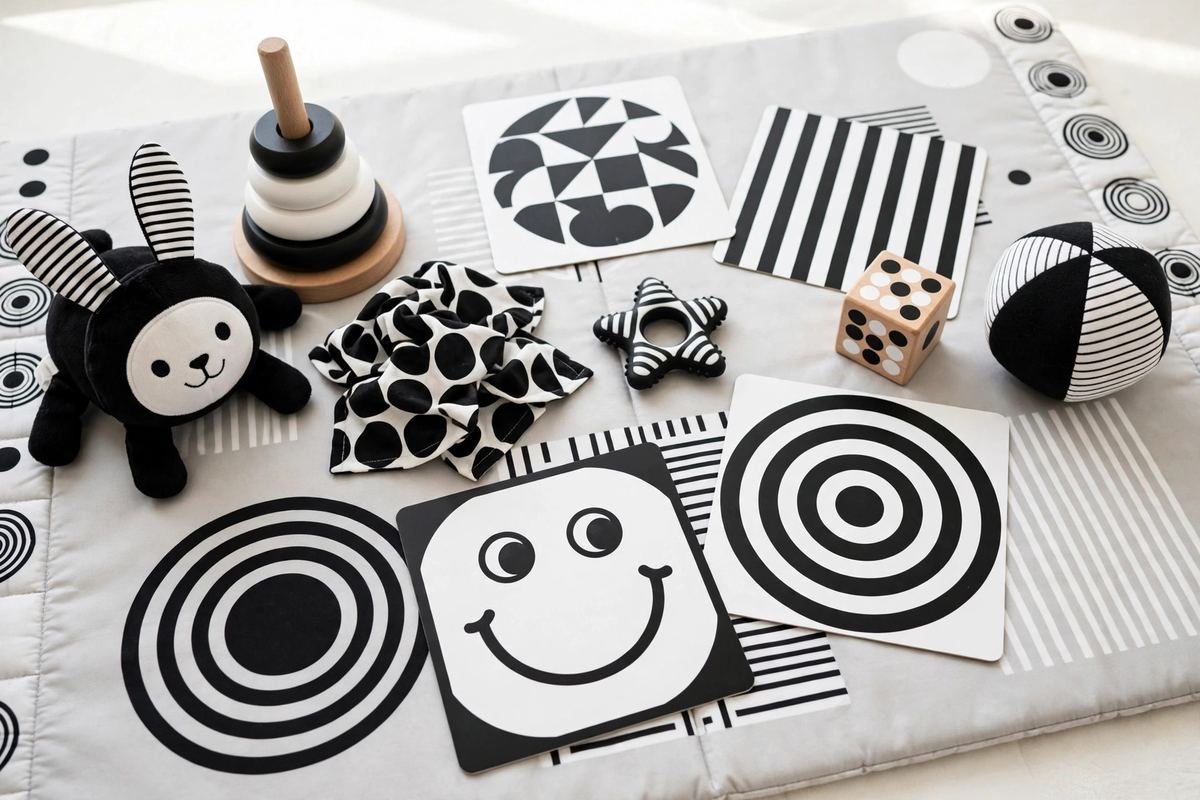
A newborn’s world starts soft and blurry. In the first weeks, babies see strong contrasts far more clearly than colour, which is why the best high contrast baby toys use bold black and white shapes. These simple patterns are not a trend. They match how young vision actually works.
When a baby studies a bold stripe or a simple face, the eyes practise focusing and the brain builds pathways for sight. Short, calm sessions with the best high contrast baby toys support that growth during tummy time, floor play, and quiet cuddles.
This guide reviews ten trusted contrast toys, from art cards to soft books and mobiles. You will also find a buying guide, safety notes, and answers to common questions. For a full first toy plan, browse our newborn and infant toys category.
Quick Picks: Our Top Choices at a Glance
Start with these three if you want the essentials covered well.
- Best overall: Wee Gallery Art Cards for Baby, a sturdy set of bold animal cards that work on the floor, in the pram, and beside the changing mat.
- Best book: Black on White by Tana Hoban, a classic board book of simple white shapes on black pages, made for the youngest readers.
- Best for tummy time: Manhattan Toy Whoozit, a soft character covered in bold patterns that gives babies a friendly target to lift the head towards.
Each pick below is a real product from a known maker. Read on for detail, or explore more early learning ideas in our baby learning toy guide.
How to Choose the Best High Contrast Baby Toys
Contrast toys are simple by design, yet quality varies. These points will help you pick items your baby will actually use.
Contrast must be strong and shapes simple
True high contrast means deep black beside clean white, with shapes a baby can read at a glance. Thin lines, grey tones, and busy scenes fade for newborn eyes. Choose bold faces, circles, stripes, and animals with thick outlines. If a design looks subtle to you, it will likely be invisible to a two week old.
Distance matters more than detail
Newborns focus best at around twenty to thirty centimetres, roughly the distance to a parent’s face during a feed. Cards and books should be easy to prop at that range on the floor or in a pram. Toys that hang too far away may look pretty to adults yet do little for the baby.
Formats for different moments
Cards suit tummy time and changing table play. Soft books suit cuddles and pram rides. Mobiles and hanging toys suit cribs and play gyms. A small mix of two or three formats covers the day better than ten of the same item. Most families find that the best high contrast baby toys earn their place by fitting real routines.
Safe materials for mouthing babies
Contrast toys live close to the face and, soon enough, inside the mouth. Look for thick board, food safe coatings, and soft organic fabrics. Avoid thin cards that tear into small pieces, and check seams on soft books often. Washable surfaces are worth a small premium.
Plan the path into colour
From around three to four months, colour vision improves and babies enjoy red, then other bright shades. Some sets add colour cards or reversible designs for this stage. A product that grows from contrast into colour will serve you for most of the first year.
The Best High Contrast Baby Toys: Our 10 Picks in Detail
Each pick below is a real product with a clear role in early visual play. We cover strengths, limits, and who should choose it.
1. Wee Gallery Art Cards for Baby, Original Set
These sturdy cards show a bold animal on one side and a simple pattern on the other. Parents prop them along the floor during tummy time, line them beside the changing mat, or hold them during feeds. The board is thick, the corners are rounded, and the art is beautiful enough to keep on display.
- Six double sided cards with animals and patterns
- Thick board with rounded, baby safe corners
- Designs based on how infant vision develops
- Works on the floor, in the pram, and in the car
Pros: Flexible, durable, and genuinely matched to newborn eyesight. Cons: Cards are not for chewing, so remove them once mouthing turns serious. Best for: Almost every newborn, and the single safest contrast gift to give.
2. Black on White by Tana Hoban
Tana Hoban’s classic board book shows one simple white shape on each black page: a flower, a key, a pair of scissors. The spare design holds the gaze of very young babies like little else. With no words to read, parents describe the shapes and enjoy a calm, shared ritual from the first weeks.
- One bold white shape per black page
- Sturdy board pages for years of use
- Simple images matched to early vision
- A calm first book for a daily routine
Pros: A proven classic that babies truly look at. Cons: Older babies may want more story and colour sooner. Best for: Families building a first library from birth.
3. Look, Look! by Peter Linenthal
This beloved board book mixes black and white patterns with faces, animals, and everyday objects. Pages move from pure contrast into early colour, which mirrors how vision develops across the first months. The large format makes the images easy to share during floor play and lap time.
- Bold patterns, faces, and simple scenes
- Introduces colour as the book progresses
- Large, sturdy pages for shared reading
- Friendly art that parents enjoy too
Pros: Grows from the newborn stage into the sitting months. Cons: The bigger pages are less handy for travel. Best for: Parents who want one contrast book with a longer life.
4. Manhattan Toy Wimmer Ferguson Infant Stim Mobile To Go
This travel version of a research based mobile clips to prams and car seats and hangs reversible contrast cards above the baby. The graphics follow the Wimmer Ferguson patterns studied in infant vision labs. It packs flat, weighs little, and brings focused looking to walks and car rides.
- Reversible cards with studied contrast patterns
- Clips to prams, carriers, and car seats
- Adjustable strap for the right distance
- Packs flat for travel
Pros: Serious visual play in a tiny travel package. Cons: No movement or sound, so some babies prefer it for short spells. Best for: Families who walk and travel often with a newborn.
5. Wee Gallery Soft Book
Wee Gallery’s soft books pair bold contrast art with gentle crinkle sounds and soft organic fabric. Pages show animals and nature scenes in black and white, with colour touches that appear as the story goes on. The book ties onto a pram or crib rail and washes when life gets messy.
- Organic cotton pages with bold artwork
- Crinkle sounds that reward a squeeze
- Ties for prams, cots, and car seats
- Colour grows through the pages
Pros: Soft, safe for mouthing, and easy to take anywhere. Cons: Fabric contrast is softer than printed board cards. Best for: Cuddly reading and pram play from birth.
6. Mesmerised Baby Book by Katey Love
Written and illustrated by an Australian mother and artist, this board book was designed after research into what newborns see. Each page offers a bold, simple image, from a fish to a flower, at a size tuned for young eyes. Parents around the world use it during feeds, when the book sits at the perfect focal distance.
- Images designed from newborn vision research
- One clear picture per page
- Strong board build for daily use
- Loved by midwives and early years teachers
Pros: Purpose built for the very first weeks of looking. Cons: Availability varies by country, and shipping can add cost. Best for: Parents who want a research led first book.
7. Hello, Baby Animals, a High Contrast Book by duopress
This cheerful book introduces baby animals in bold black and white, each paired with a friendly greeting. The final pages add a mirror, which never fails to delight a young reader. The format is light and the pages are thick, so it handles daily pram and floor use with ease.
- Bold animal art with simple greetings
- Mirror page for self discovery
- Light board book sized for laps and prams
- Part of a wider high contrast series
Pros: Sweet words to read aloud, plus the mirror finale. Cons: The mirror is small, as with most board books. Best for: Gifting, and for parents who like a gentle story shape.
8. Manhattan Toy Whoozit
The Whoozit is a round, soft character whose face, tags, and patterns are printed in strong black, white, and red. Babies stare at the face during tummy time and reach for the ribbons as grasping begins. Hidden rattles, a squeak, and crinkle parts reward movement without overwhelming young senses.
- Bold face and patterns that newborns track well
- Rattle, squeak, and crinkle in one soft toy
- Tags and ribbons for early grasping
- Soft body for cuddles after play
Pros: Combines visual, sound, and touch play in one toy. Cons: Surface cleaning suits it best, and drying takes time. Best for: Tummy time motivation and a first soft friend.
9. Baby Einstein Outstanding Opus Sensory Rattle
Opus the octopus is a multi sensory rattle with bold colours, strong patterns, and textures on every arm. Babies shake it for a soft rattle, then explore the beads, rings, and crinkle parts as control improves. The high contrast faces and shapes make it a bridge from newborn contrast play into colour play.
- Bold patterns mixed with bright colour
- Beads, rings, and crinkle textures to explore
- Easy for small hands to grab and shake
- Grows from looking play into grasping play
Pros: One toy covers several stages of early play. Cons: Busier than pure black and white toys for the first two weeks. Best for: Babies from one month who are ready for more variety.
10. Lovevery Black and White Card Set from The Looker Play Kit
Lovevery includes a set of standalone contrast cards in its kit for the first weeks of life. The cards are large, matte, and designed to stand in a holder or rest against a mat during tummy time. Images range from simple shapes to faces and everyday objects, matched to weekly stages of vision.
- Large cards with a glare free matte finish
- Images staged for the first twelve weeks
- Works in a stand, on the floor, or by the mat
- Part of a guided play kit for new parents
Pros: Stage matched images with helpful parent guidance. Cons: Sold within a subscription kit rather than alone in most shops. Best for: Parents who enjoy structured, week by week play ideas.
Safety and Care for Contrast Toys
Contrast toys are among the safest first toys, yet a few habits keep them that way. The Consumer Product Safety Commission advises parents to check toys for torn seams, peeling prints, and loose parts. Cards with chewed corners and books with lifting layers should retire at once.
Keep sessions supervised and place cards where your baby can see them without strain. Guidance shared by HealthyChildren.org reminds parents that babies learn best in short, playful moments with a caregiver nearby. Contrast toys support that play. They never need to entertain a baby alone for long stretches.
Clean soft books and fabric toys as labels direct, and wipe board books and cards with a damp cloth. Inks and coatings on quality products are made for baby use, yet heavy chewing will still damage board over time. Rotate a small set, store items dry, and keep them in a basket near your play space. Our toy storage guide has simple systems that work.
Finally, follow your baby. A turned head, closed eyes, or fussing means the session is over. Rest, feed, and try again later. Calm, happy looking is the goal, and it builds best across many tiny moments each day. Read more early play ideas on our blog.
Easy Contrast Play Ideas for Each Day
During the morning feed, rest a card against your arm at the distance your baby focuses on best. After a minute or two, swap the card for a bold face and watch the gaze settle again. These tiny sessions fit inside care you already give, so they happen even on busy days.
At changing time, line two or three cards along the side of the mat. Move one slowly across your baby’s view and pause when the eyes follow. Turning the head to track a shape strengthens the neck as well as the eyes, which supports floor play later in the day.
In the evening, open a contrast book during a cuddle and turn the pages slowly. Talk about each shape in a soft voice. Your baby hears language, sees clear pictures, and ends the day close to you. Few routines offer so much learning inside so much calm.
Frequently Asked Questions About High Contrast Toys
These answers cover the questions parents ask most about the best high contrast baby toys.
When should I start using high contrast toys?
From the first days at home. Newborns can focus on bold patterns at close range straight away. Begin with a single card or book page during calm, alert moments. One or two minutes of happy looking is a perfect start, and sessions grow naturally from there.
How long do babies need black and white toys?
Contrast matters most in the first three months, while colour vision develops. Many babies still enjoy bold patterns at four to six months, especially faces and strong shapes. After that, keep the favourite items in rotation and add colour toys beside them rather than replacing everything at once.
Can high contrast toys improve my baby’s eyesight?
They support normal visual development by giving the eyes clear targets for focusing and tracking. They are play tools, not medical treatment. If you ever worry about your baby’s vision or eye movement, speak with your paediatrician, who can check development properly.
What is the best distance for showing cards and books?
Around twenty to thirty centimetres from your baby’s face works best in the first two months. That is about the distance between a baby and a parent’s face during feeding. Move the card slowly side to side and watch for your baby’s eyes following the shape.
Are phone apps with contrast patterns a good substitute?
Physical toys are the better choice for newborns. Cards and books invite touching, shared looking, and conversation, and they keep screens out of early play. Save apps for your own research, and let your baby learn from real objects and your face.
Final Thoughts
The best high contrast baby toys prove that simple design can do powerful work. A set of bold cards, a classic board book, and one soft patterned friend will cover the first months of visual play with ease. Choose strong patterns, safe materials, and formats that fit your daily routine.
Above all, join in. Your baby learns to look by looking at you, with these toys as cheerful helpers. Enjoy the quiet wonder of those first focused gazes. They are among the sweetest moments of the newborn stage, and they pass faster than you expect.
