
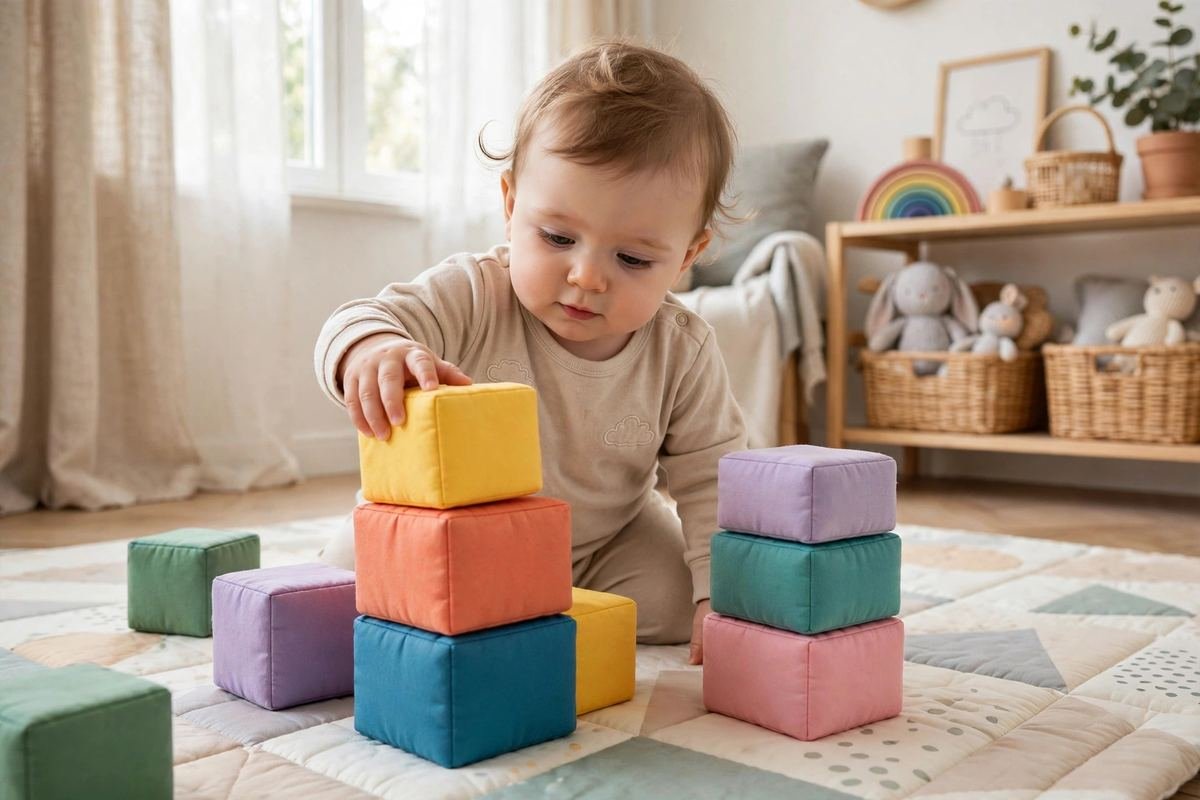
Soft blocks are often the first building toys a baby ever touches, and the best soft blocks for babies make those first builds safe and fun. They can be squeezed, chewed, stacked, and knocked down without tears or damage. For small hands and new teeth, that soft start matters a great deal.
Between grasping a single block and stacking a tower of three, babies learn hand control, cause and effect, and early problem solving. The best soft blocks for babies add learning details such as numbers, animals, textures, and sounds, while staying light and gentle. They suit floor play, high chair play, and even bath time for some sets.
This guide covers fabric blocks, squeezable rubber style blocks, and soft foam style sets from brands parents trust. Every pick is a real product, described honestly with pros and cons. You can also explore our newborn and infant toys category for more first toy ideas.
Start with one set of six to ten blocks. That count gives enough pieces for stacking and sorting games, without flooding the play mat.
Quick Picks: Best Soft Blocks for Babies
These ten sets cover squeezing, stacking, matching, and sensory play for the first year and beyond. Together they are the best soft blocks for babies for safe early building.
- B. toys One Two Squeeze for squeezable numbered blocks
- Infantino Squeeze and Stack Block Set for squeaks and easy stacking
- Melissa and Doug Match and Build Soft Blocks for matching games
- Clementoni Baby Clemmy Soft Blocks for soft, chunky building
- Edushape Soft Sensory Blocks for textures and early grasping
- iPlay iLearn Soft Baby Blocks for numbers, shapes, and animals
- Top Bright Soft Baby Blocks for patterns and stacking practice
- Earlyears Soft Baby Blocks for gentle fabric style play
- Aomiks Soft Baby Blocks for squeaky stacking fun
- Infantino Balls Blocks and Buddies Set for a mixed first play set
How to Choose the Best Soft Blocks for Babies
Start With Grip, Weight, and Mouth Safety
Blocks should be large enough to hold with two hands, light enough to lift without strain, and smooth at every seam and edge. Babies will mouth every block, so materials should be free from loose coatings and small parts. Squeeze each block before play. A good block gives under pressure and returns to shape, which makes it safe for faces during the many falls of early play. That kind feel defines the best soft blocks for babies.
Look for Learning Details That Grow
Numbers, letters, animals, and textures turn plain stacking into early learning. Young babies study the pictures, older babies match and sort, and toddlers name what they see. Our baby learning toy guide explains how these small details support language and memory. Choose clear, simple images rather than busy art, so your baby can focus and you can talk about each side.
Consider Washing, Storage, and Noise
Soft blocks meet drool, food, and floors daily, so easy washing is a real feature. Some sets wipe clean, some can be washed in water, and fabric sets may allow gentle machine washing. Think about sound too. Squeaky blocks delight many babies but can tire adults, so a mix of quiet and squeaky pieces works well. Store blocks in an open basket from our toy storage ideas so tidy up becomes part of the game.
The 10 Best Soft Blocks for Babies in Detail
Each pick explains what the set offers, key features, honest pros and cons, and the babies it suits best. Each one earns its place among the best soft blocks for babies for a clear reason.
1. B. toys One Two Squeeze Baby Blocks
One Two Squeeze is a set of ten soft, squeezable blocks with numbers, animals, and patterns on the sides. The blocks are sized for small hands, stack with a little care, and make a soft squeak when squeezed on many sets. The colours are gentle, and the set comes with a simple carrying case on many versions.
- Ten soft blocks with numbers and animals
- Squeezable bodies that are safe to chew
- Handy size for stacking practice
- Carrying case included on many sets
Pros: A complete first set with learning details and a kind feel for young babies. Cons: The soft sides can make tall towers wobble, which is part of the fun but may frustrate careful builders. Best for: Babies from six months who grasp, mouth, and start to stack. It is an easy first set among the best soft blocks for babies. Squeeze each block before you offer it and make the squeak part of the game, then stay quiet at times so your baby works to make the sound alone, because that small problem is perfect early learning.
2. Infantino Squeeze and Stack Block Set
This Infantino set includes soft blocks with numbers, shapes, and pictures, plus squeaky sounds that reward squeezing. The blocks are light, easy to stack, and sized for two hand holds. Babies enjoy the bright colours and the mix of sides, and parents enjoy how fast the set wipes clean after messy play sessions.
- Soft blocks with numbers and shapes
- Squeaks that reward squeezing
- Light pieces for early stacking
- Bright colours and clear pictures
Pros: Sound, colour, and stacking in one simple set that suits many stages. Cons: The squeak holes need care during washing so water does not stay inside. Best for: Squeaky soft blocks fans and babies who love sound feedback. Build a tower and let your baby knock only the top block off at first, then rebuild together, because this gentle version of the knocking game teaches control and patience while keeping the joy of the crash.
3. Melissa and Doug K’s Kids Match and Build Soft Blocks
Match and Build blocks are soft blocks that pair pictures across pieces, so babies and toddlers can match halves of animals and objects while they build. The blocks are light and sturdy, with clear art that supports early words. The matching idea extends the life of the set well past simple stacking, into toddler puzzle play.
- Pictures that match across blocks
- Soft, light building pieces
- Clear art for first words
- Builds towers and simple scenes
Pros: Matching games add real learning depth to a soft block set. Cons: Younger babies ignore the matching idea and just stack and chew, which is fine but expected. Best for: Older babies and young toddlers ready for first matching games. Start the matching idea by holding two matching halves apart and letting your child bring them together in any order, and praise every near match, because early puzzle success grows best with warm, patient company.
4. Clementoni Baby Clemmy Soft Blocks
Baby Clemmy blocks are soft, chunky blocks made for babies from six months, with a rubbery feel that is gentle on gums and floors. The pieces stack and connect in a loose, forgiving way, so early builders succeed often. The bright colours and simple shapes suit sensory play, and the material washes well for daily use.
- Soft, chunky pieces for young babies
- Gentle feel for mouthing
- Forgiving stacking for beginners
- Washes clean with ease
Pros: Very kind to gums, floors, and new builders, with a durable feel. Cons: The loose fit makes precise building hard for older toddlers. Best for: Babies at the start of building play who mouth everything. The soft pieces also suit play on a dry mat beside the bath, and they wash back to fresh after sticky sessions, but dry them fully after every wash so they stay clean and ready for mouthing.
5. Edushape Soft Sensory Blocks
Edushape soft blocks focus on texture, with raised patterns and varied surfaces that invite touching and mouthing. The foam style material is light and quiet, which suits calm play spaces and shared rooms. Babies explore each side with fingers and lips, building sensory maps that support later fine motor control.
- Raised textures on the sides
- Light, quiet foam style pieces
- Bold colours for visual play
- Sized for two hand grasping
Pros: Strong sensory value in a quiet, gentle set. Cons: Foam style blocks must be taken away if a baby bites off pieces, so check them often. Best for: Babies who learn through touch and enjoy calm sensory play. Start with two blocks and add more as stacking skills and patience grow. Press a textured side gently against your baby palm and name the feeling, rough or smooth, because touch words grow fast at this age, and sensory talk during block play builds language alongside hand skills.
6. iPlay iLearn Soft Baby Blocks
This set of soft blocks shows numbers, shapes, animals, and patterns, and each block includes a small rattle or squeak element on many versions. The blocks stack neatly for their soft class, and the art gives parents plenty to name and count during play. A storage bag is included with many sets, which helps travel and tidy up.
- Numbers, shapes, and animal art
- Sound elements inside the blocks
- Neat stacking for a soft set
- Storage bag on many versions
Pros: Learning rich sides make these plush building blocks style pieces great for talk and play. Cons: Printed art can fade with heavy washing over time. Best for: Parents who want one set for stacking, counting, and naming games. Use the animal sides for a sound game, making the animal noise as each block lands in the basket, because silly sounds from you will hold your baby attention longer than any feature printed on the box.
7. Top Bright Soft Baby Blocks
Top Bright soft blocks pair soft bodies with embossed animals, fruits, and numbers that babies can feel with their fingers. The blocks are light and stack in simple towers, and the raised art supports touch learning. The set suits babies who enjoy tracing textures and parents who like calm, natural play materials.
- Embossed animals and numbers
- Soft bodies with a firm enough stack
- Light pieces for small hands
- Simple, clear side designs
Pros: Touch friendly art adds learning without noise or batteries. Cons: The colour palette is calm, which may draw less attention from babies who love bold colour. Best for: Quiet play spaces and texture focused babies. Trace the raised animals with your finger while your baby watches, then guide a small hand over the shapes, because feeling the picture helps babies link touch with sight, which supports later shape and letter learning.
8. Earlyears Soft Baby Blocks
Earlyears soft blocks are gentle fabric style blocks with simple, friendly pictures and soft filling. They are among the kindest blocks for very young babies, because they weigh almost nothing and make no sound when dropped. Babies grasp, shake, and mouth them during floor play, and parents use them for early picture talk.
- Fabric style soft bodies
- Very light for young babies
- Simple, friendly pictures
- Quiet in every play space
Pros: The gentlest option here for early months and sleepy households. Cons: Fabric blocks stack less firmly than rubber style sets. Best for: Baby first blocks for young infants who need the softest start. They also pack flat in a changing bag, so a gentle game is ready during waits and visits. These gentle blocks also suit play beside a sleeping sibling, since drops make almost no sound, and their soft weight means even the youngest baby in the home can join floor play without risk to others.
9. Aomiks Soft Baby Blocks
Aomiks soft blocks are squeezable stacking blocks with numbers, animals, and shapes, and many pieces include a gentle squeak. The size suits two hand holds, and the soft bodies are safe for chewing during teething months. The set offers many pieces for the play mat, so siblings and parents can join building games.
- Squeezable bodies with squeaks
- Numbers, animals, and shapes
- Two hand friendly size
- Many pieces for shared play
Pros: A generous piece count makes group building easy and fun. Cons: Quality checks matter, so inspect seams and prints when the set arrives. Best for: Families who want many soft blocks for daily stacking play. Keep the box or a zip bag so the full set stays together. Check each new block with a firm squeeze and a close look at the seams before first use, a quick habit for any value set, and wash the blocks on arrival so they are ready for mouthing.
10. Infantino Balls Blocks and Buddies Activity Set
This mixed set combines soft blocks with balls and small character pieces, giving babies several kinds of play in one box. The blocks stack, the balls roll, and the buddies add faces for early social play. It suits families who want a starter set that covers grasping, stacking, and rolling without buying three separate toys.
- Blocks, balls, and characters in one set
- Soft pieces sized for babies
- Varied textures and colours
- Covers stacking and rolling play
Pros: Broad play value that grows across the first year. Cons: The block count alone is smaller than full block sets. Best for: A first gift set for babies starting floor play. Use the buddies as the audience for your baby building shows, and name feelings as towers fall, because early pretend play with simple characters builds social understanding long before your child can join group play.
How to Play With Soft Blocks Each Day
Start simple. Hand your baby one block and let mouthing and shaking lead. Then build a tower of two blocks and wait. Most babies will knock it down with joy, and that knock is real learning about cause and effect. Build again, a little slower, and let your baby take the last block from your hand.
Add words as play grows. Name the animal, count the blocks, and point to colours while you stack. Place a favourite block just out of reach to invite rolling and crawling, and hide a block under a cloth for an early search game. These small games turn stacking soft blocks into language, movement, and memory practice. Small games like these show why the best soft blocks for babies stay in use for years.
Finish by making tidy up part of the play. Drop blocks into the basket together and count them in. Babies copy this routine fast, and a clear end helps play stay calm. A few minutes of block play two or three times a day suits soft blocks 6 months babies and busy toddlers alike.
Safety and Care for Soft Blocks
Inspect the best soft blocks for babies weekly. Look for split seams, loose squeakers, peeling prints, and foam damage. A block that leaks filling or breaks into pieces should leave play at once. The U.S. Consumer Product Safety Commission shares recall news and toy safety advice that helps you judge older sets and gifts with care.
Wash blocks as the maker directs. Many rubber style blocks wash in warm soapy water, but take care with squeak holes, and press out water and air dry fully to stop mould. Fabric blocks may need gentle washing and full drying in moving air. Never give back a block that still feels damp inside.
Supervise mouthing play, as with all baby toys. Soft blocks are made for chewing, yet strong new teeth can damage weak materials over time. Rotate sets so each one gets rest and inspection, and store dry blocks in a clean, open basket away from bath water unless the set is made for bath use.
Frequently Asked Questions
At what age can babies play with soft blocks?
Most babies can hold and mouth soft blocks from around three to four months, and stacking starts closer to six to nine months. Follow the age note on each set, and start with the lightest, simplest blocks you own.
How many soft blocks does a baby need?
Six to twelve blocks suit the first year well. That count allows towers, lines, and sorting games without clutter. Add more only when your child builds larger scenes or plays with siblings often.
Are soft blocks better than wooden blocks?
Soft blocks suit babies because they are light, quiet, and safe for mouthing and falls. Wooden blocks become great later for precise building. Many families start soft, then add wood in the toddler years. For the first year, the best soft blocks for babies are the safer daily choice.
Can soft blocks go in the bath?
Only if the maker says so. Bath blocks must drain and dry fully. Standard soft blocks with squeak holes can trap water and grow mould, so keep those for dry floor play unless the label allows bath use.
How do soft blocks help development?
They build grasping, two hand use, stacking, and early problem solving. Pictures and numbers add first words and counting. Knocking towers down teaches cause and effect, which is a core lesson of the first year.
Conclusion
The best soft blocks for babies are light, washable, and full of small details that invite talk and play. Pick one set that matches your baby stage, play a little each day, and let stacking skills grow at their own pace. For more first year play ideas, visit our blog and browse new guides each week.
