
Learning two languages can begin long before school, and bilingual toys for toddlers make that early start feel like play rather than work. A toddler who presses a picture, hears a word in English, then hears it again in Spanish starts to link sound, meaning and memory in a gentle way. Songs, stories and simple questions invite your child to listen, copy and respond, which is exactly how first conversations grow.
Families choose the best spanish english learning toys for many reasons. Some parents speak both languages at home, some want to honour family heritage, and others simply want their child to hear new sounds while the young brain is so ready to absorb them. You can browse more ideas in our educational and learning toys collection while you compare the options below.
When chosen well, bilingual toys for toddlers support listening skills, memory and confidence at the same time. The strongest language learning toys for toddlers repeat key words often, speak clearly and reward every small attempt with music or praise.
Quick picks at a glance
If you are short on time, start with these five favourites. Each one earns its place through clear speech, sturdy design and play value that lasts well beyond the first week at home.
- LeapFrog Learning Friends 100 Words Book for a rich first vocabulary in English and Spanish
- Fisher-Price Laugh & Learn Servin’ Up Fun Food Truck for pretend play with bilingual phrases
- LeapFrog 100 Animals Book for animal names, facts and songs in two languages
- Fisher-Price Laugh & Learn Smart Stages Puppy for soft cuddles plus songs and first words
- VTech Touch and Teach Word Book for touch based word play and simple questions
How to choose bilingual toys for toddlers for real language growth
Think about age, attention span and the sounds your child already tries to copy. Younger siblings in the family may also enjoy simple language development toys for babies, while older toddlers need questions and games that stretch them a little further each month.
Match the toy to your child’s stage
The best first words learning toys keep things simple at the start. Look for big buttons, one clear word per press and pictures your child already knows from daily life, such as food, pets and family members. As skills grow, toys with quiz modes, short phrases and simple sentences keep bilingual toys for toddlers interesting instead of repetitive. Our guide to choosing a baby learning toy can help you match features to each stage.
Look for clear sound and simple language
Sound quality matters more than volume. Good bilingual talking toys use warm, clear voices, steady pacing and short pauses that give toddlers time to copy what they hear. A simple switch between English and Spanish helps children compare the two words for the same picture. Avoid toys that rush through long sentences or bury speech under loud music, because toddlers learn best when each word stands out on its own.
Choose play value that lasts
A toy that only flashes and sings will soon be ignored, so look for open ended play as well. Books, pretend food, puzzles and plush friends invite stories and role play long after the songs are familiar. Many spanish toys for 2 year olds work well because they blend words with actions, like serving food or finding animals.
Top 10 picks for bilingual toys for toddlers in English and Spanish
The ten toys below come from trusted brands with long records in early learning.
1. LeapFrog Learning Friends 100 Words Book
This interactive book is one of the most loved talking book toys for toddlers, and it shows why the format works so well. Your child touches pictures across twelve pages and hears words for animals, food, colours, the body and more. A language switch lets the whole book play in English or Spanish, so the same picture teaches two words. Friendly animal characters, songs and sound effects keep the mood light, while repeated listening helps new words settle into memory through calm, pressure free practice.
- Touch sensitive pictures that speak the word for each image
- English and Spanish modes for easy language switching
- Twelve themed pages covering everyday toddler vocabulary
- Songs and playful sounds that reward every touch
Pros: clear speech, a wide first vocabulary and a format toddlers can use alone. Cons: the book needs batteries and the pages reward touching more than page turning practice. It suits families who want one reliable first bilingual book that a child can return to daily, building word recognition step by step from the earliest months of toddlerhood.
2. Fisher-Price Laugh & Learn Servin’ Up Fun Food Truck
Pretend play gives language a purpose, and this food truck turns ordering a meal into a lively word game. Toddlers press buttons, sort food shapes and hear phrases, songs and greetings in English and Spanish as they serve pretend customers. The play moves through stages as your child grows, moving from simple sounds to colours, counting and polite phrases. Serving, sharing and taking turns also build social language, the kind children use in real conversations every day.
- Pretend food pieces for sorting, serving and sharing play
- Songs and phrases in both English and Spanish
- Smart Stages levels that grow with your child
- Buttons, dials and a cash register for active hands
Pros: rich role play, cheerful bilingual phrases and strong replay value across many months. Cons: the truck takes up floor space and loose food pieces need tidying away. It suits active toddlers who learn best while moving and pretending, and it stands out among bilingual toys for toddlers because the words always connect to a real action in the game.
3. LeapFrog 100 Animals Book
Animal lovers get their own version of the popular LeapFrog word book here. Six double sided pages introduce animals from habitats such as the savanna, the ocean and the forest. Touching each picture plays the animal name, a fun fact or a sound, and the language mode lets children hear the same content in English or Spanish. Songs about animals add rhythm and rhyme, which help toddlers remember new words and enjoy the sounds that make each language unique.
- Animal names and facts in English and Spanish modes
- Six double sided pages organised by habitat
- Touch points for words, facts and animal sounds
- Handle on the spine for carrying around the home
Pros: engaging facts, sturdy pages and a theme most toddlers adore from the start. Cons: animal facts may be advanced for the youngest toddlers, who will mostly enjoy names and sounds. It suits curious children who point at every dog, bird and fish they see, and parents who want vocabulary that grows from simple names into early nature knowledge.
4. Fisher-Price Laugh & Learn Smart Stages Puppy
This soft plush puppy teaches through cuddles, which makes it a gentle first step into word play. Pressing the paws, tummy, ear and heart triggers songs, phrases and sounds about body parts, colours, counting and the alphabet. Three learning levels change the content as your child grows, so the same friend keeps offering something new. Because the puppy is soft and huggable, language play slips naturally into quiet time, car rides and bedtime routines.
- Soft plush body made for hugging and carrying
- Interactive points on the paws, tummy, ear and heart
- Three Smart Stages levels that adapt to age
- Songs and phrases covering colours, counting and body parts
Pros: comforting design, varied songs and content that adapts across three stages. Cons: the plush surface is spot clean only and the sound unit sits inside the tummy. It suits younger toddlers who bond with a soft friend first, and it earns its place among bilingual toys for toddlers for families who value gentle, cuddle led learning.
5. LeapFrog My Pal Scout
My Pal Scout is a plush companion that parents can personalise, which gives the learning a warm and familiar feel. Scout can say your child’s name and sing songs about favourite foods, colours and animals, so the words connect directly to your child’s own world. Daytime songs encourage singing along, while calm lullabies support a soothing bedtime routine. The friendly voice models simple sentences and feelings, helping toddlers link language with emotions as well as objects.
- Personalised songs and phrases using your child’s name
- Daytime activity songs plus gentle bedtime lullabies
- Soft plush body sized for toddler arms
- Simple buttons on the paws for easy control
Pros: personal touches children love, a mix of play and sleep modes and a truly companion like feel. Cons: setup needs a parent with a computer or phone, and personalisation takes a few minutes. It suits toddlers who thrive on routine and attachment, and families who want a plush friend that speaks to their child as an individual every single day.
6. VTech Touch and Teach Word Book
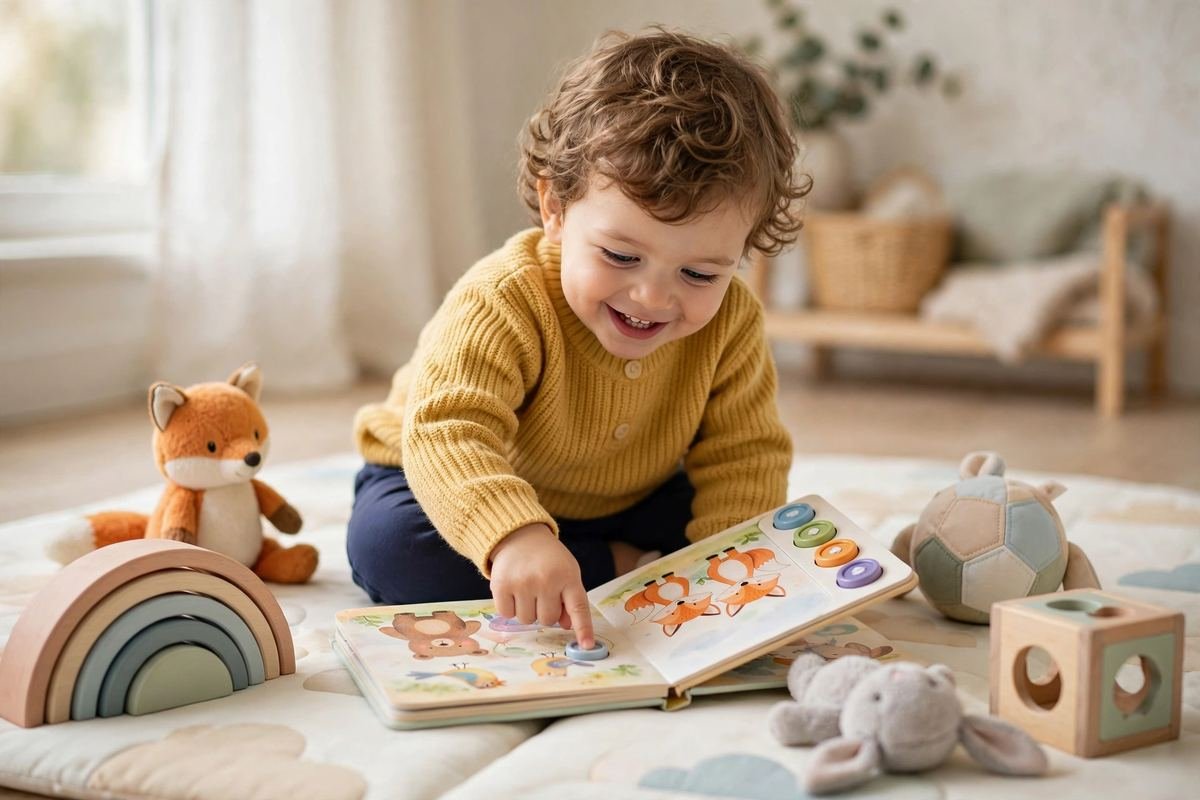
This sturdy word book invites toddlers to explore twelve illustrated pages by touch. Each page focuses on a familiar theme, and pressing the pictures plays words, sounds and short phrases that build early vocabulary. A quiz style mode asks children to find items, which strengthens listening and memory as they search the page. The chunky design stands up to daily handling, and the bright art gives parents plenty to talk about while reading and playing together.
- Twelve touch sensitive pages with themed vocabulary
- Word, music and find it modes for varied play
- Bright pictures that prompt parent and child talk
- Durable build made for everyday toddler handling
Pros: varied modes, clear prompts and a book format that encourages shared reading time. Cons: speech is mainly in English, so Spanish exposure needs support from family talk. It suits toddlers who enjoy books and searching games, and it complements bilingual toys for toddlers nicely by deepening vocabulary, listening skills and confidence with questions.
7. Baby Einstein Magic Touch Piano
This wooden piano from Baby Einstein and Hape uses touch technology instead of raised keys, so small fingers can make music with a gentle tap. Sheet music cards guide children through well known melodies, while a free play mode lets them compose noisy masterpieces of their own. Music supports language in quiet ways, through rhythm, pattern and the joy of singing along with family. Colour coded notes also introduce early matching skills that prepare toddlers for letters and words later on.
- Wooden touch surface with no raised keys to press
- Sheet music cards for guided well known melodies
- Free play mode for open ended musical exploring
- Volume settings designed with parents in mind
Pros: beautiful wooden design, real musical play and strong cause and effect learning. Cons: it teaches music rather than spoken Spanish words, so it works best beside word based toys. It suits musical toddlers who sing, dance and tap everything in sight, and parents who want a calmer sound toy that still fills the home with rhythm and song.
8. Melissa & Doug See & Spell Learning Toy
This classic wooden set takes a quieter path to language. Children match colourful wooden letters to picture boards and spell simple words such as cat, bus and sun. The act of finding each letter builds letter recognition, early spelling and fine motor control in one calm activity. Because there are no sounds or lights, parents become the voice of the game, naming each letter and word in English, Spanish or both as the puzzle comes together.
- Wooden picture boards with simple everyday words
- Colourful letter tiles for matching and spelling
- Storage box that keeps letters organised after play
- Screen free and sound free design for calm focus
Pros: durable wood, genuine early literacy practice and peaceful play without batteries. Cons: small letters need supervision and the words are printed in English only. It suits slightly older toddlers who enjoy puzzles and sorting, and it balances bilingual toys for toddlers that talk by giving families a hands on way to practise letters together.
9. VTech ABC Learning Apple
Shaped like a friendly apple, this toy introduces letters, phonics and early words through light up buttons and cheerful games. Each letter button plays sounds and words, and a moving caterpillar clock feature adds early time concepts for growing toddlers. Quiz modes ask children to find letters and objects, rewarding careful listening. The carry handle and compact size make it easy to bring along on visits, keeping language play going in the car, at grandparents’ homes and on holiday.
- Light up letter buttons with phonics and word sounds
- Quiz games that build listening and memory skills
- Clock feature that introduces early time concepts
- Carry handle for play at home and away
Pros: portable size, clear letter focus and games that reward attention. Cons: the content centres on English letters, so bilingual families will add Spanish words through talk. It suits toddlers who are starting to notice letters on signs and in books, and parents who want structured alphabet practice wrapped in a friendly and portable toy.
10. VTech Call and Chat Learning Phone
Pretend phone calls turn shy toddlers into happy talkers. This learning phone lets children chat with animal friends, hear greetings and songs, and explore numbers on a chunky keypad made for small hands. A voicemail style feature lets them record and hear messages, which encourages them to speak in longer phrases. Role playing conversations builds the back and forth rhythm of real talk, one of the most valuable language skills a toddler can practise during play.
- Pretend calls with friendly animal characters
- Chunky number keypad for counting practice
- Message feature that encourages speaking and listening
- Songs and greetings that model everyday conversation
Pros: wonderful for conversation practice, easy keypad and a format toddlers instantly understand. Cons: pretend screen play needs balancing with books and face to face talk. It suits chatty toddlers who copy every phone call they see at home, and families who want to turn that copycat instinct into confident speaking, listening and early number skills.
Safety and care for language toys
Safe play starts with the basics. Choose bilingual toys for toddlers that carry clear age guidance, and check seams, battery covers and small parts before the first play session and regularly after that. The American Academy of Pediatrics offers helpful toy safety guidance at HealthyChildren.org, including advice on choosing toys that match a child’s age and stage of development.
Care is simple but important. Wipe hard surfaces with a damp cloth, follow the maker guidance for plush toys and store books away from bath water unless they are made for it. Keep volume at a level where your child can still hear your voice across the room.
Frequently asked questions
When should my toddler start playing with language toys?
You can begin as soon as your baby enjoys pressing, touching and listening, often well before the first birthday. Simple bilingual toys for toddlers grow with your child, starting with music and single words and moving toward phrases and questions. Short daily sessions during normal play are enough, because toddlers learn language best in relaxed moments spread across the whole day rather than in one long lesson.
Will learning two languages at once confuse my child?
For most children, hearing two languages is a normal and healthy part of growing up. Toddlers may mix words from both languages in one sentence while they sort out the rules, and that mixing is a healthy sign of learning.
How much play time should we aim for each day?
Aim for several short bursts rather than one long session. Ten relaxed minutes with these toys in the morning and another short session later in the day gives plenty of repetition without pressure. Follow your child’s interest, because a toddler who chooses the toy, presses the buttons and asks for more is learning far more than one who is pushed to finish a set routine.
What if our family speaks a language other than Spanish at home?
The same principles still apply. Most toys in this guide focus on English and Spanish, but the listening, copying and turn taking skills they build transfer to any language. Pair the toy with your own voice in your home language, naming the same animals, foods and colours.
How can parents make language toys work even better?
Your voice is the most powerful teaching tool in the room. Sit with your child, repeat the toy words in both languages, and praise every attempt to copy a sound. Using bilingual toys for toddlers together, rather than as a solo activity, turns button pressing into real conversation. Add the new words at meals, bath time and walks, and your child will soon use them without any toy at all.
Conclusion
The right toy will not teach a language on its own, but it can fill your home with the sounds, songs and words that make two languages feel normal and fun. Start with one or two favourites from this list, play together every day, and let curiosity lead the way. Explore more ideas on All Baby Toys, and remember that steady, joyful practice with bilingual toys for toddlers today builds confident little talkers tomorrow.
