
Choosing tracing boards for preschoolers is easier when you focus on one simple goal. Your child should be able to copy a line, follow a letter shape and try again without frustration. A good board turns early practice into play, so short sessions feel like drawing time rather than schoolwork. This guide explains the main styles, what to check before you buy and which boards suit different learners. For more early learning ideas, browse our educational and learning toys collection.
Some children love the best letter tracing toys because the grooves guide their hands and build confidence one stroke at a time. Others prefer a bright screen, chunky stamps or a board they can erase in seconds. There is no single perfect choice for every family. The right option depends on hand strength, attention span and how much guidance your child enjoys. Used well, handwriting practice toys can support letter recognition, pencil grip and the control needed for drawing and early writing.
This roundup brings together electronic boards, magnetic boards, wooden boards and mats that work with water. Each pick comes from a known brand and suits practice at home, in the classroom or while traveling. We explain the features in plain language, note the drawbacks honestly and say who each board suits most.
Quick Picks at a Glance
If you need a fast answer, start here. These five tracing boards for preschoolers cover the most popular needs, from a simple first board to guided letter practice for kindergarten starters. The full reviews below explain why each one earned its place.
- Best overall: Boogie Board Jot Kids for clean, repeatable practice anywhere.
- Best for tracing pictures: Crayola Light Up Tracing Pad for guided copying and drawing.
- Best guided letters: LeapFrog Scribble and Write for spoken prompts and stroke order.
- Best activity center: VTech Write and Learn Creative Center for drawing, stamping and letters.
- Best classic board: Fisher Price Doodle Pro Classic for simple magnetic drawing every day.
Buying Guide: How to Choose tracing boards for preschoolers That Fit Your Child
A reusable tracing board for preschoolers should invite daily use and survive enthusiastic scribbling. Look past bright colors and check the basics first, the writing area, the stylus shape and how the board clears. The three points below help you compare styles, and you can see how boards sit alongside other baby learning toys in our collection.
Match the Board to Age and Hand Strength
Younger children need a large surface, a thick stylus and marks that appear with little pressure. A magnetic drawing board for toddlers often works well at this stage because the child can make bold lines, stamp shapes and clear the screen without help. Families shopping for a doodle board for 3 year olds should also check that the stylus is attached or easy to store. At this age, the best tracing boards for preschoolers feel forgiving rather than fussy.
Choose Between Digital, Magnetic and Wooden Styles
Choosing an lcd writing tablet for kids is smart if you want crisp lines that clear at the touch of a button, handy for cars and waiting rooms. Magnetic boards feel more tactile and often add stampers, while wooden grooved boards guide the stylus along a fixed path. Dry erase boards offer the most freedom but need closer supervision with markers. Whatever the format, tracing boards for preschoolers should clear fast and restart without fuss.
Look for Guided Practice and Room to Grow
Guidance matters most once your child moves from scribbles to letters. Boards with arrows, dotted paths or spoken prompts teach where each stroke begins and ends, preventing habits that are hard to undo later. Also look for practice cards, stencils or a second side for numbers and shapes. Families who like sensory play may also consider montessori sand tracing tray alternatives such as grooved wooden boards, which give similar finger feedback with far less mess.
The 10 Best tracing boards for preschoolers for Home Practice
The shortlist of tracing boards for preschoolers below is grouped by what each board does best rather than by brand. Read the feature list and the honest pros and cons for each one, then match the board to your child’s age and habits. Every pick works in short daily sessions, and most need no paper, ink or replacement sheets.
1. Boogie Board Jot Kids LCD Writing Tablet
The Boogie Board Jot Kids is a slim electronic board that writes like paper and clears with one press of a button. Children draw with the included stylus or even a fingernail, and the bright line stands out well in normal room light. There are no menus to distract from practice, so a child can copy letters, draw shapes and start again within seconds. Its light build suits trips, restaurants and quiet time at home.
- Clear screen clears fully with a single button press
- Included stylus stores neatly on the board itself
- Lightweight design suits travel, school bags and laps
- Writing feels smooth with very little hand pressure
Pros: It is quiet, clean and ready to use in seconds, with no paper waste. Cons: It offers no guided letters, templates or stroke order help, and the line color cannot be changed. It suits children who already enjoy drawing and need a simple board for copying letters, numbers and pictures in short sessions.
2. Crayola Light Up Tracing Pad
The Crayola Light Up Tracing Pad uses a soft LED light to shine through paper, which makes outlines easy to copy. Children place a tracing sheet under a blank page, switch on the light and follow the lines with the included pencils. The set includes illustrated sheets with animals and vehicles, and plain paper can be added later. For families exploring tracing boards for preschoolers, this pad rewards careful looking as much as careful hand control.
- Even LED light makes outlines clear and easy to follow
- Tracing sheets and blank pages support guided copying practice
- Included pencils let children start straight from the box
- Flat surface works well on tables and on laps
Pros: Copying real pictures feels rewarding and builds focus, patience and line control. Cons: It needs batteries and fresh paper, and younger children may need help layering the sheets. It suits creative preschoolers who love drawing and are ready to slow down and follow a line with care.
3. LeapFrog Scribble and Write
The LeapFrog Scribble and Write is a compact electronic tutor that shows children how to form letters step by step. A friendly character demonstrates each stroke on the light up screen, then the child copies it with the easy grip stylus. The toy speaks instructions aloud and offers two levels, so beginners can trace simple lines before moving on to full letters and numbers. Sound can be adjusted, which parents will appreciate during early morning practice.
- Guided demonstrations show correct stroke order for letters
- Two learning levels grow with your child’s ability
- Chunky stylus suits small hands still building grip
- Compact size works for sofas, cars and small tables
Pros: Spoken guidance and clear demonstrations make letter formation easier to understand without constant adult help. Cons: The writing area is small, and the sounds will not suit every household. It suits preschoolers who respond well to instructions and praise and are beginning to recognize and write letters.
4. VTech Write and Learn Creative Center
The VTech Write and Learn Creative Center is a magnetic board with an animated screen that demonstrates how to draw shapes and write letters. Children can copy the demonstrations on the large drawing area, then clear it with the sliding eraser. Magnetic stamps add stars, shapes and simple pictures, which keeps reluctant writers engaged for longer. A sturdy handle and storage for the stylus make the board easy to move between rooms.
- Animated demonstrations show letters, shapes and simple drawings
- Magnetic stampers add playful marks without any mess
- Large drawing area gives beginners room to practice
- Sliding eraser clears the board in one motion
Pros: It blends drawing, stamping and letter copying in one activity, so practice rarely feels repetitive. Cons: It is bulky for travel and needs batteries for the demonstrations. It suits active learners who enjoy sound and movement and families comparing tracing boards for preschoolers that cover both writing and creative play.
5. Fisher Price Doodle Pro Classic
The Fisher Price Doodle Pro Classic keeps things wonderfully simple. A child draws on the magnetic screen with the tethered stylus, adds shapes with the built in stampers and slides the eraser to start again. There are no lights, sounds or settings, which many parents see as a strength. The chunky frame and rounded corners feel made for daily drops, knocks and enthusiastic scribbling.
- Tethered stylus stays with the board between sessions
- Built in stampers create shapes, lines and patterns
- Slide eraser clears the screen quickly and cleanly
- Chunky frame withstands everyday knocks and drops well
Pros: It needs no batteries, paper or charging and can be handed over in seconds. Cons: Lines are gray rather than colorful, and there is no letter guidance included. It suits toddlers and younger preschoolers who need free drawing first, and it remains a dependable doodle board for 3 year olds moving toward early marks and shapes.
6. Melissa & Doug Wooden Alphabet Tracing Board
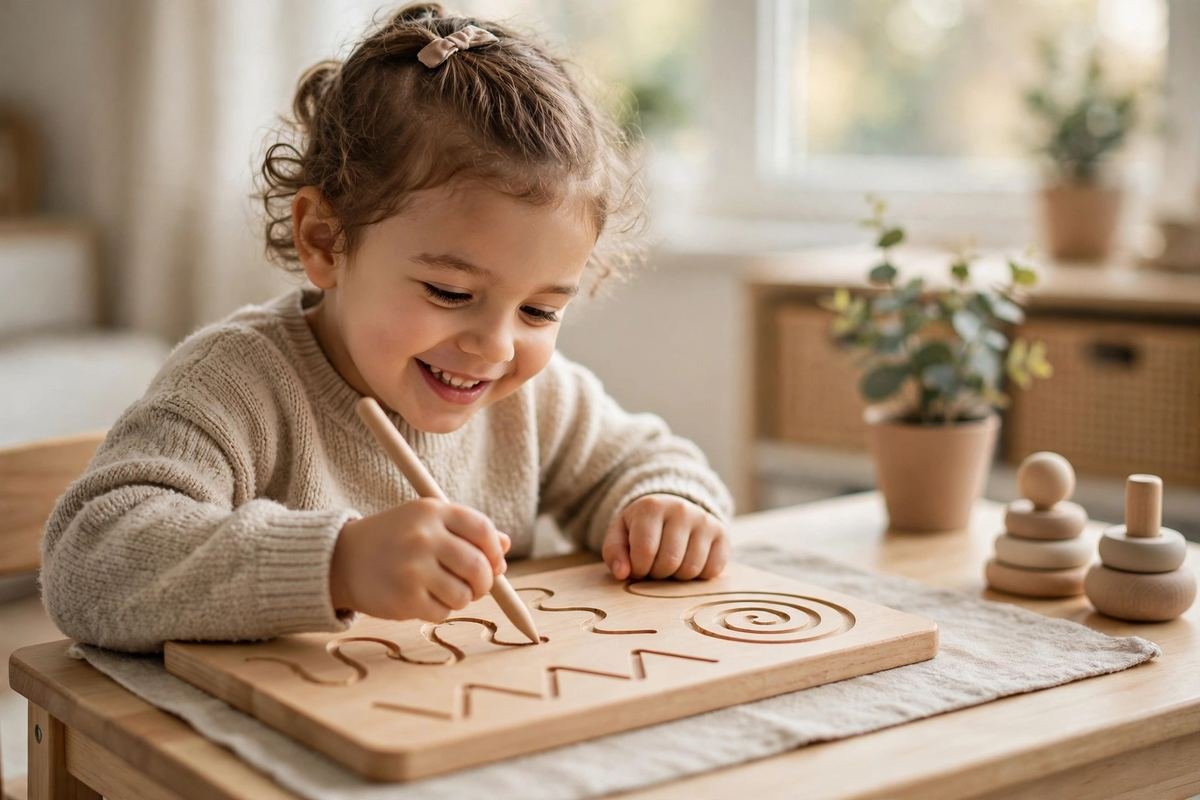
This double sided wooden board from Melissa & Doug has grooved uppercase letters on one side and lowercase letters on the other. Children guide the attached wooden stylus along each groove, which teaches the direction and shape of every letter through touch. Because the path is fixed, the board gives clear feedback when a hand drifts off course. It also works without the stylus, as small fingers can trace each groove directly.
- Grooved letters teach shape and stroke direction clearly
- Uppercase and lowercase letters cover both learning stages
- Solid wood build suits years of daily use
- Attached stylus is easy to find and store
Pros: The tactile grooves offer guidance that flat boards cannot match, and there is nothing to charge. Cons: It only covers letters, and the fixed size makes it less handy for travel. It suits children who learn by touch and parents who prefer wooden handwriting practice toys for calm, screen free practice at the table.
7. Hape All in One Wooden Easel
The Hape All in One Wooden Easel gives letter practice a more active feel. One side is a chalkboard and the other is a magnetic whiteboard, so children can write standing up with chalk or markers and use magnetic letters for word play. Standing changes the muscles involved and often helps children who dislike sitting at a table. For households with space, it earns a place among tracing boards for preschoolers that double as art stations.
- Two writing surfaces support chalk and marker practice
- Magnetic board works with letters, numbers and shapes
- Adjustable height grows with your child over years
- Paper roll above supports longer drawing sessions too
Pros: Writing at easel height builds shoulder strength and keeps practice feeling like play. Cons: It takes floor space and markers need supervision on the whiteboard side. It suits siblings who practice together and children who concentrate better when they can stand, move and work on a bigger scale.
8. Spin Master Etch A Sketch Freestyle
The Etch A Sketch Freestyle updates the classic red frame with a drawing pad and a stylus, so children can sketch freely instead of turning knobs. Each end of the stylus creates a different line style, one fine and one stamped with shapes, and a simple shake clears the screen. The board comes with reusable stencils that help beginners copy pictures. It is light, quiet and easy to hand over on long trips.
- Double ended stylus creates plain and patterned lines
- Shake to clear design needs no buttons or power
- Included stencils help children copy simple pictures accurately
- Familiar frame feels sturdy in small hands daily
Pros: It encourages free drawing and copying without paper, ink or charging cables. Cons: The patterned stylus can distract from letter work, and lines cannot be saved. It suits imaginative children who will practice letters more willingly when drawing games and stencils are part of the same session.
9. TOMY Aquadoodle Classic Drawing Mat
The Aquadoodle Classic mat from TOMY lets children draw with nothing but water. Fill the chunky pen, press it to the mat and bold lines appear, then fade as the water dries so the mat is ready again. Letters, numbers and pictures around the border give beginners something to copy. Because the mat is large and soft, two children can practice side by side on the floor without arguing over space.
- Water pen makes bold marks with no ink
- Large mat gives plenty of room for letters
- Border letters and numbers provide easy copying prompts
- Soft mat folds away for storage and travel
Pros: There is almost no cleaning, and drying time naturally paces short practice sessions. Cons: Lines fade quickly, work cannot be kept and the pen needs refilling with water. It suits younger children, group play and anyone shortlisting tracing boards for preschoolers that can be used on living room floors and laps.
10. Coogam Wooden Letters Practicing Board
The Coogam wooden tracing board is a compact Montessori style board with uppercase letters carved on one side and lowercase letters on the other. A wooden stylus follows each groove, and small arrows show where to start and which way to move. The board is smooth, well finished and small enough for a lap or a small table. It gives focused letter practice without lights, sounds, batteries or anything to set up.
- Carved grooves guide the stylus through every letter
- Direction arrows support correct habits from the start
- Uppercase and lowercase sides extend its useful life
- Smooth wooden surface feels pleasant and wipes clean
Pros: The guidance is excellent for children who rush or reverse letters, and the board is completely silent. Cons: It covers letters only, with no numbers, shapes or drawing space. It suits focused practice at home, children who enjoy Montessori materials and parents who want a durable board for daily five minute sessions.
Safety and Care
Safe practice starts with the right board for your child’s stage. Choose tracing boards for preschoolers with smooth edges, a secure battery cover and a stylus that is too large to be a choking risk for younger siblings. The American Academy of Pediatrics shares helpful guidance on play and child development at HealthyChildren.org.
Care for boards as the maker directs. Wipe surfaces with a soft, slightly damp cloth and keep water based mats away from felt pens and crayons. Store styluses with the board, check magnetic stampers for cracks and remove any toy with a loose battery cover from use at once. Short, supervised sessions also protect eyes, posture and patience, especially with light up electronic boards.
Frequently Asked Questions
At what age should a child start tracing letters?
Most children are ready for simple tracing between three and four, once they can hold a chunky crayon and copy a line or circle. Start with straight lines, curves and the letters in your child’s name. Keep sessions short and playful, and stop before frustration builds. Readiness matters more than age, so follow your child’s interest rather than a fixed timetable.
How often should preschoolers practice tracing?
Little and often works best. Five to ten minutes most days gives tracing boards for preschoolers time to build muscle memory without turning practice into a chore. Many families attach the habit to an existing routine, such as after breakfast or before bath time. If your child asks to continue, let drawing take over once the letter work is done.
Are electronic tracing boards safe for young eyes?
Used in normal room light for short sessions, electronic boards are a comfortable way to practice. They do not glow like a video screen, and most reflect light much like paper does. Encourage regular breaks, good posture and a mix of activities, including outdoor play and drawing on paper, so eyes and hands get varied exercise.
How do I clean a tracing board safely?
Start with a soft cloth that is barely damp, and wipe the writing surface gently. Avoid soaking seams, speakers and battery areas, and never use strong sprays on boards for young children. Wooden boards only need a quick wipe and time to dry. Check the maker’s care notes, since magnetic screens and LCD panels prefer slightly different handling.
Can tracing help my child get ready for kindergarten?
Yes, when it sits alongside drawing, building, cutting and lots of conversation. Regular tracing builds the grip, control and letter knowledge that early writing lessons assume. Children who arrive able to write their name and recognize most letters usually settle into class writing tasks with more confidence. Used regularly, tracing boards for preschoolers are one useful piece of readiness, not a test your child must pass.
Conclusion
The best board is the one your child reaches for without being asked. Start with one style that matches their age and interests, keep sessions short and praise effort more than neatness. With regular use, tracing boards for preschoolers help turn wobbly first letters into confident early writing. For more ideas that pair well with practice time, explore the latest posts on our baby toys blog.
