
Long before a child can write numbers, she learns what numbers feel like. Sliding a bead across a wire, dropping a square through a matching hole and stacking rings in size order all build that early understanding. That is why abacus toys for toddlers remain such a trusted choice. They turn counting, colour matching and problem solving into quiet, hands on play that a young child can return to every day.
The best sets grow with your child. At first the play is simple pushing, posting and carrying. Later it becomes counting in small groups, naming colours and sorting shapes by type. Good abacus toys for toddlers support both stages without batteries, screens or loud sounds. You can browse more ideas in our educational and learning toys collection if you are building a small play shelf.
This guide brings abacus frames together with thoughtful sorting and stacking sets, because toddlers learn these skills side by side. Alongside classic frames you will find shape sorters, stacking rainbows and a few bead maze and abacus toys style designs. Each pick is a real product from a well known maker, chosen for sturdy materials, smooth finishes and play value that lasts beyond a single afternoon.
Quick picks: abacus toys for toddlers at a glance
If you are short on time, start with these five favourites. They cover a classic counting frame, a simple first sorter and open ended stacking play, so you can match one option to your child and your space.
- Melissa & Doug Classic Wooden Abacus: the timeless counting frame for home learning corners.
- IKEA MULA Abacus: a simple, sturdy first abacus with bright beads and a solid base.
- Melissa & Doug Shape Sorting Cube: chunky wooden shapes for posting and matching play.
- Grimm’s Large Rainbow: beautiful open ended stacking, balancing and building.
- Fat Brain Toys SpinAgain: spinning discs that make stacking feel fresh and lively.
How to choose abacus toys for toddlers
Choosing well is mostly about fit. Match the size of the beads and shapes to your child’s hands, check that the base stays steady during enthusiastic play, and look for finishes that feel smooth. The three points below will help you compare sets with confidence.
Size, stability and smooth bead movement
Beads should slide freely without catching, yet feel large enough for a toddler to grip and push with purpose. A wide base matters because young children often lean on a frame while they play. If you are hunting for the best wooden abacus for kids, look for solid wood, rounded edges and wires held firmly at both ends. Among all the abacus toys for toddlers, the steadiest frames invite the most independent play.
Sorting, stacking and early maths together
An abacus teaches counting in a straight line, but toddlers also need to group, compare and build. Shape sorters teach matching by outline, while stackers teach order and balance. Sets inspired by montessori sorting toys keep this learning calm and self directed, with one clear idea at a time and no flashing rewards. Pairing a counting frame with one sorter gives your child two different ways to practise the same early maths ideas.
Materials, age guidance and lasting value
Wood, good quality plastic and water based colours are all sensible choices when they come from trusted makers. Always check the age guidance on the box and follow it, especially where smaller pieces are included for older toddlers. A counting abacus for preschoolers can serve a child for years, first for sliding and colour naming, then for simple adding. Our guide to baby learning toys explains how these skills build step by step.
The best abacus toys for toddlers and sorting picks
Here are ten well loved options, from classic counting frames to shape sorters and stacking sets. Read the closing line of each pick to see who it suits best.
1. Melissa & Doug Classic Wooden Abacus
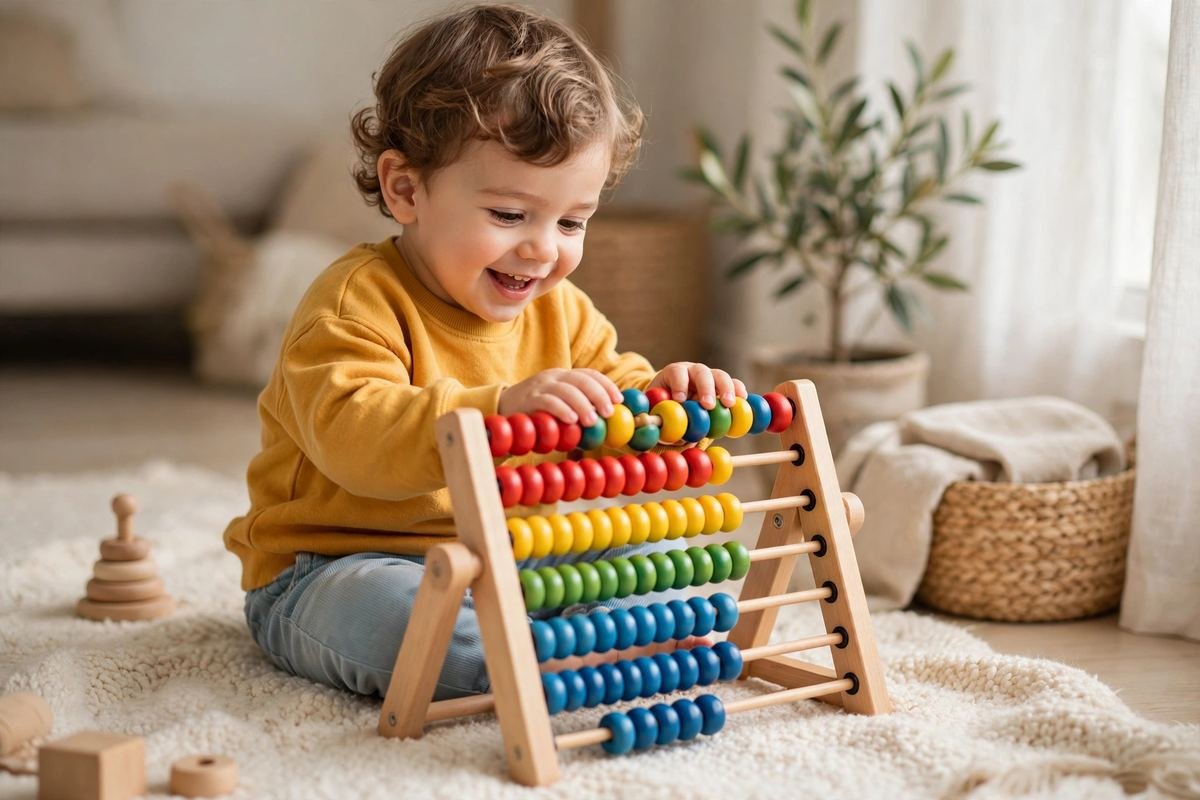
This is the abacus many families picture first. Ten rows of ten beads sit inside a sturdy arched wooden frame, giving one hundred beads in bright rainbow colours. Toddlers slide beads one by one, then in small clumps, while older children begin to count in tens. The base is wide and flat, so the frame stays put on a table or floor while small hands push hard. It is a calm, screen free centrepiece for a play corner.
- Ten rows with ten beads on each row
- Solid wooden frame with a wide, stable base
- Brightly coloured beads for colour naming games
- Supports counting, patterns and simple early sums
Pros: generous bead count, very sturdy build and years of use. Cons: large footprint for a small shelf and no storage for loose pieces. It suits families who want one classic frame that carries a child from toddler counting into early school maths practice at home.
2. IKEA MULA Abacus
The IKEA MULA abacus keeps things beautifully simple. Colourful wooden beads run along curved metal arcs set into a solid wooden base, and the whole frame feels reassuringly chunky. Toddlers enjoy the gentle clicking sound as beads travel from one side to the other. Because the design is so plain, children focus on movement, counting and colour rather than characters or sounds. It is also easy to wipe clean and easy to carry from room to room.
- Wooden beads in bright, varied colours
- Solid wooden base that resists tipping
- Curved wires for smooth bead travel
- Simple design with no small loose parts
Pros: affordable style, strong build and a clean look that suits any room. Cons: fewer beads than larger teaching frames and limited colour sorting games. It suits first time buyers who want a reliable first abacus for daily floor play and early counting practice. It also stores neatly on a low shelf between sessions.
3. Hape Rainbow Bead Abacus
Hape is known for well finished wooden toys, and its rainbow bead abacus follows that tradition. Rows of coloured beads slide along wires inside a neat wooden frame, giving toddlers a clear visual path for counting. The colours make simple games easy. You can ask your child to move all the red beads, count five blue beads or copy a short colour pattern. The frame is compact enough for a table, yet solid enough for regular toddler handling.
- Rainbow coloured beads arranged in clear rows
- Smooth wooden frame from a trusted maker
- Compact size for tabletop play
- Encourages counting and colour pattern games
Pros: lovely finish, clear layout and trusted brand quality. Cons: smaller than classroom style frames, so bead groups feel tighter for bigger hands. It suits parents who value finish and design, and it shows how abacus toys for toddlers can look beautiful as well as teach well. It is also a pleasure to leave out on display.
4. Melissa & Doug Shape Sorting Cube
This wooden cube is a classic among sorting toys for toddlers. Twelve chunky shapes, including a cross, a heart, a clover and simple geometric forms, fit through matching holes on the sides of the cube. Toddlers turn each piece in their hands, test a hole, adjust and try again, which builds patience and fine motor control. The lid slides open so children can tip everything out and start again, and that repeating cycle is exactly what young learners love.
- Twelve chunky wooden shapes to post and match
- Matching cut outs on the sides of the cube
- Sliding lid for easy emptying and restarting
- Shapes store neatly inside the cube itself
Pros: rich problem solving, self storing pieces and strong wooden build. Cons: some shapes are tricky at first and need adult patience nearby. It suits toddlers who enjoy posting games and are ready for a gentle challenge beyond a basic first sorter.
5. Fisher Price Baby’s First Blocks
This much loved set pairs a bucket with a shape sorting lid and ten colourful blocks. Babies and young toddlers can simply fill and empty the bucket, then progress to posting each shape through its matching hole. The handle makes the bucket easy to carry, which toddlers adore, and the bright plastic pieces are light for small hands. It is a friendly first step into sorting play before a child moves on to wooden sorters with more shapes.
- Ten colourful shapes with a sorting bucket lid
- Carry handle sized for toddler hands
- Light pieces that are easy to grasp
- Bucket doubles as tidy storage for the set
Pros: very approachable, portable and easy to clean. Cons: older toddlers master the five lid shapes quickly and want more challenge. It suits younger toddlers starting out, and it pairs nicely with abacus toys for toddlers for a balanced early learning basket. It also travels well for play away from home.
6. Melissa & Doug Geometric Stacker
This stacker replaces a single tower with three pegs holding rings, squares and octagons in graded sizes. Toddlers match each shape to its peg, stack from large to small and compare colours across the posts. With twenty five wooden pieces, the set offers far more sorting and ordering play than a basic ring stacker. The pieces feel satisfyingly chunky, and the base is solid. It bridges the gap between simple stacking and early geometry in a natural way.
- Three pegs with rings, squares and octagons
- Twenty five chunky wooden pieces in all
- Graded sizes for ordering and comparing
- Solid base that keeps towers steady
Pros: lots of pieces, several skills in one set and durable wood. Cons: many pieces to tidy and the pegs need a flat surface. It suits toddlers who have mastered a first stacker, and it complements abacus toys for toddlers by teaching size order alongside counting. It rewards slow and careful play.
7. Grimm’s Large Rainbow
The Grimm’s large rainbow is twelve curved pieces of wood that stack into a tunnel, nest together and come apart for building. Toddlers stack it, line the arches up as fences or bridges, and sort the pieces by size and colour. The water based colours let the wood grain show through, and the slightly textured finish helps pieces balance. As part of the world of rainbow stacking and sorting toys, this is the set families often keep for years.
- Twelve curved pieces in rainbow colours
- Made from wood with water based finishes
- Stacks, nests, balances and builds
- Grows from toddler stacking into building play
Pros: endless open ended play, beautiful materials and long lifespan. Cons: premium positioning and pieces need gentle handling to stay lovely. It suits families who prefer fewer, lasting toys and want one centrepiece for stacking, sorting and imaginative building. The smooth edges feel gentle in small hands during quiet stacking sessions.
8. PlanToys Geometric Sorting Board
PlanToys makes this sorting board from sustainable rubberwood, with chunky geometric pieces that fit onto matching pegs. Each shape has its own place, so toddlers practise recognition, matching and careful hand placement. The pieces can also stack in small towers off the board, which adds a second kind of play. PlanToys is respected for its environmental approach and smooth, safe finishes. The board feels calm and uncluttered, which helps a young child focus on one task at a time.
- Chunky geometric pieces with matching pegs
- Made from sustainable rubberwood
- Pieces also stack away from the board
- Calm, simple layout for focused play
Pros: thoughtful materials, clear matching task and tidy storage on the board. Cons: fewer pieces than bigger sorters, so sessions can be short. It suits eco conscious families, and it sits comfortably alongside abacus toys for toddlers in a calm learning corner. The layout also helps adults notice progress as matching becomes faster.
9. Fat Brain Toys SpinAgain
SpinAgain puts a lively twist on stacking. Colourful discs in flower and star shapes drop onto a corkscrew pole and spin all the way down to the base. Toddlers choose a disc, find the top of the pole and watch it whirl, which teaches cause and effect as well as size and colour order. The base can be flipped for a wobbling finish. Everything is chunky, smooth and sized for confident two handed play at the table or on the floor.
- Six colourful discs that spin down the pole
- Flower and star shapes in graded sizes
- Reversible base for steady or wobbling play
- Chunky pieces sized for toddler hands
Pros: engaging movement, strong motor play and very sturdy pieces. Cons: the spinning action can excite rather than calm some children before naps. It suits active toddlers who learn by doing, and who enjoy watching results unfold in motion. The discs can also stack without the pole for simpler play.
10. Hape Shake and Match Shape Sorter
This wooden sorter from Hape adds sound to the matching game. Each of its chunky shapes holds small beads inside, so it rattles gently when shaken, and each one fits through its own hole in the sturdy box. Toddlers shake, listen, turn and post, using sight, sound and touch together. The box is well made with smooth edges, and the shapes are easy to retrieve for another round of play.
- Six chunky shapes that rattle when shaken
- Each shape matches its own hole in the box
- Smooth wooden box with rounded edges
- Shapes are easy for small hands to hold
Pros: multi sensory play, quality wood and a satisfying posting task. Cons: the gentle rattle may not suit very quiet spaces. It suits toddlers who love sound and movement, and it rounds out a set of abacus toys for toddlers with listening and matching skills. The sturdy box keeps every shape together, which makes tidying simple after play.
Safety and care
Choose toys from makers who follow recognised toy safety standards, and always respect the age guidance on the packaging. Supervise toddlers during sorting play, especially where smaller shapes are designed for older children. The American Academy of Pediatrics offers helpful guidance on choosing safe toys at HealthyChildren.org, and it is worth reading before you buy. Check frames, wires and pegs regularly, and retire any toy with cracks or loose parts.
Care is simple. Wipe wooden abacus toys for toddlers with a damp cloth and mild soap when needed, then dry them fully before play resumes. Avoid soaking wood, which can swell and split. Plastic sorters can be washed more thoroughly. Store sets together in a low basket or box so pieces stay complete. Our tips on baby toy storage can help you keep small learning sets organised and easy to find.
Frequently asked questions
At what age can a toddler start with an abacus?
Most toddlers can enjoy sliding beads from around eighteen months, starting with simple pushing and colour naming. The counting value grows later, through the second and third years. Choose abacus toys for toddlers with large beads and a steady base for this early stage, and sit nearby while your child explores. Short, relaxed sessions work better than lessons, and stopping while play is still fun keeps interest high.
Which sorting toys work best for a two year old?
Look for chunky shapes, clear matching holes and pieces that store inside the toy itself. Simple colour sorting toys for 2 year olds, such as a bucket sorter or a peg board with a few shapes, give success without frustration. At this age, filling and emptying is real learning too. Add one slightly harder sorter once your child posts every shape in a set with confidence and starts naming shapes aloud.
Are wooden or plastic learning toys better?
Both can be excellent. Wood feels sturdy, lasts well and often passes between siblings, while plastic is light, washable and easy for very young toddlers to carry. What matters most is safe construction, smooth edges and a design your child returns to. Many families mix the two, keeping a wooden counting frame on the shelf and a light plastic sorter for travel, bath side play or visits to grandparents.
How do I teach counting with an abacus at home?
Start by sliding one bead at a time together and saying each number slowly. Then count groups of two or three beads, name colours as you move them, and copy simple patterns. Keep sessions playful and brief. Quality abacus toys for toddlers make this easy because the beads stay on the wire, so nothing is lost mid count. Over time, let your child lead the counting while you simply join in and encourage.
How many learning toys does a toddler actually need?
Fewer than you might think. One counting frame, one sorter and one stacking set cover counting, matching, ordering and building very well. Rotating toys every few weeks keeps them feeling fresh without buying more. Store the rest out of sight and swap one item at a time. A small, thoughtful collection also makes tidying faster, which helps toddlers learn to put their own toys away.
Conclusion
The right set depends on your child. A classic frame suits a child who loves counting and colour games, a sorter suits a determined poster, and a rainbow stacker suits a builder. Whichever you choose, well made abacus toys for toddlers offer calm, lasting play that builds real early skills. Start with one strong pick from this list, enjoy it together, and add another only when your child is ready for a new challenge.
