
Young children ask big questions about rain, bubbles, shadows, seeds and stars. Good science kits for young kids turn that natural curiosity into simple play that feels like discovery rather than schoolwork. A child can pour, mix, watch, compare and talk about what changed, all while building early language and thinking skills with a grown up nearby.
For very young learners, the best start is gentle and open. Look for first science kits for toddlers with large tools, clear pictures and activities that last a few minutes at a time. Slightly older preschoolers often enjoy preschool science experiment kits that add simple steps, color changes and nature study while still keeping play calm and manageable.
This guide explains how to choose science kits for young kids with care, then shares ten trusted options from respected brands. You will find lab tools, a first microscope, nature viewers, chemistry play, geology fun and color experiments. Browse more ideas in our Educational and Learning Toys collection as you read.
Quick Picks
Short on time? Start with these five favorites. Each one offers a clear activity, sturdy tools and a friendly first step into science play. The full reviews below explain who each kit fits best and what adult help it may need.
- Learning Resources Primary Science Lab Set for classic lab play and pretend experiments.
- Educational Insights GeoSafari Jr. My First Microscope for a first close look at leaves and coins.
- National Geographic Volcano Science Kit for children who love a classic volcano kit for kids moment.
- Thames and Kosmos Kids First Chemistry Set for guided mixing, measuring and observing.
- Educational Insights GeoSafari Jr. Bugnoculars for gentle outdoor observation and garden discovery.
A Buying Guide for science kits for young kids
The right kit matches a child in the present moment, not a child six months from now. Age guidance on the box is a helpful start, but attention span, hand strength and comfort with mess matter just as much. Choose a kit that invites repeat play instead of a single dramatic result.
Start With Age and Skills
Parents searching for best science kits for 4 year olds usually need chunky tools, picture led steps and activities that reset quickly. At four, pouring water, sorting colors and watching a plant sprout can teach plenty. Success builds confidence, and confidence keeps a child willing to try the next activity.
Many science kits for 5 year olds add simple recording, basic measuring and short sequences with a clear result. A five year old may enjoy predicting what will happen before a test, then drawing the outcome. If a kit looks advanced, save it for later rather than rushing through every step in one sitting.
Look for Real Science in Simple Form
Strong stem science toys for kids do more than light up or make noise. They help children observe, ask questions, test an idea and notice patterns. When you compare science kits for young kids, favor kits that let children change one small thing at a time, such as adding more water or using a larger leaf.
Simple tools often teach the most. Magnifiers, droppers, funnels, tweezers and measuring cups support careful looking and patient practice. A good guide card also matters. Clear photos help children follow along before they can read well, and short prompts give adults easy questions to ask during play.
Check Tools, Materials and Cleanup
Before buying science kits for young kids, check what is included and what you must supply from home. Some sets need vinegar, baking soda, soil or leaves from the garden. None of that is a problem when you know in advance. Surprises are less fun when a child is ready to begin.
Cleanup deserves a thought too. Washable tools, trays and storage boxes make repeat play far more likely. Families building a wider play corner can also explore our guide to a baby learning toy for younger siblings who want to join in with simpler sensory play alongside the main activity.
Best science kits for young kids for Curious Learners
These ten picks cover a range of interests, from lab benches to garden bugs. Read the age guidance for each one, start with the simplest activity in the box, and let your child lead the pace. Repetition is learning, so a favorite experiment done five times is a win.
1. Learning Resources Primary Science Lab Set
This classic lab set from Learning Resources is often the first name families meet when they shop for science kits for young kids, and it earns that place. Chunky beakers, a flask, a test tube and large tweezers fit small hands well. Picture activity cards guide simple experiments with water, color and everyday materials. Children can predict a result first, then watch for bubbles, color changes or objects floating and sinking. It also sets up easily on a kitchen table, a classroom rug or a picnic blanket outside for group play.
- Chunky lab tools sized for small hands
- Picture activity cards guide each experiment
- Durable plastic pieces wash clean with ease
- Works well for pretend lab play too
Pros: sturdy tools, clear cards and strong replay value for everyday play. Cons: household materials are needed for some activities. It suits preschoolers who love pouring and mixing, and it helps shy children copy real scientists and join group play with confidence.
2. Educational Insights GeoSafari Jr. My First Microscope
A first microscope should invite looking, not create frustration, and this GeoSafari Jr. model does exactly that. It has a chunky shape, two large eye pieces and a simple focus knob that small hands can turn. Children can place leaves, fabric, coins or feathers on the stage and enjoy a closer view. They learn to describe details such as veins on a leaf or threads in cloth. The wide stage also makes it easy to swap samples quickly, so a restless child stays engaged while waiting turns with siblings.
- Two eye pieces make viewing easy
- Simple focus knob suits young children
- Built in light brightens each sample
- Chunky body stands up to daily use
Pros: friendly design, real magnification and no slides to prepare. Cons: magnification is modest compared with school models. It suits curious children who collect small treasures and want to see familiar objects in a new way, at home or outdoors.
3. National Geographic Volcano Science Kit
Few activities capture attention like a volcano, and National Geographic builds this kit around that classic moment. Children help form the volcano, paint it and then create eruptions while learning simple facts about real volcanoes. The included rock specimens add a quieter second activity once the excitement settles down. Building the volcano first also gives children a sense of ownership over the finished project. Families can repeat the eruption on another day, and each try gives children a chance to predict how big it will be.
- Build and paint your own volcano
- Eruption mix creates repeat eruptions
- Real rock specimens included for study
- Learning guide shares volcano facts
Pros: memorable centerpiece, real specimens and clear science links. Cons: eruption play needs close supervision and cleanup. It suits children who ask about mountains and lava, especially when science kits for young kids need one big wow moment to spark interest.
4. Thames and Kosmos Kids First Chemistry Set
Thames and Kosmos is known for careful science design, and this first chemistry set brings that quality down to a young level. Children use a balance, test tubes and measuring tools to explore mixing and dissolving with guided steps. The manual explains ideas in plain language that adults can share aloud. Activities grow gently, moving from simple pouring toward comparing weights and noticing how materials change in water. The sturdy tools feel close to real lab equipment, which adds a welcome sense of importance for a child who takes the work seriously.
- Balance and measuring tools included
- Guided experiments build step by step
- Clear manual supports adult helpers
- Tools store neatly in the box
Pros: thoughtful guidance, real measuring practice and calm pacing throughout. Cons: younger children will need an adult for most steps. It suits patient five and six year olds who enjoy careful work and like following a sequence from start to finish.
5. Scientific Explorer My First Mind Blowing Science Kit
Scientific Explorer designed this kit as a friendly first lab for children who are new to experiments. It explores color mixing, water play and simple reactions with tools such as test tubes and droppers. The activities feel magical to a young child, yet each one opens a simple talk about cause and effect. Because activities are short, families can fit one experiment into a busy afternoon. Adults can extend the play by asking children to sort results by color, size or speed and explain the order they chose for each group.
- Color mixing activities lead the set
- Test tubes and droppers included
- Steps suit first time experimenters
- Activities use small amounts of material
Pros: gentle introduction, bright results and short activity times for busy days. Cons: some supplies run out and need replacing from home. It suits families who want science kits for young kids that feel exciting without feeling overwhelming on a first try.
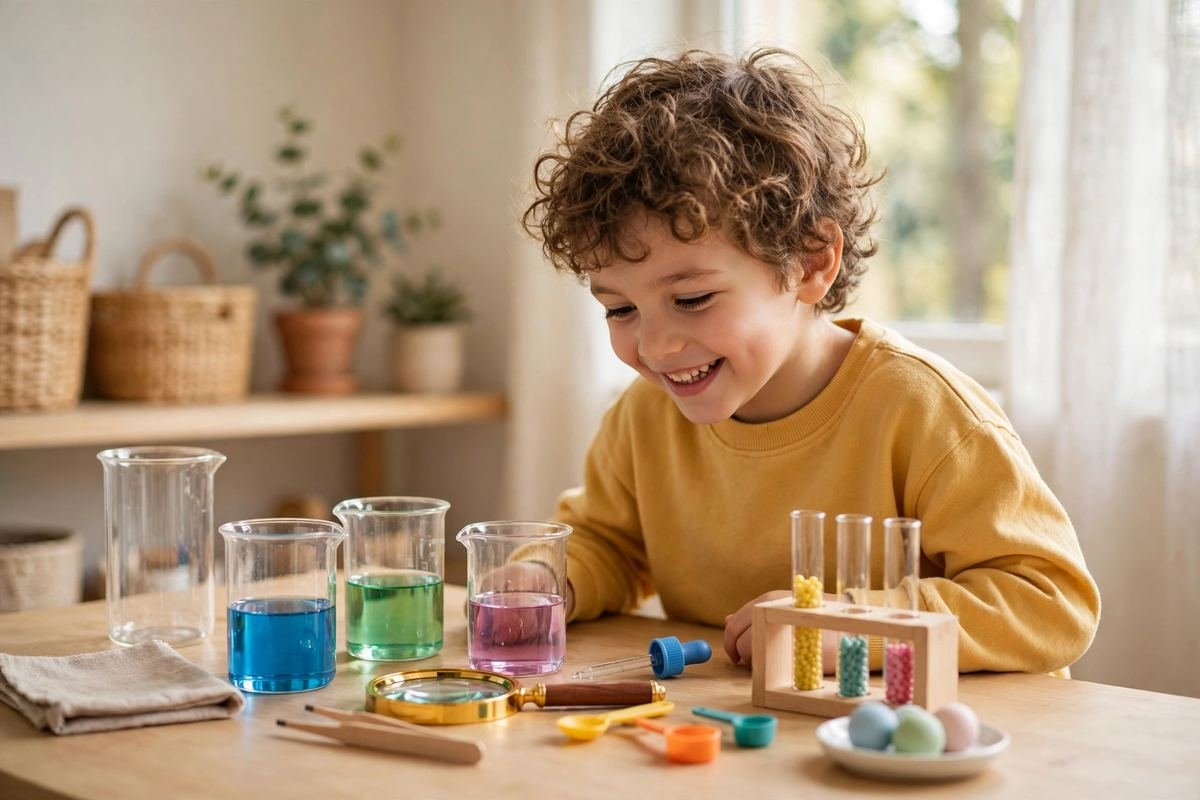
6. Learning Resources Beaker Creatures Lab Set
Beaker Creatures adds a playful surprise to lab play. Children drop a reactor pod into water and watch it fizz until a small creature figure appears. Then the learning continues with tools for examining the figure and a guide that links each creature to a real science theme, from oceans to space. After the reveal, children can sort creatures and compare colors with the magnifier. Children can guess which creature might appear next, turning the short waiting time into part of the fun and the learning for everyone watching.
- Fizzing pods reveal collectible creatures
- Tongs and magnifier support closer study
- Guide links creatures to science themes
- Lab tray helps contain water play
Pros: strong motivation, fun collecting and good tool practice during play. Cons: extra pods are needed once the included set is used. It suits children who stay focused longer when an activity includes a surprise reveal at the end.
7. Educational Insights GeoSafari Jr. Bugnoculars
Bugnoculars turn a garden walk into a small expedition. The container has a clear viewing area with magnification, soft grips and a snap lid that keeps a found bug safe for a short look before release. Children can study legs, wings and patterns up close, then let their visitor go home. Adults can model gentle handling and quiet voices near insects during each outing. A simple drawing page pairs well with the viewer, giving children a place to record legs, colors and patterns they noticed.
- Magnified viewing window for close study
- Soft grips suit small hands well
- Snap lid keeps bugs secure briefly
- Light body travels easily outdoors
Pros: encourages outdoor time, gentle handling and real observation of living things. Cons: it is a viewer only, with no guide book included. It suits nature lovers, and it pairs well with magnifying and bug discovery kits for longer garden sessions. Among science kits for young kids, few travel better.
8. National Geographic Break Open Geodes Kit
This kit brings geology to the table with real geodes that children break open with adult help to reveal crystal formations inside. Each geode is different, which makes the reveal genuinely uncertain and exciting. A learning guide and display stands help children keep and compare their finds like young collectors. Younger children can help sort the unopened geodes by size and guess what may hide inside. Once the crystals are on display, children often enjoy showing visitors their collection and retelling how each geode was opened with care.
- Real geodes with crystal centers
- Display stands for finished specimens
- Learning guide explains geode formation
- Goggles included for the breaking step
Pros: real specimens, true surprise and keepsake value for young collectors. Cons: an adult must lead the cracking step with care. It suits older preschool and early school children who love rocks, treasure and the idea of finding something hidden inside.
9. Steve Spangler Science Energy Stick
The Energy Stick from Steve Spangler Science makes electricity feel friendly and safe to explore. When a child holds both ends, the body completes a low energy circuit and the stick lights up and makes sound. Friends can join hands in a circle to test how far the circuit can travel. Children can also test what happens when one person lets go of the chain. It also works as a calm demonstration between louder activities, since the result appears at once and invites discussion.
- Lights and sound signal a closed circuit
- Group play works with joined hands
- No wires or loose parts to manage
- Simple concept with instant feedback
Pros: instant results, social play and a clear science idea to discuss. Cons: batteries are required and the sound may not suit every setting. It suits children who learn best by doing, especially when science kits for young kids are shared with friends or siblings.
10. Learning Resources Primary Science Jumbo Magnifiers
Sometimes the simplest tool teaches the most, and these jumbo magnifiers prove it. The large frames and clear lenses are easy for young children to hold, and the size works well for leaves, shells, fabric and printed pictures. A classroom style set means siblings and friends can explore side by side. Children can choose one found object, study it closely and draw what they see. Because there are no batteries or small parts to manage, the magnifiers can stay in a play basket for daily use.
- Extra large frames suit young hands
- Clear lenses give a bright view
- Multiple magnifiers support group play
- Sturdy build handles drops well
Pros: simple, durable and endlessly reusable indoors and out in the garden. Cons: there is no storage case for the set. It suits toddlers moving up to preschool who are ready to slow down, look closely and describe what they see.
Safety and Care
Safety starts with supervision. Even the gentlest science kits for young kids are designed for children and adults to use together, especially when water, small parts or household powders are involved. Read the box guidance before the first session, set out only what the activity needs, and pack away extras out of reach.
Check age labels and small parts warnings with care. The U.S. Consumer Product Safety Commission offers clear guidance on toy safety for young children. Wash hands after experiments, keep powders and mixtures away from eyes and mouths, and never taste lab materials, even when an ingredient came from the kitchen.
Care is simple for most kits. Rinse tools with warm soapy water, dry them fully and store cards where they will stay flat and clean. A small tray or box for each kit keeps pieces together, which makes the next science session far easier to start.
Frequently Asked Questions
What age is best to start science play?
Most children can enjoy simple science play from about age three, with an adult leading every step. Start with water, magnifiers and sorting, then add short experiments as attention grows. Short sessions done often teach more than one long session that ends in frustration for everyone.
How often should we use a science kit?
Once or twice a week works well for most families. Rotate science kits for young kids with outdoor play, books and building toys so each activity stays fresh. Repeating a favorite experiment is fine too, since young children learn by seeing the same result happen again.
Do these kits help with school readiness?
Yes, in quiet and practical ways. Science play builds vocabulary, counting, comparing and early problem solving. Children also practice listening to steps and waiting for a result. You can find more readiness ideas on our blog, where we share play based learning guides for parents.
What if my child loses interest quickly?
Keep sessions short and end while the activity still feels fun. Let your child choose between two experiments, and follow their questions rather than the full instruction page. Interest often returns when a kit connects with something they noticed outside, such as rain, ice or a garden snail.
Can siblings of different ages share one kit?
Often, yes. Give the older child the measuring, pouring or recording jobs, and give the younger child safe tasks such as holding a magnifier or choosing colors. Shared play builds teamwork, and the adult can adjust each role so everyone feels included and successful.
Conclusion
The best science kits for young kids do not need to be complex. They need sturdy tools, clear steps and room for a child to wonder aloud. Pick one kit that matches your child today, set it up on a calm afternoon, and let small discoveries lead the way to bigger questions.
