
Counting starts long before a child writes numbers on paper. It grows through songs, snack time tallies, and stairs counted one by one. The right number counting toys for preschoolers turn that natural curiosity into steady practice. Children point, touch, sort, and say each number out loud, and that simple routine builds a clear link between a spoken word, a symbol, and an amount.
Many families begin earlier with the best counting toys for toddlers, then move on to sets with numerals and small challenges as confidence grows. A good set invites a child back again and again without feeling like a lesson.
This guide rounds up trusted options for different play styles, from quiet puzzles to chatty electronic toys and classic wooden pieces. You will also find advice on age fit, safety, and storage, plus ideas for using early math learning toys during daily routines. Browse our Educational and Learning Toys category as you compare the number counting toys for preschoolers below.
Quick Picks at a Glance
If you need a short starting point, these five counting toys for preschoolers cover common needs, from first sorting games to early addition practice.
- Learning Resources Rainbow Counting Bears with Sorting Cups: a classic first set for sorting and counting.
- Learning Resources Snap Cubes: linking cubes that make groups and simple sums easy to see.
- Melissa and Doug Classic Wooden Abacus: a sturdy frame for sliding and counting in tens.
- LeapFrog Number Lovin Oven: pretend cooking play with songs and number talk built in.
- Hape Counting Stacker: a calm wooden peg toy that pairs stacking with counting.
What to Look for in number counting toys for preschoolers
Start with your child and work outward. The best number counting toys for preschoolers match the stage a child is in now, offer one clear next step, and feel inviting rather than overwhelming. Our guide to choosing a baby learning toy shares the same idea: simple, open ended play tends to hold attention longest.
Match the Toy to Your Child and Stage
For younger children, look for large pieces, bright colors, and activities built around sorting and counting to five or ten. Many number learning toys for 3 year olds focus on matching a numeral to a picture group. Older preschoolers are often ready for ten frames, linking cubes, and games that introduce adding one more or taking one away.
Look for Hands On Ways to Play
Children learn amounts by moving things. Pieces that can be lined up, stacked, posted, or grouped help a child check an answer by touch instead of guessing. The strongest number counting toys for preschoolers support several kinds of play at once. That variety is why math toys for preschoolers with loose pieces often stay useful longer than a single purpose toy.
Choose Quality, Size and Storage
Check that pieces are smooth, sturdy, and large enough for small hands to grip without frustration. Wooden and well made plastic sets both work well when the finish is clean and the pieces feel solid. Think about storage too. A lidded box keeps pieces together, and our ideas for baby toy storage can help you set up a tidy play corner.
10 Best number counting toys for preschoolers Reviewed
1. Learning Resources Rainbow Counting Bears with Sorting Cups
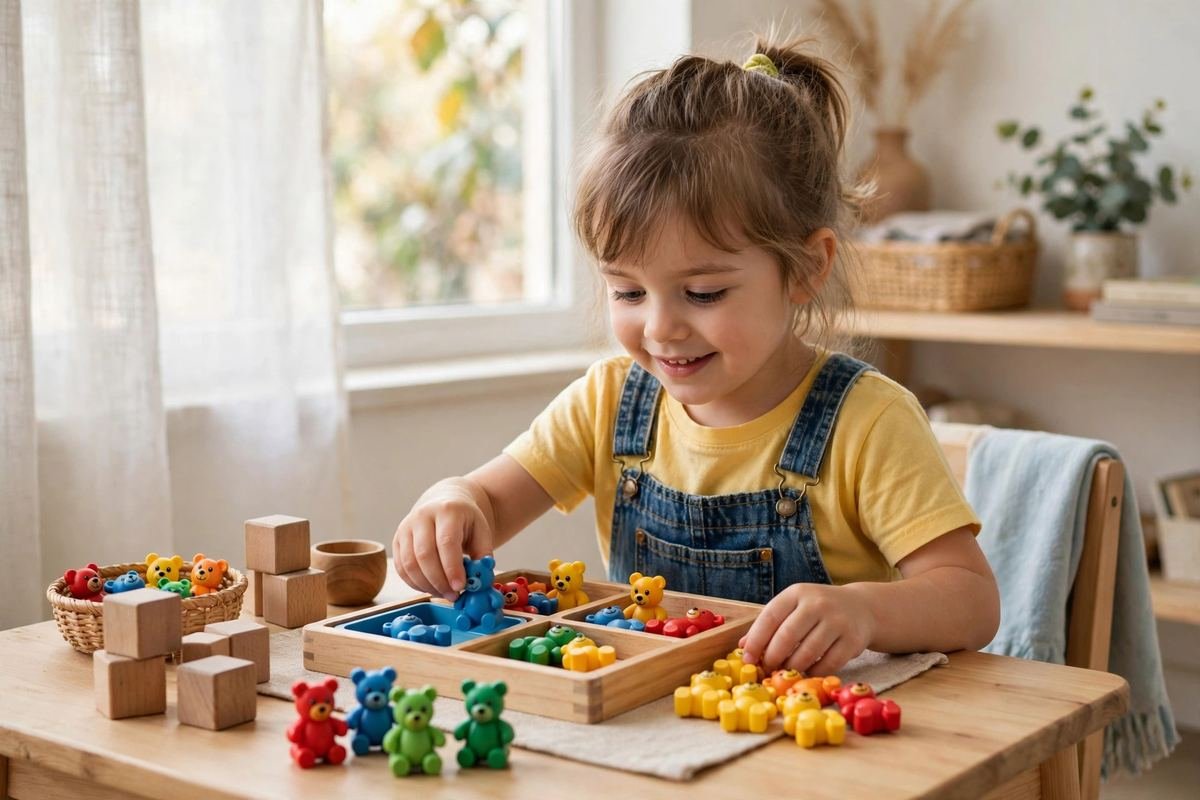
This cheerful set is a longtime favorite in homes and classrooms, and it shows why counting bears toys remain so popular. Children get colorful bears in different sizes plus matching cups, which opens up sorting by color, sorting by size, pattern making, and simple counting games. A child can fill a cup with five red bears, line up bears from smallest to largest, or count characters in and out during pretend stories.
- Includes bears in several colors and sizes for sorting games
- Matching cups give counting practice a clear and satisfying goal
- Works for counting, patterns, colors, and early problem solving
- Pieces are sized for small hands to move easily
Pros: versatile, durable, and easy for adults to turn into quick games. Cons: the smallest bears need supervision with younger children who still mouth toys. It suits families who want one open ended set that covers sorting, counting, and pretend play, and it grows from first color games into early addition with two groups of bears.
2. Learning Resources Snap Cubes
Snap Cubes are simple linking cubes that connect on every side, and that one design choice creates endless counting possibilities. Children can build a train of seven cubes, snap apart a tower to check how many pieces remain, or push two small groups together to see a total. Because each cube stands for one, abstract ideas become visible. Teachers have used cubes like these for years, and they work just as well on a living room rug.
- Cubes connect on all sides for towers, rows, and shapes
- Bright colors support sorting, grouping, and pattern activities
- Great for showing one more, one less, and simple addition
- Compact pieces store easily in a tub or zip bag
Pros: extremely flexible, sturdy, and useful into early school years. Cons: plain cubes may need adult ideas at first to spark interest. It suits children who love building and families who want number counting toys for preschoolers that double as a construction toy, since counting practice can hide inside towers, bridges, and long cube trains.
3. Learning Resources Numberblocks MathLink Cubes 1 to 10 Activity Set
Fans of the Numberblocks television series will recognize the characters in this activity set, which pairs MathLink Cubes with cards and character pieces for numbers one to ten. Children build each character, match it to its numeral, and complete small activities that link counting, ordering, and simple sums. As number recognition toys go, this one gives every number a friendly face and a clear visual size, so children can see that eight is taller than five.
- Builds the Numberblocks characters for numbers one through ten
- Activity cards guide counting, ordering, and early addition play
- Character pieces make each number distinct and memorable
- Cubes fit other MathLink Cubes sets for bigger builds
Pros: engaging for fans of the show and strong on numeral recognition. Cons: children who do not know the characters may use it as plain cubes at first. It suits preschoolers who learn best through stories and characters, and it gives parents ready made activities on days when planning a counting game feels like one task too many.
4. Melissa and Doug Classic Wooden Abacus
The wooden abacus is one of the oldest counting tools in the world, and this classic version from Melissa and Doug keeps the design simple and sturdy. Rows of beads slide along a solid wooden frame, letting children count one bead at a time, group beads in fives and tens, and spot patterns in the colors. There are no sounds and no screens, just a calm rhythm of sliding and counting that many children find soothing.
- Colorful beads support counting to one hundred over time
- Solid wooden frame stands firmly on a table or floor
- Supports grouping in fives and tens for place value ideas
- Quiet, screen free play that suits calm corners well
Pros: beautifully simple, very durable, and useful for years. Cons: younger children may slide beads randomly before counting with intent. It suits families who value classic wooden number counting toys for preschoolers and want a calming activity that still builds real skills, from counting to ten up to skip counting and simple sums with older preschoolers.
5. Hape Counting Stacker
Hape is known for thoughtful wooden toys, and its counting stacker turns a familiar stacking format into early math practice. Children place colorful pieces onto pegs, count as they stack, and match amounts to the numbers on the base. The pace is gentle and the goal is clear, which helps children who feel unsure about numbers. Stacking also builds hand strength and coordination, so a short counting session quietly supports fine motor development too.
- Wooden peg base pairs stacking pieces with printed numbers
- Bright, smooth pieces are pleasant for small hands
- Encourages counting aloud while stacking each piece in place
- Compact size suits shelves, play tables, and travel bags
Pros: calm, attractive, and easy for beginners to understand. Cons: the counting range is smaller than sets built for older preschoolers. It suits younger preschoolers and toddlers moving toward school readiness, especially children who enjoy stacking and posting games and who learn best when a toy gives one clear, repeatable action to practice each day.
6. LeapFrog Number Lovin Oven
Pretend cooking meets early math in this friendly toy oven from LeapFrog. Children pop a pizza or cupcakes inside, turn the number dial, and hear songs and phrases about counting, sharing, and time while they play chef. The food pieces can be counted, divided between plates, and served to family members, which turns sharing into a natural counting moment. It is a warm option for children who learn happily through role play and music.
- Interactive oven with a number dial, songs, and phrases
- Food pieces invite counting, sorting, and sharing practice
- Encourages pretend play skills alongside early number talk
- Sturdy design with pieces that store inside the oven
Pros: joyful role play value and lots of number language built in. Cons: it needs batteries and the sounds may not suit quiet time. It suits children who love kitchens and music, and families who want number counting toys for preschoolers that spark conversation, since serving four cupcake pieces to four stuffed animals makes counting part of the story.
7. Fisher-Price Laugh and Learn Smart Stages Piggy Bank
This smiling piggy bank from Fisher-Price turns posting coins into a counting game. Children push colorful coins through the slot and hear numbers, colors, and songs as the bank counts along. Opening the door to tip the coins out and start again is half the fun, and that repeat loop is exactly what young counters need. Different learning levels let the sounds grow a little with your child, moving from simple counting toward colors and coin pictures.
- Coins are counted aloud as children post them in
- Multiple learning levels adjust content as your child grows
- Chunky coins are easy for young children to hold
- Door opens easily so the counting game restarts quickly
Pros: highly repeatable, cheerful, and simple for young children to use alone. Cons: the counting range is limited and it requires batteries. It suits toddlers and younger preschoolers who love posting toys and cause and effect play, and it makes a friendly first step before loose piece counting sets that demand more patience and focus.
8. VTech Chomp and Count Dino
The Chomp and Count Dino from VTech invites children to feed a friendly dinosaur colorful food discs while it responds with sounds, songs, and questions. Each disc shows a food picture, and the dino talks about colors, foods, and numbers as it munches. Children count the discs as they feed them in, then pull them out and begin again. The mix of movement and humor keeps sessions lively for children who find quiet table activities hard.
- Feeding play pattern keeps counting active and physical
- Discs feature foods and colors for vocabulary practice
- Songs and questions prompt children to count out loud
- Discs store inside the dino for tidy cleanup
Pros: energetic, funny, and great for reluctant sitters. Cons: electronic sounds and batteries will not appeal to every family. It suits active preschoolers who learn through movement and families who want number counting toys for preschoolers with plenty of prompts, since the dino asks questions that encourage a child to count, answer, and keep playing longer.
9. Coogam Counting Bears with Dice and Sorting Cups
Coogam offers a generous counting bears set that adds dice and activity ideas to the classic bears and cups format. Children roll a die, count out the matching number of bears, and sort them into cups by color, which layers chance, counting, and matching into one game. The bears are a comfortable size for preschool hands, and the set works for solo practice as well as turn taking games with a sibling or parent.
- Includes bears, sorting cups, and dice for game based counting
- Supports color sorting, matching, patterns, and number games
- Generous piece count suits siblings and small group play
- Works for independent play and simple two player activities
Pros: lots of pieces and built in game ideas in one set. Cons: small parts need a storage tub and supervision with younger siblings. It suits families who enjoy simple tabletop games and want a set that can shift between free sorting play and slightly more structured counting challenges as a child becomes ready for rules and turns.
10. hand2mind Montessori Number Rods
Number rods bring a calm Montessori approach to counting. Each rod is divided into alternating colored sections, so a child can count the segments, compare lengths, and see at a glance that the rod for seven is longer than the rod for four. Children often lay the rods in order like a staircase, which makes number order physical and memorable. This style of material rewards slow, careful work and suits children who enjoy arranging and quiet concentration.
- Colored segments make each quantity easy to count and compare
- Rod lengths show number size and order visually
- Encourages careful placement, ordering, and addition exploration
- Pairs well with numeral cards for matching symbols to amounts
Pros: clear visual logic and a peaceful, focused style of play. Cons: the concept may need a brief adult demonstration at the start. It suits Montessori inspired homes and families who want number counting toys for preschoolers that build deep number sense, because comparing rod lengths helps children feel what numbers mean instead of only reciting them in order.
Safety and Care
Counting sets often include small pieces, so match the set to your child and supervise play when younger siblings are nearby. Check the age guidance on the box, and choose number counting toys for preschoolers with pieces sized safely for the youngest child in the room. The American Academy of Pediatrics offers helpful toy safety guidance at HealthyChildren.org, including advice on choosing age appropriate toys.
Care is simple for most sets. Wipe plastic and wooden pieces with a damp cloth, let them dry fully, and store them in a lidded container so small parts stay together. For electronic toys, replace batteries promptly and store the toy dry.
Frequently Asked Questions
At what age should children start counting toys?
Simple counting play can begin in the toddler years with songs, stairs, and posting games, then grow more structured around ages three to five. The number counting toys for preschoolers in this guide suit that preschool stage best, when children start matching numerals to amounts. Follow your child and keep sessions short and playful, since confidence matters most.
How many pieces does a good counting set need?
A first set needs enough pieces to count comfortably to ten, plus a few spares for sorting and simple games. Sets with twenty to sixty pieces give room for patterns, sharing between two children, and grouping in twos and fives. Very large sets can overwhelm younger children, so store some pieces away and rotate them.
Are electronic counting toys better than wooden ones?
Neither style is automatically better. Electronic toys offer songs, prompts, and questions that encourage counting aloud, while wooden and loose piece sets give quiet, open ended practice that children control themselves. What matters most is that a child touches, moves, and talks about real amounts often.
How can I use counting toys during daily routines?
Daily life is full of small counting moments. Count spoons while setting the table, socks while folding laundry, or steps on the way to the park, then let number counting toys for preschoolers carry that practice into play time. Short games work well too, such as asking a child to bring you six bears or to feed a toy dinosaur four discs.
What skills do counting toys build besides numbers?
Counting play builds far more than number order. Sorting and matching strengthen early logic, moving small pieces develops fine motor control, and turn taking games practice patience and language. Children also build focus as they check a group by touching each piece once, and they gain confidence when a set lets them correct a mistake on their own.
Conclusion
The best choice is the set your child reaches for often. Whether that is a tub of bears, a wooden abacus, or a singing oven, regular playful practice is what turns counting from a song into real understanding. Start with one of the number counting toys for preschoolers above, keep sessions short and warm, and add a new challenge when the old one feels easy. Small moments of counting, repeated with joy, build a strong start in math.
